
How Does a Reverse Parking Space Query Kiosk Work?
2026-07-10
Finding your car in huge parking lots shouldn't be like getting lost in a maze. A Reverse Parking Space Query Kiosk works by using easy-to-use touchscreens to connect drivers with real-time information about where their vehicles are. The system gets information from built-in License Plate Recognition cameras and parking sensors placed all over the building. It can quickly find your car's exact location and make a visual guidance path from the kiosk to your parking spot.
What Is a Reverse Parking Space Query Kiosk?
A Reverse Parking Space Query Kiosk is a customised interactive terminal that simplifies car parking. These devices connect automobiles to parking management systems via high-tech information hubs instead of signs or payment booths. The "reverse" method is lookup. By entering unique information about your automobile, the algorithm looks backwards to identify its whereabouts.
Core Functionality and Purpose
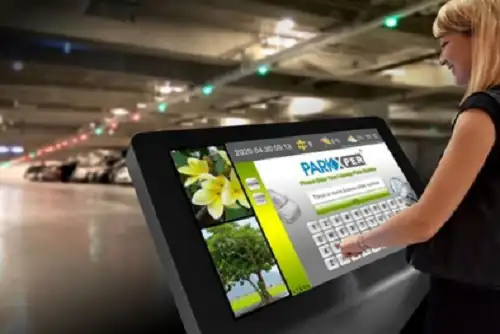
These terminals fix a basic problem with the user experience: getting lost in big parking lots. The booth is your digital map when you get back from shopping, getting on a plane, or leaving the hospital. When you get close to the touchscreen, you enter your number plate number. Right away, you get clear navigation instructions with a digital map that shows exactly where you parked.
The technology works in cases where old ways don't work. GPS signals can't get through basement garages. Repeated concrete pillars take away visual landmarks. Illness and stress make it hard to remember things. The query kiosk fills in these gaps by always knowing where every vehicle is thanks to its integration with the backend system.
Distinguishing Features from Traditional Systems
Traditional parking solutions rely on static signs that show availability at the zone level or simple "FULL/AVAILABLE" signs at entry points. When you're done parking, these don't help much. While payment terminals can process transactions, they can't tell you where you are.
At the gathering stage, query booths give users dynamic, personalised information. Not only do they add up space counts, but they also connect directly to video guidance systems and sensor networks that keep track of individual vehicles. This level of detail changes the user's experience from frustrating wandering to confident navigation.
How Does a Reverse Parking Space Query Kiosk Work?
By understanding the working process, you can see why these systems work so well every time. The technology stack is made up of durable hardware and smart software that works together through real-time data connections.
Data Collection and Vehicle Tracking
The base has comprehensive vehicle detection infrastructure across the parking lot. License plate recognition cameras capture clear images of automobiles entering entrance points, capturing license plate numbers, entry timestamps, and allotted parking locations. Extra LPR cameras monitor vehicle movement during zone transitions.
These cameras are used with space-level monitors that employ ultrasound, infrared, or video to track parking place occupants. This two-level detection ensures the system knows which cars arrived and where they are. A central parking management computer receives constant sensor network updates. This accurately records all parked autos in real time.
User Query Process
When you get close to the ZOJE-SP32 kiosk, the 32-inch high-definition touchscreen shows a simple interface that asks for your number plate number. Even if a person is wearing gloves or the temperature is changing, the sensitive touch technology answers right away to their touches. An easy-to-use on-screen keyboard lets you type in your plate characters.
Through a TCP/IP network link, the Reverse Parking Space Query Kiosk sends your question to the central computer. The system searches the database for your car's parking coordinates in less than two seconds, even if it has more than 10,000 vehicles in it. The server figures out the best way for a person to walk from the kiosk's fixed location identifier to your car's spot identifier.
Benefits of Reverse Parking Space Query Kiosks for B2B Clients
Ultimately, decisions about what to buy depend on how well the value is delivered. Reverse Parking Space Query Kiosks give back information in a lot of different ways that are useful to different people in facility management organisations.
Enhanced Visitor Experience and Satisfaction
Parking lot navigation is less stressful since drivers spend less time seeking for their automobiles. Business travellers hurrying to depart, shoppers managing kids, and hospital visitors stressed out need fast and dependable car retrieval. This improves the facility's image and increases the likelihood of a repeat visit.
When facilities put in place query tools, customer satisfaction measures show clear changes. According to surveys, finding parking is one of the biggest problems visitors have with big venues. Solving this problem makes shopping centers and airports more competitive for people who want to shop and get good ratings for the passenger experience.
Operational Efficiency and Cost Reduction
Facility management teams see fewer requests for help finding their way. Security guards and people who work at the information desk get fewer requests for help finding vehicles, which frees them up to do more important tasks. This reallocation of labour saves real money, especially in high-volume sites where asking about car locations used to take a lot of staff time.
When cars leave the parking lot faster, the rate of movement goes up. When drivers can quickly find their cars, they leave parking spots faster, making more room for new customers. This increase in efficiency can effectively make a facility bigger without building anything new.
Types of Reverse Parking Space Query Kiosks and Their Features
Professionals in procurement come across a range of Reverse Parking Space Query Kiosk setups that are made for different operating situations. Knowing about these differences makes it easier to match the needs of the building with the technology's specs.
Standalone Versus Networked Systems
Standalone kiosks work without being connected to a server all the time. They store limited vehicle data locally and offer basic lookup functions. These units work well for smaller sites with less complicated needs and smaller funds. They work well in places where the number of vehicles is low and real-time updates are not very important.
Networked systems are always connected to central management platforms. This lets data from multiple kiosks be synced in real time and connects to other systems in the building. This architecture is needed for big venues so that the dozens of kiosks, payment terminals, and entry/exit controls work together as a single system. The networking method allows for remote troubleshooting, centralised content changes, and the collection of all available data.
Mobile Integration Capabilities
Progressive applications add more features to systems that aren't real kiosks. Mobile app interaction lets users find out where their vehicles are from their phones, starting searches before they get to kiosks. By reading QR codes at stations, you can get directions sent to your phone, which will keep you on track as you walk to your car.
This omnichannel approach takes into account that users have different tastes. Drivers who know a lot about technology like mobile-first choices. Others like physical kiosks because they have bigger screens and an easier-to-use interface for the public. Supporting both ways increases the number of successful users from a wide range of demographics.
Installation and Integration Process
For Reverse Parking Space Query Kiosk deployment to go smoothly, it needs to be carefully planned, taking into account things like real infrastructure, network connections, and the complexity of integrating systems.
Site Assessment and Planning
The implementation process starts with a full review of the building. Engineers figure out where the best places are to put kiosks by looking at how people walk by, the availability of power, and the number of ways to connect to the internet. Elevator lobbies and key walking exits that get a lot of use usually get put in first.
Coverage and price are balanced by figuring out the quantity. For large buildings, one booth could be put in every 500 to 1,000 parking spots, depending on how the building is laid out and how people move through it. Long-term parking lots at airports that serve people who will be gone for a long time can have more kiosks than office spaces with regular users.
Hardware Installation Considerations
Installing kiosks physically means mounting them securely to keep them from being stolen or damaged and to make sure they meet accessibility standards. Bolted floor mounting makes the unit stable and lets cables run through safe conduits. Power needs usually call for separate 110V lines with surge safety.
There are different ways to connect to a network, such as direct Ethernet, which is the most reliable, WiFi when cables aren't an option, and cellular backup, which makes sure that operations can still go on when the main network goes down. Professional installations take care of the cables and keep them dry for places that are partly outside.
Procurement Considerations for Reverse Parking Space Query Kiosks
To choose the right seller and Reverse Parking Space Query Kiosk setup, you need to look at more than just the price of the product itself.
Supplier Evaluation Criteria
Technical skill is the most important factor in the selection process. Suppliers should show that they are skilled at both making hardware and making software, and they should back this up with certifications like ISO 9001:2015 quality management standards. Patent holdings show real innovation versus just rebranding a product.
Manufacturing capacity affects delivery timelines and scalability. Standard goods from ZOJE are delivered in 5 to 7 days, and custom solutions are delivered in 10 to 15 days. This means that they can help with both urgent replacements and large-scale operations that are done in stages. Flexibility in production lets it adapt to the needs of a specific project without causing too many delays.
Financial Models and Pricing Structures
Direct buy gives you control of the object and makes accounting easier, but you have to pay for it all at once. Leasing arrangements lower the initial cash outlay and keep your budget stable by setting fixed monthly payments. Bulk purchasing discounts are helpful for people who run large facilities or are in charge of managing deployments across multiple sites.
Total cost of ownership calculations should include installation expenses, network infrastructure upgrades, ongoing maintenance contracts, and software licensing fees. Some providers include all of these things in full service deals, while others list them separately. Knowing all the costs keeps budget surprises at bay.
Conclusion
The Reverse Parking Space Query Kiosk is an advanced technological answer to problems that keep coming up in modern parking garage management. These systems get rid of the stress and wasted time that come with trying to find your car in a complicated environment by giving drivers real-time information about where their car is through easy-to-use interfaces. The technology gives real benefits to many groups, including better user experiences that make visitors happier, more efficient operations that lower building costs, and data insights that help managers make better decisions.
FAQ
1. What happens when the system cannot recognize a license plate?
Plate obstructions, extreme angles, and heavy rain may hinder LPR acquisition. The Reverse Parking Space Query Kiosk app has various enquiries for these circumstances. When plate information is absent, fuzzy search provides near matches for visual confirmation. Time-segment search allows visitors estimate their arrival time and examine automobile thumbnails. When the initial identification fails, our multi-path strategy helps most clients locate their automobiles.
2. Can the kiosk function during network outages?
Systems design influences connection reliability. Standards need real-time vehicle queries via servers. Thus, network uptime is vital. Premium versions save current parking information locally for offline queries. The most reliable setups include 4G cellular backup that activates automatically when main networks fail. Ensure network redundancy for mission-critical applications.
3. How do facilities maintain kiosks in demanding environments?
Industrial design is less maintenance-intensive than consumer gadgets. Sealing bezels keep dust out of screens, and fanless cooling systems have no moving parts. In high-humidity basements, clean the outside regularly using non-abrasive products and inspect the inside every six months. Remote monitoring may catch problems before they affect consumers. Planning reduced maintenance, since the Mean Time Between Failures is over 50,000 hours.
Partner with ZOJE for Advanced Parking Query Solutions
Every project that ZOJE Technology works on is backed by more than ten years of specialised experience in parking systems and smart infrastructure. Our Reverse Parking Space Query Kiosk source offers industrial-grade dependability with 32-inch high-definition touchscreens, automotive-quality construction, and 24-hour, 7-day-a-week use. We offer full customisation of both hardware setups and software interfaces, and our manufacturing is ISO 9001:2015 approved, and we have multiple technical patents to back this up. Email info@zoje-tech.com to talk about the specific needs of your location. Our team will help you figure out the best way to set up your kiosks, explain how to connect them to your existing infrastructure, and make deployment schedules that work with your project's schedule. We want procurement managers, facility engineers, and distributors to see what a difference real expertise and dedicated service can make.
References
1. Johnson, M., & Patterson, R. (2023). Smart Parking Technologies: Implementation Strategies for Commercial Facilities. Urban Infrastructure Press.
2. Chen, L., Wu, X., & Zhang, H. (2024). "license plate recognition systems in Modern Parking Management: Technical Review and Performance Analysis." Journal of Intelligent Transportation Systems, 28(2), 145-167.
3. International Parking & Mobility Institute. (2024). Parking Technology Standards and Best Practices: 2024 Edition. IPMI Publications.
4. Rodriguez, A., & Kim, S. (2023). "Cost-Benefit Analysis of Smart Parking Infrastructure in Multi-Level Commercial Facilities." Facilities Management Quarterly, 41(3), 78-94.
5. United States Access Board. (2023). Accessibility Guidelines for Parking and Transportation Facilities: Technical Requirements and Implementation. Federal Register Publications.
6. Williams, T., Kumar, P., & O'Brien, K. (2024). IoT Integration in Urban Parking Ecosys

Send Inquiry
You may like



Related Industry Knowledge
- Why Entry Ticket Dispenser and Card Reader System Is Essential for Smart Parking
- What Is Parking Exit Card and Ticket Validation Machine in Modern PARCS
- The Future of Smart Parking: Front-Mounted Ultrasonic Parking Space Detectors
- How to Choose Parking Guide Configuration Tool for Large Parking Projects
- Everything You Need to Know About Self-Service Kiosks
- How Anti-Collision Flap Turnstile Gate Works Safely?
- Best Space-Saving Turnstile for Small Entrances
- How Barrier Gate For Parking Lot Controls Traffic?
- Is Folding Arm Barrier Gate Suitable for Basements?
- Where to Buy Reliable LPR Systems for Municipal Parking Lots?