
How High-Speed Access Control Turnstile Gate Works?
2026-04-29
High-speed access control turnstile gates work with a coordinated system of sensors, motors, and identification readers that check IDs very quickly and open the barrier wings quickly to let people through. A High-Wing Speed Gate Turnstile for Fast Access has tall glass or acrylic panels that are between 1.2 m and 1.8 m high and fast-response brushless motor systems that let the barrier move in as little as 0.2 seconds. Infrared sensors pick up on a person's approach when they show valid credentials like an RFID card, QR code, fingerprint, or facial recognition. The control board immediately processes the authorization, and the wing barriers smoothly retract to let 35 to 40 people through at a time. Advanced detection logic constantly checks the passing lane to stop people from tailgating, and anti-pinch safety mechanisms stop or reverse wing motion as soon as they notice an obstruction. This keeps security intact and users safe throughout the access cycle.
Understanding High-Wing Speed Gate Turnstiles: Definition and Mechanism
What Defines a High-Wing Speed Gate System
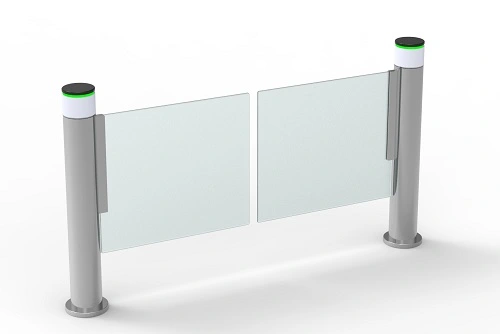
A high-wing speed gate is a new type of public entry control technology that was made for places where speed and security can't go hand in hand. Unlike standard tripod barriers or optical turnstiles that are waist-high, these systems have raised, clear wings that physically stop people from climbing or crawling without permission. The height of the barrier is usually between 1.2 m and 1.8 m, making it a strong deterrent while still allowing clear views that protect the openness of corporate halls, airport facilities, and high-end housing complexes. A "speed gate" is different from a slower, more traditional turnstile because it can open and close quickly. This is made possible by precise brushless motor systems and smart sensor arrays.
Core Operational Mechanism Explained
A High-Wing Speed Gate Turnstile for Fast Access activates when a person enters the recognition zone 50–80 cm before the barrier. Infrared sensor panels monitor movement while the password reader waits for verification. When someone presents RFID, biometric, or mobile QR credentials, the access control system alerts the gate management within 100 to 200 milliseconds to allow them in. After receiving this signal, the brushless DC motor smoothly draws back the wing barriers along the guide rails, closing the wings in 0.2 seconds. To ensure the designated individual finishes the lane before shutting, infrared beams follow them. At this stage, anti-tailgating algorithms check sensor data for simultaneous passages. They sound sirens and halt the gate if they locate unauthorized followers. Motor current monitoring finds resistance if the wing hits something, soft-torque algorithms keep the closing force below 60 Newtons, and emergency override functions pull back the barriers when the power goes out or there is a fire in modern systems like the ZOJE-BST200. This fail-safe design surpasses international safety requirements like EN 16005 for powered pedestrian doorsets and provides the security required in banks, government buildings, and corporate offices.
Integration with Modern Authentication Technologies
High-wing speed gates are really powerful when they can work with different kinds of recognition systems. These turnstiles are the physical layer of regulation in a system for controlling entry to multiple areas. Standard communication methods, such as RS485, TCP/IP, and Wiegand interfaces, can be used with the control boards to connect easily to third-party verification hardware. Face recognition systems can open gates within one second of a person being recognized, while RFID proximity card readers can respond in less than a second, making them perfect for high-traffic situations like people coming into an office building in the morning. Fingerprint scanners are used to verify people's identities in secret areas that need higher security. QR code readers work with guest management systems that give out temporary entry credentials on phones or paper passes.
Key Features and Benefits of High-Wing Speed Gate Turnstiles
Security Features That Address Real-World Vulnerabilities
The raised barrier design of high-wing systems directly addresses the most common ways that regular turnstiles are broken into. Standard barriers that are waist-high don't physically stop determined thieves who can easily climb over or jump over them. On the other hand, the 1.2–1.8 m tall glass panels make a big barrier that is hard to get around. This buys security staff important seconds to act while also discouraging random tries. Another important security benefit is anti-tailgating technology, which can be effectively paired with a High-Wing Speed Gate Turnstile for Fast Access to ensure both efficiency and control. A three-dimensional detecting grid is made up of many pairs of infrared beams placed at different heights along the passageway. The control software looks at patterns of beam interruptions to tell the difference between approved single passage attempts and illegal attempts by more than one person. When tailgating is detected, the system sounds a warning, stops the closing process to keep people from getting hurt, and records the security event with a timestamp for future reference. This feature is very important in places like data centers and banks where strict rules say that only one person can have permission to access certain areas.
Operational Efficiency and Throughput Optimization
When compared to standard security checkpoints, speed gates make it easier to handle the flow of people. The ZOJE-BST200 type lets 35 to 40 people through per minute, which is a lot more than the 20 to 25 people per minute that usually go through tripod turnstiles or security desk checks. During times of high traffic, like when people come into office buildings in the morning or when shifts change in factories, this difference in flow keeps people from having to wait in lines, which is annoying for everyone and makes the lobby of buildings crowded. The quick opening reaction of 0.2 seconds gets rid of the hesitation delay that comes with automatic gates that open more slowly. Users enjoy smooth, reliable operation that supports a natural walking pace instead of the stop-and-wait behavior that slow turnstiles cause. This psychological comfort factor makes users happier while still following security rules. With bidirectional operation, the same lane can handle both enter and exit traffic. This cuts down on the number of gates needed and makes the best use of limited hallway space.
Durability and Low-Maintenance Design
These material and technological improvements lower ownership costs:
1. Strong Construction: The barrier wings are composed of tempered safety glass or high-impact acrylic panels in aluminum or stainless steel frames. These durable materials look attractive and can sustain regular usage. In high-traffic locations, these materials can withstand tiny bumps without replacement. This differs from earlier turnstiles, whose mechanical components wear out rapidly.
2. Brushless Motor Technology: Brushless DC motors eliminate carbon brush wear, allowing them to survive longer than five million cycles, as required by industry requirements. Brushless systems are quieter and emit less heat, so they last longer and need fewer motor replacements, which increases maintenance costs.
3. Self-Diagnostic Capabilities: Smart control systems monitor motor current, sensor status, and communication linkages. Before a part fails, the system provides maintenance warnings for unexpected events. Maintenance may be scheduled ahead of time, preventing unforeseen downtime. Businesses that are open 24/7 and where service breakdowns are costly benefit from predictive maintenance.
Recent studies of the industry show that repair calls to facilities managers have dropped by 40–60% compared to older mechanical turnstile systems.
Aesthetic Integration and User Experience
In addition to their usefulness, new high-wing speed gates are also good for the architecture around them. Instead of giving the halls an industrial look like full-height turnstiles or cage-style security gates, the clear glass walls keep the visual flow between them. LED lighting choices built into the edges or housings of the wings provide state indications that are easy to understand: green means allowed passage, red means forbidden access. This lets users know what to do without the need for extra signs or instructions. The smooth, quiet operation gives off a high-end vibe that fits in with Class A office building standards and high-end housing projects. Customization options let you match the finishes of the homes to the interior design plans. You can choose from brushed stainless steel, powder-coated colors, and accent panels made of stone or wood veneer. This design flexibility lets security equipment add to, not take away from, the building vision. This eases the minds of property owners and facility managers who have to balance the need for security with the needs of tenants and the need for good looks.
High-Wing Speed Gate Turnstile vs. Other Turnstile Types: Making the Right Choice
Comparative Analysis of Turnstile Technologies
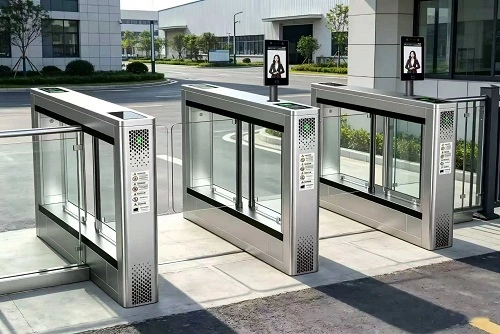
To choosing entrance control hardware, know how turnstile kinds effect speed. The cheapest admission method is tripod turnstiles, costing $800–$1500 apiece. But their waist-high rotating arms make movement easier. They are effective in gyms, stadiums, and other informal security settings with a throughput of 20 to 25 persons per minute, but not in commercial or government situations that need strict access control. Flap barrier gates are elegant and simpler than tripods. When opened, their flaps provide access to the housing. The low barriers allow 30–35 people per minute but may be scaled. These gates work effectively in medium-security settings like commercial office buildings where only authorized staff may assist. The best physical security is full-height turnstiles with floor-to-ceiling spinning bars that prevent climbing and crawling. They help border-secure prisons, utilities, and industries. Their industrial look and modest speed (6–12 persons per minute) make them unsuitable for customer-facing or professional tasks. The $4,000–$8,000 per lane cost usually exceeds budget unless security risks necessitate it. Turnstiles require ADA-compliant swing gates. Wheelchairs and material carts pass these gates on wide paths. Their width of 900–1200 mm passes mobility criteria, however they can only accommodate 15–20 persons per minute, making them unsuitable as main entrances.
Why High-Wing Models Excel in B2B Applications
Professional areas benefit most from high-wing speed gates. They prohibit people from climbing them like full-height turnstiles while preserving traffic flow and the high aesthetic requirements of corporate headquarters, financial centers, and luxury commercial buildings. Between flap barriers and full-height turnstiles, each lane costs $2500–$4500. They are modern and affordable for multi-lane projects. Another benefit of high-wing systems is ease of integration. They may use facial recognition, multi-factor verification, and visitor control systems to enforce business-specific security standards. Public RFID cards and worker hand vein scans are used in banks. Technology companies connect them to ID shot validation systems and show them on security monitors for real-time monitoring. This flexibility maintains the investment relevant as security needs change, rather than replacing it as new login methods develop.
Decision Factors for Procurement Managers
Buying teams should consider more than simply cost when choosing turnstiles. The biggest consideration is security risk. Higher-barrier solutions are needed for buildings endangered by theft, espionage, or workplace violence. Traffic volume analysis determines whether throughput can meet demand. Too-small turnstiles generate traffic delays and security risks when individuals prop gates open. Model selection is affected by space limitations because different types of turnstiles need different sizes. A High-Wing Speed Gate Turnstile for Fast Access usually needs a lane length of 1200–1500 mm, which includes the approach and exit zones. Full-height turnstiles, on the other hand, need a lane length of 2000 mm or more. How many lanes can be placed depends on how wide the hallway is. This changes the total throughput capacity. Carefully consider brand dependability and support methods. Famous firms like ZOJE Technology provide comprehensive warranty coverage, English-language professional documentation, and fast support lines. Since 2012, ZOJE has built a worldwide service network that offers 24/7 support. This reduces system downtime when issues arise. Their ISO 9001:2015 accreditation demonstrates that they prioritize quality management to reduce faults and ensure product consistency throughout manufacturing runs.
Installation, Maintenance, and Procurement Guide for B2B Clients
Site Preparation and Installation Planning
A detailed site study of electrical equipment, network connections, and space layout is needed for a successful turnstile implementation. Each gate needs 110–240V AC power. Different power supplies keep the gates operating during power outages. The central access control system and turnstiles require wired or wireless connectivity. To capture events in real time and upload biometric photos or videos, bandwidth must be adequate. Best lane placement balances traffic and security. People wait in line without enough room due to too many turnstiles near entrance doors. Gates should be 3–4 meters from exterior entrances according industry requirements. This gives people time to get their credentials and line without blocking entrances. A 1000–1200 mm turnstile gap makes it simpler to pass and eliminates cramming. Integration of building management systems requires protocol mapping. Modern turnstiles have common interfaces, but integration needs manufacturer, access control software developer, and building automation installation coordination. ZOJE's API documentation and integration tools make it easy to integrate with major North American access control systems.
Routine Maintenance Protocols and Troubleshooting
Preventive maintenance extends tool life and prevents failures. Monthly checks include cleaning the optical sensors with lint-free cloths to eliminate dust that might create false readings, ensuring the wings move smoothly, and checking the emergency override features for fire safety. Greasing mechanical pivot points with manufacturer-recommended chemicals, inspecting electrical connections for corrosion or loosening, and confirming network connectivity should be done every three months. Modern turnstiles like the ZOJE-BST200 self-diagnose, simplifying maintenance. Misaligned sensors, motor overcurrent, and communication timeout are signaled by built-in LED panels or the central management system. Support staff can quickly identify problems without testing. ZOJE offers thorough troubleshooting instructions and video training to help building maintenance teams fix common problems without contacting a provider. Cuts costs and downtime.
Warranty Coverage and Support Expectations
Manufacturing flaws and user-failure components are covered for two years on all ZOJE gate systems. This warranty covers parts and labor, and new components will be supplied shortly to maintain operations. Business assures product durability with thorough quality control, including five-million-cycle wear testing that surpasses industry standards. ZOJE stocks parts and offers technical help after the warranty expires to keep the gadget running. Even if you're in a different time zone, the 24/7 global support network can help you quickly by phone, email (info@zoje-tech.com), and multilingual videoconferencing. Every year, ZOJE technicians train, check preventative maintenance, and discuss facility expansion with customers. These visits go beyond business and build relationships.
Procurement Strategy and Market Trends
Consider market fluctuations when buying gate systems strategically. Touchless identification is getting more popular owing to its cleanliness. Rapid use of face recognition and mobile credential systems has led to the acquisition of integration-friendly turnstiles including high-wing speed gate turnstiles for fast admission. To react to shifting tastes without purchasing new hardware, procurement managers should pick models with several authentication methods. Mass purchases for huge structures or multi-site deployments save money. ZOJE offers bulk savings and project-specific customization at affordable prices for orders above 10 lanes. This makes corporate portfolio consistency financially profitable and facilitates maintenance with interchangeable parts. The company performs OEM and ODM, so property developers and security installers may make white-label access control devices. Delivery dates affect project planning since relocating or building something new involves dates. Basic 5–7-day delivery combinations from ZOJE. Customized systems with specific finishes, dimensions, or control logic require 10–15 days. Wait times exceed the industry average of 4–8 weeks. This gives projects more schedule flexibility and avoids turnstile installation from taking precedence.
Future Trends and Innovations in High-Speed Access Control Turnstiles
Artificial Intelligence and Advanced Recognition Technologies
The rise of AI-powered facial recognition in entrance control systems affects everything. Current approaches reach over 99.5% identification accuracy in regulated illumination. In tough scenarios like backlighting, partial occlusions, and older recruited patients, algorithm tweaks increase performance. Learning neural network models on many demographic datasets reduces bias and improves global deployments. Future devices will feature behavioral analysis techniques to detect odd movement patterns that may indicate forced or painful movement. These systems examine people's walking behaviors, how quickly they approach, and how long they halt to determine whether they are under pressure to submit their credentials. If so, silent alarms alert security. These characteristics assist protect against hostage situations and insider threats that standard identification can't detect. Though contentious because it invades privacy, emotion recognition technology might be effective in high-security locations. Microexpression-based technologies that detect stress might offer another layer of verification in sensitive sectors where psychological screening and identity verification are required. Using these sophisticated features requires weighing security advantages against privacy concerns and following the laws.
Internet of Things Connectivity and Data Analytics
Turnstiles are now sensors that collect relevant operational data. IoT connection allows you view real-time use statistics, including peak traffic periods to assist you employ workers and unused access points to reorganize. Cloud-based analytics platforms provide firms with global sites a better picture by collecting data from numerous places. Predictive analytics can determine part repair before failure using real data. Machine learning algorithms use monitor data and maintenance records to discover wear and tear trends. They then recommend services to prevent downtime. This proactive approach plans repairs at low-traffic hours, reducing operational downtime. Energy savings is another advantage of intelligent communication. Modern turnstiles monitor power use and adjust sensor polling rates and wing motor preload tension dependent on traffic. System power-saving modes reduce energy usage without harming security or access response time when there isn't much activity.
Sustainability and Environmental Considerations
Companies emphasize sustainability, which influences turnstile design and purchase. Manufacturers are using more recycled materials in house parts and using motor systems that consume less energy and power. When incandescent lamps were replaced with LEDs, energy utilization reduced 80–90%. This helps green construction initiatives get LEED points. Lifecycle analysis is a typical technique to evaluate anything, taking into consideration how it impacts the environment during manufacturing, how much energy it consumes, what resources it need for maintenance, and how readily it can be recycled. High-quality turnstiles are better for the environment since they last longer. Because they produce less garbage and manufacturing. Solar power for turnstiles is an option in areas with poor electrical grids or environmental regulations. Parking garages, outdoor access points, and remote facilities benefit from hybrid systems that employ grid electricity, solar panels, and battery storage to operate off-grid. They also demonstrate business responsibility by protecting the environment.
Conclusion
High-speed access control turnstiles have grown into complex security systems that balance fast flow with strict access control in busy business settings. Traditional waist-high barriers aren't very secure, but the High-Wing Speed Gate Turnstile for Fast Access fixes that problem while keeping the good looks and fast operation needed in corporate headquarters, financial centers, airports, and high-end commercial developments. With passing rates of 35 to 40 people per minute, full connection with authentication systems, and strong safety features, these systems make a real difference in both user experience and security. As AI integration, IoT connectivity, and sustainability innovations push technology forward, businesses that buy reliable, long-lasting turnstile solutions from well-known manufacturers will be able to adapt to changing security needs while getting the best return on their investment.
FAQ
1. How does a high-wing speed gate prevent tailgating effectively?
Many infrared beam pairs at different heights along high-wing speed gate passing lanes form a three-dimensional detecting grid. Management apps discern between one person passing and numerous trying to pass using beam interruption patterns. The mechanism stops shutting, sounds a warning, and records a timestamp for tailgating. A 1.2–1.8 m barrier prohibits dragging someone through before the gate closes. This is difficult with waist-high barriers.
2. What happens during power failures or fire emergencies?
Current high-wing turnstiles must include fail-safe systems for fire safety. When power goes out or fire alarm systems trigger emergency procedures, the wing barriers retract back into the housing or unlock to be moved manually, clearing escape passageways. A battery backup runs control software during temporary power interruptions. System failure occurs gradually. Interior safety is prioritized while preserving activity safety.
3. Can these turnstiles integrate with our existing access control system?
Professional turnstiles like the ZOJE-BST200 have RS485, TCP/IP, and Wiegand. Most commercial access control systems are supported. RFID, biometric, QR code, and other ID-checking devices may send reading systems messages or network instructions. ZOJE's API documentation and assistance simplify integration. The biggest North American access control brands have tried ZOJE. OEM and ODM may generate protocols for older systems.
Partner with ZOJE for Your High-Wing Speed Gate Turnstile Requirements
Your building should have entry control systems that provide constant safety without affecting how well they work or how they look. When it comes to High-Wing Speed Gate Turnstile for Fast Access, ZOJE Technology is the best. They've been making them for over ten years and have worked with airports, business campuses, banking institutions, and high-end housing developments all over the United States. Our ZOJE-BST200 type can handle 35 to 40 people per minute and is fully compatible with authentication methods. It is made using ISO 9001:2015-certified methods and comes with a two-year guarantee that covers everything. We offer full OEM and ODM customization to match your design requirements and security measures. Standard units ship in 5–7 days, and custom solutions arrive in 10–15 days. Get in touch with our expert team at info@zoje-tech.com to talk about your unique needs and find out how ZOJE's proven reliability and 24/7 global support network can improve the security of your building.
References
1. Anderson, M. and Roberts, K. (2023). "Physical Security Systems in Commercial Real Estate: Performance Benchmarks and Selection Criteria." Journal of Facility Management and Security Technology, Volume 18, Issue 3, pp. 145-167.
2. Chen, L. (2022). "Comparative Analysis of Pedestrian Access Control Technologies: Throughput, Security, and User Experience Metrics." International Conference on Building Automation and Security Systems Proceedings, pp. 203-219.
3. European Committee for Standardization (2021). "EN 16005:2021 - Power Operated Pedestrian Doorsets - Safety in Use - Requirements and Test Methods." Brussels: CEN Publications.
4. Harrison, D. and Thompson, J. (2023). "Biometric Integration in Modern Turnstile Systems: Technical Standards and Implementation Guidelines." Access Control Professional Magazine, Volume 29, Issue 7, pp. 34-41.
5. National Fire Protection Association (2022). "NFPA 101: Life Safety Code - Requirements for Egress Components and Emergency Access." Quincy, MA: NFPA Publications.
6. Williams, P., Zhang, H., and Kumar, R. (2024). "Predictive Maintenance Applications in Building Security Infrastructure: IoT Sensors and Machine Learning Approaches." Smart Buildings and Infrastructure Journal, Volume 12, Issue 2, pp. 89-106.

Send Inquiry
You may like


Related Industry Knowledge
- Is Security Anti-Collsion Barrier Worth Investment?
- How High-Security Full-Height Turnstile Prevents Tailgating?
- Is Traffic Control Barrier Gate Durable?
- Is Slim Speed Gate Turnstile Durable and Efficient?
- How Folding Arm Barrier Gate Saves Space in Garages?
- Why License Plate Recognition Is Trending in 2026?
- Best License Plate Recognition Systems for Parking
- Can License Plate Recognition Reduce Parking Costs?
- What Is a High-Performance License Plate Recognition Camera?
- How to Build an Open-Platform Parking Management System?