
How to Choose Entry Ticket Dispenser and Card Reader System for Commercial Parking
2026-07-08
Choosing the right entry control technology for your business parking lot has a direct effect on how well it works, how much money it makes, and how happy its customers are. An Entry Ticket Dispenser and Card Reader System is the main way that your Parking Access and Revenue Control System (PARCS) talks to your cars. It does this by automatically opening the doors for guests with thermal paper tickets and contract parkers with RFID credentials. To choose the right system for your facility's specific traffic patterns and security needs, you need to look at its throughput capacity, reliability in harsh environments, ability to work with other systems, and provider support.
Understanding Entry Ticket Dispenser and Card Reader Systems in Commercial Parking
Modern parking lots use high-tech automatic entry systems that get rid of the need for gatekeepers and make security and tracking of income better. These systems handle a wide range of users effectively by combining physical ticket dispensers with electronic identity readers.
How Ticket Dispensers Operate
Ticket machines use high-speed thermal printers that can print up to 250 mm per second. This means that each car can make its own unique barcoded or QR-coded ticket in three seconds. The device holds big rolls of paper with 2,000 to 5,000 tickets on each one. This reduces the number of times it needs to be serviced. Auto-cutters made for the industry that can cut more than a million times will work reliably even during busy times. More advanced models have retractor devices that stop tickets from being pulled out too early, which greatly reduces the number of jams that happen.
Card Reader Technologies Explained
Card reader systems use a number of radio frequency methods to verify passwords. Magnetic stripe readers can read older card types, but they can't encrypt data. RFID readers that work at 125kHz (EM, HID Prox) or 13.56MHz (MIFARE, DESFire) let cards and interfaces talk to each other safely and securely. Ultra-High Frequency (UHF) readers that work in the 860–960MHz range allow hands-free authentication from 6–10 meters away, making them perfect for high-speed entry lines where cars prefer contactless access.
System Complementarity Benefits
The two functions work for different types of users on the same computer. People who have a monthly contract use proximity cards linked to prepaid accounts instead of tickets to skip the whole ticketing process. Casual guests get tickets with time stamps that tell you how long you can park at the exit. This mixed method improves lane flow while keeping accurate records of income. The Entry Ticket Dispenser and Card Reader Systems keep track of all activities locally and sync with central computers when the network allows it. This way, even if the connection drops, no data is lost.
Key Factors to Consider When Choosing Ticket Dispenser and Card Reader Systems
When making a procurement choice, technical specs and operational needs must be carefully weighed against each other. Professional-grade tools are different from consumer-level goods in the following ways.
Throughput Capacity and Performance Metrics
How fast your building needs to work depends on how many vehicles come through every day. Shopping malls that handle more than 1,000 cars every day need systems with transaction times of less than three seconds to keep people from having to wait in line to enter. Peak period performance is the most important—systems must keep their speeds steady during rush hours in the morning and evening without slowing down. Microcontroller-based options don't work as well as ARM-based embedded computers that run real-time operating systems. The ZOJE-TB101 uses a fast ARM-Linux architecture that keeps things running smoothly even when the server network goes down. It does this by handling authentication code locally using edge computing.
Compatibility and Integration Requirements
Integration that doesn't affect the current infrastructure saves money and time by avoiding expensive repairs and installation delays. Standard communication methods are very important. For example, TCP/IP lets you connect to a network, RS485 lets you handle devices like traffic lights and boom barriers, and Wiegand interfaces let you connect a third-party access controller. Make sure that the reader software meets your standards for encrypting credentials. This is especially important if you are using HID iClass SE or MIFARE DESFire EV2 cards that need specific security keys. Systems with multiple input options, such as RJ45, RS232, RS485, and dual Wiegand lines, give you the most options without having to do a lot of wiring.
Environmental Durability Standards
Conditions outside can be very harsh, ranging from very hot in the desert to very cold in the Arctic. Industrial-grade housings made of 2.0 mm cold-rolled steel or SUS304 stainless steel with a powder finish don't rust when exposed to salt from the road or moisture in the air. Covers with an IP65 rating keep the gadgets inside safe from dust and high-pressure water jets used for cleaning. Commercial goods and industrial solutions are different in how well they can handle changes in temperature. For example, airport tarmac systems need to be able to work in temperatures ranging from -40°C to 80°C. Condensation that harms electronics and paper supplies can be avoided with internal temperature control that includes heaters and ventilation fans.
Security Features and Fraud Prevention
To protect revenue, strong security methods must be used throughout the whole deal chain. Using algorithm-based validity that is checked by central systems during exit processing, encrypted ticket numbers stop fakes from being sold. Card readers that support AES-128 or higher security standards keep password data safe while it's being sent wirelessly. Critical infrastructure sites are safest when they use two-factor authentication, which combines physical passes with license plate recognition. Offline redundancy features that store thousands of transaction logs in non-volatile memory keep businesses from losing money when the network goes down. When the connection is restored, cached data is instantly uploaded.
Maintenance and Support Considerations
Long-term operational costs go beyond the price of the original buy. By splitting printer parts, card reader modules, and power supply units, modular designs make it possible to fix problems quickly in the field without having to replace whole terminals. Cleaning the thermal print head with isopropyl alcohol every three to five rolls is part of regular maintenance that keeps paper dust from building up and lowering the quality of the prints. How responsive vendor support is affects how long downtime lasts. Look for makers that offer technical help 24 hours a day, seven days a week, across all time zones in the world. A two-year warranty that covers all parts replacement shows that the maker is confident in the product's trustworthiness. ZOJE offers full expert help before, during, and after the sale, making sure that the whole project goes smoothly, from purchasing to installation and ongoing use. This applies to every Entry Ticket Dispenser and Card Reader System we provide.
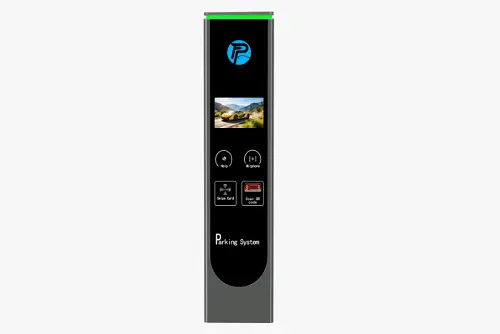
Evaluating Popular Systems and Brands for Commercial Parking
On the market, you can find everything from simple automatic devices to high-tech stations with video intercom and multiple frequency card readers. Figuring out how to place a brand helps you find solutions that fit the needs of the building and your budget.
Professional makers set themselves apart by having track records and coming up with new technologies. ZOJE was founded in 2012 and has its main office in Shenzhen. Its main business is making parking entry control systems that meet ISO 9001:2015 quality management standards. The company has many scientific and design patents, which show that it is always investing in new ideas. Their ZOJE-TB101 model is an example of industrial-grade construction that supports IC, ID, Bluetooth, and UHF recognition protocols all in one terminal. This means that it can handle different types of credentials without lowering security.
Performance data from real-world sites backs up theoretical specs. Shopping center applications show reliability even when handling more than 1,000 transactions per day, with store discounts being applied immediately at exit payment points by a validation server. Mixed-use apartment towers give RFID card readers to people who have monthly passes and keep ticket machines open for visitors, making dual-access work smoothly. Installations in airports need to have backups that work at all times and include license plate recognition systems for two-factor login that meet strict security standards. This versatility makes the Entry Ticket Dispenser and Card Reader System a preferred choice for diverse projects.
Costs include more than just the price of a unit; they also include the total costs of ownership. When compared to longer wait times that need backup inventory, standard goods that ship within 5 to 7 days lower project schedule risks. Through OEM and ODM relationships, you can get customization options that meet the needs of a specific project. This keeps you from having to settle for solutions that don't meet your business needs. Shipping by sea or air is possible with flexible delivery terms, and DDU and DDP choices make foreign purchasing easier.
Step-By-Step Guide to Choosing the Right System for Your Parking Facility
Systematic review processes keep bought systems from meeting the real needs of operations, which can be very expensive. Choosing the best Entry Ticket Dispenser and Card Reader System requires careful assessment.
Assess Your Facility's Specific Needs
Start by figuring out how many vehicles are used each day during normal and busy times. Standard-speed dispensers may work well in places that process less than 500 cars per day, but industrial-grade systems with steady three-second transaction times are needed in places with a lot of traffic. Different types of buildings have different security needs. For example, residential buildings use long-range UHF readers to make things easier for residents, while business airports need multi-layered identification that includes both actual tickets and biometric verification. The type of environmental protection that is needed depends on the climate. For example, sites near the coast need housings made of corrosion-resistant stainless steel, while places with extreme temperature changes need longer operating ranges.
Compare System Features Against Essential Criteria
Make scoring matrices for possible systems based on weighted factors. Give the most weight to processing capacity, reliability in harsh environments, and compatibility with other systems. Compare badge support—facilities that serve a wide range of people should have readers that can read IC, ID, Bluetooth, and UHF cards. Check the quality of the user interface by seeing how well the screen works in strong sunlight and by using the video chat to get help from afar. The ZOJE-TB101 has a 10.1-inch high-brightness industrial display that is easy to see in any lighting. It also has a video speaker that lets drivers and control centers talk to each other in real time when help is needed.
Engage Reliable Suppliers and Secure Favorable Terms
Ask for full quotes that include not only the price per unit but also installation instructions, training programs, and ongoing expert support. Check the manufacturer's qualifications, such as ISO certifications and product portfolios that show they can come up with new ideas. Give more weight to sellers that can customize your order by changing the hardware and software to fit your specific operational processes. Make sure the protection covers at least two years and has clear instructions on how to repair parts. Check out the quality of help after the sale. Companies that visit customers' sites once a year show they are committed to long-term partnerships that go beyond business relationships. ZOJE puts the needs of its customers first by offering global technical help 24 hours a day, seven days a week. The company's employees also meet customers in person once a year to build relationships and get direct feedback from the market.
Future Trends and Technological Advancements in Ticket Dispenser and Card Reader Systems
New technologies are changing how parking entry is controlled, which means that sites can become more efficient while also making the user experience better. The next generation of Entry Ticket Dispenser and Card Reader Systems will incorporate even more connectivity.
Contactless and Mobile Solutions
Physical cards are being replaced by IDs that can be accessed on a smartphone in all business parking lots. Near Field Communication (NFC) and Bluetooth Low Energy (BLE) technologies let drivers show digital IDs through mobile apps, which gets rid of the need to distribute cards and pay for replacements. Scanning QR codes with parking apps is another contactless choice that doesn't require a lot of gear. These methods are especially appealing to younger people who expect to be able to use their smartphones to connect with all service places.
Putting together artificial intelligence and the Internet of Things
Machine learning algorithms look at trends of transactions to figure out what repairs need to be done before they happen. Sensors that check the temperature of the thermal printer, the amount of paper in the supply, and the wear on the cutting blades send information to cloud platforms that make repair plans ahead of time. An IoT connection lets you change firmware remotely, which fixes security holes without having to send a technician to your home. Analytics screens combine transaction data from multiple entry points to find bottlenecks and make the best use of workers during busy times.
Biometric authentication for better security
When facial recognition cameras are combined with ticket machines, they make entry systems that don't need credentials because drivers' faces are used as identification. Card reader devices with fingerprint scanners stop unwanted users from sharing credentials. At the moment, implementation costs keep it from being used outside of high-security sites. But within five years, as hardware prices drop, it will be widely used in business settings. These technologies fix problems with identity theft and sharing that happen with card-based systems.
Scalability and Planning for Upgrades
Modular design lets you add new technologies in small steps without having to update the whole system. Facilities can keep using the hardware that is already in place for ticket machines while updating the card reader units to work with newer credentials. With software-defined functions, you can activate features by licensing them instead of making changes to the hardware. Planning infrastructure with growth options, such as extra conduit paths and power sources that are too big for the current needs, lets you add more devices in the future without having to do invasive construction work that stops operations.
Conclusion
When choosing the right parking entry technology, you have to weigh the short-term needs of operations against the ability to adapt to changing user needs and security standards over time. Systems that support multiple protocols for credentials, are resilient in harsh environments, and work well with current infrastructure are favored in successful applications. As important as hardware specs are, the relationships between vendors. Total ownership value is higher for makers who offer full expert support, flexible customization, and ongoing innovation compared to the cheapest options. The ZOJE-TB101 is an example of a professional-grade solution that combines industrial sturdiness with advanced multi-recognition capabilities. This Entry Ticket Dispenser and Card Reader System comes with ISO-certified quality management and global support resources that make sure it works reliably for a long time in a variety of business parking areas.
FAQ
1. What maintenance intervals ensure optimal system performance?
For thermal printer upkeep, the print heads need to be cleaned with isopropyl alcohol every three to five rolls of paper to get rid of dust and glue residue that can lower the quality of the prints. Once a month, check the cutting blade parts for debris that could be causing jams. Cleaning card reader devices every three months with compressed air to get rid of dust on optical parts is helpful. When a seller releases an update for software that fixes a security hole, it should be installed right away. Full system checks are done every six months to find worn-out parts before they stop working and cause problems.
2. Can new card readers integrate with existing ticket dispensers?
Communication system suitability is a key factor in how well an integration works. Standard Wiegand interfaces are used by most professional card readers, which lets them connect to current access control screens without any proprietary limits. Make sure that the power source can handle the extra current that the reader will need, which is usually between 200mA and 500mA based on the reader technology. Systems that support multiple communication methods, like RS485 and TCP/IP, give you the most interaction options for a wide range of infrastructure setups.
3. How do RFID technologies differ from magnetic stripe cards in parking applications?
RFID credentials last longer than magnetic stripe cards, which can lose their magnetic properties when they come close to electronics and get worn out from being swiped many times. RFID readers can work without touching anything, so they don't need mechanical parts that could break. They can also communicate securely, keeping identity information safe while it's being sent wirelessly. UHF RFID allows for hands-free identification over longer distances, which improves traffic flow by reducing the need to stop at entry lines.
Partner with a Trusted Entry Ticket Dispenser and Card Reader System Manufacturer
ZOJE offers complete parking entry options that are made to fit the specific needs and safety standards of your building. Our ZOJE-TB101 terminal has a high-performance ARM-Linux design, multi-protocol credential support, and industrial-grade environmental protection. This makes sure that it works reliably in a wide range of demanding business applications. As an experienced provider of Entry Ticket Dispenser and Card Reader Systems, we offer a wide range of customization options through OEM and ODM partnerships. We can change the hardware setups and software functions to fit the needs of each project. Our ISO 9001:2015-certified production methods guarantee consistent quality, and our two-year protection and 24/7 global technical support will protect your investment as long as it works. Email our engineering team at info@zoje-tech.com to talk about what you need for your parking lot and to get fair quotes for your next project on the technical details.
References
1. Chen, W., & Liu, H. (2021). Advanced Parking Management Systems: Technology and Implementation. Transportation Engineering Press.
2. International Parking Institute. (2022). Parking Access and Revenue Control Systems: Best Practices Guide. IPI Technical Publications.
3. Martinez, R. (2020). RFID Technology in Access Control Applications. Security Technology Journal, 15(3), 45-62.
4. National Parking Association. (2023). Commercial Parking Infrastructure Standards and Specifications. NPA Industry Guidelines.
5. Thompson, J., & Anderson, K. (2022). Smart City Parking Solutions: Integration Strategies for Modern Facilities. Urban Infrastructure Press.
6. Zhang, L., Wang, Q., & Kim, S. (2021). Environmental Durability Testing of Outdoor Electronic Systems. Journal of Industrial Engineering, 28(4), 112-128.

Send Inquiry
You may like

Related Industry Knowledge
- How to choose a uhf rfid tag reader? How does it work?
- How Does a UHF RFID Tag Reader for Parking Management System Work?
- Car Parking Kiosk: A Modern Solution for Efficient Parking Management
- How barrier radar sensors prevent injury accidents?
- Self Service Kiosk Solutions for Your Business Needs
- Parking Automatic Payment Station Integrated with LPR System Buyer’s Guide
- Top Benefits of High-Wing Speed Gate Turnstile Systems
- Plug-and-play ANPR Device for Quick Parking System Deployment
- Smart Ticketless ANPR Parking System vs Ticket Parking System
- What Is a Ticketless Parking Solution and How Does It Work?