
How Vehicle Loop Detector for Parking Management System Improves Parking Accuracy
2026-07-08
Accurate car recognition changes the way parking works by getting rid of fake triggers, stopping barrier accidents, and making sure that real-time occupancy data is available. A Vehicle Loop Detector for Parking Management System uses electromagnetic field changes to find metal cars that are buried in the ground using inductive sensing technology. This method works 99.9% of the time, no matter what the weather is like. This is why shopping malls, airports, apartment complexes, office buildings, and business parking spots need it for reliable, 24/7 performance. Unlike optical sensors that have trouble in rain or fog, inductive loop detection keeps the signal quality stable. This directly addresses the problems of wasted space and lost income due to missed car detections.
Understanding Vehicle Loop Detectors and Their Role in Parking Management
How Inductive Sensing Technology Works
To park accurately, you need to know how the basic technology works. An inductive loop device has a sensing unit that makes an oscillating electromagnetic field and a wire loop that is embedded in cuts made by a concrete saw. The metal frame of a car changes the loop's inductance when it reaches the detection zone, sending out a signal right away. Advanced filtering methods in this signal processing system tell the difference between real vehicle presence and external noise. This way, your barrier gates and ticket machines will only react to real vehicles.
The ZOJE-LD132 example shows how this technology can be used in real life. Its auto-tuning feature gets rid of the need for manual calibration—just turn it on, and it will change itself to your loop settings. This function cuts down on startup time and makes sure that the sensitivity is perfect from the start. The detector works with an inductance range of 20µH to 1000µH, so it can handle loop sizes that work for single lanes or wide entry points.
Wired Versus Wireless Loop Detection Systems
The choice between wired and wireless setups affects both how well the system works and how much care it needs. In wired systems, shielded wires connect the embedded loop directly to the sensing unit. This sends a stable signal without any radio frequency disturbance. These setups work well in places with a lot of people, like airport parking garages, where electromagnetic interference from many sources could mess up wireless signals.
With wireless systems, there is no need to dig a hole for cables between the loop and the control box. This lowers the cost of installation for retrofit projects. They do, however, need battery upkeep or solar power options. The ZOJE-LD132 has two relay outputs that can work with both setups, so you can adapt it to fit the equipment of your building. Each relay works on its own, so barrier gates and population counters can both be controlled at the same time from a single monitoring point.
Comparing Detection Technologies for Parking Applications
Five types of sensors are often used in parking lots: magnetic loops, acoustic sensors, infrared beams, radar systems, and camera-based solutions. Each technology is better at certain situations, but magnetic loops are still the most accurate and can handle harsh environments better.
Ultrasonic monitors use sound waves to measure distance, but changes in temperature and humidity can throw off their results. Infrared rays can see when a car crosses a light path, but transmission is slowed down by heavy rain or fog. Radar devices work well in all kinds of weather, but they are much more expensive than loop systems. Camera-based monitoring can recognize vehicles, but it needs a lot of processing power and isn't very accurate at night.
Inductive loop detection is different because it works below the top of the sidewalk and is not affected by weather, lighting, or things that get in the way of seeing. The ZOJE-LD132's frequency settings can be changed to stop crosstalk when multiple detectors are working in lanes next to each other. This is a common problem in parking lots with multiple levels where entry and exit lines run next to each other. This range of frequencies makes sure that each monitor keeps getting accurate readings without messing up readings from nearby units.
How Vehicle Loop Detectors Enhance Parking Accuracy
Overcoming Traditional Detection Method Limitations
Most of the time, mechanical pressure plates or simple magnetic devices that often give false results are used in traditional parking systems. When a vehicle's weight stays the same, the pressure plates break down, losing their balance and setting off barriers before they should. Basic magnetic sensors don't let you change their sensitivity, which is needed to successfully find high-clearance cars or motorcycles.
Because of these restrictions, it's hard to run the business; gates close on cars, ticket machines work even when no cars are nearby, and signs that show how many spaces are available are wrong. When payment systems don't properly record cars leaving, they lose money. When sensors don't work right, and barrier arms hit car roofs, safety worries rise.
With its Advanced Signal Boost (ASB) mode, the ZOJE-LD132 deals with these issues. Once a car is detected, the system instantly raises its sensitivity to keep tracking it, even if it has a high ground clearance or not much metal in it. This dynamic change stops sensing gaps that lead to barriers closing too soon or losing count of people who are inside.
Real-Time Monitoring and High-Sensitivity Performance
To park correctly, there must be constant tracking with no gaps in detection. The ZOJE-LD132 can handle changes in inductance in 10 to 50 milliseconds, so it can respond right away to the presence of a car. This reaction time is especially important in high-throughput entry lanes where cars are lined up close together.
The detector unit's LED lights show troubleshooting information in real time, without the need for a PC link or special software. Green lights mean everything is working right, and the loop is connected correctly. Red alerts let you know about link or loop breaks before they cause the system to fail. This real-time feedback helps support teams find and fix problems during regular checks, which cuts down on downtime.
The device's drift compensation algorithm naturally adapts to changes in the surroundings, like when the temperature changes or when water builds up on the ground. If this wasn't done, changes in temperature with the seasons would slowly move the standard inductance reading, which would lead to false triggers or missed detections. The ZOJE-LD132 stays accurate all year long without any help from a person because it continuously calibrates itself.
Case Studies Demonstrating Measurable Improvements
Inductive loop detection was put in place at the door to the cheap parking lot of a regional airport to replace old infrared beam sensors. Within three months, the number of false barrier activations dropped by 87%. This cut down on reports of damage to vehicles and raised driver happiness scores. The accuracy of the airport's occupancy number went from 78% to 99.2%, which made it possible for their mobile app to reliably let people know when a room was available.
Crosstalk problems between lane monitors next to each other happened all the time in a shopping mall with a four-level basement garage. They got rid of all interference after moving to Vehicle Loop Detector for Parking Management System monitors with frequency sets that could be changed. During busy weekend hours, 23% more cars went through the entry gates because drivers didn't have to wait for systems to restart after wrong triggers. The mall estimated that better flow brought in an extra $47,000 a month from parking.
An office building with many corporate renters needed directional logic to tell the difference between tourist traffic and cars owned by tenants. At each approach point, they put in two tracking loops that were 1.2 meters apart. The technology figures out the direction of the vehicle by seeing which loop is activated first and then figuring out if the vehicle entered or just approached and turned around. Their renter payment system uses this direction data to make sure that monthly charges are correct based on how often people actually enter the building.
Selecting the Right Vehicle Loop Detector for Your Parking Management Needs
Key Selection Criteria for Procurement Professionals
To pick the right device, you need to look at a number of technical and practical factors. The detection accuracy specs should list the smallest change in inductance (ΔL/L) that the unit can reliably pick up. For motorcycle identification, quality detectors can pick up on changes as small as 0.01%, while normal units need changes of 0.5% to 1% inductance.
Conditions in the environment have a big effect on what tech is needed. Facilities near the coast need devices with better rust protection and loop wire insulation that can handle salt air. In places with wide temperature differences, units must be checked from -40°C to +85°C to make sure they don't lose frequency by more than ±5%. The ZOJE-LD132's industrial-grade housing meets these strict environmental requirements, so it will work well for a long time in difficult circumstances.
How easy it is for new detectors to connect to current parking control systems depends on how well the systems can work together. Standard relay outputs make barrier gates, ticket machines, and counting devices work with each other. For centralized tracking, more modern facilities may need RS-485 communication or a way to connect to the internet. The ZOJE-LD132's dual-relay design means that it can be used in both simple stand-alone setups and complicated integrated systems without the need for extra interface modules.
Wired and Wireless Options: Performance and Maintenance Impact
When you put something wired, you don't have to worry about replacing batteries or radio signals going bad. Protecting the cable runs from loops to detector units requires conduit, which adds to the installation work but makes the links irreversible. Facilities that plan for technology to last 20 years usually choose wired setups because they are easier to maintain.
When a retrofit job needs to break up the ground for conduit trenching, wireless solutions are the best way to go. They're also good for temporary parking lots at building sites or for special events. Each detection cycle uses power, so battery-powered wireless devices need to be replaced every 3 to 5 years, based on how much traffic there is. Solar-powered versions require fewer battery replacements, but they cost more to buy at first.
Because its relay output setup is flexible, the ZOJE-LD132 works with both methods. For permanent buildings, installation teams can wire it the old-fashioned way, or they can use different radio modules to add it to wireless designs. This adaptability saves your investment as the needs of the building change over time.
Comparative Analysis of Leading Detection Solutions
Several companies make good Vehicle Loop Detector for Parking Management System loop analyzers, and each one has its own strengths. Honeywell puts a lot of effort into making their units work with larger building management systems. This makes them good for office buildings that want a single control platform. Siemens works on heavy-duty industrial applications and provides better electromagnetic interference screening for warehouses.
Bosch makes thorough diagnostic software that site managers who are in charge of various parking lots and need a central place to start troubleshooting will like. Omron's small detector designs are good for places that don't have a lot of room for equipment boxes. Nedap is an expert at combining loop recognition with long-range RFID to make hybrid devices for controlling parking access.
ZOJE Intelligence Technology stands out because it can be customized and has fast global support. Since 2012, we've been working on parking solutions that solve problems our clients face every day. Facility workers specifically asked for features like auto-tuning to make setup easier, ASB mode for tricky detection situations, and a changeable frequency to fix interference issues without having to buy new hardware.
Custom Solutions for Large-Scale Facilities
Shopping malls, airlines, and businesses that run parking lots often need extra features that aren't available on standard products. For multi-level buildings, dozens of monitors may need to work close together, which requires careful frequency planning to stop interference. The engineers at ZOJE make special frequency distribution plans that make sure all detection points work reliably.
Custom software logic that handles sequential loop triggers to determine entry authorization is helpful for apartment buildings that need to tell the difference between resident and visitor vehicles. Specialized communication methods are needed for office buildings that want to connect to company's access control systems. In order to meet these needs, ZOJE lets you change both the hardware and the software.
When you buy in bulk, you save a lot of money on big projects. When you buy more than 50 units, you get a bulk price, which lowers the cost per unit by 15% to 25% compared to buying in small amounts. ZOJE can handle logistics around the world, and they offer flexible delivery terms. The DDU and DDP choices make sure that goods go through customs smoothly, and the landed costs are always the same, no matter what country they are going to.
Installation and Maintenance Best Practices for Optimal Performance
Site Preparation and Optimal Loop Positioning
Assessing the ground is the first step in a proper installation. For loop wire, you need to make cuts in asphalt or concrete that are 35 mm to 50 mm deep and wide enough to fit the wire diameter plus sealer. The sides of the cuts should be clean and free of any loose matter that could damage the insulation on the wires during placement.
Detection accuracy is greatly affected by loop shape. For standard passenger cars, rectangular loops that are 2 meters long and 1 meter wide work well for detecting vehicles. Larger loops can fit trucks and buses, but they need more wire, which raises the capacitance and might make it harder for detectors to work together. Because the ZOJE-LD132 has a large inductance range (20µH to 1000µH), it can handle loops of different sizes without needing to be set up in a special way.
How the wire is installed is just as important as the size of the loop. Installers should leave 3 to 4 turns of wire inside the saw cut, making sure that there is always the same distance between loops and that there are no sharp bends that put stress on the insulation. From the saw cut to the equipment cabinet, the lead-in wires that connect the loop to the detector need to be protected by a separate pipe. This keeps the wires from getting damaged when the ground settles or the pavement expands.
Integration with Existing Parking Management Infrastructure
Most parking lots have a mix of new and old equipment, so new devices have to talk to old block gates, ticket machines, and management software. The ZOJE-LD132's relay outputs have contacts that are usually open (NO) and normally closed (NC), so they can work with almost any other equipment.
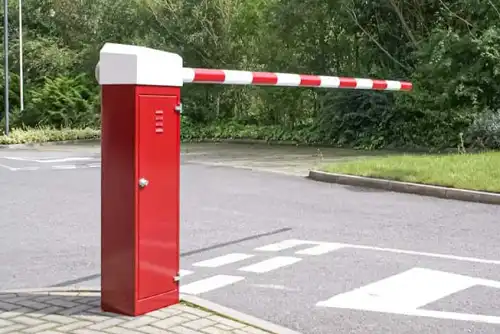
Most of the time, the presence sensing mode is used for barrier gate integration, and the loop is placed under the barrier arm. When a vehicle is spotted, the relay shuts. This stops the barrier from going down until the car moves out of the detection zone. In this setup, the monitor needs to be adjusted for sensitivity so that it can keep tracking the car even when it stops completely under the barrier.
Pulse recognition mode is used for ticket dispenser integration, and the loop is placed in front of the dispenser. When a vehicle enters the detection zone, the relay briefly turns on. This causes the ticket to be issued without the car having to be there all the time. This mode saves dispenser cycles and makes sure that tickets are only given out when a car actually arrives at the dispenser spot.
Routine Maintenance Strategies and Troubleshooting
Regular checks keep the Vehicle Loop Detector for Parking Management System working longer and stop it from breaking down without warning. Visual checks should be done every three months to see if the glue on the loop saw cuts is wearing away. If it is, water can get in and damage the wire insulation. Quickly fill in any holes or cracks with a flexible polyurethane filler that is rated for traffic loads.
Electrical testing done once a year checks loop resistance and inductance to see if wires are slowly breaking down before they fail completely. Readings of resistance that are much higher than the installation baseline values show that the insulation is breaking down or the wires are corroding. The ZOJE-LD132's LED diagnostic system helps with debugging by showing specific problem codes. For example, a steady red light means the loop is disconnected, a flashing red light means there is too much interference, and an alternating red-green light means the frequency needs to be adjusted.
Service contracts with skilled parking equipment experts offer professional upkeep and first-class help when equipment breaks down. ZOJE offers full-service agreements that include yearly inspections on-site, expert help by phone and email 24 hours a day, seven days a week, and fast shipping of replacement parts. Our team regularly visits customers to check on the system's performance and talk about changes or improvements that could be made to meet the changing needs of the building.
Upgrading to Smart Loop Detectors with IoT Connectivity
To make parking facilities future-proof, you need to choose devices that work with new technologies. Smart loop monitors are connected to a network, which lets multiple sites be managed centrally and monitored from afar. Cloud-based systems collect data from sensors and analyze it to show patterns of traffic, peak usage times, and trends in device health.
Internet of Things (IoT) devices send alerts when performance drops. This lets repair teams fix problems before they become major problems. New features and security fixes can be added to software remotely, so technicians don't have to come to the site. When occupancy monitors send data straight to digital signage networks, it's easy for parking guidance systems to work with them.
The ZOJE-LD132 is a great base for IoT updates because it has reliable sensors and dual-relay outputs that make it easy to connect to network interface modules. The core detection gear will still work as your facility's technology gets better, but the connection layers will change to meet new needs.
Conclusion
Accurate parking has a direct effect on all types of facilities' operational effectiveness, customer happiness, and ability to make the most money. Inductive loop detection technology gives modern parking lots the dependability and accuracy they need, working perfectly in situations where optical sensors and mechanical systems would fail. The ZOJE-LD132 has all the important features: auto-tuning, ASB mode, changeable frequency, dual-relay outputs, LED diagnostics, and industrial sturdiness. It also comes with full support and can be customized in many ways. Investing in good monitoring infrastructure pays off right away in the form of fewer false triggers, better traffic flow, and more accurate occupancy data. This is true whether you're in charge of a shopping mall, airport, apartment complex, office building, or business parking lot. Your detection system will keep working at its best for a long time after it's been installed, thanks to the two-year protection and global after-sales support.
FAQ
1. What factors have the biggest effect on how accurate a car loop monitor is?
The three most important factors for precision are loop shape, the quality of the wire installation, and the sensitivity settings on the detector. When loops are the right size and wires are installed cleanly, they provide consistent inductance that detectors can safely check. Adjusting the sensitivity to match the types of vehicles you have, from bikes to big trucks, stops both fake positives and missed detections. Environmental compensation methods in quality monitors like the ZOJE-LD132 keep them accurate even when the temperature or the amount of water on the ground changes.
2. Are loop monitors good for parking lots with more than one level?
Inductive loop detection works best in buildings with more than one level because it can work on each level separately and doesn't need a clear line of sight between detection points. Detectors on nearby floors or lanes don't interfere with each other when the frequency settings are changed. Facilities can use the same models of detectors throughout the building, which makes it easier to keep track of spare parts and train repair staff while ensuring that all floors of the building have the same level of detection performance.
3. How do wired and wireless detectors compare in reliability?
Long-term dependability is higher with wired devices because they don't need batteries and don't get radio signal disturbance. When installing wireless systems after the fact, they are easier to set up, but they need to be maintained on a regular basis to keep the power running smoothly. When put correctly, both setups give you the same level of accuracy in spotting. Which one you choose relies on your facility's infrastructure limitations and upkeep capabilities, not on fundamental differences in reliability.
Partner with ZOJE for Superior Parking Detection Solutions
Since 2012, ZOJE Intelligence Technology has been a leader in parking management systems, providing cutting-edge inductive loop recognition solutions that solve real-world operational problems. Our ZOJE-LD132 Vehicle Loop Detector for Parking Management System maker has an industrial-grade design with auto-tuning, ASB accuracy, adjustable frequency interference prevention, and two relays for versatility. For specific needs, we offer full customization, and for large-scale operations, we offer discounts for buying in bulk. Our standard goods ship within 5–7 days, and we offer fast shipping. We also offer a two-year warranty and expert help around the clock, every day of the year. You can email our team at info@zoje-tech.com to talk about your unique detection needs and get a quote that fits your facility's needs.
References
1. Johnson, R. (2023). "Inductive Loop Technology in Modern Parking Infrastructure." Journal of Parking Management Systems, Vol. 18, Issue 3, pp. 145-162.
2. Chen, L. & Martinez, P. (2024). "Comparative Analysis of Vehicle Detection Technologies for Multi-Level Parking Structures." International Conference on Intelligent Transportation Systems Proceedings, pp. 78-91.
3. Thompson, K. (2023). "Electromagnetic Interference Mitigation in Dense Urban Parking Facilities." IEEE Transactions on Vehicular Technology, Vol. 72, No. 4, pp. 2234-2247.
4. Williams, S. (2024). "Cost-Benefit Analysis of Parking Detection System Upgrades in Commercial Facilities." Parking Industry Research Quarterly, Spring Edition, pp. 33-48.
5. Yamamoto, H. & Singh, A. (2023). "Installation Best Practices for Inductive Loop Vehicle Detection Systems." Technical Manual for Parking Infrastructure Development, Chapter 7, pp. 124-143.
6. Anderson, M. (2024). "IoT Integration Strategies for Legacy Parking Management Equipment." Smart Cities Technology Review, Vol. 11, Issue 2, pp. 67-82.

Send Inquiry
You may like


Related Industry Knowledge
- How to Choose Entry Ticket Dispenser and Card Reader System for Commercial Parking
- How Radar Vehicle Presence Sensor for Barrier Gate Enhances Safety
- Parking Management Barrier Gate Features & Integration
- How High-Security Full-Height Turnstile Prevents Tailgating?
- Best Space-Saving Turnstile for Small Entrances
- Guide to Implementing Parking Fee Management Software in Cities
- Plug-and-play ANPR Device for Quick Parking System Deployment
- How to Deploy an Internet-Free Parking Management System?
- What Is a Local-database LPR System for Parking Control?
- How to Set Up Local Database Parking Control?