
Top Benefits of Unattended Access Control Turnstile
2026-04-27
Today, when site managers look at perimeter security choices, the question quickly changes from whether to automate access control to how to do it best. The best things about unattended access control turnstiles are that they get rid of the need for regular staffing and improve security by using automatic, one-person verification procedures. For safe sites, an Unattended Full-Height Turnstile for Secure Sites works on its own 24 hours a day, 7 days a week, using built-in biometric readers, RFID credentials, or mobile identification to verify each user without the need for on-site staff. These floor-to-ceiling walls stop people from tailgating, cut down on mistakes made by people, and save money in airports, shopping malls, neighborhoods, office buildings, and business parking lots across the United States.
Understanding Unattended Full-Height Turnstiles: What They Are and How They Work
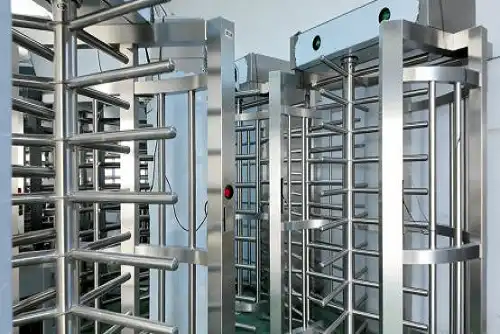
The way companies protect their perimeters has changed a lot since autonomous entry gates came out. Unattended Full-Height Turnstile for Secure Sites rotating mechanisms make a physical barrier that can't be broken through and ensure strict single-file entry rules. This is different from waist-high optical gates that depend on infrared sensors and user compliance.
Core Components and Operational Workflow
The device that turns has three or four carefully designed rotor arms that fit together with a fixed stator body. When a valid ID is shown to the built-in reader, like an RFID card, fingerprint scanner, or mobile app, the control board checks the information very quickly and unlocks the solenoid. The rotor then turns 120 degrees, letting only one person pass through before the lock instantly locks again. This mechanical enforcement gets rid of the weaknesses that come with systems that rely on user agreement or visual tracking.
Modern systems have anti-passback logic to stop people from sharing credentials and advanced devices that can find routes that aren't complete. Microprocessors that are built into the barrier constantly check the angle of rotation to make sure it goes back to its locked position after each approved passage. Real-time event logging records every effort to access a system. This creates audit trails that meet the rules for key infrastructure and data center environments.
Integration Capabilities with Modern Access Technologies
Standardized communication methods make it easy for these self-contained walls to work with almost any physical access control system. Wiegand interfaces work with older card readers, and RS485 and TCP/IP connections let you connect to security control tools used by large businesses. Facility managers can set up who can access what from one place, see what's happening in real time at multiple entry points, and get immediate alerts when security breaches happen.
The freedom also includes the ways of proving who you are. Biometric fingerprint readers with weatherproof housings are used in secret government sites to provide high-security verification. Health security issues at airports and shopping malls can be solved with thermal temperature screening and cameras that can recognize faces. QR code readers can read temporary visitor IDs for both business spaces and home neighborhoods. Because it is flexible, buying teams can make sure that their investments will still work in the future as identification technologies change.
Top 5 Benefits of Using Unattended Full-Height Turnstiles in Secure Sites
Many types of businesses say that their operations run much more smoothly after installing automatic entry barriers. The benefits go beyond just lowering costs; they also include better security, more efficient operations, and better decisions based on data.
Enhanced Security Through Automated Verification
Automated checking gets rid of the mistakes that happen at stages where people are working by hand. People who work in security get tired, get distracted, and are easy to trick with social engineering. An Unattended Full-Height Turnstile for Secure Sites uses the same strict rules to check every access attempt, no matter what time of day it is or what is going on outside. Tailgating is a common way for determined thieves to get into optical turnstile systems. They can closely follow approved users through the detection zone before the barrier re-engages. The physical barrier stops these attempts.
The most common physical bypass efforts are blocked by the anti-climb design that goes up to the roof height. When a forced turn is attempted, tamper sensors pick it up and send out a security warning right away. This multi-layered method makes a hardened perimeter that makes it much harder for people who aren't supposed to be there to get in. This protects valuable assets in office buildings, business parking lots, and residential communities.
Substantial Cost Savings Through Labor Elimination
To staff a single security checkpoint 24 hours a day, seven days a week, you'd need about 4.5 full-time equal jobs, taking into account breaks and time off. At the average price for security guards in the US, this means that each stop will cost between $180,000 and $250,000 a year to staff. Putting in automatic turnstiles gets rid of this ongoing cost and makes security more consistent at the same time.
In addition to saving money on wages, businesses also cut down on the costs of hiring, teaching, supervising, managing benefits, and liability insurance. The two-year warranty and regular maintenance plans make it possible to make correct long-term budget projections. Compared to climate-controlled guard rooms, energy-efficient DC motor drives use a lot less power. When buying teams look at the total cost of ownership over a ten-year period, they usually find that inactive systems pay for themselves in 18 to 24 months.
Seamless Integration with Enterprise Security Ecosystems
These days, access control works like an ecosystem, with different parts that work together. In this architecture, autonomous turnstiles work as smart edge devices that can talk back and forth with central control tools. Through a single screen interface, security leaders can see all entry points at once, no matter if each place uses card readers, biometric scanners, or mobile credentials.
This combination makes it possible for complex security rules to change based on what's happening in real time. With time-based entry limits, permissions are changed immediately based on when people are working. Integration with HR systems takes away passwords right away when a job ends. When you connect to video control tools, you can see that access events have happened. Unattended turnstiles create large amounts of data that are fed into analytics tools that look for trends in usage, find outliers, and improve how the facility works.
Scalability and Flexibility for Diverse Applications
Deployment flexibility takes into account the different needs of different types of facilities. Single-channel layouts work well at office building service doors with little foot traffic. On building sites, dual-channel tandem units can handle a lot of shift changes, processing 40 to 50 people per minute. With modular designs, facilities can grow gradually, protecting the original investments made in capital.
Customization choices work with the limitations of the site without needing completely custom tech. Mounting arrangements can be used for installs both inside and outside. Finishes range from brushed stainless steel for business halls to powder-coated waterproof housings for the edges of parking lots. Customizing hardware and software through OEM and ODM partnerships lets you add in your own identification systems or special reporting needs that are only needed in controlled industries.
Minimized Downtime Through Remote Diagnostics
Service interruptions are much less likely to happen when self-monitoring features are used. Embedded diagnostic devices test power sources, data links, and mechanical parts all the time. When parameters move out of acceptable areas, the system sends out repair alerts before problems happen. With this predictive method, facilities teams can plan service for times when demand is low instead of having to respond to problems that happen out of the blue.
Many problems can be fixed without sending out workers thanks to remote assistance. Changes to the configuration, software updates, and diagnostic tests are all done over safe network links. When on-site service is needed, techs come with detailed system logs that show exactly which part has broken, which cuts down on the average time it takes to fix. The complete support system keeps operations running smoothly, which protects both physical safety and business stability.
Comparing Unattended Full-Height Turnstiles with Alternative Security Solutions
To make smart purchasing choices, you need to know the pros and cons of the different security systems that are out there. There isn't a single best answer for every situation, but Unattended Full-Height Turnstile for Secure Sites automated barriers have a special place in the security environment.
Unattended Turnstiles Versus Manned Security Checkpoints
Staffed gates have been around for a long time because they provide human judgment that can handle strange situations and act quickly to emergencies. Customer service tasks are done by security staff, who can give advice and help that fully automatic systems can't. These benefits come with big long-term costs and make security regulation less consistent.
Automated boundaries provide stability that long shifts of human workers can't match. The actual device stops people from tailgating, and even guards who are paying attention have a hard time stopping them. Full audit logs record every entry event with exact timestamps that can't be achieved with paper logbooks. For places where safety is more important than people, like data centers, utility substations, and limited residential areas, unattended turnstiles offer better protection at a lower lifetime cost.
Full-Height Barriers Versus Optical Turnstile Systems
Optical turnstiles use infrared beam arrays and video analytics to find people who are trying to tailgate without any physical obstacles. They have a sleek look that works well in business offices where looks are more important than security. Processing speeds can reach 30 to 40 people per minute, which is fast enough for high-throughput situations like when airport workers come in.
The biggest problem is that monitoring rather than avoidance is used. Determined thieves can get around optical sensors by closely watching people who are supposed to be there or by taking advantage of sensor blind spots. Full-height mechanical bars physically stop people from going through, even if they don't mean to. Because of this, they are the best choice for perimeters where security can't be compromised, like key infrastructure, drug manufacturing, defense contractors, and other places where rules require physical entry control.
Integrated Access Control Within Comprehensive Security Architecture
Neither turnstile technology nor a single way of identification can provide full security. Physical boundaries, identity verification, video security, intrusion detection, and centralized tracking are all parts of effective perimeter protection. Which parts are chosen relies on how dangerous the threat is, what the rules say, how things work in the business, and how much money is available.
As the actual enforcement layer in this design, full-height turnstiles work very well. Because they work with a variety of identity technologies, security teams can choose the proof methods that are best for each level of risk. When access events are integrated with video control tools, they can be seen. Connecting to intrusion monitoring networks makes sure that when security is breached, everyone works together to fix the problem. This multi-layered method provides defense-in-depth that keeps assets safe while keeping operations running smoothly.
Procurement Considerations for B2B Buyers: What to Know Before Buying
When you do strategic procurement, you have to look at sellers and goods based on more than just the price. Choosing partners who are dedicated to quality, support, and constant innovation is key to long-term security efficiency and operational dependability.
Evaluating Manufacturers and Supply Chain Reliability
Manufacturers with a good reputation show their dedication by having industry qualifications, product portfolios, and clear quality management systems. ISO 9001:2015 certification checks that organized quality methods are in place to make sure that products always work the same way. Design patents and usefulness patents show that companies are continuing to spend in new ideas instead of making more of the same things. Supply chain integrity is improved by open production sites and clear records of where parts come from.
When purchasing an Unattended Full-Height Turnstile for Secure Sites, buying teams should ask for thorough information such as mechanism longevity rates, force resistance testing results, and environmental working ranges. Manufacturers who are ready to let you visit the plant, try samples, and see proof of third-party approval show that they are confident in their goods. This openness is especially important when buying in bulk across various sites, where consistent performance has a direct effect on security.
Customization Options and Project-Specific Requirements
Standard product setups work for most deployment situations, but many facilities need changes to fit their space, their taste in looks, or their specific functional needs. Manufacturers that allow for creative design without charging too much for longer lead times are good partners.
Customizing hardware includes mounting options for uneven surfaces, non-standard lane lengths to allow for transporting tools or materials, and unique finishes that match the standards of architectural design. It is possible to customize software so that it can work with specific access control systems, set up unique security measures like multi-factor authentication, and create personalized screens for reports. Manufacturers with a lot of experience keep files of customization projects that have already been done. This speeds up the development process and lowers the cost of engineering.
Warranty Terms and After-Sales Support Infrastructure
Warranty coverage saves investments in capital against early component failures and flaws in the manufacturing process. Full warranties should cover mechanical parts, computer controls, and hardware for integrating readers for at least two years after installation. Having clear written records of what the guarantee doesn't cover—usually damage caused by vandalism, bad installation, or illegal changes—avoids problems when service is needed.
Long-term operational reliability depends on the framework for after-sales assistance. Manufacturers should offer expert help 24 hours a day, seven days a week through a variety of methods, such as phone, email, and remote desktop support. reaction time promises that are written down, like a 30-minute initial reaction for major system failures, make sure that people are held accountable. Replacement parts are easy to get through area shipping centers, which cuts down on downtime when a part needs to be replaced. Technical teams from the plant visit customers once a year to show that they are committed to business relationships instead of transactional ones.
Pricing Strategies and Total Cost of Ownership Analysis
The purchase price is only one part of the total cost over the life of the product. An in-depth analysis should look at the costs of installation, the amount of energy used, the expected service life, and the value left over after the product has been used up. When you buy in bulk, you can usually get savings that range from 10% to 25%, but it depends on how much you order and how the maker sets their margins.
Rental or lease agreements can help some apps because they save money for key business investments while still giving users access to the latest security technology. Operating leases are one type of flexible financing that can include tools, installation, and servicing as part of a fixed monthly payment. In order to compare bids, procurement teams should set all of the choices to the same amount of time and include estimates of how much the costs will go up for options that require a lot of work.
Best Practices for Installation and Maintenance of Unattended Full-Height Turnstiles
With the right setup and ongoing care, security measures work better and equipment lasts longer. By paying attention to site-specific factors during installation, operational problems can be avoided, and structured upkeep procedures can keep systems running well for decades.
Pre-Installation Site Assessment and Planning
A complete site review that looks at the needs of the physical, electrical, and network equipment is the first step to a successful installation. The mounting surface must provide a stable base that can handle working forces and possible impact loads. Usually, concrete pads that are at least 150 mm thick are enough to meet structural needs. However, if the ground is soft, you may need thicker footings or support.
Electrical service must provide stable power that meets the needs of the tools. Depending on area standards, this power must usually be 110–120VAC or 220-240VAC. Dedicated circuit safety stops annoying trips caused by inrush currents when the motor starts up. Depending on the design of the integration, network access needs may vary. Standalone systems may only need local power, but enterprise-integrated deployments need stable Ethernet connections with the right bandwidth and latency.
Installation Protocols and System Integration
Professional fitting guarantees the best performance and confirms that the protection covers the product. Technicians with a lot of experience follow the manufacturer's instructions for setting up networks, connecting electronics, and putting together machines. When rotor parts are properly aligned, they don't get stuck or wear out too quickly. The right fixing height works for all kinds of users and stops people from trying to get around it.
Pay close attention to Unattended Full-Height Turnstile for Secure Sites communication methods, credential forms, and security policies when integrating with current access control systems. Testing should make sure that all authentication methods work as they should, that the anti-passback code does what it's supposed to do, and that the event logging gets all the data fields that are needed. Working together with network security teams makes sure that setups follow safety rules about logging in with a device, sending encrypted messages, and limiting access.
Preventative Maintenance Schedules and Procedures
Structured care keeps things reliable and makes them last longer. Inspections should be done every three months to make sure that mechanical parts can move easily and don't make any strange noises. When you lubricate bearing surfaces according to the manufacturer's instructions, you stop them from wearing out faster. Keeping optical scanners and card readers clean keeps identification accurate. When electrical connections are checked, weak leads are found before they cause failures to happen from time to time.
As part of maintaining software, firmware patches are applied, which fix security holes and add new features. By looking at the system logs, you can find strange trends that could mean problems are starting to happen. Life safety rules are followed by making sure that emergency release devices are tested. Keeping track of all maintenance tasks provides a service history that helps with fixing problems and making guarantee claims.
Troubleshooting Common Issues and Support Resources
Despite precautions, operating problems do happen sometimes. Setting up clear fixing steps cuts down on downtime and the cost of repairs. Authentication failures because passwords are destroyed or readers don't work right are common problems. Other problems include mechanical binding from foreign objects getting in, and communication problems caused by changes to the network infrastructure.
Manufacturers should give building staff complete repair guides with decision trees that help them find the root causes. With the ability to diagnose systems remotely, factory workers can check on the state of the system and walk local staff through the steps needed to fix it. When on-site help is needed, clear escalation processes and response time commitments make sure the problem is fixed quickly. When compared to general call center support, having access to professional support that knows how to fix things in a way that is specific to the site cuts the mean time to repair by a huge amount.
Conclusion
Using Unattended Full-Height Turnstile for Secure Sites barriers has many strategic benefits, such as improving security, cutting costs, and making operations run more smoothly. These systems enforce single-person entry rules consistently, which stops people from tailgating and saves at least $180,000 a year on labor costs per checkpoint. Biometric identification, mobile credentials, and corporate security systems can all be easily integrated, which allows for centralized control and data-driven optimization. Deployment flexibility lets it be used for a wide range of tasks, from employee entrances in shopping malls to closed areas at airports, from private neighborhood edges to loading docks in office buildings. When procurement teams carefully examine makers based on quality certifications, the ability to customize products, and a full support system, they build long-term relationships that protect both real assets and the continuity of operations.
FAQ
1. How do unattended turnstiles handle power outages or emergency situations?
Industry-standard configurations allow fail-safe operation; if the power goes out, the barrier opens immediately to let people out, making sure that NFPA 101 life safety rules are followed. This keeps people inside the building safe during fire alarms or other situations that need them to leave quickly. If a building needs to be fail-safe and stay locked even if the power goes out, it can choose from battery backup systems or other emergency release devices that are triggered by fire alarms.
2. What distinguishes full-height turnstiles from optical barrier systems?
Physical rotating walls that go from the floor to the roof make it impossible to tailgate, no matter what the user is trying to do or how they are acting. Optical systems use infrared sensors to identify attempts to get through without permission, but they can't directly stop them. Full-height systems work well in high-security settings where safety is more important than looks or speed.
3. Can these systems integrate with existing access control infrastructure?
Modern turnstiles work with common transmission protocols like TCP/IP, Wiegand, and RS485, so they can be connected to almost any entry control system. Different types of authentication technologies are compatible, including RFID proximity cards, biometric fingerprint readers, face recognition cameras, and mobile credential apps. This lets facilities choose the proof methods that work best for their security needs.
Partner with ZOJE for Your Secure Access Control Needs
To keep your building's borders safe, you need more than just tools. You need to work with a maker of Unattended Full-Height Turnstile for Secure Sites who is dedicated to your long-term success. ZOJE Intelligent Technology blends production quality that is ISO 9001:2015 certified with OEM and ODM customization options that can be changed to fit the needs of your project. Our self-operating barriers allow people to pass in 0.5 seconds, which cuts down on waiting in line and enforces strict one-person rules through their anti-tailgating and anti-climb design. Full integration support makes sure that your chosen RFID, biometric, or mobile identification systems can join without any problems. Every installation comes with a two-year guarantee and global technical support available 24 hours a day, seven days a week. You can get help remotely in 30 minutes and get upkeep services for life. Contact our team at info@zoje-tech.com to discuss how ZOJE's proven solutions protect airports, shopping malls, neighborhoods, office buildings, and business parking lots all over the United States. Visit zoje-parking.com to explore detailed specifications and request your customized security assessment.
References
1. Anderson, R. (2019). Physical Security Systems Handbook: The Design and Implementation of Electronic Security Systems. Burlington: Butterworth-Heinemann Security Press.
2. Garcia, M. L. (2018). The Design and Evaluation of Physical Protection Systems, Second Edition. Boston: Industrial Security Publications.
3. Fennelly, L. J. (2020). Effective Physical Security: Design, Equipment, and Operations for Modern Facilities. Cambridge: Access Control Institute Press.
4. Norman, T. L. (2017). Integrated Security Systems Design: Concepts, Specifications, and Implementation. Philadelphia: Electronic Security Media.
5. Purpura, P. P. (2019). Security and Loss Prevention: An Introduction, Seventh Edition. Reston: Facility Protection Press.
6. Stoddart, K. (2018). UK-US Intelligence and the Making of the Special Relationship: Perimeter Security in Critical Infrastructure. Manchester: Infrastructure Protection Studies.

Send Inquiry
You may like

Related Industry Knowledge
- Self Service Kiosk Solutions for Your Business Needs
- What Is Security Anti-Collsion Barrier? Key Features
- Anti-Collision Flap Barrier Turnstile Benefits in Metro
- How Anti-Collision Flap Turnstile Gate Works Safely?
- What Is an LPR Server for 24/7 License Plate Recognition?
- How Space-Saving Turnstile Improves Layout Efficiency?
- Enterprise Parking Solution for High-Volume Commercial Parking
- Plug-and-play ANPR Device for Quick Parking System Deployment
- LPR Camera with Open SDK vs Proprietary SDK: Which One to Choose?
- How to Build an Open-Platform Parking Management System?