
Open API Parking Systems: Building Your Own Integrations
2026-11-18
An open API LPR parking system means you may link license plate recognition technology to your own applications, using published interfaces. Your team writes the business logic. The hardware does plate reading and gate control. You submit orders and receive events, such as plate readings, entries, and exits, instead of constructing cameras and obstacles yourself. This way you’ll save development time, stay visible to consumers, and be able to add hardware kinds without rewriting your platform. This tutorial will show you how the interfaces function, what has to be tested, how to organise the project, and where the ZOJE-LPR216 comes into play.
Why an Open API LPR Parking System Matters
The Cost of Closed Parking Platforms
Closed car parks may typically separate cameras, barrier gates, payment terminals and management software. Each product has its own records, so personnel have to re-key data, reconcile reports by hand, and hunt inconsistencies across systems. A closed vendor may only provide a paid bespoke project (or nothing) if a customer needs a new payment method or a connection to a property-management tool. That constraint is a growth blocker for a software firm since you can’t add locations, regions, or hardware kinds without being at the mercy of another company’s timetable. An open API license plate recognition parking system eliminates most of that friction, since your developers control how data flows between devices and your own apps.
What Open API Means in Practice
Open API is not the same as open-source code. It implies the supplier releases documented interfaces and your developers utilise them with regulated access. Many teams specify these interfaces utilising the OpenAPI Specification, a standard style for defining HTTP APIs that is maintained by the OpenAPI Initiative. Good documentation specifies endpoints, request fields, response codes, and error messages, and matches what the device really delivers. Check this early since a mismatch will bring engineers back to rewrite code. With Open API LPR parking systems, you can combine ERP, CRM, hotel, property-management, payment, and access-control systems into a single source of parking data. You determine which features your customers get to see.
How the Plate-to-Barrier Workflow Runs
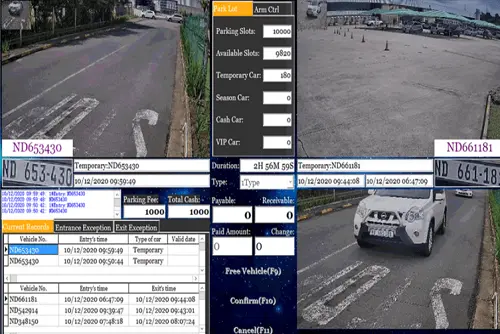
A license plate recognition system integrates the camera, recognition software, barrier gate, sensors, payment tools, and administration platform. When a car approaches, the camera takes a picture of it and scans the plate. The programme verifies access regulations or payment status, and the barrier opens if the vehicle is authorised. Then APIs and webhooks exchange entry, exit, occupancy, payment, alarm, and equipment status information with outside systems. For example, a retail platform may provide a plate number at a shopping centre after a transaction, and without a paper voucher, the departure cost changes. This is how an open API LPR parking system converts one gate into a data source for several business solutions.
Building a Custom Integration for an Open API LPR Parking System
API Functions to Check Before You Commit
When evaluating an open API parking system, begin with the functionalities that your day-to-day operations rely on. Look for vehicle record management, recognition result queries, entrance and exit history search, and authorisation lists for whitelist, blacklist, VIP, and temporary cars. "Session endpoints should provide duration, occupancy, capacity, and overstay across sites. Calls for barrier-control should allow for remote opening, status checks, and fault notifications. Payment endpoints should have price, validation, discounts, receipts, and local gateways. Test webhooks under load. Authentication confirmation. Retry logic. Delivery confirmation. Also, ask about rate limitations, since a limit that works at noon might throttle gates during rush hour.
Defining Requirements and Choosing an Architecture
A good integration is based on documented requirements. List your locations, lanes, traffic volume, vehicle types, accepted payment methods, current business systems, and local laws. Then compare cloud vs. on-premises vs. hybrid vs. edge-first architectures. Cloud administration provides centralised control of several locations, while on-premise configurations keep data nearby. A hybrid architecture that makes lane choices locally and transmits information to the cloud is suitable for busy facilities and shaky networks. Your data model should also account for duplicate readings and low-confidence recognition results so that one car does not cause two sessions. Teams that define these guidelines early will often have less rework throughout testing.
Sandbox, Pilot, and Staged Rollout
Test in stages to limit risk. The sandbox allows developers to contact endpoints and obtain sample events before they interact with actual equipment. Then controlled barrier testing with safety sensors in place. Pilot on one lane or site evaluates entrance, exit, payment, and operator processes with actual traffic. Designing your own camera hardware may take six to twelve months, and connecting final gear via an API often takes a few weeks depending on scope. Expand to other locations after the pilot fulfils your objectives for response speed, accuracy, and uptime.
Security, Uptime, and Accuracy for Open API LPR Parking Systems
Security Controls for Commands and Plate Data
An open API LPR parking system has two sensitive things: orders to open barriers and personal vehicle data. Secure both using token-based authentication (e.g., OAuth 2.0), role-based permissions, HTTPS, request signing, credential rotation, and extensive audit logs. TLS 1.3 (RFC 8446, 2018) secures data in transit. The OWASP API Security Top 10 (2023) places broken object-level authorisation at number one; thus, check that one customer’s token cannot access another customer’s information. From the design stage, apply data minimisation, retention limitations, and encryption to plate pictures, and verify privacy requirements such as GDPR or California's CCPA.
Accuracy Testing Beyond a Headline Number
A single recognition percentage isn’t very informative about your website. Test daylight, night, rain, snow, vehicle speed, and local plate types on the lanes you propose to create. The ZOJE-LPR216 boasts a 99% identification rate and offers license plate recognition for areas all over the globe. We still propose a pilot on your own lanes. Uptime is to be earned equally. Add safety sensors, health monitoring, alarms, and a defined API maintenance strategy that notifies of firmware or interface changes before they go to production. Front-end recognition maintains plate reading active during network delay or an outage, and offline charging is enabled, so prepare how your platform handles late entries.
How Open API LPR Parking Systems Compare With Other Options
Open API LPR parking systems are more flexible for integration and simpler to transfer data than closed platforms, particularly when one project is shared by numerous software suppliers. LPR scans cars without physical tags, unlike RFID, yet RFID may still be useful in regulated environments or as a backup. LPR eliminates consumables, manual validation, and touch points over ticket-based parking. Cloud solutions make it easier to administer several sites; on-premise systems provide more local control. Hybrid architecture merges local lane operation with cloud reporting, and is suited for high-volume facilities, poor networks, or tight data-residency restrictions.
ZOJE-LPR216: Hardware for Your Open API LPR Parking System
What the ZOJE-LPR216 Includes
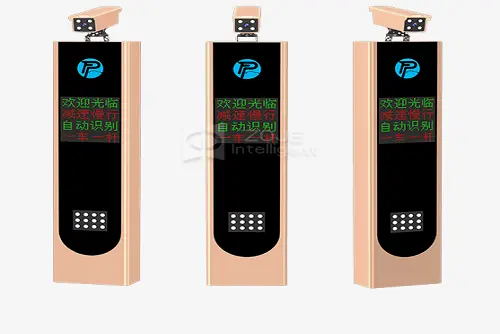
The ZOJE-LPR216 is the hardware of an open API parking system, integrating the license plate recognition camera, LED display, and controller board in one outdoor unit. It offers a lot of hardware and software customisation, and many kinds of secondary development, so your developers are able to adapt it to your platform. Plus, ZOJE enables OEM and ODM projects, so you may offer the solution under your own brand name. The machine can identify cars driving from 0 to 40 km/h (approximately 25 mph) without halting them, recognises over 150 automobile emblems and more than 1,500 types, and differentiates small, medium and big buses and freight trucks for automated charging by vehicle type.
Specifications Developers Ask About
The camera captures 5MP JPEG photos and has a 6mm fixed-aperture lens with operation down to 0.01 Lux and a WDR rating of at least 100 dB. Micro SD (TF) card slot for cards up to 32GB. The LED screen is 256mm×256mm, P4 red and green dual-colour modules; each module is 64×32 dots and displays a QR code with different brightness. The controller board plays spoken messages, e.g., "Temporary vehicle", "Monthly pass vehicle", "Welcome". The housing is IP42 rated according to IEC 60529, which means it is protected against solid objects > 1 mm and against vertically falling water. Up to 100W Power Consumption 336mm x 180mm x 1580mm Approximate Weight 16kg Operating Temperature : -10°C - 60°C Operating Humidity : 5% - 85%
Advantages for Platform Builders
These benefits are especially important to software teams who bundle hardware with a service. The front-end recognises plates on the device; therefore, the read is not dependent on back-end software or network speed. Non-stop entry and departure save time for drivers. The 70-degree wide-angle identification can manage vast roadways, short approach depth, and cars coming from many angles. Image optimisation and automated plate parameter modification may be adapted to front and back illumination, front and rear plate mismatch, rain, and snow. Support for cloud systems and cloud payment. Labour cost is reduced due to minimal maintenance. In all, these features provide your open API LPR parking system a hardware layer optimised for fast gate passing and reduced troubleshooting.
Choosing an Open API LPR Parking System Supplier
How to Evaluate an Open API Parking System Supplier
Don’t just compare camera features and pricing. Enquire about API docs, sandbox access, supported protocols, rate limitations, version policies, SDKs, and assistance with integration. Make sure it works with the existing barriers, sensors, payment terminals, and access-control systems. Request project-specific statistics on recognition, lane conditions, throughput, adverse weather, and manual exception handling. Total Cost of Ownership includes licenses, cloud services, customisation, installation, training, and support. Then review the business background. Hong Kong ZOJE Intelligent Technology Co., Ltd. was founded in 2012 in Shenzhen. ISO 9001:2015 quality management. 2-year guarantee. 24/7 technical assistance. 5-7 days delivery for regular goods. 10-15 days delivery for customised products.
Practical Integration Scenarios
Shopping malls have linked parking validation to loyalty programmes, mobile payments, tenant systems and occupancy displays. Airports need high throughput, pre-booked parking, zone management and central revenue visibility. Residential communities connect resident cars and guest rights to property-management software. Offices handle workers, renters, contractors, and reserved space. Hotels link parking to visitor bookings, valet service, and free stays. If you’re running a SaaS platform, an open API LPR parking system enables you to service these clients with one integration. ZOJE’s OEM and ODM assistance includes branding and hardware upgrades for region-specific or white-label goods.
Phased Rollout and Expected Business Value
Begin with discovery: site circumstances, traffic flow, current equipment, network architecture, API requirements, privacy, and a rough bill of materials. Run a pilot on a single site or lane and monitor reaction time, recognition accuracy, barrier success, uptime, exceptions, and human intervention. Tune . . Copy default config to other places... Monitor centrally . The anticipated advantages include reduced ticket prices, shorter lineups, improved space management, more transparent revenue tracking, and less paperwork. For a platform provider, a well-run open API LPR parking system also adds a hardware offering to your software subscription, expanding the variety of products you sell to your current client base.
Conclusion
An open API LPR parking system allows software businesses a specified means to link recognition gear to their own systems. Instead of segregated records and laborious reconciliation, there is shared data. The paper indicated that successes rely on explicit API functions, early requirement design, a sandbox and pilot, robust security controls, and accuracy testing on actual lanes. Open design is more flexible than closed platforms, RFID, and ticket systems. Cloud, on-premise, and hybrid options still rely on connectivity and data regulations. The ZOJE-LPR216 displays the hardware layer of front-end recognition, offline billing, customisation, and OEM or ODM support. Check supplier paperwork, rate restrictions, version policy, and overall cost, then roll out in stages to keep risk low and outcomes demonstrable.
FAQ
1. Is an open API LPR parking system the same as open-source software?
No. Open API means the supplier publishes documented interfaces so your software can send commands and receive data under controlled access. It does not mean the source code is public. Ask each supplier what its license allows.
2. Can the ZOJE-LPR216 work during a network outage?
Yes. Front-end recognition keeps plate reading active during network delay or offline use, and the unit supports offline billing. Your platform should accept records that arrive after the connection returns, so design for late data.
3. Does ZOJE support custom development?
Yes. ZOJE supports hardware and software customization, secondary development, OEM, and ODM. Share your API needs, target regions, and branding plans, and our engineers will confirm the scope with you.
4. What should I prepare before asking for a quote?
Prepare your location, lane count, traffic volume, existing equipment, required integrations, deployment preference, local plate formats, and schedule. These details let us recommend compatible hardware and documentation.
Talk to ZOJE About Your Open API LPR Parking System Project
Ready to plan your integration? Send your site details, lane count, and API requirements to info@zoje-tech.com, and our team will recommend compatible hardware and next steps. As an open API LPR parking system manufacturer, ZOJE offers customization, OEM and ODM support, a two-year warranty, and 24/7 technical service.
References
1. OpenAPI Initiative, OpenAPI Specification v3.1.0, 2021.
2. OWASP Foundation, OWASP API Security Top 10, 2023.
3. Internet Engineering Task Force, RFC 8446: The Transport Layer Security (TLS) Protocol Version 1.3, 2018.
4. International Electrotechnical Commission, IEC 60529: Degrees of Protection Provided by Enclosures (IP Code), 2013.
5. European Union, General Data Protection Regulation (Regulation (EU) 2016/679), 2016.
6. International Organization for Standardization, ISO 9001:2015 Quality Management Systems — Requirements, 2015.

Send Inquiry
You may like