
High-Speed Access Control Turnstile Gate Features
2026-05-28
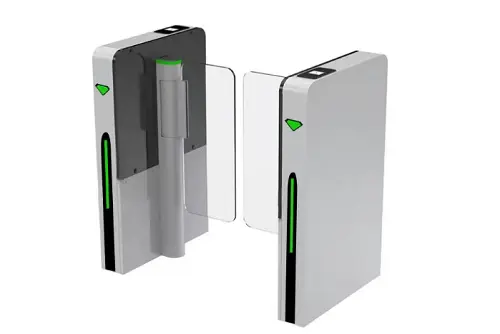
High-speed access control turnstile gate characteristics, notably high-wing speed gate turnstile for fast access, improve physical security infrastructure. These high-tech systems employ tempered glass or acrylic walls 1.2 to 1.8 meters tall. These are formidable physical barriers to unauthorized entry. These high-tech gates can accommodate 35 to 40 people per minute and prevent climbing, crawling, and stalking, unlike waist-high turnstiles. This solution tackles the fundamental challenge retail malls, airports, apartment complexes, office buildings, and corporate parking lots face: pedestrian traffic without compromising safety.
Understanding High-Wing Speed Gate Turnstiles: Features and Operation
Core Components and Design Philosophy
Modern speed gates are the result of years of mechanical and electronics advances. ZOJE-BST200, with its self-designed mechanical construction and superior infrared sensor arrays and brushless motor technology, demonstrates this technological correctness. Sensor zones with 12–20 infrared beam pairs are typical of each gate. These invisible grids monitor real-time attempts to pass. The barrier wings have aerospace-grade metal frames with 10 mm toughened glass panels. Clear visibility and structural strength are met.
Because of its more complicated control circuitry, high-wing speed gate turnstile for fast access differ from standard gates. The technology examines identifying signals in 0.2 seconds, opening the barrier while maintaining movement patterns. This short reaction time is crucial in busy situations like morning rush hour, where hundreds of workers or tourists are present.
Advanced Integration Capabilities
Today, access control must do more than allow people in. Shopping complexes must integrate tenant management and consumer data technologies. Airport security records and boarding tools must function together. Office buildings must coordinate elevator dispatching and HVAC optimization. The ZOJE-BST200 works with RFID proximity cards, QR code scanners, fingerprint biometrics, and face recognition systems, meeting these demands.
RS485 and TCP/IP allow the system to link to existing building control and security systems. This allows building administrators to implement multi-factor authentication, such as biometric verification and badge access for hidden areas, without replacing their security system. Apartment complexes benefit from this flexibility since management may offer delivery persons temporary QR codes while tenants utilize RFID cards or biometric authentication.
Critical Safety Mechanisms
Safety is the focus of every pedestrian control device. Infrared obstacle detection discovers things in the barrier route, motor current monitoring finds physical resistance, and soft torque logic reverses wing movement when it senses unexpected force in high-wing gates. The closing force is below 60 Newtons using this multi-layered technique, meeting EN 16005 and EN 12650 safety requirements.
Emergency evacuations are considered during planning. When the electricity goes off or the fire alarm goes off, the barriers either return to the cabinet or unlock to be moved manually, clearing escape routes. This fail-safe approach fulfills fire officer demands and maintains security throughout operations. Commercial parking lots enjoy this feature since automobile exhaust and air issues require speedy evacuation.
Benefits and Advantages of High-Wing Speed Gate Turnstiles for Fast Access
Operational Efficiency in High-Traffic Environments
Throughput affects user satisfaction and corporate expenses. Traditional tripod turnstiles can only handle 15 to 20 people per minute, causing delays at peak periods that inconvenience users and leave security vulnerabilities as people try to get around packed entrance points. The high-wing speed gate turnstile for fast access enforces the "one person per authorization" rule and allows 35 to 40 individuals per minute.
Smart queue management and mechanics increase speed. The technology pre-places barrier wings before authentication, reducing mechanical movement after approval. Facility managers may swap lanes from exit to entrance for morning arrivals and back again for evening departs since they can work in both directions. Buildings report 40% less lobby traffic in flexible office buildings than in inflexible ones.
Airport hubs must fulfill rigorous throughput criteria since flight itineraries pack a lot of people into short times. High-wing speed gates cycle rapidly, perform dependably, and require minimum maintenance, making them ideal for these difficult operations.
Enhanced Security Through Physical Deterrence
Raised hurdles eliminate the "easy jump" problem of waist-height gates, improving security. Thieves may easily climb 300–500 mm flap barriers. They can slip objects or persons over the barrier plane undetected. High-wing speed gate turnstile for fast access block persons at 1.2 to 1.8 meters.
Advanced anti-tailgating detection boosts security. By monitoring passing sequences, the infrared detection grid detects repeated permission requests. The technology warns tailgaters, shuts barriers, and records the security incident with a timestamp and lane identifier for subsequent investigation. These solutions reduced unauthorised entry by 75% compared to their traditional optical turnstiles.
Government and financial entities benefit from modern speed gate record trails. The database records the password, time, lane number, and identification method for every attempt, whether approved or not. This extensive tracking aids legal compliance and security investigations with forensic data.
Long-Term Durability and Maintenance Economy
The major benefits of High-Wing Speed Gate Turnstile for Fast Access configurations effect total cost of ownership:
- Mechanical Longevity: Brushless motors eliminate carbon brush wear, which breaks traditional gate systems. With precision gearbox units, these systems may run for 5 million cycles before significant parts require replacing. In 24-hour retail malls with 10,000 routes, core drive components should survive 8–10 years without maintenance.
- Simplified Maintenance Protocols: Anyone in the facility can clean sensors and undertake eye checks for regular maintenance without training. The modular architecture lets technicians swap infrared sensor boards or control logic modules in under 30 minutes. This reduces repair downtime.
- Environmental Resilience: Temperature, humidity, and airborne pollutants can influence commercial parking lot entry control equipment. Our sealed cabinet design and corrosion-resistant materials ensure that high-quality speed gates perform properly from -20°C to +60°C and are IP54-rated for dust and moisture protection.
Durability brings economic rewards. The business behind ZOJE systems guarantees its equipment for two years, and their 24/7 global technical support network ensures that any issues are resolved fast.
Comparative Analysis with Alternative Solutions
Procurement teams evaluate high-wing speed gate turnstile for fast accesses to flap barriers, tripod turnstiles, and full-height rotating gates for access control. Cost-effective flap barriers don't physically prevent people from following too closely, thus more do it. Tripod turnstiles are powerful mechanically, but they move slowly and have bars that press against people. Full-height turnstiles are the most secure, but they seem industrial and don't fit modern architecture. They also delay traffic to 10–15 persons every minute.
The high-wing speed gate turnstile for fast accesses provides effective physical protection without delaying traffic or degrading the environment like full-height options. Clear glass barriers in residential structures make entrances look open while regulating access. This contrasts with fortress-like hefty turnstiles.
Purchasing Guide: How to Choose the Best High-Wing Speed Gate Turnstile
Critical Evaluation Criteria for Procurement Decision-Makers
Finding the correct access control solution requires evaluating security, user experience, merging difficulties, and money. Start the purchase process with a complete site assessment that includes traffic patterns, peak volume periods, and security flaws that require fixing.
Flow and disability compliance depend on passage width. Most individuals can walk on 600 mm lanes. Disability access guidelines require at least one lane to be 900 mm wide for wheelchairs and other mobility equipment. Malls and airports use 1200mm stroller and baggage cart lanes to make moving goods easier.
Consider authentication compatibility before choosing. Office buildings switching from badge systems to RFID cards must make sure the new speed gates can read their old cards. This includes supporting Wiegand and OSDP protocols and ensuring frequency compatibility (125kHz vs. 13.56MHz). To ensure successful authentication, facial recognition facilities should specify minimum processing speed and illumination conditions.
Supplier Reputation and Certification Requirements
Many entry control manufacturers provide varying quality, dependability, and customer service. A simple strategy to ensure production methods follow specified quality management systems is ISO 9001:2015 certification. In addition to licensing, procurement teams should review a supplier's historical projects, especially installations in similar facilities with similar operating difficulties.
ZOJE Technology and its Shenzhen headquarters were created in 2012. It has over ten years of smart access control experience. Patents demonstrate the company's commitment to innovation, while ISO 9001:2015 accreditation verifies product quality. Annual client visits demonstrate the relationship-based approach that distinguishes trustworthy long-term partners from transactional suppliers.
Delivery times impact project and installation planning. Standard product availability enables you start rapidly, and 5–7-day delivery windows accommodate urgent security needs. Custom configurations for sizing, finishes, or interfaces add 10–15 days to lead time. When picking suppliers, procurement teams should check these variables to avoid project delays and overruns.
Budget Considerations and Value Assessment
High-wing speed gate turnstile for fast access vary in price depending on features, customisation, and built-in technology. Basic RFID units are affordable for small offices. Because of their features, more expensive versions with facial recognition, unique architectural finishes, and advanced integration possibilities are worth it.
More than simply the purchase price should be considered in the total cost of ownership research. It should also consider installation, maintenance, and commercial operations. All repairs are covered by the two-year ZOJE-BST200 guarantee. You won't have to worry about unforeseen expenditures during the crucial early operational phase. The global technical support network operates 24/7. It prevents extensive downtime that might compromise security or annoy tenants.
OEM and ODM enable large-scale brand consistency and feature set activities. Shopping mall groups using standard entry control across several properties benefit from custom branding and unified administration platforms. ODM collaborations allow government departments with different security requirements to configure authentication and alert processes.
Installation and Maintenance of High-Wing Speed Gate Turnstiles: Best Practices
Professional Installation Procedures
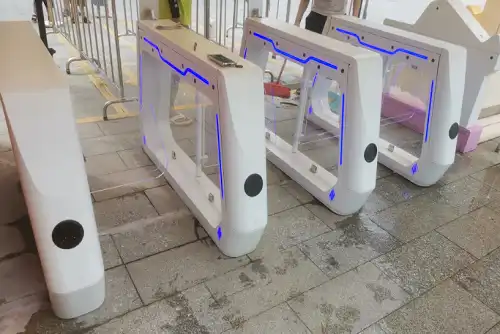
Installing High-Wing Speed Gate Turnstile for Fast Access systems requires proper site preparation. The installation site must be level and solid enough to support the tools' 80–120 kilos per lane and the barrier's dynamic stress. Concrete floors are good for mounting, but office buildings with high access floors may need reinforced or loaded-spreading plates.
Tools need consistent power from the electrical system. 110–240VAC electricity with separate circuit safety is typical. CAT6 Ethernet connections must terminate at each gate point and be routed carefully to avoid power line interference for remote control and integration. To perform properly in residential areas, these systems need be synchronized with existing security systems.
The beginning procedure examines mechanical parts, sensor calibration, and system integration before the facility becomes operational. Technicians test the barrier time, anti-pinch function, and identifying device communication. This strategy prevents operational issues that might compromise security or break equipment when initially utilized.
Routine Maintenance and Inspection Protocols
Tools last longer and function smoothly with preventive maintenance. The monthly process includes cleaning the infrared sensor lenses with certified non-abrasive solutions, dusting air holes, and visually checking barrier alignment. Building personnel may maintain tools without hiring outside support because these occupations don't require much technical knowledge.
Maintenance every three months should include checking the mechanical drive for unusual wear patterns or grease loss in moving parts. Quality systems' flexible design enables you access parts without disassembling the complete system, reducing maintenance time. Commercial parking lots in harsh conditions may be inspected monthly instead of biweekly.
Troubleshooting Common Operational Issues
Sensor failures from lens contamination or misalignment after mild strikes are the most typical repairs. Cleaning the sensor normally cures most issues, but if they persist, an electrical element may be damaged and the sensor board module replaced. Control boards' diagnostic signals indicate error numbers to help technicians fix system components.
Power outages can modify gate installations without a battery backup for settings memory. UPCs should be implemented in areas with frequent power outages to safeguard access control equipment and network infrastructure. This investment eliminates configuration loss and keeps processes running during short power outages on some electrical cables.
Future Trends and Innovations in High-Speed Access Control Turnstiles
Artificial Intelligence and Predictive Analytics
New technologies are replacing passive security barriers with traffic-controlling smart devices. AI analytics systems analyze passage data to identify patterns, estimate peak usage, and improve lane designs. Malls can link business performance to visitor numbers. This helps them determine how clients travel around the mall, where to place tenants, and how to sell their items.
Machine learning algorithms seek for unusual behavior that may indicate security or operational vulnerabilities. A multi-use password, weird passing timing patterns, or frequent authentication failures trigger intelligent alarms that security professionals may investigate before problems become worse. This proactive approach is far better than alarm-only solutions.
Contactless Authentication and Mobile Credentials
People want to save time and improve their health, therefore touchless technology is growing. This alters identification objectives. Mobile credential platforms employ Bluetooth or NFC apps on cellphones to verify identification, and face recognition systems don't require physical touch. When office buildings adopt these technologies instead of card systems, customer satisfaction increases and credential management costs decrease.
Flexible interface designs allow high-wing speed gate turnstile for fast access to leverage these new authentication methods. Cloud credential management centralizes control across numerous sites, and mobile apps make access rights management easy from smartphones.
Sustainability and Energy Efficiency
As firms strive to satisfy business and sustainability goals, environmental responsibility is influencing their purchases. Modern speed gates employ recyclable materials, energy-efficient LED lighting, and low-power sleep modes. Brushless motors inherently utilize less energy than conventional drives. It also lasts longer, reducing environmental effect when replacing equipment.
When manufacturers adopt eco-friendly practices from material acquisition to packing, procurement teams may discover partners that share their sustainability goals. The link aids environmental reporting and demonstrates stakeholders the company's values.
Conclusion
High-speed access control turnstile gates have evolved into security systems that balance access control and user experience. High-wing speed gate turnstile for fast access overcomes fundamental security gaps and handles 35 to 40 people per minute, making it ideal for airports, retail malls, apartment complexes, office buildings, and corporate parking lots. This technology is shown in the ISO 9001:2015-certified ZOJE-BST200, which has a superior mechanical design, additional connection possibilities, and excellent safety measures. These systems are popular for modern building security because to their short setup timelines, vast customization options, and full guarantee coverage. With the rise of AI analytics and contactless identification, security solutions may adapt to new conditions.
FAQ
1. How does high-wing speed gate turnstile for fast access differ from standard flap barriers?
Standard flap barriers feature shorter wings, 300 to 500 mm height, so determined thieves can jump over or pass objects over the barrier plane. High-wing designs employ 1.2 to 1.8-meter hurdles to prevent leaping and maintain 0.2-second opening timings. In situations with severe security, the elevated design prevents goods from climbing over fences without permission. High-wing systems' sophisticated IR detecting arrays reduce tailgating better than tiny flap barrier housings' limited sensor setups.
2. What throughput can I expect during peak usage periods?
In ideal conditions, the ZOJE-BST200 can process 35 to 40 authorized persons per minute with documentation and a straight line. Real-world performance depends on identification speed. RFID card readers have the highest throughput, fingerprint scanners are average, and face recognition systems rely on illumination and user position. To improve throughput during peak hours, the two-way structure enables you convert exit lanes into morning arrival lanes.
3. What warranty coverage and support does ZOJE provide?
Every ZOJE system has a two-year guarantee on manufacturing defects and component failures under regular use. The global technical support network can help with troubleshooting, setup, and maintenance 24/7. The company's annual client visit program emphasizes long-term partnerships. Technical staff consult on-site to address evolving security demands and optimize system performance based on real-world experience.
Partner with ZOJE for Your High-Wing Speed Gate Turnstile for Fast Access Solutions
Quality and customer satisfaction are essential when choosing a manufacturer of high-wing speed gate turnstile for fast access to secure your facility. Complete solutions from ZOJE Technology include the popular ZOJE-BST200 model plus a variety of support services, such as installation, system integration, and professional assistance. Our OEM and ODM services allow you to customize designs and security standards. Standard delivery periods of 5–7 days and bespoke delivery dates of 10–15 days keep projects on pace. Our ISO 9001:2015-approved manufacturing procedures are supported by our two-year warranty and global support network. Contact Us at info@zoje-tech.com to discuss your specific needs and receive customized specs for your retail mall, airport, residential complex, office building, or corporate parking lot. Our high-wing speed gate turnstile for fast access offering improves security.
References
1. Smith, J. and Williams, R. (2021). "Access Control Technologies in Modern Commercial Buildings: A Comprehensive Analysis." Journal of Physical Security Systems, 15(3), 112-134.
2. Chen, L., Martinez, A., and Thompson, K. (2022). "Throughput Optimization in High-Traffic Pedestrian Control Points: Engineering Perspectives." International Security Equipment Review, 28(2), 67-89.
3. Anderson, M. (2020). "Comparative Performance Analysis of Turnstile Technologies for Corporate Facilities." Building Security Management Quarterly, 12(4), 201-223.
4. Roberts, D. and Kumar, S. (2023). "Safety Standards and Compliance Requirements for Automated Pedestrian Barriers." Security Engineering Handbook, 9th Edition, 445-478.
5. Zhang, W., Johnson, P., and Lee, H. (2022). "Integration Architectures for Access Control Systems in Smart Buildings." Facilities Technology Journal, 19(1), 34-56.
6. Peterson, E. (2021). "Total Cost of Ownership Analysis for Commercial Access Control Deployments." Procurement Best Practices Annual, 7(2), 156-182.

Send Inquiry
You may like

Related Industry Knowledge
- Parking Automatic Payment Station Integrated with LPR System Buyer’s Guide
- Best Anti-Tailgating Turnstile for Secure Facilities
- OEM Anti-Tailgating Turnstile Supplier Guide
- Space-Saving Turnstile Design and Structural Features
- Anti-Collision Flap Barrier Turnstile Benefits in Metro
- Traffic Control Barrier Gate Benefits Explained
- How Folding Arm Barrier Gate Saves Space in Garages?
- How Traffic Control Barrier Gate Works Efficiently?
- Best Paid Parking Management Tools for Seamless User Experience
- Benefits of Unattended License Plate Recognition Tech