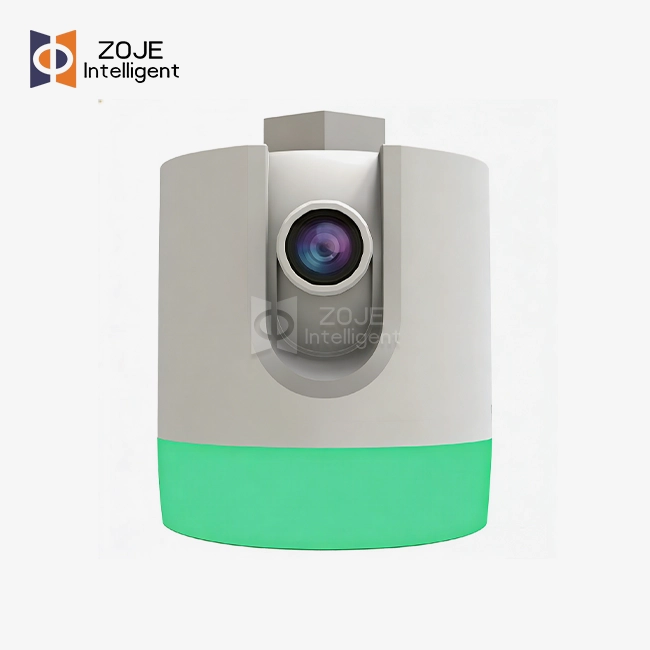
Video-Based Parking Space Detector
2.32-bit ARM processor.Industrial-grade stable operation
3.Fast data transmission.Instant server sync
4.Anti-interference tested.All-weather reliability
5.Software-controlled status light.Clear occupancy indication
6.Plug-and-play.Quick installation
7.Flexible expansion.Upgrade-compatible
8.24/7 tech support and service

- Face to Face Discussion
- Quality Assurance
- 24/7 Customer Service
Product Introduction
Video-Based Parking Space Detector for Smart Parking Guidance Systems — Precision Detection with LPR Intelligence
The ZOJE-TB101 runs on an ARM-Linux platform. One unit reads IC, ID, Bluetooth, and UHF tags. Got a Video-Based Parking Space Detector in your PARCS setup already? Then the TB101 can work as the entry terminal. Data moves from there to the upstream management software. TCP/IP or RS485 handles the link. IP54 is the standard housing protection. The running temperature range is -40℃ to +80℃. System integrators can order OEM and ODM configurations.
What Is an Entry Ticket Dispenser and Card Reader System?
This terminal goes in the entry lanes of a controlled parking facility. It is the main interface to the Parking Access and Revenue Control System (PARCS).
It handles two core functions. First, it dispenses thermal paper tickets embedded with encrypted barcodes or QR codes for casual visitors. Second, it authenticates permanent credentials — RFID cards, IC cards, or long-range UHF tags — for contract parkers.
Each entry takes less time when check-in is automated. That load no longer falls on guard booths. An electronic timestamp is created for every vehicle entry. Audits are possible on that record, so duration billing stays accurate and disputes get settled more easily.
Better-equipped models do more. The ZOJE-TB101 is one of them, and it acts as an edge computing node. Entry logic lives on the device itself. Central server offline? The device keeps working.
Key Technical Specifications
| Parameter | Specification |
|---|---|
| Camera | |
| Lens | 2.8mm standard, 4.0mm optional |
| Pixels | 4MP (4,000,000) |
| Maximum Resolution | 2560×1440 |
| Minimum Illumination | 2LUX |
| Electronic Shutter | 10-100ms |
| Processing | |
| Noise Reduction | 2D/3D support |
| White Balance | Automatic |
| Camera Angle | -20° to -40° rotation |
| Recognition Speed | <3 seconds |
| Accuracy Rate | ≥98% |
| Connectivity | |
| Network Interface | 2×10/100Mbps RJ45 |
| RS485 | 1 channel |
| Built-in Bluetooth | Supported |
| Power & Environment | |
| DC Power Supply | 12V/1A standard, 9-36V range |
| Power Consumption | 3W (3-space), 6W (6-space) |
| Operating Temperature | -20°C to 60°C |
| Humidity | 10%-95% (no condensation) |
| Physical | |
| Dimensions | Ø101mm×100mm |
| Indicator Colors | 7 colors supported |
| External Indicators | 3-way LED support |
Core Product Features
Multi-Recognition Technology
The ZOJE-TB101 reads IC cards, ID cards, Bluetooth credentials, and UHF long-range tags within a single unit. UHF detection operates at a range of 6–10 meters, supporting hands-free entry for residents or frequent parkers without requiring the driver to stop at the terminal.
ARM-Linux Edge Processing
The ARM-Linux architecture runs real-time task management on the spot. Transaction logs move to onboard NVRAM or to SD card memory whenever the network drops. Once the link returns, the server gets that cached data on its own. Nothing in the transaction records is lost while the outage lasts.
HD Screen and Video Intercom
An HD display is where drivers do their work. Ticket status shows up there, along with prompts and on-screen instructions. Should the need come up, operators talk to the driver straight through the built-in video intercom. Airports make good use of this. Mixed-use towers do too, and so do gated communities.
I/O Ports for Video-Based Parking Space Detector and System Integration
The ZOJE-TB101 comes with several I/O ports. LPR cameras, barrier gates, payment stations, and third-party access control panels can all hook up to it through standard Wiegand or RS485 interfaces. Most PARCS setups already in place will work with the terminal.
Industrial-Grade Housing
SUS304 stainless steel is one option for the housing. The other is cold-rolled steel with a powder coating. That coat fights corrosion when the unit sits outdoors. Heaters and fans inside the unit hold the temperature steady. They stop condensation from forming as well. Moisture is carried away from the electronics by water channels in the chassis.
Quality Control
products from ZOJE come out of quality management processes that meet ISO 9001:2015. Before any ZOJE-TB101 leaves the line, it goes through testing in set stages.
- MCBF Testing: Every printing and cutting module gets a run of at least 1.5 million cycles. No jam happens in that run. No motor failure either.
- Environmental Chamber Testing: Heat and cold cycle each unit from -35℃ up to +75℃. Humidity is held at 95% and stays non-condensing the whole time. The PCB conformal coating is what this test checks. How the lubricant holds up also shows in the results.
- IP Verification: Dust chamber runs and water spray runs back up IP54 or IP65 compliance.
- EMC Testing: Barrier gate motors and ground loops can cause interference. The card reader module is shielded from both. That keeps read-range loss small.
- Barcode Print Clarity: PCS, the print contrast signal, gets checked. That check confirms a scanner can still read the barcode under standard conditions.

Application Scenarios for Video-Based Parking Space Detector
Commercial Shopping Centers
Some sites handle a lot of vehicles every day. A unit there has to keep running through a continuous duty cycle. Every ticket dispensed carries its own 1D or 2D barcode. That code talks to retail validation servers. At the payment stations the parking discount is then applied on its own.
Buildings That Mix Homes and Offices
Tenants get in every day with a monthly RFID pass. Visitors and delivery drivers take a ticket from the dispenser instead. Nobody has to reach for anything with the UHF long-range reader. Reading distance goes out to 10 meters. Cars and vans are a heavy metal mass, and shielding keeps their interference away.
Airports and Transport Infrastructure
Sites running around the clock can pair the ZOJE-TB101 with LPR cameras for two-factor authentication. Every ticket the machine dispenses is tied to a digital plate record. Redundancy comes from two ticket roll inputs, and that keeps downtime low. Outdoor setups at tarmac level see big temperature swings, which an operating range of -40℃ to +80℃ covers.

Customization and OEM/ODM Services
You can set up the ZOJE-TB101 to match your project. The engineering team takes care of changes to hardware and software. Local language support and your own branding are part of that work. Protocol integration and special I/O setups fall under it too.
We work with parking system integrators and distributors through OEM and ODM cooperation. Standard Video-Based Parking Space Detector products ship in 5 to 7 days. Most custom setups need 10 to 15 days. Shipping by sea or air is possible under DDU or DDP terms.

Frequently Asked Questions
Q: What happens if the central server goes offline?
A: A dropped link does not stop the ZOJE-TB101. It switches to offline mode by itself. Entry timestamps are written to local NVRAM or to the SD card by the onboard controller. Ticket IDs and card logs land in that same memory. Once the connection returns, the stored batch reaches the server. Nothing is lost from that offline stretch, and the transaction records stay.
Q: What upkeep steps keep tickets from jamming?
A: Every 3 to 5 rolls, clean the thermal print head with isopropyl alcohol. That lifts paper dust and sticky adhesive residue. Look for debris around the cutting blade now and then. Jams often start when a ticket gets pulled out too early. The retractor mechanism makes that less likely.
Q: Can the system run in damp or humid weather?
A: Yes. Heaters and fans sit inside the cabinet. They keep the temperature steady and cut down on condensation. Channels in the chassis let water drain away from the electronics. The housing meets IP54 as standard. Tougher outdoor sites can get IP65.
Q: Can the card reader work with access control systems from other vendors?
A: Wiegand 26/34-bit protocol is supported by the reader. Most third-party access control panels connect to it directly, thanks to that. Do you use proprietary encrypted credentials, such as HID iClass SE or MIFARE DESFire EV2? Then during procurement, check two things: the encryption key compatibility and the reader firmware version.
Q: How does the system fit in with License Plate Recognition (LPR)?
A: The LPR camera does the main release job in a hybrid setup. Once it reads the plate, the barrier lifts on its own. Dirt or an obstruction can make a plate unreadable. When that happens, the driver goes to the entry terminal and gets a physical ticket. That ticket is tied to the digital plate record and serves as a backup reference.
Q: How many tickets fit on a single roll, and how often do you have to swap it out?
A: One paper roll holds between 2,000 and 5,000 tickets. The exact number depends on the setup you pick. Take a site that serves 1,000 vehicles a day. A full roll usually lasts 2–5 days. Once it runs out, you change it. No special tools are needed for the swap. The modular design makes the job easy.
Contact Us
Send your Video-Based Parking Space Detector project requirements or quote requests to info@zoje-tech.com. We support inquiries from system integrators, distributors, and facility operators worldwide.
Send Inquiry
You may like