
Why Entry Ticket Dispenser and Card Reader System Is Essential for Smart Parking
2026-07-09
Modern parking lots are under more and more pressure to provide faster service, better security, and smoother experiences for customers. An Entry Ticket Dispenser and Card Reader System solves these problems by automatically letting vehicles in at entry points, getting rid of the need for lots of people to hand out tickets, and making sure that all credentials are verified correctly. This high-tech electromechanical system changes the way parking works by combining thermal ticket printing, RFID card tracking, and real-time data syncing. Whether you're in charge of a busy mall, a safe office building, or a huge airport, automated entry systems cut transaction times to less than three seconds per car and collect important revenue data. When procurement workers know why these systems are so important, they can make choices that are in line with both short-term goals and long-term strategic plans.
Understanding Entry Ticket Dispenser and Card Reader Systems in Smart Parking
What Makes These Systems the Backbone of Modern Parking Infrastructure
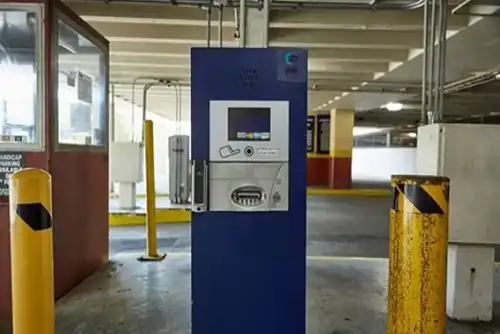
Drivers and Parking Access and Revenue Control Systems (PARCS) mostly talk to each other through Entry Ticket Dispenser and Card Reader Systems. The dispenser part gives out thermal paper tickets with barcodes or QR codes to casual guests. For contract parkers and monthly pass users, the built-in card reader verifies RFID proximity cards, IC cards, Bluetooth credentials, or UHF tags. These two features make sure that facilities can handle a wide range of users without slowing down or risking security. The system works as an edge computing server, handling authentication code locally even when the network goes down. This keeps operations running smoothly and makes sure that services are always available.
Core Technologies Driving Automated Access Control
Thermal printing is still the usual way to give out tickets because it works quickly and reliably. Industrial-grade auto-cutters in high-performance printers can cut more than one million times. They can print at speeds of up to 250 mm per second. Card reader technology has improved to handle more than one frequency: 125kHz for EM and HID cards, 13.56MHz for Mifare and Desfire cards, and 860-960MHz UHF for identifying vehicles over a long distance. The ZOJE-TB101 is an example of this multi-recognition method because it supports IC, ID, Bluetooth, and UHF standards all at the same time. This means that facility managers can use the best type of credential for each type of user without any hardware limits.
Integration Capabilities with Smart Parking Ecosystems
Through normal TCP/IP networking and RS485 peripheral links, modern access control terminals work with larger parking management platforms without any problems. This connection lets data be synced with central computers in real time, store prices to be automatically checked in shopping malls, and systems for recognizing license plates (LPR) to work together for better security. When combined with mobile apps and IoT platforms, these systems allow for tracking from afar, repair alerts based on what the system is likely to need, and detailed analytics dashboards. Advanced models like the ZOJE-TB101 use the ARM-Linux architecture, which gives them the processing power they need to make decisions locally while still keeping secure communication methods that keep private transaction data safe.
Key Benefits of Using Entry Ticket Dispenser and Card Reader Systems for Smart Parking
Operational Efficiency and User Experience Enhancements
Automated entry systems cut the time it takes to handle vehicles by a huge amount compared to human ticketing. Traditional booths with guards take 15 to 30 seconds per transaction, which causes lines to form during busy times. Automated machines can handle the same transaction in less than three seconds, which helps keep traffic moving smoothly even when facilities are handling over 1,000 cars per day. Getting rid of human error in ticketing and recording timestamps makes sure that estimates of length are correct, which stops disputes and lost income. Users get consistent, predictable service no matter what time of day it is, what the weather is like, or whether there are enough staff members. This directly leads to higher customer happiness numbers.
Security Advantages and Access Control Precision
Real-time authentication checks passwords against current permission databases before letting someone into a car without permission. Every activity is recorded in the system with an exact time stamp. This makes long audit trails that can be used for security investigations and operational analysis. When combined with LPR cameras, the dual-factor identification method checks both personal credentials and data from license plates, making it almost impossible for someone else to get in without permission. The video intercom feature of the ZOJE-TB101 makes security even better by letting control center staff visually check names when credential problems arise. These different layers of security keep income lines safe while keeping the fast processing speeds that users expect.
Cost Reduction and Sustainability Benefits
In standard parking management, labor costs are a big part of the operating budget, especially for 24/7 sites that need multiple shifts of workers. These ongoing costs are taken care of by automated systems, which also make service more consistent. Most of the time, the hardware investment pays for itself in 18 to 24 months by saving money on labor and preventing income loss. When credential-based access is the norm, paperless choices are good for sustainability efforts. Also, thermal printing technology gets rid of the need for ink refills and the damage they do to the environment. Professional systems like the ZOJE-TB101 are built to last thanks to their industrial-grade construction, operational temperature range of -40°C to 80°C, and IP65-rated weather protection. This means that they don't need to be replaced often, which reduces the amount of electrical trash that is created.
Here are the core advantages of the Entry Ticket Dispenser and Card Reader System that directly impact your facility's bottom line:
- Labor Cost Elimination: Getting rid of manual booth guards cuts yearly hiring costs by 60–80% while improving service consistency across all operating hours. This frees up people to work in customer service roles that add more value.
- Revenue Protection: Electronic timestamping stops length fraud schemes where people change the times on their tickets, and secure credential encryption stops efforts to fake credentials that harm the integrity of access control and facility security.
- Maintenance Efficiency: The design of modular parts makes it possible to quickly change printer kits, card reader modules, or power supply units in the field, even by people who don't have a lot of technical knowledge. This cuts down on downtime to less than 30 minutes for routine service tasks.
- Scalability Support: Lots of I/O ports, such as RJ45, RS232, RS485, and dual Wiegand interfaces, make it easy to expand as the facility's needs change, adding more lanes or integrating new technologies without having to update the core system.
Types and Features of Entry Ticket Dispenser and Card Reader Systems
Standalone Versus Integrated Solution Architectures
At entry points, standalone Entry Ticket Dispenser and Card Reader System machines work on their own, giving out credentials without being able to read cards. These easier-to-use methods work well in situations where everyone gets a temporary ticket and pays at a central stop when they leave. Integrated options like the ZOJE-TB101 put both the dispensing and reading functions in one body. This makes them easier to install and allows for dual-mode operation for a wide range of users. Hybrid models add a mobile app connection, which lets you use passwords on your phone instead of hard media. Which of these architectures to use relies on the type of users, the limitations of the building's plan, and the desired balance between the cost of capital and the flexibility of operations.
Contactless Technology and Credential Format Options
Many current versions use contactless authentication instead of traditional methods because it is cleaner, faster, and more convenient for users. RFID proximity cards that work at 13.56MHz can be used to authenticate people without touching them up to 10 centimeters away. UHF long-range tags can be read from 6 to 10 meters away, allowing for truly hands-free operation. Bluetooth Low Energy (BLE) credentials saved on smartphones get rid of the need to handle physical credentials completely. However, users must have devices that are compatible and apps that are enabled in order to use them. Contact-based magnetic stripe cards are still useful for retrofitting older systems where current identity stocks are high sunk costs. The ZOJE-TB101 can recognize all major formats at the same time, which protects financial freedom as tastes in technology change.
Essential Feature Evaluation Criteria for Procurement
Compatibility with current parking management software platforms is the most important thing to look at when evaluating, since systems that don't work with each other need expensive middleware development or a whole new platform. This problem is solved by the ZOJE-TB101, which has standard protocol support and interfaces for TCP/IP, Wiegand, and RS485 that let it talk to almost all major PARCS systems. Scalability decides whether original operations can grow cost-effectively as building needs change. Look for systems with unused I/O ports and software that can handle more peripheral devices. Connectivity choices are very important for facilities that are spread out and where WiFi service isn't always reliable. Cellular backup makes sure that operations can keep going even when the network goes down. The design of the user interface affects both the driver experience and the efficiency of the repair staff. The ZOJE-TB101's 10.1-inch high-brightness display, which supports more than 30 languages, makes it easy to use for a wide range of people and lighting situations.
Installation and Maintenance Guidelines for Optimal Performance
Systematic Installation Approach and Site Assessment
A detailed site survey that looks at things like power access, network infrastructure, and environmental exposure factors is the first step to a successful rollout of an Entry Ticket Dispenser and Card Reader System. Entry lanes need enough room for mounting tools while still keeping enough space for oversized cars to avoid hitting mirrors. For power needs, 110-240VAC connections with surge protection are common. For network links, weatherproof Cat6 wiring is needed for the best dependability. First, the terminal housing is securely mounted. Next, loop monitors, barriers, and intercoms are connected to the terminal housing's peripherals. Setting up software includes creating a credential database, writing a rate structure, and trying how well it works with central management platforms. Professional workers can finish a basic single-lane installation in 6 to 8 hours. However, complicated multi-lane facilities that need a lot of integration work may take several days to commission.
Preventive Maintenance Protocols and Common Issue Resolution
The parts of a thermal printer that wear out the most are the ones that get the most attention during routine repair. Every three to five ticket rolls, the print heads need to be cleaned with isopropyl alcohol to get rid of paper dust and heat buildup that makes the print quality worse. Cutting blade parts need to be checked every so often for buildups of dirt that can cause jams. To keep the windows of card readers clear for reading barcodes and sending RFID signals, they should be cleaned once a month. Manufacturers release firmware updates that fix security holes and make operations more stable. Facilities should set up quarterly update plans for times when there isn't much traffic. The ZOJE-TB101's modular design makes it easier to replace parts. For example, printer cartridges and reader units can be swapped out in the field by repair staff who don't need to know a lot about electronics. Most of the time, network connection problems are fixed by checking the integrity of the cables, looking for IP address conflicts, and checking for firewall settings that might block communication lines.
Operator Training and Documentation Requirements
Even systems with a lot of automation need trained people to keep an eye on them and step in when something goes wrong. Basic troubleshooting steps should be taught in training classes. For example, how to clear a printer jam, change a ticket roll, and restart the system. Staff need to know how to fix common user problems like credentials not working, payment cards not working, and how the speaker works so they can help users remotely. The video chat feature on systems like the ZOJE-TB101 lets control center workers give real-time visual help, but they need to learn how to use this feature properly when talking to customers. Documentation packages must have network topology diagrams, equipment serial numbers and warranty information, contact information for the seller for technical help, and maintenance log forms to make sure they follow the rules and back up guarantee claims.
Making the Right Procurement Decision for Your Smart Parking Project
Evaluating Suppliers Across Performance and Service Dimensions
When choosing an Entry Ticket Dispenser and Card Reader System, you have to weigh a lot of factors, such as the original capital costs, the expected upkeep costs, the image of the provider, and the ability to provide long-term support. Hong Kong ZOJE Intelligent Technology Co., Ltd. is a great example of a seller because it has ISO 9001:2015 certification, several technology patents, and a history that goes back to 2012. The company puts the customer first by offering global technical help 24 hours a day, seven days a week, detailed installation instructions, and yearly on-site customer visits that build partnerships. When you need to get things done quickly, it's very important. ZOJE ships standard goods within 5–7 days and completes special configurations in 10–15 days, keeping the project moving forward. The skilled after-sales service and two-year guarantee cover protect your money and make sure the product works well for a long time after the initial deployment.
Matching System Capabilities to Specific Facility Requirements
In shopping malls, high-throughput systems are needed that can handle more than 1,000 transactions per day and connect to store approval networks that automatically apply discounts. The ZOJE-TB101's processing design keeps transaction times below three seconds even when shopping is very busy around the holidays. Residential and office buildings put a high priority on managing credentials for large groups of monthly pass users. This requires strong database support for multiple card types. Extreme-environment hardware that works consistently in temperatures from -40°C to 80°C is needed by airports and transportation infrastructure facilities. This hardware should have multiple parts that mitigate the risk of a single point of failure. Commercial parking lot owners are looking for low-cost options that can integrate with a variety of payment methods so they can collect money in a number of different ways. Knowing these application-specific needs makes sure that decisions about what to buy are based on working facts instead of general feature lists.
Building Strategic Supplier Relationships for Long-Term Success
Successful procurement goes beyond just buying tools; it also involves building long-term relationships that help the business grow. Customization options for both hardware and software make it possible to create custom solutions that meet specific operating needs that standard goods can't meet. ZOJE has a lot of experience with unique projects, OEM agreements, and working together with ODMs, which shows that they are flexible enough to handle complicated solutions. Financing terms have a big effect on the costs of a project, especially for big deployments that happen on multiple sites, and a lack of cash limits what can be done. When suppliers offer open payment plans or lease options for tools, they get rid of the financial problems that could slow down modernization efforts. Installation help decides whether systems work at their best right away or have to go through long commissioning periods with problems during integration. ZOJE offers full professional support before the sale, during implementation, and after the sale to make sure the project runs smoothly and gets the best return on investment.
Conclusion
Modern parking garages can't work without automated entry systems; they used to be nice to have, but not necessary. When you combine fast transaction handling, better security controls, full data collection, and no labor costs, you get a great return on your investment while also making the user experience better. Modern solutions like the ZOJE-TB101 show how multi-recognition technology, industrial-grade durability, and careful feature integration can solve real-world practical problems in a range of building types. Not only should the specifications of the equipment be looked at when making a purchase choice, but also how well the provider can customize, support, and commit to a long-term relationship. As cities grow and technology improves, parking needs will change too. Buildings with strong Entry Ticket Dispenser and Card Reader Systems will stay ahead of the competition and have more operating freedom than those that use manual processes.
FAQ
1. How do ticket machines and card readers work together in buildings that are used for more than one thing?
Integrated approaches let a single station serve many groups of people at the same time. When contract parkers show their RFID credentials, they are immediately verified, and the barrier is released without a ticket being issued. This keeps the flow high. Casual guests automatically get a ticket when no real ID is found. This makes sure that the system works smoothly for all types of users. The system connects ticket serial numbers to entry timestamps in the central database. This lets exit fees be correct based on length. This two-mode operation makes the best use of the tools while also meeting the needs of people with different entry needs in the same building.
2. What makes contactless systems different from regular card readers?
Radio frequency transfer lets IDs and readers talk to each other without touching. This makes transactions faster and prevents card surfaces from wearing down mechanically. Standard RFID read ranges from a few centimeters to several meters. UHF read ranges are the same. Contact methods need cards to be inserted into readers, which can slow down transactions and cause jams. Because they are cleaner, more reliable, and easier for users, contactless methods have become very popular. However, places that already have a lot of credentials can still use touch systems.
3. Can these methods safely work when the weather is bad?
Professional-grade connectors, like the ZOJE-TB101, are made to last in harsh conditions and can work in temperatures ranging from -40°C to 80°C. Internal temperature control systems keep electronics from getting damaged by condensation, and heavy-duty housings made of 2.0 mm cold-rolled steel or stainless steel are resistant to rust and physical damage. For cold places, thermal control includes heating, and for hot places, ventilation fans. This tough design makes sure that the system works the same way everywhere, from sites in the desert that are very hot to spots in the north that have to deal with harsh winters.
Transform Your Parking Operations with ZOJE's Industry-Leading Solutions
Facility managers and people who work in buying are welcome to see how our advanced access control technology improves parking operations. As a known maker of Entry Ticket Dispenser and Card Reader Systems with more than ten years of experience, we offer solutions that combine multiple recognition options with industrial-grade dependability and full support services. From -40°C to 80°C, our ZOJE-TB101 works perfectly in all kinds of temperatures. It accepts IC, ID, Bluetooth, and UHF credentials. Email our technical team at info@zoje-tech.com to talk about your unique needs, get full specs, or set up a demonstration of our tools. We offer full customization support, fast shipping (5-7 days for common configurations), a two-year warranty, and 24/7 global expert help. Find out why some of the biggest buildings in the world trust ZOJE to automate their parking lots.
References
1. International Parking & Mobility Institute (2022). "Parking Industry Technology Adoption Report: Access Control Systems and Revenue Management." IPMI Annual Conference Proceedings, Chicago.
2. Anderson, Michael P., and Chen, Patricia L. (2021). "RFID and Contactless Technology in Transportation Infrastructure: Implementation Best Practices." Journal of Transportation Engineering and Management, Volume 147, Issue 3.
3. European Parking Association (2023). "Standards and Guidelines for Automated Parking Access Systems in Commercial Facilities." EPA Technical Documentation Series, Brussels.
4. Roberts, James K. (2020). "Total Cost of Ownership Analysis for Automated Parking Revenue Control Systems." Facilities Management Quarterly, Spring Edition, pages 34-52.
5. Smart Cities Council (2023). "IoT Integration in Urban Parking Infrastructure: Technical Requirements and Case Studies." Smart Cities Technology White Paper Series, London.
6. Zhang, Wei, and Martinez, Carlos (2022). "Comparative Performance Analysis of Thermal Printing Technologies in High-Volume Parking Applications." Industrial Electronics and Systems Journal, Volume 29, pages 112-128.

Send Inquiry
You may like
Related Industry Knowledge
- How to Choose Entry Ticket Dispenser and Card Reader System for Commercial Parking
- Front-Mounted Ultrasonic Parking Space Detector Features You Should Know Before Buying
- Cashless Pay Stations Are Important for Car Park
- The Rise of Self-Service Auto-Payment Station for Parking Lots: A Look into the Future
- Traffic Control Barrier Gate Features and Design
- How AB-Type Glass Full-Height Turnstile Works?
- Best Automatic Parking Barrier Gate for High Traffic
- Top Benefits of Unattended Access Control Turnstile
- What Is an Integratable LPR Parking System?
- Compliance Parking Management Solution for Smart Cities