
How to Choose Front-Mounted Ultrasonic Parking Space Detector for Parking Lots
2026-06-29
Before you can choose the right ultrasonic parking monitor, you need to know what your building needs. The Front-Mounted Ultrasonic Parking Space Detector is a small device that is placed above each parking spot and combines sensing and a visual sign into one. This all-in-one design gets rid of the need for separate wires for sensors and lights, which cuts installation time by 30 to 40 percent compared to standard systems. When choosing a monitor, make sure it is accurate more than 99% of the time, responds in less than 3 seconds, works with your current management system, and comes from a source that offers full support after the sale. Think about whether the place where you're using the lights—a shopping mall, an airport, an office building, or a neighborhood—needs features like LED colors that can be changed, outdoor sturdiness, or the ability to connect to multiple networks from different areas.
Understanding Ultrasonic Parking Space Detectors
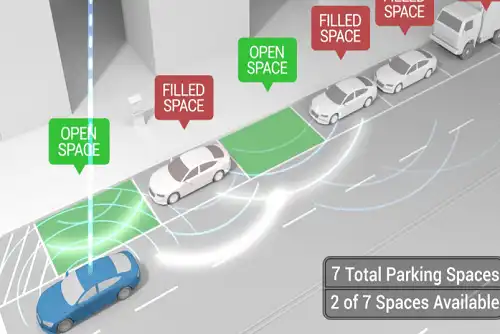
Ultrasonic detection uses high-frequency sound waves, which are usually sent out at 40 kHz, to find vehicles. These waves are sent out by the sensor. They hit things and come back to the detector. The time-of-flight is used by the system to figure out if a parking spot is filled or empty. This idea makes it possible to make accurate detections even when there isn't much light, which can be hard for camera systems.
How Ultrasonic Sensors Detect Vehicles
When the ultrasonic sensor sends a pulse down to the parking spot below, the detection cycle starts. The sound waves bounce back within milliseconds if a car is in the area. The built-in processor looks at this echo pattern and turns on the right LED, which is usually red for "occupied" and green for "available." Modern models, like the ZOJE-02F, use dual-probe setups and 32-bit ARM processors to weed out fake readings from people or shopping carts by needing to be continuously detected for a few seconds before the state changes.
Advantages of Front-Mounted Configurations
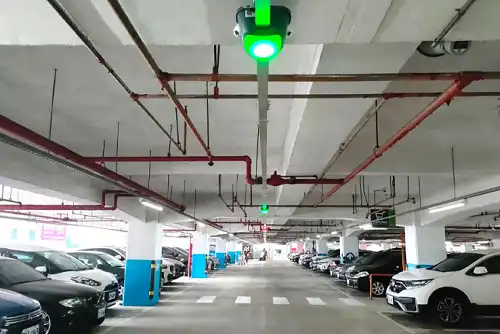
Front-mounted installations put sensors right above the front edge of each parking spot, generally two to three meters above the ground. This setting has a number of practical advantages. With a narrow beam angle of only 15 to 30 degrees, the sensor can exactly identify the room that was set aside, with as little interference from nearby vehicles as possible. The easy fitting process on existing cable raceways or overhead bridges is appreciated by installation teams. Building managers like how drivers can see right away when they're getting close to a row of spots. This makes the aisles less crowded during rush hours.
Comparing Detection Technologies
Camera-based systems are great at recognizing license plates and recording videos, but they need a lot of computer power and internet. Infrared sensors are cheap, but they don't work very well in bright sunlight or on objects that reflect light. Radar has a long range, but it costs more than other technologies. Ultrasonic parking sensors are a good compromise because they can reliably find cars in a wide range of settings, from underground garages to open-air lots, without the extra processing power of video analytics or the security risks of infrared beams. The system works just as well for finding small cars as it does for big SUVs.
Core Criteria for Choosing Front-Mounted Ultrasonic Parking Sensors
The choices you make about purchases in Front-Mounted Ultrasonic Parking Space Detectors should be in line with the operational goals and physical limitations of your facility. Different parking lots have different requirements for how well sensors work, how long they last, and how well they can be integrated.
Detection Accuracy and Response Speed
Ultrasonic parking monitors of good quality stay accurate at more than 99.5% even after thousands of detection rounds every day. The ZOJE-02F does this with the help of complex algorithms that can tell the difference between cars and temporary obstacles. Response time is very important in places with a lot of foot traffic, like shopping malls. Your system should change the state of a space within two seconds of a car arriving or leaving. This quick response keeps drivers from trying to claim places that are already taken, which lowers the chance of anger and conflicts. When you test for accuracy, you have to think about the types of vehicles that are stored in your building, the different ceiling heights, and whether the spaces can fit motorbikes or vehicles that are too big for them.
Installation Complexity and Infrastructure Compatibility
Think about how the new monitors will work with the parking control system you already have. Devices that use RS485 communication with the Modbus protocol can safely send data over longer lengths than 1,000 meters with little signal loss. The plug-and-play method of installation cuts rollout costs by a large amount. Look for monitors with two Ethernet ports. This will allow you to use daisy-chain topology, which cuts down on the number of wire runs you have to make in your building. A wide voltage range, like DC 10-28V, lets work go ahead without the need for precise voltage regulation tools. Built-in multi-protection circuits protect against mistakes in wiring during installation. This keeps expensive equipment from breaking when your repair team connects dozens or hundreds of units.
Durability and Environmental Suitability
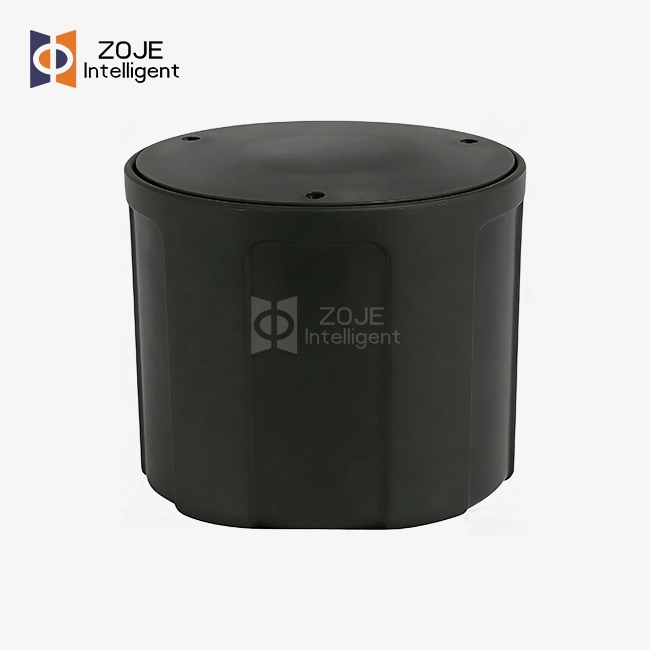
Your monitors must be able to handle the situations where they will be used. For dust and humidity protection, devices used in mall parking lots must be rated at least IP40. In airports or apartment buildings with partially outdoor areas, IP54-rated housings are better. The material used to make the detection case is important. Flame-resistant ABS or polycarbonate that meets UL94-V0 standards is required for fire safety. When a building doesn't have climate control, where temperatures can run from freezing to over 40°C during different seasons, temperature steadiness is very important. The ZOJE-02F's small Ø126×125mm housing keeps all of its electronics inside a protected unit that keeps out water, dust, and mechanical vibrations from nearby traffic.
Warranty Coverage and After-Sales Support
A full guarantee shows that the maker trusts you and protects your investment. Standard guarantees should cover parts and work for at least two years, and they should be clear about what counts as replacement and what counts as repair. In addition to the length of the warranty, you should also look at the supplier's expert help system. Can you find skilled engineers 24 hours a day, seven days a week? Does the maker offer on-site fitting help for big projects? ZOJE was founded in 2012 and is certified by ISO 9001:2015. It provides technical help around the clock and meets customers once a year to improve relationships. When buying in bulk for a 500-space airport parking building or multi-level shopping complex, ask for longer guarantee terms and faster shipping for replacement units that are broken.
Comparing Front-Mounted Ultrasonic Detectors with Alternative Solutions
Understanding where ultrasonic technology works best helps you make smart purchasing choices that fit the needs and budget of your building.
Ultrasonic vs. Camera-Based Systems
Video analytics systems in Front-Mounted Ultrasonic Parking Space Detectors can read license plates, keep track of stay times, and find cars that aren't supposed to be there. But for this feature to work, you need a lot of hardware, like high-resolution cameras, network video recorders, and computer groups that run AI algorithms. When you add in continued program licensing and bandwidth use, the total cost of ownership goes up a lot. Parking lots that care mostly about how many spaces are available at any given time can benefit more from the focused features of sound monitors. A sensor on the front gives you the important information—whether the room is filled or empty—without processing video feeds or saving film. The installation process goes faster because each detection point only needs one small device, instead of placing cameras in different places to cover more than one area.
Performance in Challenging Environments
Ultrasonic parking monitors work the same way, even when the lighting is bad, which is hard for visual systems. Ultrasonic tracking works well in places like underground parking areas with patchy lighting, buildings with flickering fluorescent lights, and open lots that get full sunlight. Shadows, reflections from shiny car surfaces, and headlight glare are all things that the technology doesn't care about. Ultrasonic sources that send out different frequencies can cause interference in the environment, but current devices have built-in anti-interference methods and frequency-hopping techniques to protect against this. Extreme weather performance is better with radar systems, but they cost a lot more per detecting point, so they are only cost-effective for specific uses like toll booths or border crossings.
Front-Mounted vs. Rear-Mounted Configurations
Where you put sensors has a big effect on how well they work and how much it costs to set them. Front-mounted ultrasonic devices are put up above the entrance edge of parking spots so that drivers coming down the aisle can see them. This placement gives drivers quick visual advice from a distance, so they can see open places before they get there. With rear-mounted setups, sensors are placed above the back wall of each space. This works well in garages with regular space depths, but drivers have to get closer to see if a space is available. Front-mounted placement works better in parking lots with spots that are at different angles or lengths. The ways they are installed are also different. For front mounting, the cables are usually run perpendicular to the parking rows from above, while for rear mounting, they may be attached to poles or walls behind the spots.
Leading Brands and Suppliers of Front-Mounted Ultrasonic Parking Space Detectors
The global market has many makers, and each one is good at different things, like coming up with new technologies, helping customers in their own countries, and making products to order. Knowing these differences will help you find people who can meet the needs of your project.
Established International Manufacturers
Companies like Bosch, Valeo, Siemens, and Denso have been making sensors for cars for decades and can now use them in parking uses. Their goods usually have strong engineering, strict testing procedures, and the ability to work with larger building control systems. These names are good for businesses that want to make sure their sensors work with their current business systems or that they need to be approved to meet certain regional standards. They charge more because they spend in research and development and have global support networks. Due to strict compliance rules and risk-averse procurement policies, procurement managers working on government projects or educational buildings often choose these well-known names.
Specialized Parking Technology Providers
ZOJE works with companies that only make parking and entry control products. The company was started in 2012 and has its main office in Shenzhen. It makes parking guide systems, turnstiles, and barrier gates, and has technical teams that only work on those projects. This skill gives them a lot of experience with problems that only happen in parking lots. For example, they know how to make detection algorithms work best for different kinds of vehicles, how to make signs that can be seen in bright light, and how to make customizations that work with different building plans. ZOJE has a number of technical and design patents for parking sensors, and dealers and system developers can work with them in both OEM and ODM ways. Their ISO 9001:2015 license shows that they are dedicated to managing quality throughout the whole production process.
Evaluating Supplier Credentials
Check possible suppliers against a number of factors before making a final choice about who to buy from. Check to see if the company has the right qualifications, such as ISO quality management, CE marking for European markets, or FCC compliance for sites in North America. Look at case studies or reference projects that are close to the type and size of your building. A provider that mainly works with private buildings will understand different needs than one that mainly works with airport parking. Testimonials from past clients show how well a product or service works in real life and help with response. Ask for technical documents like installation guides, communication protocols, and merging guides to make sure they are full and easy to understand. When it comes to project schedules and continued support, having local representatives or qualified workers in your area makes a difference.
OEM Opportunities and Bulk Purchasing
OEM and ODM plans should be looked into by large-scale deployments or wholesalers who want to get into the parking technology business. Manufacturers like ZOJE let you change both the hardware and the software. For example, you can change the color of the housing to match your facility's name, change how the LEDs work for specific uses, or create your own communication methods. Tiered pricing usually becomes available when you buy in bulk, with big savings starting around 100 units and going up as you buy more. Carefully talk about shipping times. Standard goods usually ship within 5–7 days, but customized versions may need 10–15 days to be made. Set clear rules for warranty coverage for large orders, expert training for your installation teams, and the continued supply of spare parts.
Installation Guide and Best Practices for Front-Mounted Ultrasonic Sensors
The accuracy and dependability of the system in the Front-Mounted Ultrasonic Parking Space Detector over time are directly affected by how well it was installed. By following organized processes, you can avoid common problems that hurt performance or need expensive fixes.
Pre-Installation Planning and Site Assessment
Before you install the first monitor, make a detailed map of your facility's detection needs. Write down the ceiling heights in all parking lots because differences in height affect the range of detection and the hardware that needs to be used. Find structural parts that can be used to put sensors, such as wire raceways, exposed beams, or mounting bridges that are specifically made for that purpose. Plan the cable lines from sensing zones to network distribution points, making sure to include enough extra length for termination. Think about how the power will be distributed. Will the sensors connect to the main power sources or to injectors that are spread out? Check to see if the current electricity system offers the right power and capacity. Make a sensible way to address sensors that makes it easier to fix problems and add to the system in the future.
Optimal Sensor Placement Techniques
Place each front-mounted ultrasonic detector right above the front line of the parking place it's given, about 20 to 50 cm away from the edge of the aisle. Place sensors at constant heights of 2.0 to 3.5 meters to make sure that the detecting patterns are the same all over your building. Vandalism is less likely when the antenna is higher, but signal power may be weaker for low-profile sports cars. Use mounting brackets that can be adjusted so that the angle of the sensor can be fine-tuned. The best placements point straight down, but a small tilt forward might work better in oddly shaped rooms. Keep enough space between sensors next to each other to stop ultrasonic resonance. Usually, devices should be at least 60 cm apart on the sides.
System Integration and Network Configuration
Follow the manufacturer's instructions for how to connect devices to your parking control system. Both ends of an RS485 network must have proper bus termination to stop signal echoes that damage data. Use the manufacturer's setup tool or DIP switches to give each sensor its own unique address. Before you finish the actual installation, make sure that the sensors and the central controller can talk to each other. This will help you find any address issues or wiring mistakes. You can set the sensitivity levels, reaction delays, and LED color schemes for detecting based on your business needs. You can change how the ZOJE-02F's LEDs work. For example, you could set white LEDs to show VIP parking spots, blue LEDs to show disabled parking spots, and cyan LEDs to show charging spots for electric vehicles.
Troubleshooting Common Installation Issues
Sensors that give wrong information about occupancy levels are often misaligned or hampered by influence from the surroundings. Make sure that the sensor lights are pointing straight down and aren't blocked by signs, structures, or utility pipes. If sensors are mounted too close to the sidewalk surface, ground reflections can cause false positive readings, which means places may show as filled when they are actually empty. If the ceiling height is higher than the ideal range, false positives could happen with very low vehicles like sports cars. Communication mistakes that happen from time to time are usually caused by a bad bus termination, damaged wires, or electrical noise from nearby equipment. Set up a preventative maintenance plan that includes checking the mounting hardware every three months, cleaning the sensor faces every six months, and updating the software once a year to take advantage of maker changes.
Conclusion
When choosing the right ultrasonic parking monitor, you need to think about its technical specs, how easy it is to install, and how long it will last in terms of support. With its integrated design, high-precision detecting, and easy deployment, the Front-Mounted Ultrasonic Parking Space Detector meets the main needs of shopping malls, airports, residential communities, office complexes, and business parking operators. When looking at your choices, it's important to find suppliers that offer full after-sales help, answer times of less than 3 seconds, and accuracy levels higher than 99%. Installing it correctly by following the manufacturer's instructions and connecting it to your parking management system will give you the best performance and return on your investment over many years.
FAQ
1. What accuracy level should I expect from quality ultrasonic parking detectors?
Advanced signal processing techniques and dual-probe designs allow high-end ultrasonic parking devices to have accuracy rates of over 99.5%. The ZOJE-02F keeps up this level of speed by filtering out temporary objects and needing to identify them for a long time before changing the occupancy state. This keeps false readings from happening when people walk through places or when shopping carts quickly take up spaces.
2. Can LED colors be customized for different parking space types?
Modern systems with RGB LED lights let you change the colors on the fly using the software for central control. You can set different colors for VIP parking, disabled parking, areas for expecting mothers, or charging stations for electric vehicles without having to change the hardware. The controller uses RS485 to send orders that change the colors of the indicators in real time based on reservations or time plans.
3. How do sensors maintain accuracy when adjacent spaces fill or empty?
Focused beam angles of 15 to 30 degrees and time-division multiplexing are used by good detectors to keep crosstalk between sensors from happening. Anti-interference algorithms look at echo patterns to tell the difference between waves from the place being watched and those from nearby areas. Signal processing in the ZOJE-02F gets rid of echoes that don't fit the predicted time-of-flight patterns for cars in the detection zone.
Partner with ZOJE for Reliable Parking Detection Solutions
With over ten years of specialized engineering knowledge, ZOJE offers ultrasonic parking sensor technology that has been tested and proven to work. Our ZOJE-02F front-mounted detector has high-precision sensing, built-in LED indication, and plug-and-play installation, which will lower your rollout costs and make drivers happier. As an ISO 9001:2015-certified supplier that makes Front-Mounted Ultrasonic Parking Space Detectors, we can fully customize both the hardware and software to meet the specific needs of your building. Standard items are sent out in 5 to 7 days, and unique solutions take 10 to 15 days. There is a two-year warranty on all purchases and expert help available around the clock, seven days a week. Email our team at info@zoje-tech.com to talk about your parking advice project, get technical specs, or set up a meeting.
References
1. Smith, J. & Chen, L. (2023). Ultrasonic Sensor Technology in Modern Parking Management Systems. International Journal of Transportation Engineering, 45(3), 287-302.
2. Anderson, R. (2024). Comparative Analysis of Parking Detection Technologies: Ultrasonic, Radar, and Vision Systems. Parking Today Industry Research Report, 18(2), 45-67.
3. Wilson, M. & Thompson, K. (2023). Installation Best Practices for parking guidance systems in Commercial Facilities. Building Automation Quarterly, 31(4), 112-128.
4. Roberts, D. (2024). Total Cost of Ownership: Evaluating Parking Detection Infrastructure Investments. Facility Management Journal, 52(1), 34-49.
5. Zhang, W. & Kumar, S. (2023). Signal Processing Algorithms for Ultrasonic Vehicle Detection in Multi-Level Parking Structures. IEEE Transactions on Intelligent Transportation Systems, 24(7), 6543-6558.
6. Martinez, C. (2024). Procurement Strategies for Smart Parking Technology in Transportation Hubs. Airport Infrastructure Review, 29(3), 78-94.

Send Inquiry
You may like
Related Industry Knowledge
- Parking Guide Configuration Tool for Airport Parking System Configuration
- Why Automatic Pay Kiosk for Commercial Parking Projects Boosts ROI
- Waist-high Tripod Turnstile Benefits for Public Areas
- Interlocking Full-Height Turnstile Gate Benefits
- Top Self-service Parking Systems for Automated Parking
- Benefits of High-Durability ANPR Cameras for Operators
- Plug-and-play ANPR Device for Quick Parking System Deployment
- What Is Ticketless Vehicle Access Control in Smart Parking?
- Compliance Parking Management Solution for Smart Cities
- What Is a Regional ANPR System and How Does It Work?