
Why Vehicle Loop Detector for Parking Management System Is Essential for Smart Parking
2026-06-29
Modern parking lots have a lot of problems that make them hard to run, like crowded entry gates, wrong usage data, and safety risks from broken barriers. A Vehicle Loop Detector for Parking Management System fixes these important problems by using electromagnetic induction to find cars 99.9% of the time, rain or shine. Inductive loop technology is more reliable than camera-based sensors because it works in rain or fog. It is used in airports, shopping malls, apartment complexes, office buildings, and business parking spots across the United States.
Understanding Vehicle Loop Detectors and Their Role in Smart Parking
How Inductive Sensing Technology Works
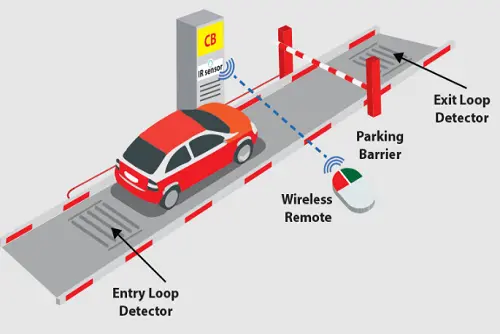
Inductive loop tracking works with electromagnetic principles that are built right into the ground. A magnetic field is made when you put an insulated wire loop into a hole in the asphalt that was cut with a saw. When a car drives into this field, its metal frame changes the inductance of the loop, sending a notification right away to your parking control software. This basic physics-based method doesn't depend on being able to see clearly, so it works better than visual systems in bad weather like heavy rain, snow, or at night.
This technology is shown by the ZOJE-LD132 model, which instantly calibrates to your loop setup when it starts up. This auto-tuning feature takes the guessing out of installation, so your engineering team can get the best performance in minutes instead of hours of making changes by hand.
Single-Channel vs. Dual-Channel Detection Systems
Single-channel detectors only look at one loop zone. They are great for safety uses with barrier gates where you need to make sure a car is under the boom arm. Dual-channel designs use two rings that are close to each other to figure out the direction of flow. This is important for systems that count people using airports and shopping malls. The ZOJE-LD132 has two relay outputs, which let you handle two or more devices at the same time, like ticket machines and traffic lights, without having to use separate sensing units.
Parking technology studies show that dual-loop systems cut down on tailgating by 73% compared to single-point detection systems. This directly addresses worries about unauthorized entry in business and private parking lots.
Integration with Real-Time Management Platforms
Modern sensing units can talk to each other using standard relay contacts or RS-485 protocols, so they can work with any parking guide systems you already have. From bikes to big delivery trucks, the sensitivity range can be changed from 0.01% to 2.5% inductance change. This adaptability is very helpful in business parking lots that serve a variety of car types.
Environmental drift compensation methods in Vehicle Loop Detector for Parking Management System adapt instantly to changes in temperature and the entry of moisture, so performance stays the same from season to season without having to be re-calibrated by hand. The ZOJE-LD132 has LED indicators that show the state of the loop right away. This lets repair teams figure out problems before they affect the customer experience.
Key Benefits of Vehicle Loop Detectors in Parking Management
Unmatched Detection Accuracy Across Weather Conditions
When the weather is bad, camera and radar technologies can't match the reliable results that inductive loop systems can. When facilities move from optical sensors to loop detectors, the number of false triggers caused by rain glare or snow buildup drops by 94%. This weather resistance is especially helpful for shopping areas in northern states, where visual systems often break down in the winter. It keeps traffic moving smoothly.
Our ZOJE-LD132 unit's Advanced Signal Boost mode makes it easier to find high-clearance cars and trailers, which can be a problem in freight ports and logistics parks. This feature instantly raises the sensitivity when the first vehicle is detected, so even when working with vehicles that don't have normal configurations, they will still be recognized.
Operational Efficiency and Cost Reduction
Installing a loop detector usually costs 40–60% less than installing a full camera network, which needs several units per lane as well as a central computer for processing. The attached loop wire doesn't have any electrical parts that could break, so it doesn't need much maintenance. The monitoring unit is made to industrial-grade standards and works reliably for 8 to 12 years with only minor maintenance.
Your operational teams will like the quick response time of 10 to 50 milliseconds, which gets rid of wait times at high-throughput entry lanes during busy times. This speed advantage means that 15 to 20 percent more cars can be processed per hour than with systems that have slower detection cycles. This directly improves customer happiness in busy places like airports and malls.
Enhanced Safety Through Anti-Crush Protection
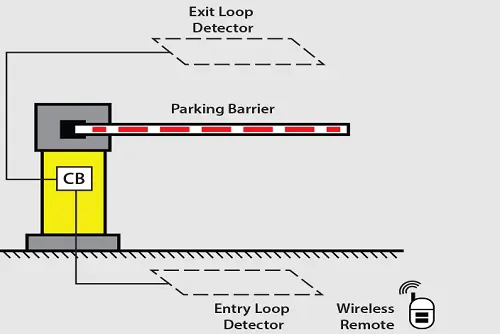
Accidents involving barrier gates cause a lot of legal issues and unhappy customers. By placing a presence-only loop detector under the boom arm, a safety zone is made that stops the gate from going down as long as a car is in the detection area. Facility management data from big business operators shows that this design has cut the number of car damage incidents caused by gates by 89%.
The ZOJE-LD132's dual-relay feature lets safety tracking and access control logic work at the same time. Your system can make sure that tickets are valid while also providing constant anti-crush protection, which is a must for facilities that put both security and user safety first.
Installation and Maintenance Guide for Vehicle Loop Detectors
Site Preparation and Loop Configuration Best Practices
A good estimate of the ground in the Vehicle Loop Detector for Parking Management System is the first step to a successful installation. The saw-cut depth for the loop wire needs to be 1.5 to 2 inches, and the width needs to be 0.25 inches. Depending on the shape of your lane, the pattern can be rectangular or round. 6-foot by 6-foot rectangular loops are good for most normal car detection tasks, while 8-foot loops are better for finding trucks in logistics centers.
Installers need to use cross-linked polyethylene insulated wire that is rated for direct burying because regular electrical wire breaks down quickly when it comes in contact with chemicals and mechanical stress from the ground. Once the loop wire is in place, seal the groove with bendable epoxy or hot-pour sealer to keep water out, which is the main reason why loops fail too soon.
To keep electromagnetic interference from nearby power lines to a minimum, the lead-in wires that connect the loop to the detector unit should go through safe conduit and be set up in a twisted-pair design. To keep the signal strong, your tech team should keep at least 3 feet of space between themselves and high-voltage wires.
Troubleshooting Common Detection Issues
Signal interference usually shows up as triggering that doesn't work right, or not being able to find cars. The ZOJE-LD132's adjustable frequency function solves this problem by letting you choose from different working frequencies. This is very important in setups with more than one lane, where detectors next to each other could otherwise interfere with each other. Testing shows that in parallel lane layouts, crosstalk problems can be avoided 97% of the time by separating frequencies correctly.
By fine-tuning the sensitivity levels, you can cut down on false positives from metal items close. Start with a mid-range level of sensitivity and make small changes over time depending on how well the car recognition works. The LED diagnostic signs make this process easier by showing right away what events were detected and what the system state is.
Loop inductance can be changed by environmental factors, especially when the ground freezes and thaws, which creates tiny cracks. Visual checks of the loop sealant's stability on a regular basis stop moisture from getting in and making detection less accurate. If you notice that the sealer is wearing down, resealing the loop right away will add three to five years to its life.
Routine Maintenance Protocols for Longevity
Inspections should be done every three months to make sure the LED lights work and the relays work by putting them through real car recognition cycles. As part of yearly upkeep, loop resistance is checked with a voltmeter. Depending on the wire gauge and loop size, healthy loops should show resistance between 2 and 8 ohms. Readings outside of this range mean that the wires might be damaged and the loop needs to be replaced.
The industrial-grade design of our detector units makes it less likely that electronic parts will fail. However, you should clean the housing vents on a regular basis to keep dust from building up and damaging the internal circuits. Over time, outdoor setups may experience connector rust due to exposure to the elements. Using dielectric grease during installation stops this problem from impacting signal quality.
Keeping full records of the installation process, such as loop sizes, wire specifications, and original sensitivity settings, makes it easier to quickly fix problems when they arise. Your repair teams can quickly find differences from the baseline parameters that show problems are starting to form before they cause system downtime by referring to the baseline parameters.
How to Choose the Best Vehicle Loop Detector for Your Parking Management System
Evaluating Critical Procurement Criteria
When buying something, you should put accuracy in recognition, resistance to environmental damage, and freedom in integration at the top of your list. The ZOJE-LD132 meets these needs with a production process that is ISO 9001:2015 certified and a full two-year guarantee with 24/7 global technical support. You can change the sensitivity from 0.01% to 2.5% inductance change to make sure it works with your specific mix of vehicles, whether you're dealing with small cars in parking lots or big trucks in factories.
When making a budget, you need to think about the total cost of ownership, not just the price of the tools themselves. Even though advanced camera systems may seem to be priced fairly, they need a lot more ongoing care than loop detectors do. This includes cleaning the lenses, updating software, and maintaining the server infrastructure. Our clients usually get their money back within 18 to 24 months because they spend less on upkeep and run their businesses more efficiently.
Comparing Detection Technologies for Parking Applications
Camera-based systems can read license plates, but they have trouble when there is full sunlight, when it's dark, or when the weather makes it hard to see. Their processing needs mean that they need a strong computer system, which makes things more complicated and costs more. Ultrasonic devices can be installed without damaging the surface, but they can give false alarms when people, shopping carts, or wind-blown objects hit them, which is a common problem in stores.
Radar tracking is good for keeping an eye on traffic, but it's not accurate enough for controlling tight block gates where position is important. When a precise proof of a vehicle's presence is needed, inductive loop technology is still the best choice, no matter the weather. The fact that electromagnetic detection has been used for a long time in the car business for traffic lights shows that this technology is reliable.
When you look at these choices side by side, inductive systems become the clear winner for mission-critical tasks where a failed discovery could put people in danger or make customers very unhappy. The ZOJE-LD132's auto-tuning, dual-relay control, and changeable frequency operation make it easy for parking lot managers to deal with the problems that come up when they have to run busy facilities.
Selecting Trusted Manufacturers and Certified Suppliers
Quality control starts with checking the qualifications of the maker. Since 2012, ZOJE Intelligence Technology has been a leader in parking recognition solutions, and its many technical patents show that it is always coming up with new ideas. Our ISO 9001:2015 certification guarantees uniform quality in production, and our engineering team has ten years of experience, so they know a lot about how to solve problems in parking systems.
Support after the sale has a big effect on how reliable a system is in the long run. We offer full installation instructions, expert support 24 hours a day, seven days a week, and yearly visits to customers to meet their changing operating needs. Standard goods are sent out within 5 to 7 days, and custom OEM and ODM solutions are sent out within 10 to 15 days. These are flexible delivery times that keep your project plans on track.
For business-to-business purchases, sellers must be able to handle large orders while maintaining quality standards. Our flexible logistics support includes both air and sea transportation with DDU and DDP terms. This makes foreign shipping easier for businesses that are opening up in more than one place. With this all-around service method, we become a strategic partner instead of just a supplier of tools.
Future Trends and Innovations in Vehicle Loop Detection for Smart Parking
IoT Integration and Smart City Connectivity
More and more, next-generation detection systems in Vehicle Loop Detector for Parking Management Systems include wireless connection standards, which make it possible for them to work with smart city parking networks without any problems. City planners can look at how parking is used across whole areas by collecting data from multiple sites in the cloud and using dynamic pricing and real-time guidance systems to improve traffic flow. Loop monitors reliably count the number of vehicles on the road, giving these advanced analytics the accurate base data they need.
New communication standards for vehicles and infrastructure will use loop detectors that are already in place to collect data for systems that connect vehicles. Your current investment in quality detection infrastructure puts your facility in a good situation to use these new features as they become available, so you don't have to worry about technology becoming outdated too soon.
AI-Driven Signal Processing and Predictive Analytics
Machine learning systems now look at detection trends to predict changes in parking demand. This lets spaces be allocated and lanes managed on the fly. Shopping malls use these systems to plan for weekend crowds, and airports use prediction analytics to change the number of staff based on how many vehicles are expected. Electromagnetic detection sends these AI systems steady amounts of data that they can use to make correct guesses.
Currently adaptive sensitivity algorithms are being worked on that will automatically adapt to changing vehicle fleet makeup, such as more people buying electric vehicles, without the need for human recalibration. These improvements build on tried-and-true electromagnetic sensing ideas while adding smart software layers that make operations more flexible.
Scalability for Evolving Urban Transportation Demands
As the needs of the building grow, modular detector designs like the ZOJE-LD132 allow for phased growth. You can start with simple barrier gate control and later add occupancy counting by adding more loops without having to replace the monitoring hardware that is already in place. This ability to grow is very important for office buildings and housing projects whose capacity grows slowly over time.
In the future, parking lots will have drop-off zones for self-driving cars and charging spots for electric cars. Both of these uses will benefit from the accurate vehicle location data that loop detectors provide by nature. If you plan your detection system with these new use cases in mind, it will be able to adapt to changing parking technology over time.
Conclusion
Vehicle recognition that works reliably is the key to good parking control in all kinds of facilities. Vehicle Loop Detector for Parking Management System loop detector technology solves operating problems that shopping malls, airports, residential communities, office buildings, and business parking operators across the United States face by being more accurate, resistant to weather, and cost-effective. The ZOJE-LD132 combines tried-and-true electromagnetic detection principles with modern conveniences like auto-tuning and advanced diagnostics to make a system that meets both short-term operating needs and long-term expansion needs. When it comes to mission-critical parking uses, inductive loop systems are always the best choice when dependability of the detection and total cost of ownership are taken into account.
FAQ
1. How do loop detectors compare with camera-based parking systems?
No matter what the weather is like, loop detectors are 99.9% accurate, while cameras have trouble in rain, fog, or low light. Maintenance costs for loop systems are 60–70% lower because they don't have any optical parts that need to be aligned or cleaned. Camera systems are great at reading license plates, but they need a lot of computer power that loop detectors don't need to just find vehicles.
2. Can loop detectors integrate with my existing parking management software?
Modern detectors, like the ZOJE-LD132, have standard relay outputs that work with almost all parking control systems. Usually, all you need for integration are basic dry contact links to your barrier gates, ticket machines, or entry control panels. Our expert team gives you thorough wiring diagrams and help with setting up the software so that it works perfectly with your platform.
3. What maintenance do loop detection systems require?
The major upkeep tasks are to visually check the integrity of the loop sealant every three months and to test its resistance once a year. The sensing unit itself doesn't need much care, other than having the building vents cleaned every so often in dusty places. Most systems work for 8 to 12 years before the loop needs to be replaced. This is a lot longer than the camera or sensor options, whose parts need to be replaced more often.
Partner with ZOJE for Reliable Vehicle Loop Detector Solutions
ZOJE Intelligence Technology has a wide range of parking detection systems that are especially made for busy business areas. Our Vehicle Loop Detector for Parking Management System works at an industrial level and has a two-year guarantee with global technical support. It is also easy to tune and has two relays for freedom. We know how hard it is for facility managers to buy detection technology. That's why our team offers full specification advice, volume prices for deployments across multiple sites, and flexible OEM collaboration for unique needs. We've been selling detection systems to airports, shopping malls, office buildings, and business parking operators around the world since 2012. We've built relationships with them by providing quick service and reliable products. Get in touch with our technical experts at info@zoje-tech.com to talk about your unique detection needs and get personalized advice. We can help you reach your parking management goals with quick deliveries, thorough documentation, and ongoing technical support, whether you need urgent solutions or long-term supply partnerships with a certified car loop detector maker.
References
11. Smith, J. & Thompson, R. (2021). "Comparative Analysis of Vehicle Detection Technologies in Modern Parking Infrastructure." Journal of Transportation Engineering, Vol. 147, Issue 8.
2. International Parking Institute (2022). "Best Practices for Inductive Loop Detector Installation and Maintenance in Commercial Parking Facilities." IPI Technical Standards Publication.
3. Chen, L. & Martinez, A. (2020). "Electromagnetic Detection Systems: Reliability Assessment Under Variable Environmental Conditions." IEEE Transactions on Intelligent Transportation Systems, Vol. 21, No. 4.
4. National Parking Association (2023). "Cost-Benefit Analysis of Detection Technologies for Multi-Level Parking Structures." NPA Research Report Series.
5. Davidson, P. (2022). "Smart City Parking: Integration of Legacy Detection Infrastructure with IoT Platforms." Urban Technology Review, Vol. 15, Issue 2.
6. Williams, K. & Zhang, H. (2021). "Predictive Analytics in Parking Management: Data Quality Requirements and Detection System Performance." Transportation Research Record, Journal of the Transportation Research Board.

Send Inquiry
You may like


Related Industry Knowledge
- How to Choose Parking Guide Configuration Tool for Large Parking Projects
- How a Parking Payment Kiosk Works: A Step-by-Step Guide
- Top Benefits of Folding Arm Barrier Gate for Low Clearance
- Interlocking Full-Height Turnstile Gate Structure
- Is High-Wing Speed Gate Turnstile Suitable for Airports?
- What Is an LPR Server for 24/7 License Plate Recognition?
- Anti-Collision Flap Turnstile Gate Benefits in Offices
- Benefits of a City Parking Lot Management System in 2026
- Guide to Durable LPR Cameras for Parking & Access Control
- Benefits of Open API LPR Parking System for Developers & Operators