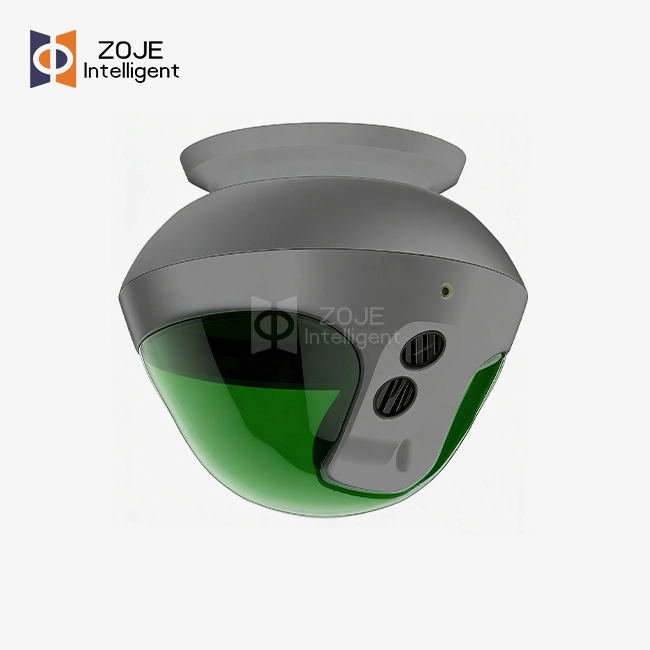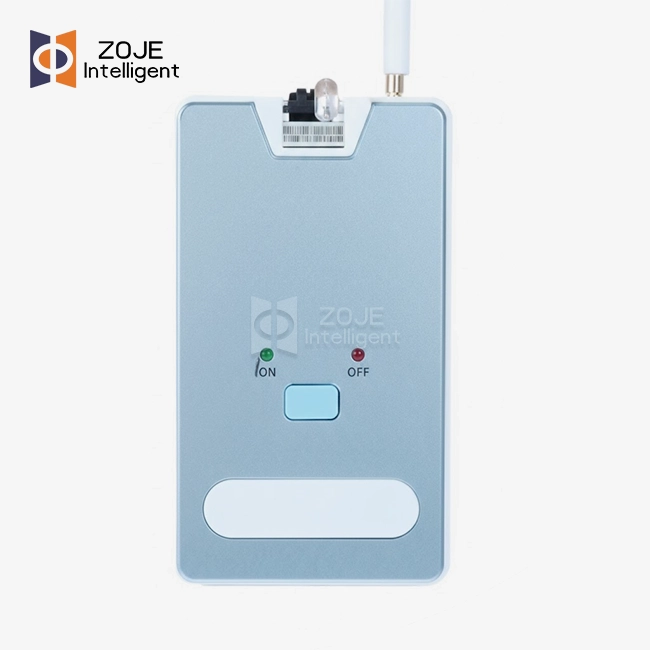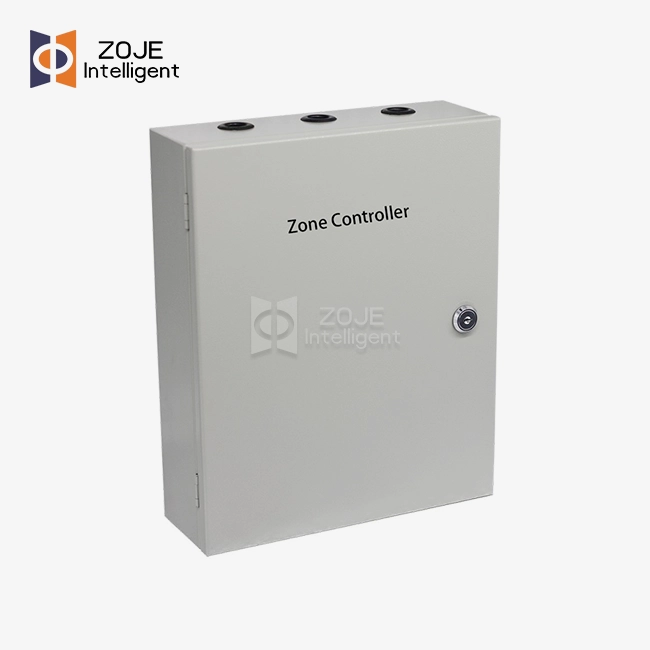

Indoor Node Controller for Parking Guidance
2.Cross-device compatible . Links central & wired controllers
3.Parking status upload.Syncs to centralized controller instantly
4.Zone parking data summary.Collects all space status in area
5.Parking info relay . Sends data to outdoor wired controller
6.Wireless deployment. No complex wiring, labor cost saving
7.Stable RF signal .Anti-interference
8.24/7 tech support and service

- Face to Face Discussion
- Quality Assurance
- 24/7 Customer Service
Product Introduction
Indoor Node Controller for Parking Guidance — Edge Computing Gateway for Smart Parking Systems
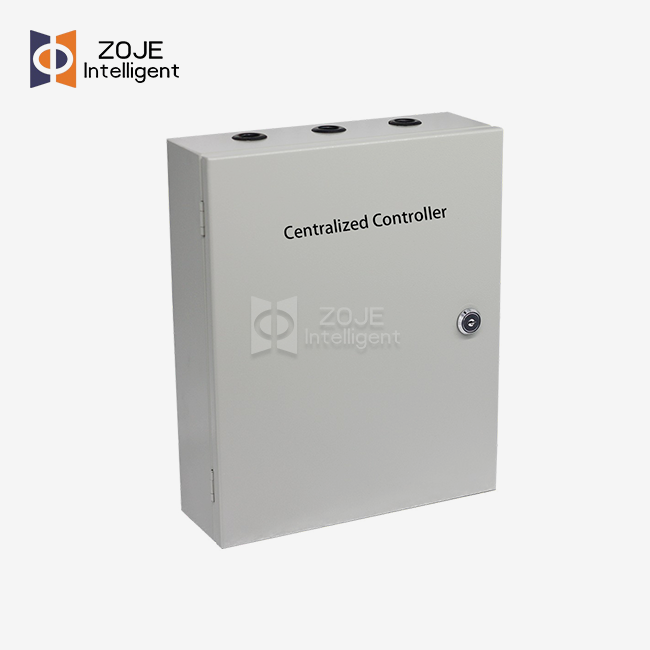
Hong Kong ZOJE Intelligent Technology Co., Ltd. builds the Indoor Node Controller for Parking Guidance (Model: ZOJE-02N). Front-end sensors link to back-end parking management servers through it. Multi-story and large-scale parking structures are the usual home for these units. Live occupancy data arrives from as many as 64 sensors over 2–4 RS485 lines. Field bus signals get converted to TCP/IP. Outdoor wired controllers then receive the zone data. Around the clock, the unit keeps running thanks to a 32-bit ARM Cortex processor and an anti-interference RF design.
What Is the ZOJE-02N?
The ZOJE-02N sits between ultrasonic sensors or video detectors and the central management server. Rather than forwarding raw sensor signals across the full network, it preprocesses occupancy data at the edge — reducing server load and limiting network congestion in cable-dense concrete structures.
What comes out of the device is standard TCP/IP, converted from RS485/CAN field bus signals. A well-known problem gets solved here. Thick concrete walls in multi-level parking buildings cause heavy signal attenuation.
Sometimes the central server cannot be reached. Switching into Offline Logic Mode is what the device does next. It holds on to the last known configuration. Zone Display screens carry on working from live sensor input. Guidance for drivers never breaks.
Key Features
Cross-device compatibility
Connects central controllers and wired controllers without requiring changes to existing network infrastructure.
Real-time occupancy sync
Uploads space status data to the centralized controller continuously, keeping every zone display current.
Zone-level data aggregation
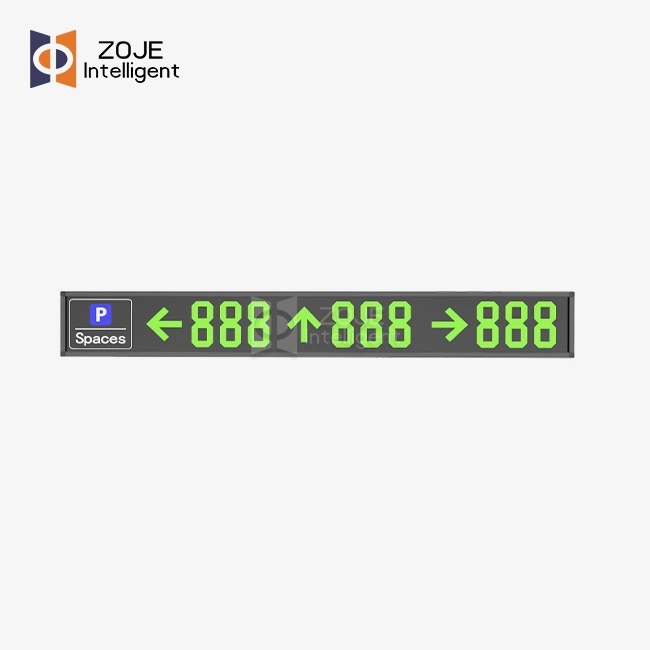
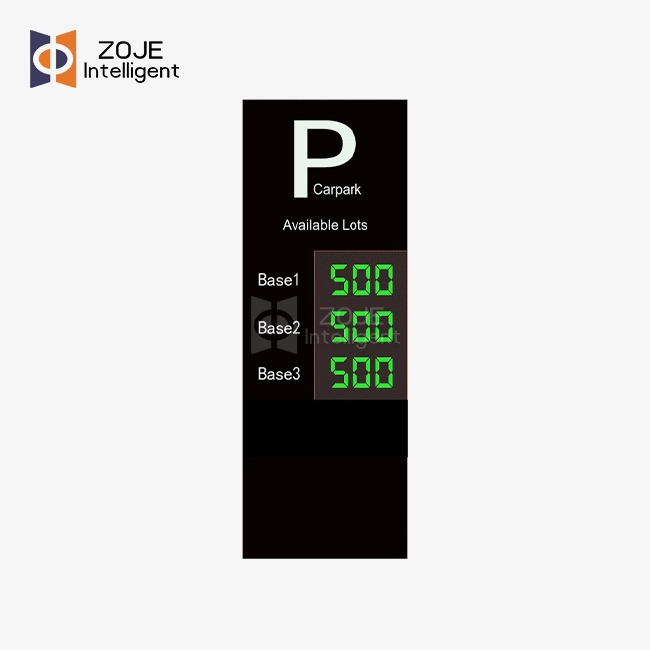
This unit picks up the status of parking spaces in a set area. It then passes that data to outdoor wired controllers, which show it on their displays.
Wireless deployment option
Pulling new cable isn't always an option. When that happens, the install can be done wirelessly. On large sites, or in buildings with many floors, crews then spend less time on the job.
Anti-interference RF design
High-voltage ceiling lights give off electromagnetic interference. Even so, the link holds steady.
Low power consumption
Power draw is under 5W. PoE (Power over Ethernet) setup works as well. Wiring plans stay simple that way.
Store-and-forward architecture
Data gets cached and sent again when the network drops. That cuts the chance of losing occupancy data.
Technical Specifications
| Parameter | Specification |
|---|---|
| Model | ZOJE-02N |
| Node Capacity | 25 devices |
| Communication Mode | Route 2 CAN@20kbps |
| Communication Distance | CAN: ≤1000m |
| Operation Voltage | AC 110~240V |
| Power Consumption | ≤2W (excluding detectors) |
| Dimensions | 320×260×90mm |
| Material | Galvanized steel plate with spray coating |
Quality Control
Before any Indoor Node Controller for Parking Guidance unit leaves the factory, it passes a fixed set of checks.
Full-load throughput test: Here the device polls 64 sensors at the same time, once every second. No packet loss is allowed.
Environmental Stress Screening (ESS): Each unit runs through burn-in cycles of 72 hours at varying temperatures. Catching component failures that show up early and pulling them out is the point of this step.
Surge and interface protection test: A 2kV lightning surge has to be withstood by every RS485 port, and so do ground loops. We check this on all units.
Latency verification: We checked the full travel time, from the moment a sensor status changes until the server receives it. It comes in under 500ms.
Production runs to ISO 9001:2015. CE and FCC electromagnetic compatibility certifications are held for this product.

Application Scenarios for the Indoor Node Controller for Parking Guidance
Large commercial parking structures
Cabling between floors costs a lot in multi-story buildings. There, going wireless makes installation simpler. One node collects data from as many as 64 sensors. It then passes zone status on to display screens, and the delay stays within the limits given in the specifications.
Facilities that have to run nonstop
Sometimes the central server goes down for maintenance. Other times it just fails. When that happens, the controller switches to Offline Logic Mode. From there it keeps driving the local Zone Display screens on its own. The data comes straight from the live sensors. Nobody has to step in and do anything by hand.
Large-scale deployments with many nodes
Two RJ45 ports give you network redundancy. IP setup is flexible too, DHCP or static. So integrators can configure hundreds of nodes without much effort. Batch tools do the work, sorted by MAC address or by physical grouping.

Customization and OEM/ODM
Hardware and software can both be customized for a given project. Firmware settings can be adjusted. The RS485 line count can change as well. OEM labeling on the Indoor Node Controller for Parking Guidance hardware is also available.
Standard items leave us in 5–7 business days. Work on customized orders usually wraps up in 10–15 business days.
Sea freight and air freight are both options for your goods. You can pick DDU or DDP trade terms too. That way the shipping setup fits the logistics you already run.
Got a project in mind? Write to the team at info@zoje-tech.com and say what you need. Do this before you place a customized order.
Frequently Asked Questions
Q: How many sensors can one controller handle at most?
A: One controller can handle 32 to 64 sensors. Those sensors are spread over 2 to 4 RS485 lines. Baud rate settings decide the exact number. Power distribution matters too.
Q: What if the controller drops its connection to the server?
A: The device moves into Offline Logic Mode. The last known configuration stays in place. Local Zone Display screens still get live sensor data, so parking guidance runs during the outage.
Q: What kind of cable should be used on RS485 buses?
A: In parking ceilings, the trouble usually comes from high-voltage lighting lines. Shielded twisted pair cable fixes this. Take RVSP 2×1.0 or CAT6 STP as examples, both cut that interference down.
Q: How are IP addresses handled when a site has a lot of nodes?
A: Both DHCP and static IP assignment work on the controller. IPs can be handed out by MAC address, or by physical grouping with batch configuration tools. Deployment gets faster on big sites.
Q: Does power come out of the controller to the sensors wired to it?
A: The model variant you pick decides this. With PoE or a power-distribution setup, versions feed 12V or 24V straight to the sensor chain. Other variants act as data concentrators. For those, the sensors need external power supplies. To confirm which variant fits your installation, get in touch with the team.
Q: Before shipping, which tests does every unit undergo?
A: Every unit goes through a full-load throughput test at 64 sensors. Next comes a 72-hour ESS burn-in cycle. RS485 ports face a 2kV surge resistance test, and end-to-end latency is checked to stay below 500ms. All of this runs under ISO 9001:2015 manufacturing standards.
Contact Us
Email them to info@zoje-tech.com. The ZOJE team will write back with confirmation of the Indoor Node Controller for Parking Guidance specs.
Send Inquiry
You may like