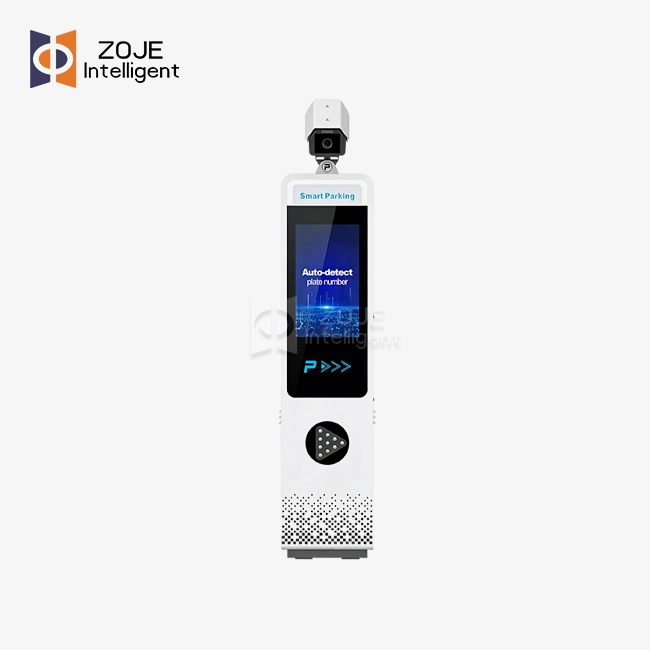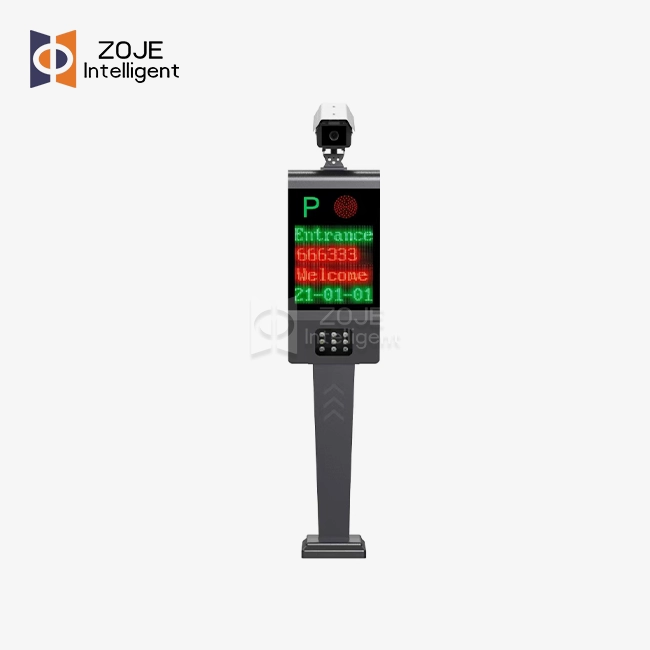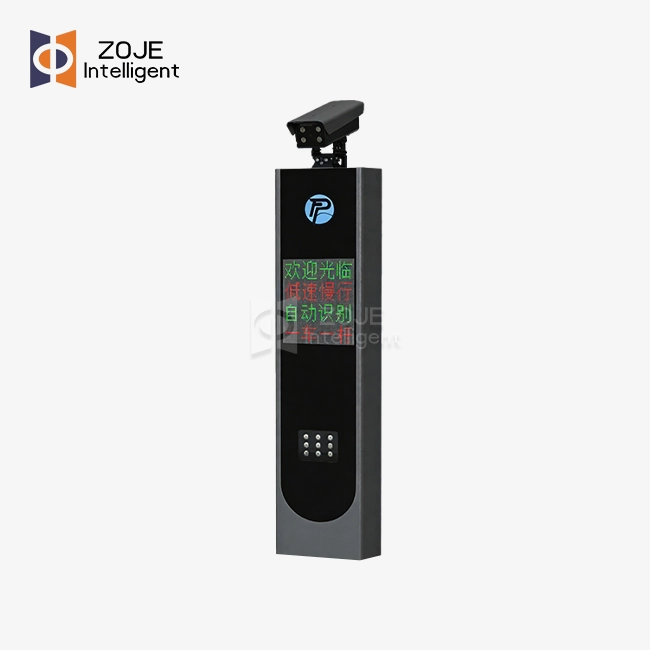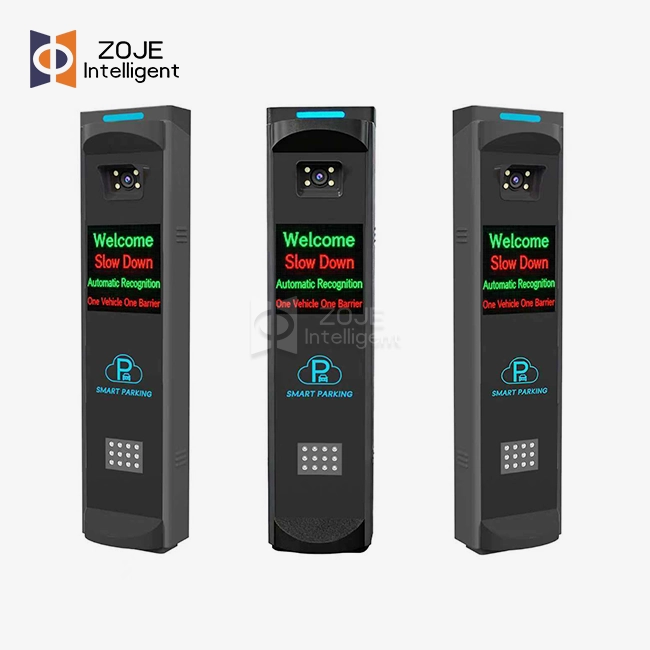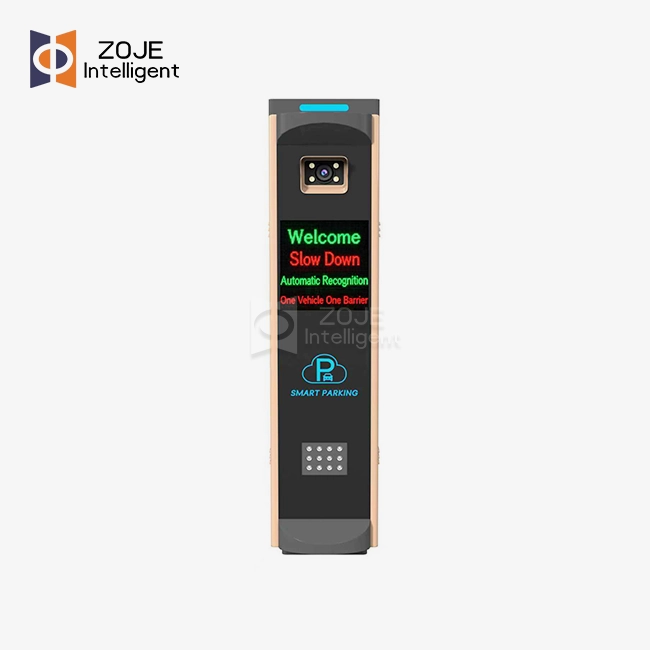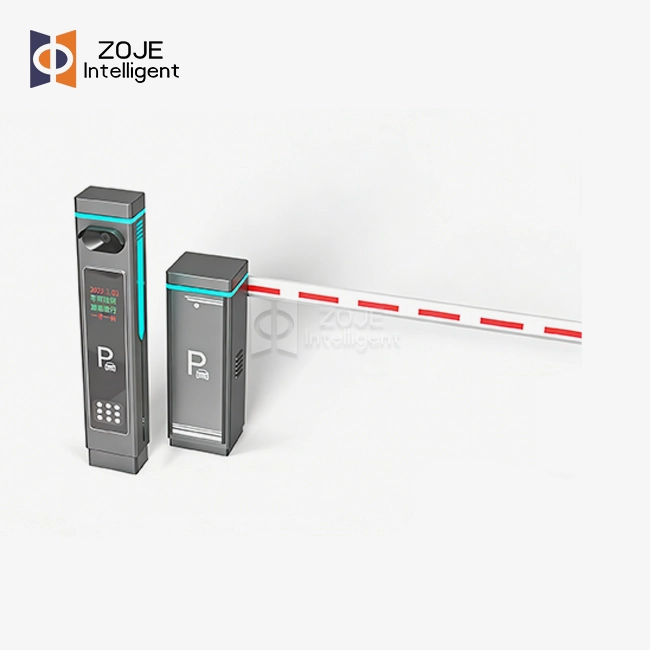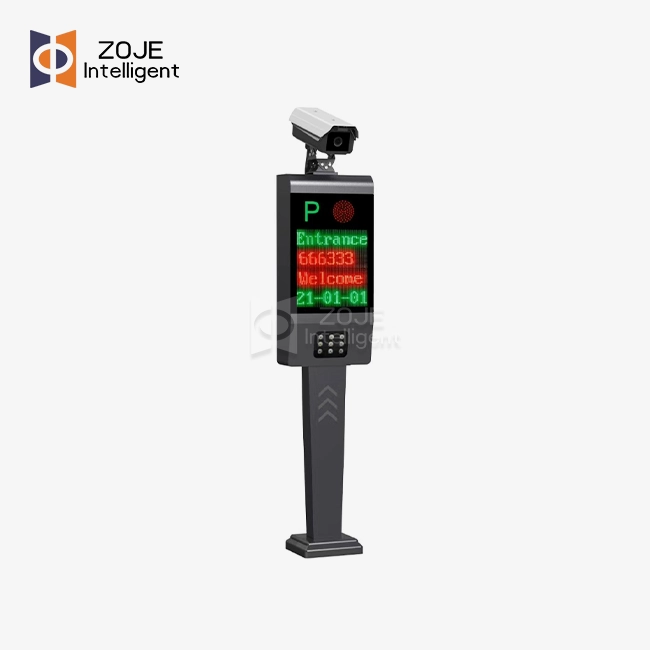
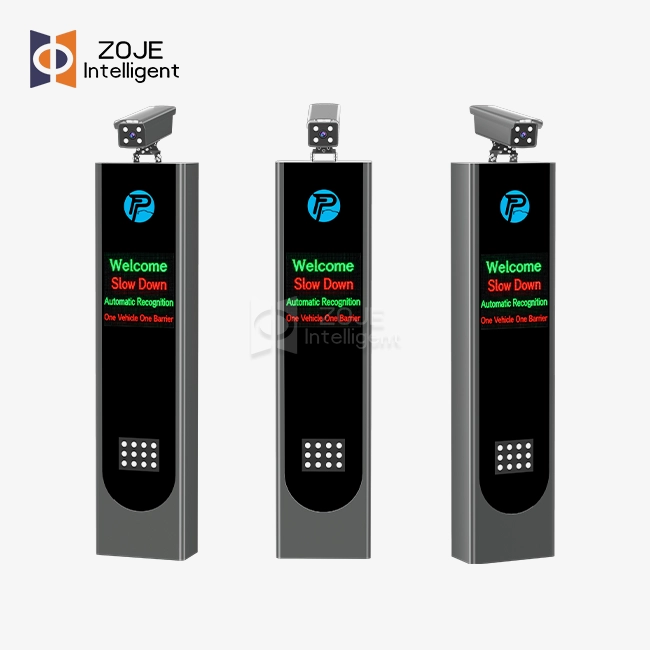
Centralized License Plate Recognition Server
2.Recognition rate:99%
3.Recognition Regions:Around world
4.Support offline use:Front-end recognition, unaffected by network delay/offline
5.Support hardware/software customized,support various types of secondary development
6.Support outdoor use
7.24/7 service
8.Support OEM and ODM

- Face to Face Discussion
- Quality Assurance
- 24/7 Customer Service
Product Introduction
Centralized License Plate Recognition Server for Multi-Site Parking and Traffic Management
Parking operators run sites in several places. Traffic management authorities face the same problem. So do system integrators with sites in several places. One issue returns again and again for all of them. Edge cameras process video on the spot. They turn into bottlenecks the moment you need algorithm upgrades or one central place to manage data. The Centralized License Plate Recognition Server from ZOJE Intelligent Technology takes this on. It combines video feeds from 4 to 64+ channels into one processing unit. A vehicle pass is recognized in under 150ms. Daytime accuracy is above 99.8%.
What Is This Product?
Edge computing runs recognition inside the camera itself. A server setup in the center works in a different way. Video feeds come in through RTSP/ONVIF protocols and land in one GPU/CPU processing cluster. OCR algorithms that use deep learning read several streams at once. Plate data and vehicle type come out of those streams. Color and make come out too.
Three problems in daily operation keep coming back. This setup deals with all of them:
- Algorithm upgrades without hardware replacement: New recognition models go out to the server over the network. Nothing on the camera side needs to change.
- Fragmented data across sites: Every site in a multi-site rollout works off one database. No local servers sit alone at each location.
- Compute limits on edge devices: Heavy traffic makes jobs such as trajectory tracking or behavior analysis hard. Edge chips simply lack the processing power for them. Run the work on the server and that ceiling disappears.
Key Technical Specifications
| Hardware Components | Specifications |
|---|---|
| Model | HD all-in-one ZOJE-LPRC101 |
| Processor | Hisilicon specialized recognition chip |
| Sensor | 1/3" Progressive Scan CMOS |
| Minimum Illumination | 0.01 Lux |
| Electronic Shutter | 1/25 to 1/30,000 seconds |
| Lens Options | 6mm prime / 2.8-12mm electric zoom |
| Fill Light | 4 high-power LED white lights |
| Performance Features | Capabilities |
| ------------------------- | ------------------ |
| Recognition Rate | 99% accuracy |
| Triggering Modes | Video/coil trigger (≥99% capture rate) |
| Image Output | 1080P, 960P, 720P, D1, CIF |
| Picture Output | 2 mega-pixel JPEG |
| Ultra-wide Dynamics | 120dB |
| Video Compression | H.264 variants, MJPEG |
| Connectivity & Power | Requirements |
| ------------------------- | ------------------ |
| Network Interface | 10/100M adaptive RJ45 |
| I/O Interface | 2-route input/output terminals |
| Audio Interface | 1-route input/output |
| Storage | Micro SD up to 32G |
| Serial Interface | RS485 |
| Power Supply | AC110-240V |
| Power Consumption | ≤7.5W |
| Operating Temperature | -35℃ to +70℃ |
| Protection Grade | IP65 |
| Dimensions | 452×148×120mm |
| Weight | 2.75kg |

Core Features
Remote algorithm updates. Push a model update to the server and the software-defined recognition engine takes it. When the AI models get upgraded, nobody has to visit the site. Front-end hardware stays where it is.
More than just the plate gets read. Deep learning models do not stop at the licence plate. Color, make, model and year get picked out as well. Structural details count too, roof racks for example. How much of that actually runs comes down to the compute power on the server side.
Cleaning up the picture when conditions are bad. Any camera struggles with heavy rain or dense fog. Harsh backlight causes trouble too. Denoising and contrast fixes on the server keep recognition working through it. Cameras at the edge with fixed on-chip processing usually slip up more often in those cases.
Standard IP cameras do the job. If a camera speaks RTSP or ONVIF, it can feed the server. Best OCR results come from models with a high shutter speed. You still do not need a vendor-specific front-end box.
Cache locally when the link drops. Footage can be written to an SD card by a front-end camera. The connection comes back, and the data goes out again by itself. So short network outages on the Centralized License Plate Recognition Server cost you no records.
Application Scenarios
Multi-Site Parking Management
A group running several parking sites can pull every location's data into a single platform. One place then handles blacklists and whitelists. Billing is unified too, and cars keep roaming rights across sites. At each lot, no server room is needed.
High-Speed Electronic Tolling and Audit
The server handles vehicle captures at speeds up to 200 km/h. Plate data gets checked against vehicle type and axle sensor readings. This uses multi-frame analysis. Toll evasion methods that need data from several capture points can then be spotted.
Urban Traffic Management
At complex intersections, LPR data is correlated with traffic signal status and trajectory records. Red-light violations and illegal maneuvers get spotted this way. Centralized processing handles the concurrent stream volume. Distributed edge deployments cannot aggregate that volume efficiently.

Quality Assurance Process for Centralized License Plate Recognition Server
Before shipment, each unit goes through these validation steps:
- 72-hour high-concurrency stress test: Every channel streams at different bitrates (CBR/VBR). During the run, packet loss and memory stability get watched.
- Algorithm generalization test: Difficult sample sets are used to check recognition. These include muddy plates, severe backlight, reflective glare, and plate angles beyond 60 degrees. In such scenarios, qualified units stay above 95% accuracy.
- Watchdog and failover verification: If the software crashes, the service restarts on its own. HA clustering is also tested. The goal is to confirm the secondary server takes over when the primary fails.
- Database throughput testing: We check that a search across big sets of old records comes back in under 1 second.
Customization and OEM/ODM
Hardware and software can be changed to match what a project needs. Custom API integration is one option. So are branded interfaces. Recognition settings can be set up for one specific site. Both OEM and ODM cooperation models are available.
Standard products leave in 5–7 business days. Tailored solutions from the Centralized License Plate Recognition Server usually ship in 10–15 business days. Freight can go by sea or by air. DDU and DDP trade terms are supported.
Are your integration needs non-standard? Or maybe local rules decide where you can deploy. Either way, talk to the engineering team first. Before you order, they will tell you what can actually be done.

Frequently Asked Questions
Q: Does the server need a specific camera brand or model?
A: No. Any camera that speaks standard RTSP or ONVIF will work. For the best OCR results we do suggest cameras with a high shutter speed. That said, the system does not lock you into one vendor's hardware.
Q: Why does available bandwidth matter for performance?
A: Raw video streams feed the server, so a steady network matters. Give every 1080p channel a stable 4 Mbps upload. Tight on bandwidth? You can set the system to run on image snapshots taken when a trigger fires. In that case no continuous video stream is needed.
Q: What happens to recordings if the link to the server goes down?
A: Each front-end camera writes its data to an SD card inside the unit. When the link drops, the camera sends it again on its own once the connection comes back. A short network outage will not mean lost recordings.
Q: How is data privacy handled?
A: On-premise installation over a local LAN is supported. Your own infrastructure holds all of the data. Stored data sits behind AES-256 encryption. Traffic between machines is protected with TLS 1.2 or higher. Rules like GDPR are covered by this setup, so compliance work gets easier.
Q: What about warranty and support from ZOJE?
A: Every product we sell comes with a 2-year warranty. Installation help and maintenance are part of the service too. So are answers to technical questions. Email your support requests to info@zoje-tech.com.
Contact Us
Need product specs? Want to talk through a Centralized License Plate Recognition Server project? Ask us for a quote by writing to info@zoje-tech.com. Expect a reply within one business day.
Send Inquiry