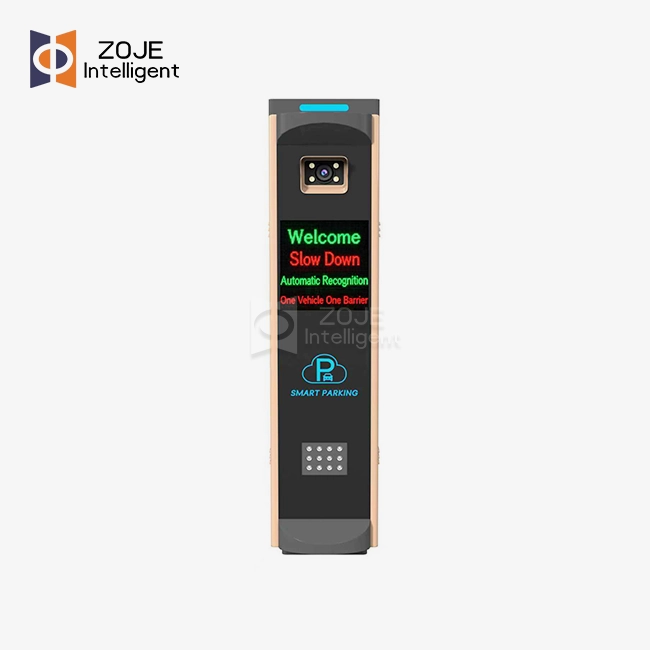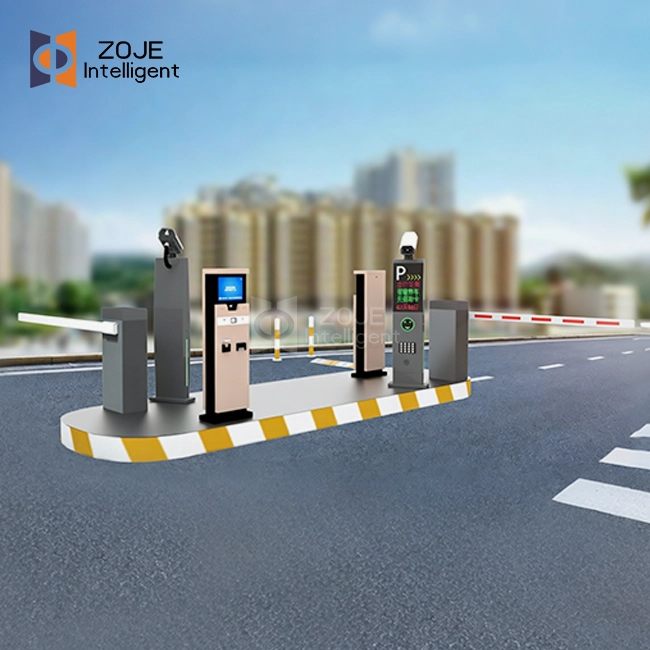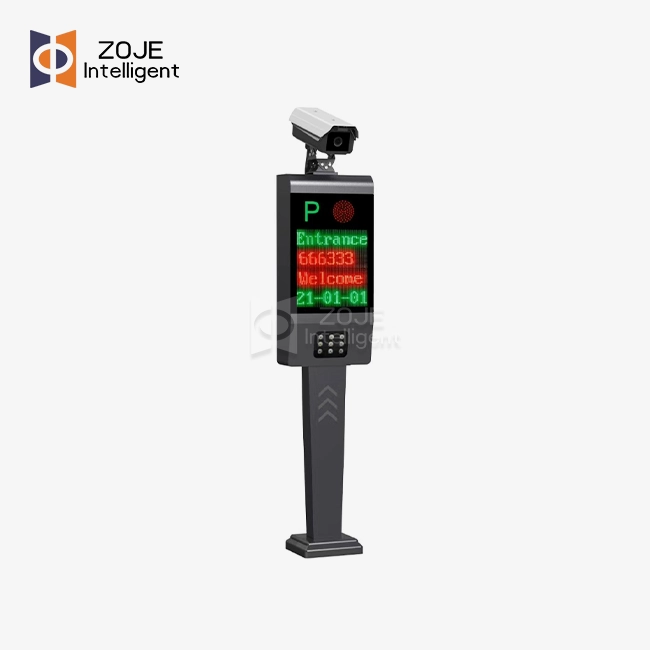
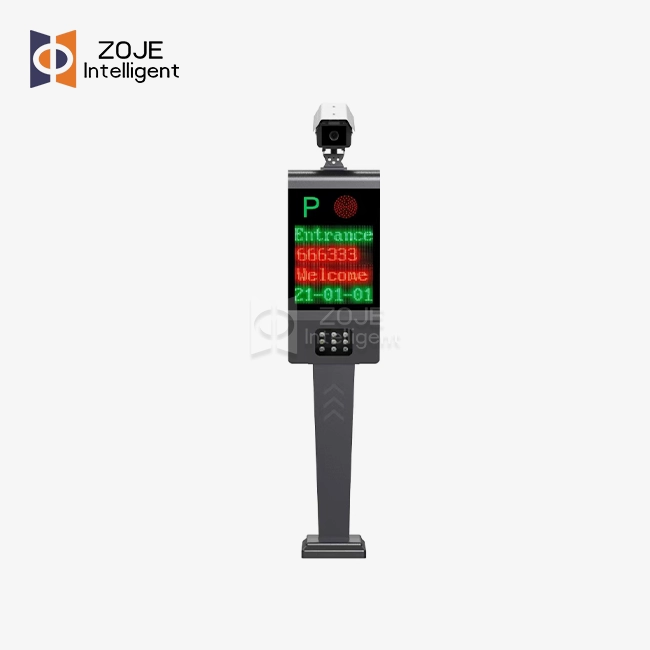
Parking Access Control With LPR
2.Recognition rate:99%
3.Recognition Regions:Around world
4.Support offline use:Front-end recognition, unaffected by network delay/offline. Support offline billing
5.Support hardware/software customized,support various types of secondary development
6.Support outdoor use
7.24/7 service
8.Support OEM and ODM

- Face to Face Discussion
- Quality Assurance
- 24/7 Customer Service
Product Introduction
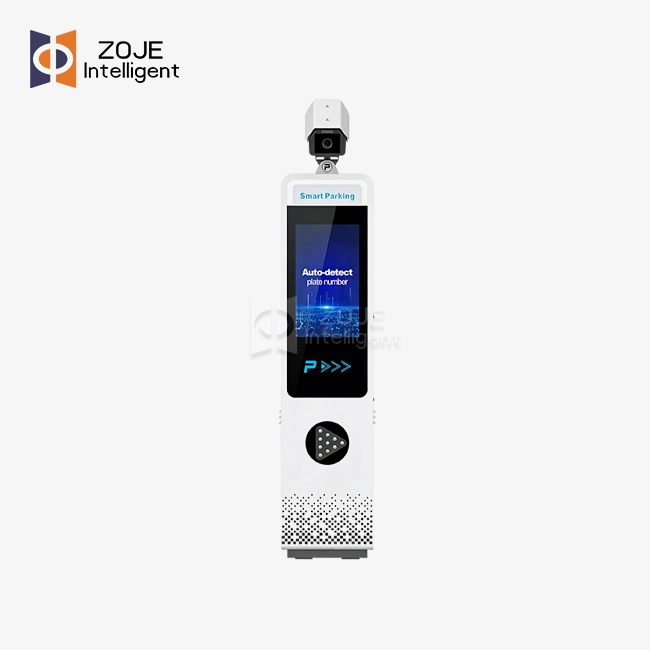
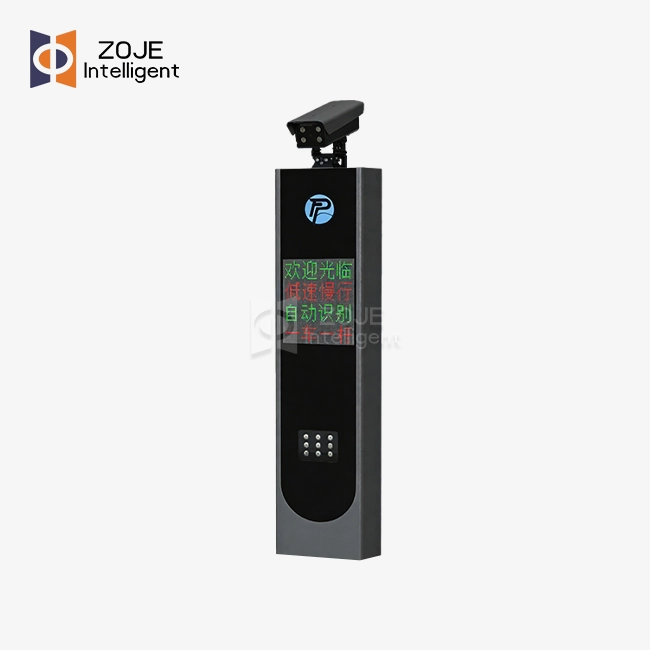
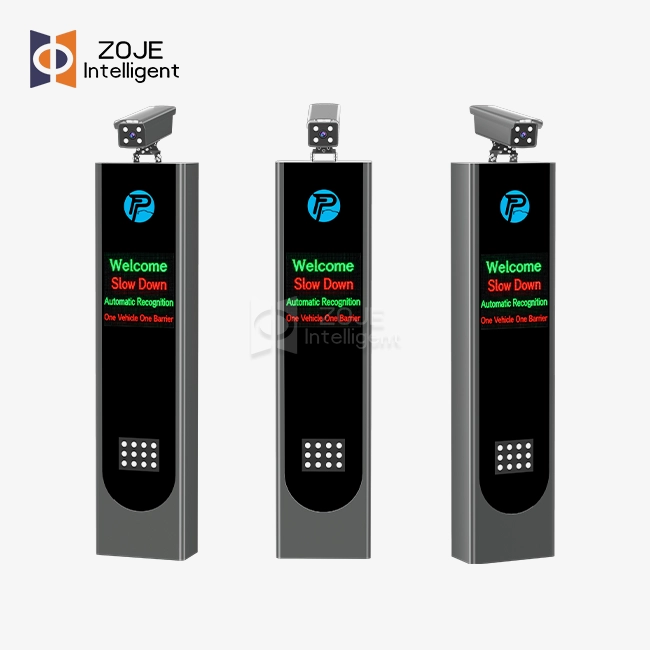
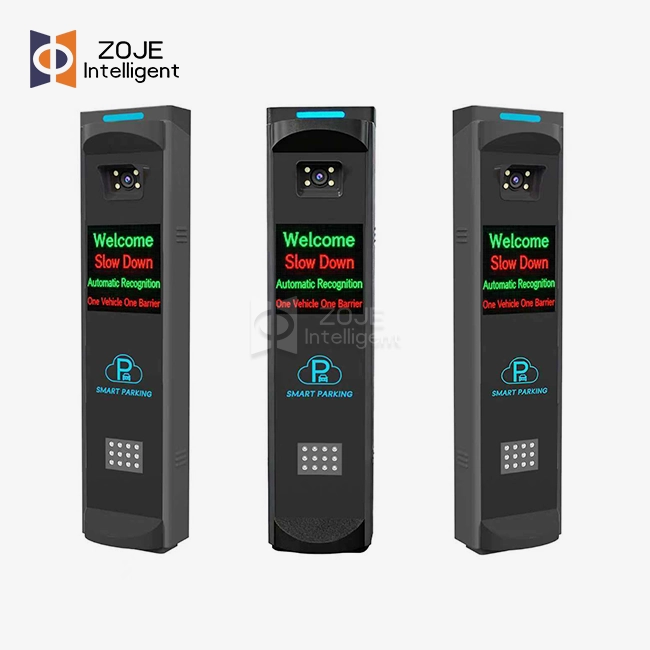
Parking Access Control With LPR System – ZOJE-LPR101
Parking Access Control With LPR does away with paper tickets and RFID fobs. Cameras read the plates instead. No mechanical parts sit in the lane, so nothing there moves anymore. That leaves staff with less work at the entry and the exit. Hong Kong ZOJE Intelligent Technology Co., Ltd. makes the ZOJE-LPR101, and the unit is built to ISO 9001:2015 standards. Plate formats from many countries work on it. Offline billing runs on it too. Outdoor installs are fine as well. Facility managers, system integrators, and parking operators pick it when they need vehicle access that holds up and grows with the site. OEM/ODM flexibility comes with it.
What Problems Does a License Plate Recognition Parking System Solve?
A lane running an old RFID or ticket setup jams up. Consumables eat money month after month. Security holes add up over time as well. Each of those problems gets taken on head on by the ZOJE-LPR101.
Throughput bottlenecks: About 150 vehicles an hour get through a conventional system. Once LPR access is in place, that figure climbs past 350. The reason is simple. Drivers no longer stop to scan at the barrier.
Operational costs: Paper tickets and plastic cards are no longer bought. Booth staffing drops as well. Fewer people are needed to run the booths by hand.
Revenue leakage: Swapping tickets got a lot harder. The same goes for claiming a lost ticket, or tailgating in behind another car. Once entry time is locked to one plate, it stays locked there. Nobody can pass it along the way a token gets passed along.
Hardware maintenance: Card readers and ticket dispensers have plenty of mechanical spots where things fail. LPR pulls those parts out of the lane entirely. Fewer repair trips follow from that.
Key Technical Specifications
| Parameter | Specification |
|---|---|
| Model | ZOJE-LPR101 |
| Recognition Rate | 99% |
| Operating Voltage | AC110-240V±10% |
| Operating Temperature | -20℃ to +60℃ |
| Relative Humidity | ≤95% without condensation |
| Rated Power | ≤60W |
| Communication | TCP/IP, RS485 |
| Display Type | P4 Red-Above-Green LED Module |
| Protection Class | IP64 |
| Material | High-strength carbon steel |
| Dimensions | 360×150×1490mm |
Core Technical Features
The ZOJE-LPR101 does plate recognition by itself, on the device. A vehicle image comes in through the camera, and the plate area of interest gets picked out. OCR then runs on-board. Server response time and network conditions, as a result, play no part in how long processing takes.
Accuracy stays steady at night as well. Even at zero lux, the 850nm IR illuminators keep it steady. Cameras with visible-light sensors alone often fail when headlights glare during a nighttime entry. That gap is what the illuminators close.
Fuzzy logic algorithms deal with ambiguity at the character level. One case is telling "0" from "O", or "8" from "B". Operators can set error-tolerance thresholds. Local plate standards and the working environment are matched by the camera after that.
More than 120dB of dynamic range means the camera can read plates in high-contrast scenes. Think of a car leaving a dark underground garage and driving straight into direct sun. Even at both exposure extremes, the plate stays legible.
Cast aluminum alloy makes up the housing, rated IP66/IP67. IK10 vandal resistance is part of the build, including Parking Access Control With LPR, along with a corrosion-resistant powder coating. At exposed or harsh-climate sites, it can stay outdoors for good.
Application Scenarios
Corporate campuses and logistics facilities: The system can be integrated with HR or fleet databases. Remove an employee or contractor from the access list and the change takes effect right away. No physical credential has to be collected. In logistics operations, the system logs when trucks arrive and leave. Those timestamps can feed dock scheduling workflows.
Residential communities and gated estates: People who live there drive in with no remote or fob. Guests can be handled through a visitor management screen. A guest plate gets registered in advance by the resident, and the pass only works for a set window. Lost or copied remotes stop being a worry too.
Retail and ticketless parking environments: Some lots have odd layouts and heavy turnover. There the system works out the fee from the entry and exit timestamps. Mud or physical damage can hide a plate. When that happens, an overview image is saved so an operator can check it by hand. QR code scanning is another option built into the access setup.

Quality Control Standards for Parking Access Control With LPR
Each ZOJE-LPR101 gets a full inspection before it ships. Nothing leaves the plant without one. Rules for that check come from the ISO 9001:2015 quality management framework.
Environmental stress testing shows how a unit behaves from -30°C up to +60°C. Through thermal cycles, processor speed and camera focus stay put. That holds over the whole range, not just at fixed endpoints.
Recognition and capture rate benchmarking are measured as separate metrics. Capture rate, defined as the camera detecting that a vehicle is present, is targeted above 99.9%. Recognition rate, defined as successfully reading the plate characters, reaches 99% under controlled access conditions.
Latency benchmarking tracks the gap from plate capture to the barrier relay signal. The ZOJE-LPR101 closes that gap in under 200ms. Drivers do not brake for nothing or wait at the barrier.
Regional OCR dataset validation checks how accurate the algorithm is on local plate formats. Two-row layouts are covered. Non-standard fonts and vanity plates are included too. The results show localized performance before a rollout in a new region.

Customization and OEM/ODM Services
Certain projects bring their own technical needs. Some bring branding needs too. ZOJE offers hardware customization for those cases. Software customization is available as well. Custom enclosure designs can come from the engineering team. The same team can build branded management interfaces. Third-party access control panels can be connected through Wiegand or OSDP protocols.
OEM and ODM cooperation is open to system integrators and distributors. It fits partners who need parking access control with LPR products sold under their own brand. Standard products have a lead time of 5–7 days. Customized orders usually ship in 10–15 days. Both DDU and DDP trade terms are supported. Sea freight can be arranged. Air freight is also possible, based on project timelines.
Thinking about the ZOJE-LPR101 for one specific deployment? You can reach the team at info@zoje-tech.com. Email them to ask for a datasheet. Integration questions are worth settling before you lock in a spec.
| Feature | Specification |
|---|---|
| CPU | Dual-core 900MHz + CNN acceleration |
| Image Sensor | 1/2.8" starlight-level CMOS |
| Max Resolution | 1920×1080 |
| Lowest Illumination | 0.01Lux (Color) |
| Data Output | H265/H264/MJPEG |
| Standard Lens | 6mm prime lens |
| Network Interface | 10/100Mbps RJ45 |
| Storage | TF card slot (512G max) |
| Component | Details |
|---|---|
| LED Count | 10 pieces |
| Maximum Power | 10W |
| Control Method | Intelligent light sensitivity |
| Effective Distance | 50LUX at 5 meters |
| Angle Adjustment | Supported |
Frequently Asked Questions
Q: What happens when it rains hard, or when snow and fog roll in?
A: When visibility drops, 850nm IR illuminators do better than visible-light cameras. A plate can get blocked once snow piles up. The system has fallback options for that case. Part of the wider access architecture are QR code readers or intercoms.
Q: Can the ZOJE-LPR101 integrate with an existing access control panel?
A: Yes. The system maps recognized plate strings to virtual card IDs and outputs Wiegand signals to the existing ACS panel. Operators manage users within their current software without replacing existing infrastructure.
Q: What prevents someone from using a printed plate image to spoof entry?
A: Entry validation requires detection of actual vehicle presence via loop detector or radar, coincident with the plate read. A flat image presented to the camera without a corresponding vehicle detection signal does not trigger barrier release.
Q: How are dirty or partially damaged plates handled?
A: Fuzzy matching lets a plate through when it matches a registered entry above a confidence threshold you can set. Say 6 of 7 characters. Go below the threshold and you get an "Unknown" event. An operator notification goes out for manual review.
Q: How do privacy laws like GDPR or CCPA treat stored plate data? Is there a compliant way to do it?
A: Once the retention period you set runs out, the plate data gets hashed by itself. Image areas with no plate on them are covered by privacy masking. All transmission goes out encrypted, over HTTPS/TLS 1.2.
Q: Can the system run offline?
A: Yes. The ZOJE-LPR101 performs front-end recognition and billing without a network connection and is unaffected by network delay or outages.
Contact Us
For technical consultation, product specifications, or OEM/ODM inquiries about parking access control with LPR, Contact Us at info@zoje-tech.com.
Send Inquiry
You may like