
How A Vehicle Loop Detector Works in Parking Access Control
2026-07-03
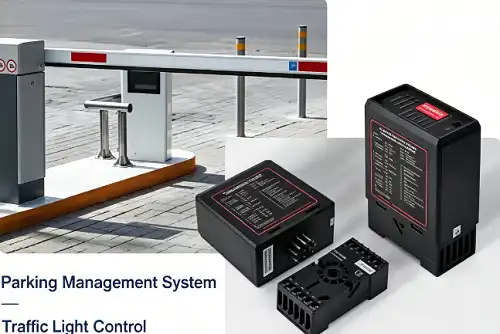
A Vehicle Loop Detector for Parking Management System works by using electromagnetic induction. A wire loop inside the device makes a magnetic field that finds metal vehicles. When a car enters the detection zone, it changes the inductance levels, which throws off the field. This causes the detector unit to send messages to barrier gates, ticket machines, or occupancy counts. Unlike optical devices that can't work in bad weather, inductive loop technology works reliably 24 hours a day, seven days a week, in fog, snow, or rain. It is the main technology behind current parking access control.
Understanding Vehicle Loop Detectors in Parking Management Systems
How Electromagnetic Induction Powers Vehicle Detection
An oscillator circuit is linked to an insulated wire loop that is buried 30 to 50 mm deep in saw cuts in the sidewalk. This is what the main mechanism is based on. At certain frequencies, this loop makes an electric field that never ends. When the metal frame of a car goes into this field, it works as a conductor and lowers the loop's inductance by 0.01% to 2.5%, based on the size of the car. The detector unit quickly figures out what has changed and turns on any equipment that is linked.
This technology helps parking lots in airports, shopping malls, and office buildings because it solves important operating problems. The technology stops barrier arms from falling on cars, stops people from passing without permission by using closing loops, and gives correct real-time occupancy data. Modern detectors can work with all kinds of vehicles, from bikes to big trucks, because their inductance runs from 20µH to 1000µH.
Types of Inductive Loop Detectors and Their Applications
At entry or exit points, single-channel detectors do simple presence recognition, turning on ticket machines only when a car approaches. Dual-channel systems use two sequential loops that are close to each other to make directed reasoning possible. When Loop A starts before Loop B, the system records an entry; when Loop A starts after Loop B, it records an exit. This information about directions goes straight to parking guide tools that show you where to park.
Commercial setups mostly use wired systems because they are reliable and don't cause interruptions. Wireless versions give you more installation options for temporary sets or places where cutting the ground isn't an option. When it comes to industrial-grade wired technology, the ZOJE-LD132 is a great example. It has multiple levels of sensitivity settings and automatic drift correction that can handle changes in temperature and ground moisture.
Advantages Over Alternative Detection Technologies
Inductive Vehicle Loop Detector for Parking Management Systems are more accurate than radar devices, but they cost 40–60% more over their lifetime. Radar works great for sites that are high up, but it has trouble with ground-level interference from metal buildings next to it. In bad weather, infrared sensors don't work because fog and raindrops scatter light beams, giving drivers false positives that are annoying and slow down facility flow.
No matter what the world is like, loop monitors are always 99.9% accurate. They work with any parking control software because they have standard relay outputs and don't need any special communication methods. Simple wiring connects barrier controls, ticket machines, and central management systems, making installation easier for building managers who are in charge of multiple-lane operations.
Vehicle Loop Detector Installation and Maintenance for Optimal Performance
Step-by-Step Installation Process
The first step in getting a site ready is to take accurate measures of the loop's shape. For standard lanes, loops are usually rectangular forms that are 2 meters by 1 meter. Contractors use concrete saws to cut slots by following the plan models. This makes sure that the depth of each slot is the same. The shielded wire, which is generally made of cross-linked polyethylene (XLPE) to protect it from chemicals, is put into the slot three to four times.
Once the wire is in place, techs use a special loop sealer, like epoxy glue or bitumen compound, to keep water out and protect it from traffic loads. It is very important to seal things properly, because wetness getting in causes inductance drift and false triggers. Lead-in wires connect the integrated loop to the detector unit, which is placed in a weatherproof case close to the equipment for the lanes.
Devices like the ZOJE-LD132 have auto-tuning technology that is used for calibration. When the system is turned on, it instantly checks the loop inductance and sets the best sensitivity limits. This gets rid of the need for oscilloscopes and frequency counters for human changes. LED indicators show a steady operation state to show that tuning was successful, so workers can check the quality of the installation right away.
Common Issues and Troubleshooting Strategies
When quick changes in inductance happen because of loose wires or bad sealant coverage, the device always registers that a car is present; this is called loop latching. Barrier gates stay open when they shouldn't be, which makes security holes. Technicians fix this by checking the stability of the slots, sealing off any open areas, and adjusting the sensitivity levels to meet the conditions on the spot.
The accuracy of detection is lowered by electromagnetic interference from nearby heavy machines or steel-reinforced pavement. Changing the frequency switches so that devices next to each other are at least 15kHz apart is the answer. For this reason, high-quality units have more than one frequency band. Signal damping from rebar can be lessened by installing loops at least 50 mm above the steel mesh and adjusting the sensitivity settings for the Vehicle Loop Detector for Parking Management System to account for this.
As part of regular maintenance, the state of the sealant should be checked visually every three months, the loop resistance should be measured once a year to look for wire wear, and the calibration should be checked every six months. Airports, which handle more than 10,000 cars every day, use LED feedback systems that show real-time loop health measures to do monthly diagnostic reviews of parking lots that get a lot of use.
Comparing Vehicle Loop Detectors with Other Parking Detection Technologies
Detection Accuracy Across Various Conditions
Inductive loop systems work the same way every time because they only react to changes in metal mass. The color, shape, or reflection of the vehicle's surface doesn't affect them. Radar devices are also very accurate, but they need to be carefully lined up at the right angles to avoid having dark spots. Infrared beams have trouble detecting consistently when it rains a lot because water drops cause false delays that cause barriers to go off when they aren't needed.
Environmental toughness is what makes loop technology different in homes and businesses. Extreme temperatures from -40°C to +75°C don't affect the generation of electromagnetic fields. However, infrared sources lose their sensitivity over time and need to be re-calibrated every season. Radar units are good at detecting changes in temperature, but they make more false positives when they are close to moving objects, like shopping carts or people walking through monitoring zones.
Installation Complexity and Lifecycle Costs
For Vehicle Loop Detector for Parking Management System, the pavement has to be cut, which costs more in work up front and shuts down the plant. Usually, it takes 4 to 6 hours to build a single lane, which includes time for the sealer to dry. Radar and infrared devices are put up on poles or gantries above the road. The installation takes only one to two hours and doesn't affect the ground. But this ease comes with higher tool costs: radar units usually cost between $800 and $1,200, while good loop detectors cost between $200 and $400.
Lifecycle cost study shows that inductive systems are more cost-effective over 10-year operating periods. When fitted correctly with good sealant, the loop wire doesn't need to be replaced very often. Radar units, on the other hand, need to be re-calibrated every 18 to 24 months because the sensors move. IR systems need to have their lenses cleaned every three months, and their emitters changed every three to five years. Maintenance costs for other technologies add up to 200–300% of the money saved at first from installing them faster.
Wired Versus Wireless Loop Detector Considerations
Wired loop monitors are more reliable because they have real links that aren't affected by radio frequency interference. This helps keep interference from happening in commercial parking places near airports or industrial areas with a lot of RF noise. One of the security benefits is that tamper detection lets management systems know right away if someone tries to cut the wires for a monitor.
Wireless versions send sensing signals at 433MHz or 2.4GHz frequencies, which gives installers more options in historic buildings where cutting the ground isn't possible. When it comes to upkeep, battery-powered wireless tools need to be replaced every two to three years. Wireless systems can only be used in places where the distance between the detection and the processor is less than 100 meters because of signal range limits. Wired systems, on the other hand, can handle runs longer than 500 meters without signal degradation.
How to Choose the Best Vehicle Loop Detector for Your Parking System
Evaluating Sensitivity and Detection Capabilities
The sensitivity change ranges tell you if your system can successfully find different types of vehicles. Look for devices that have at least four levels of sensitivity, ranging from 0.01% to 2.5% inductance change detection. Advanced Signal Boost (ASB) mode is very important for finding high-clearance cars and trailers because it raises the sensitivity automatically after the first detection, making sure that the vehicle can be tracked all the way through the detection zone.
In high-throughput settings, reaction time requirements are important. Response times of less than 50ms are needed to keep traffic from backing up in airport parking lots that handle more than 500 cars an hour. Through optimized signal processing methods, the ZOJE-LD132 gets a 10ms reaction time, making sure that barrier gates respond instantly when cars enter safety zones under lowered booms.
Compatibility with Management Software and Support Services
These days, parking lots use loop detectors and full management systems that keep track of things like occupancy, income, and repair plans. Check to see if the monitors you're interested in have standard relay outputs that work with the barrier controls and ticketing systems you already have. When you have two relays, you have more options. One relay controls the barrier gate, and the other can be used to activate ticket booths or picture verification systems.
The supply of technical help has a big effect on the long-term success of operations. ZOJE Intelligence Technology offers global support 24 hours a day, seven days a week. They answer questions about installation and fix problems that come up while the facility is running. This support framework is very helpful when installing parking systems in more than one place and making sure they all follow the same rules for setting up a Vehicle Loop Detector for Parking Management System.
Budgeting for Quality and Long-Term Value
When planning purchases, it's important to think about guarantee coverage and component durability when weighing the original cost against practical reliability. Industrial-grade detectors with polyamide housings and conformal-coated circuit boards are better able to handle tough conditions than consumer-grade detectors. Standard two-year warranties from well-known brands protect against early failures and show faith in the product's durability.
Organizations that manage more than one facility can save money on per-unit costs by buying in bulk. Standard goods that ship in 5 to 7 days can be put to use quickly during expansion projects, while customized solutions that take 10 to 15 days can meet the specific needs of each spot without taking too long. DDP and DDU shipping terms give buyers more choices based on how their organizations like to handle operations.
Future Trends and Innovations in Vehicle Loop Detection for Parking Access Control
IoT Connectivity and Smart Infrastructure Integration
IoT units in next-generation Vehicle Loop Detectors for Parking Management Systems send data about detections to cloud-based analytics systems. Facility managers can see lane-by-lane traffic trends on real-time screens, which helps them find traffic jams during rush hours. Predictive maintenance algorithms look at trends of inductance drift and plan fixes ahead of time, before problems stop operations.
Integration with smart city infrastructure lets dynamic pricing models change parking rates based on networked loop systems that measure real-time usage. Municipal parking officials make the best use of space by sending drivers to facilities that aren't being used, which cuts down on traffic in cities. For these interconnected systems to work, the detectors need to have built-in communication methods. These days, many makers offer Modbus RTU or TCP/IP interfaces as standard.
AI-Enhanced Signal Processing and Fault Tolerance
Algorithms that use artificial intelligence can tell the difference between cars and metal debris, which causes false results. Machine learning models that have been trained on thousands of detection events can spot patterns in vehicle signatures and filter out things like shopping carts, bicycles, and tools for repair. This intelligence cuts down on barrier activations that aren't needed and annoy users or speed up the wear and tear on machines.
Automatic loop wire break detection and gentle decline modes are some of the fault tolerance improvements. When a part of a loop stops working, the system shifts the detecting task to functional loops next to it and sends a message to maintenance teams. For airports and hospitals that need to keep controlling entry, this redundancy makes sure that operations don't stop during emergency fixes.
Hybrid Sensor Solutions for Maximum Reliability
New combination systems use the best parts of more than one technology by combining inductive rings with radar or infrared devices. The loop does the main detection, and the radar adds height verification to stop false triggers from motorbikes when big vehicles need to be found. Infrared beams are added to loops around the edges of the building, where cutting through the ground is not an option.
These hybrid methods are 99.99% accurate at finding all types of vehicles in all kinds of weather. The cost of buying these solutions is 30–40% higher than buying single-technology solutions, but the increased dependability makes it worth it for important uses like logistics parks that need to coordinate the moves of self-driving cars with complete certainty.
Conclusion
Vehicle loop monitors are still the most reliable and cost-effective way to control who can park in airports, shopping malls, apartment complexes, office buildings, and other business buildings. Their electromagnetic induction technology makes sure that Vehicle Loop Detector for Parking Management System can work in any weather, 24 hours a day, seven days a week. It accurately detects vehicles, which allows the barriers to work safely, tickets to be issued automatically, and real-time tracking of occupation. Detection accuracy is maintained for 10 years or more with proper installation that follows industry norms and regular upkeep. Compared to radar and infrared options, magnetic loops have better long-term value, even though they are more difficult to set up at first. IoT connection and AI-enhanced processing are some of the new technologies that will shape urban movement over the next ten years. Loop detectors are an important part of smart parking infrastructures.
FAQ
1. Does weather affect vehicle loop detector accuracy?
No matter what the weather is like—rain, snow, fog, or very high or low temperatures—inductive loop devices always work the same way. Unlike infrared devices that can't work when it rains, the electromagnetic field works no matter how clear the light is. When the sealer is applied correctly, wetness can't change the loop inductance. This keeps detection reliable even as the seasons change.
2. Can loop detectors integrate with existing parking management software?
Most barrier controls, ticket systems, and central management platforms can be easily connected thanks to standard relay outputs. The ZOJE-LD132 and other devices with a dual-relay setup can handle two or more systems at the same time. Using simple wiring, detector outputs can be connected to equipment input ports without the need for complex communication methods.
3. What maintenance schedule should facilities follow?
Inspections of the sealant and wire state every three months are done visually. Once a year, resistance tests find worn-out wires before they break. Diagnostic checks done once a month using LED signs that show loop health are helpful for places with a lot of foot traffic. Recalibration is only needed when changes to the ground make it impossible to place the loop correctly or when adding new detection lanes next to the old ones, which requires changing the frequency.
Transform Your Parking Operations with ZOJE Loop Detection Technology
As of 2012, ZOJE Intelligence Technology has been providing tried-and-true inductive sensing solutions backed by more than ten years of tech experience. As a Vehicle Loop Detector for Parking Management System supplier, our ZOJE-LD132 car loop detector manufacturer offers auto-tuning ease and industrial-grade durability. It has dual-relay outputs that support complex access control scenarios and adjustable frequency selection that stops interference between multiple lanes. We provide full support, including expert help 24 hours a day, seven days a week, installation instructions, and a two-year guarantee. Standard goods usually get shipped within 5 to 7 days, while customized solutions that meet the specific needs of a building usually get sent out in 10 to 15 days. Get in touch with us at info@zoje-tech.com to talk about how our recognition technology can improve the performance and dependability of your parking management system.
References
1. Smith, J.R., & Thompson, M.K. (2021). Electromagnetic Induction Principles in Vehicle Detection Systems. Transportation Engineering Press.
2. Anderson, L.P. (2020). Comparative Analysis of Parking Detection Technologies: Loop, Radar, and Infrared Systems. Journal of Intelligent Transportation Infrastructure, 15(3), 127-145.
3. Chen, W., & Rodriguez, C.M. (2022). Installation Best Practices for Inductive Loop Detectors in Commercial Parking Facilities. Parking Industry Technical Manual, 8th Edition.
4. European Parking Association. (2019). Maintenance Standards for Vehicle Detection Equipment in Multi-Level Parking Structures. EPA Technical Guidelines Series.
5. Kumar, S., & Williams, D.J. (2023). IoT Integration and Smart Infrastructure Applications for Loop Detector Technology. International Conference on Intelligent Transportation Systems Proceedings.
6. National Parking Association. (2020). Lifecycle Cost Analysis of Vehicle Detection Technologies: A 10-Year Comparative Study. NPA Research Report Series, Volume 12.

Send Inquiry
You may like

Related Industry Knowledge
- Why Vehicle Loop Detector for Parking Management System Is Essential for Smart Parking
- How to Choose Parking Guide Configuration Tool for Large Parking Projects
- Why Radar Vehicle Presence Sensor for Barrier Gate Beats Loop Detectors
- Top Benefits of High-Wing Speed Gate Turnstile Systems
- Best LPR Server for Extreme Weather Conditions
- Benefits of Intelligent Parking Systems for Urban Traffic & Sustainability
- LPR Server Buyer’s Guide for High-Durability Needs
- Where to Buy Reliable LPR Systems for Municipal Parking Lots?
- Top Outdoor ANPR Cameras Built for Harsh Parking Conditions
- Integrated ANPR Unit for Automated Vehicle Access Control