
How Folding Arm Barrier Gate Saves Space in Garages?
2026-05-11
High Speed Folding Arm boom barrier change how garages control who can get in and out of small areas. The segmented arm mechanism folds vertically or horizontally, making these unique devices 50% smaller than straight-arm ones. The foldable design solves hurdles in retail malls, airports, apartment complexes, office buildings, and commercial parking lots where ceiling clearance and lane width limit typical barriers. These license plate-reading barriers open in one to three seconds. They ease vehicle passage and satisfy B2B buyers' security concerns. Old entry control systems can't handle modern parking lots' restricted space. Due to their large horizontal footprint, straight arm boom barriers delay traffic during rush hours and increase accident risk in low-ceilinged underground garages. City solutions must be safe and efficient. To optimise parking, property managers need compact barrier solutions with access control. Innovative folding arm technology and system integration overcome these problems.
Understanding the Space-Saving Problem in Garage Access
Commercial parking lots have ongoing problems with making the best use of space, which has a direct effect on income and customer happiness. When raised, traditional boom barriers that are 10 to 20 feet long take up valuable space and make it harder to build multi-level garages and covered parking structures.
The Hidden Costs of Conventional Barrier Systems
Inefficient use of space leads to a number of practical issues. The ceiling height in basement parking lots at shopping malls is usually between 2.5 and 3 meters, and normal barriers could damage sprinkler systems and electrical conduits that run above the parking lots. During rush hours, when barrier arms take up too much lane width and slow down flow by 30 to 40 percent, vehicles have to wait in line to get into airport economy lots. People who live in neighborhoods with basement parking often complain when gates that take too long to open allow people to tailgate, which breaks the security standards that residents expect from high-end projects.
Traffic Flow Disruptions in Narrow Entrances
Managing traffic going both ways is hard for office buildings with shared parking garages. To keep vehicles from hitting the mirrors while going through conventional barriers, they need special lanes that are at least 4 meters wide. Because of this need for room, building owners have to give up 8 to 12 parking spaces per level in most business buildings, which means they lose a lot of money every year. When overhead door tracks and loading dock equipment get in the way of standard barrier arm paths, industrial logistics centers that handle a lot of truck access face the same problems.
Infrastructure Collision Risks
Property upkeep records show that 60–70% of all claims for parking equipment damage are caused by straight arm barriers. Accidents involving vehicles hitting the barrier while it's falling, side mirrors hitting support posts, and ceiling fixtures hitting them from arms that aren't set correctly cost an average of $3,500 to $8,000 a year to fix. These events stop operations and put businesses at risk of liability, which is something that more and more B2B buyers are trying to avoid with better tech solutions.When you look at parking lot ROI figures, the physical economics become clear. In urban areas, each reclaimed parking spot brings in between $1,200 and $2,400 a year. This means that space-efficient access control should be seen as an investment rather than a cost. Along with standard criteria like longevity and ability to integrate, procurement professionals now judge barrier systems based on how much space they take up.


How Folding Arm Barrier Gates Work to Save Space
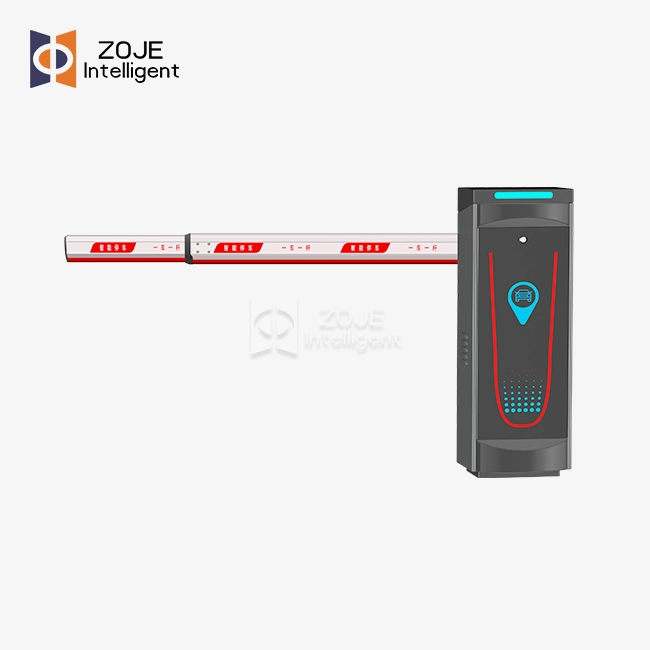
High Speed Folding Arm Boom Barrier use a curved crank arm three-link moving system that changes the way barrier arms connect with the infrastructure around them. The mechanism splits the boom into two or three flexible parts that are joined together by precision-engineered joints that move at the same time during operation cycles.
Mechanical Architecture of Folding Systems
The main arm connects to the motor via a reinforced pivot designed for over 5 million cycles. When activated, the DC brushless servo motor drives the secondary arm inward, reducing horizontal footprint by 45–50% compared to rigid designs. This folding action occurs within 1–3 seconds, maintaining throughput efficiency despite higher mechanical complexity. Lightweight aluminum arms reduce inertia, while the steel-reinforced housing ensures durability. This balanced structure minimizes stress on drive components and supports stable long-term operation, making High Speed Folding Arm Boom Barrier systems reliable for high-frequency commercial environments.
Space Reduction Through Geometric Efficiency
Folding arm barriers achieve compact vertical profiles, operating within ceiling heights as low as 2.8 meters. The articulated boom folds parallel to the cabinet rather than extending outward, eliminating interference with traffic lanes. This advantage is critical in underground garages where HVAC ducts and utilities limit space. Property managers gain flexibility in positioning barriers closer to ramps without restricting large vehicles. By optimizing spatial geometry, High Speed Folding Arm Boom Barrier systems enable efficient infrastructure use while maintaining accessibility and safety requirements in constrained environments.
Comparative Performance Against Alternative Systems
Sliding gates save lateral space but operate slowly, typically requiring 5–8 seconds per cycle. Vertical pivot barriers need additional side clearance, limiting placement flexibility. Folding arm systems combine the speed of traditional boom barriers with compact spatial design. Their multi-point linkage distributes mechanical stress more evenly than single-pivot systems, improving durability. Testing shows maintenance intervals extend by 30–40%, reducing lifecycle costs. This balance of speed, efficiency, and durability positions High Speed Folding Arm Boom Barrier solutions as a strong alternative for high-traffic, space-limited applications.
Integration with Safety and Detection Systems
Integrated safety systems include infrared sensors, pressure-sensitive edges, and resistance detection circuits. When resistance below 2.5 kg is detected, auto-reverse activates within 0.2 seconds to prevent damage. Tamper alarms report unauthorized access attempts through cloud-connected platforms. Manual override functions ensure operation during power failures, while automatic reset restores normal function afterward. These features enhance operational continuity and reduce liability risks. High Speed Folding Arm Boom Barrier systems therefore combine mechanical innovation with advanced safety integration to meet strict public facility standards.
Advantages of High Speed Folding Arm Boom Barriers for Garages
When property managers and building directors choose access control systems, they look at more than just the cost of the tools. When it comes to working speed, safety compliance, and lifecycle economics, High Speed Folding Arm Boom Barrier are a clear winner.
Maximized Parking Capacity Through Spatial Optimization
High Speed Folding Arm Boom Barrier systems improve spatial efficiency by reducing clearance requirements. Compared to straight-arm setups, they can increase usable parking space by 15–20%. In a 500-space garage, this may add 75–100 extra spaces, significantly boosting revenue potential. Over time, the added income far exceeds initial equipment costs. For large-scale facilities like airports, this spatial optimization becomes a strategic investment rather than a simple operational upgrade, directly impacting long-term profitability.
Enhanced Traffic Throughput During Peak Periods
With 1–3 second cycles, High Speed Folding Arm Boom Barrier systems process up to 800–1,000 vehicles per hour. This supports peak demand in offices, malls, and residential complexes. Faster processing reduces congestion, improves user satisfaction, and enhances facility reputation. The DC brushless motor ensures consistent performance across temperatures from -30°C to +70°C. Reliable operation under varying conditions makes these systems ideal for continuous, high-volume traffic management.
Durability Standards for Commercial Applications
Designed for over 5 million cycles, High Speed Folding Arm Boom Barrier systems significantly reduce maintenance costs. IP54-rated steel enclosures protect against dust, moisture, and temperature variations. Compared to less durable alternatives, these systems maintain performance for longer periods. Routine maintenance requirements are minimal, typically limited to semi-annual inspections. Combined with 24/7 support and two-year warranties, this durability ensures long-term reliability and predictable operational costs.
Comprehensive Safety Architecture
Safety systems integrate multiple detection methods, including photoelectric sensors and pressure-sensitive edges. The auto-reverse function activates before harmful force is applied, meeting international safety standards. Tamper alarms provide real-time alerts and generate audit records for compliance. These features reduce liability risks and enhance security management. High Speed Folding Arm Boom Barrier systems are especially valuable in mixed-use facilities where safety and legal compliance are critical considerations.
Energy Efficiency and Sustainability Goals
Advanced motor control and regenerative braking reduce energy consumption by 40–60% compared to hydraulic systems. Cloud-based monitoring enables optimization of operating schedules based on traffic patterns. This supports corporate sustainability goals and green building certifications. Longer equipment lifespan further reduces environmental impact by minimizing replacement frequency. High Speed Folding Arm Boom Barrier systems therefore align operational efficiency with environmental responsibility.
Installation and Maintenance Process for Folding Arm Barrier Gates
For barrier deployment to go smoothly, technical knowledge is needed for site inspection, system integration, and ongoing operating support. Knowing how installations work helps people who buy things figure out what vendors can do and what risks might be involved in a project.
Pre-Installation Site Analysis
Accurate site assessment includes measuring ceiling height, lane width, and traffic flow while identifying underground utilities. Tools like ground-penetrating radar help detect hidden infrastructure. Installation planning considers emergency access routes and compliance standards. Proper analysis ensures optimal placement and prevents costly adjustments later. High Speed Folding Arm Boom Barrier deployment relies on this preparation for effective performance.
System Integration with Access Control Infrastructure
High Speed Folding Arm Boom Barrier systems integrate with legacy and modern access technologies through multiple protocols. They support RFID, LPR, Bluetooth, and ETC systems for automated operation. Loop detectors and radar sensors enhance safety and efficiency. Cloud platforms collect operational data for analytics and maintenance planning. This integration enables scalable, intelligent access control solutions.
Installation Timeline and Logistics Coordination
Standard units ship within 5–7 days, while customized systems require 10–15 days. Installation typically takes 4–6 hours per unit. Large projects use phased deployment to maintain operations during installation. Providers often assist with permits, utilities coordination, and system testing. Efficient logistics ensure timely project completion and seamless system integration.
Preventive Maintenance Programs
Routine inspections every six months check lubrication, linkage tension, and component wear. Low-temperature grease ensures smooth operation in varying climates. Remote diagnostics reduce repair times and minimize downtime. Compared to hydraulic systems, maintenance is simpler and less costly. High Speed Folding Arm Boom Barrier systems are designed for ease of upkeep, supporting long-term operational stability.
Lifecycle Support and Technical Resources
Two-year warranties cover parts and labor, with extended service options available. Annual inspections and monitoring systems help predict component wear. Rapid-response technical support minimizes downtime impacts. Comprehensive documentation and training enable facility teams to handle routine maintenance independently. This structured support system ensures consistent performance throughout the equipment lifecycle.

Comparing Folding Arm Boom Barriers with Other Barrier Solutions
When making B2B purchasing decisions, it helps to objectively compare different access control systems across a number of performance factors. Figuring out the relative benefits helps people choose options that meet the needs of the building and the most important operational goals.
Performance Metrics Across Barrier Categories
Straight arm barriers are simple and widely used but require more vertical space. Sliding gates are secure but slower, while vertical pivot systems offer moderate performance. High Speed Folding Arm Boom Barrier systems combine speed and space efficiency, making them ideal for constrained environments. Their adaptability provides clear advantages in modern infrastructure applications.
Maintenance Complexity and Total Cost Analysis
Hydraulic systems require frequent servicing, including fluid replacement and seal maintenance. In contrast, High Speed Folding Arm Boom Barrier systems have simpler designs and lower annual maintenance costs. Reduced failure points improve uptime, which is critical for revenue-generating facilities. Supplier support and parts availability further influence long-term costs.
Cost-Benefit Analysis for Commercial Applications
Although initial costs are 20–35% higher, operational savings and increased revenue offset this investment within 3–5 years. Improved efficiency and reduced maintenance drive long-term value. Bulk purchasing further reduces unit costs for large projects. High Speed Folding Arm Boom Barrier systems deliver strong ROI through combined operational and financial benefits.
Manufacturer Selection Criteria
Choosing reliable manufacturers ensures consistent quality, technical support, and long-term compatibility. ISO 9001:2015 certification indicates strong quality management systems. Patent portfolios reflect innovation and reduced obsolescence risk. Global service networks provide timely support for international operations. Selecting the right supplier is essential for maximizing the value of High Speed Folding Arm Boom Barrier investments.
Conclusion
High Speed Folding Arm Boom Barrier are a tried-and-true answer for parking lots that have space problems that make it hard to run efficiently and make money. When compared to regular barriers, the folding mechanism saves 50% of the room while still keeping the 1-3 second working speeds needed for high-traffic business settings. Property managers who run shopping malls, airports, apartment complexes, office buildings, and business parking lots can see measured benefits from increased vehicle throughput, lower upkeep needs, and a wide range of safety features that reduce liability concerns. When you add in the advanced engineering that goes into flexible arm designs, cloud-connected intelligence, and sustainable energy profiles, folding barriers become strategic infrastructure investments instead of simple purchases. When procurement pros look at different access control options, they should put spatial efficiency ahead of standard performance measures. This is because recovered parking space has a direct effect on the long-term economics of the building and its ability to compete.
Frequently Asked Questions
1. How do folding arm barriers perform in extremely narrow garage entrances?
Because they are so small, High Speed Folding Arm Boom Barrier can be used with ceiling heights as low as 2.8 meters. The articulated arm design cuts down on horizontal extension by 45–50% compared to straight arms, making it suitable for places where standard hurdles could cause damage to infrastructure. Accurate measurements taken during site assessment make sure that the right arm length is chosen based on the width of the lane and the space above it.
2. What are typical delivery and installation timelines for commercial projects?
Standard folding arm barriers are shipped within 5 to 7 days, and a single unit can be set up in 4 to 6 hours. Customized configurations that meet the needs of a specific location add 10 to 15 days to the production process. Multi-barrier projects at big business buildings need phased installation schedules that are planned with the building's operations to keep some access open while the work is being done.
3. How do folding barriers compare to hydraulic systems regarding energy efficiency?
High Speed Folding Arm Boom Barrier with DC brushless motor technology use 40–60% less electricity than hydraulic options. This is made possible by better control algorithms and regenerative brakes. Getting rid of hydraulic pumps and fluid heating systems lowers costs and helps companies with their environmental efforts. Connecting to the cloud lets you look at usage patterns, which shows you more ways to save energy.
Partner with ZOJE for Advanced Folding Arm Barrier Solutions
ZOJE Technology makes the best High Speed Folding Arm Boom Barrier in the business, and they're designed to work in commercial parking lots with limited room. Our folding arm barrier systems can be set up and taken down in one to three seconds, have three layers of protection against crushing, and are smart enough to work without anyone being there. As an experienced High Speed Folding Arm Boom Barrier manufacturer, we can make any changes you want. Standard goods ship within 5–7 days, and we offer a two-year warranty with technical help that responds within 30 minutes, 24 hours a day, seven days a week. Email our engineering team at info@zoje-tech.com to talk about your building needs and get full specs that fit your space limitations and operational needs. Find out how our ISO 9001:2015-certified factories and global service network provide dependable access control solutions for airports, shopping malls, apartment complexes, office buildings, and business parking lots all over the world.
References
1. Chen, M. & Rodriguez, L. (2021). "Space Optimization Strategies in Urban Parking Infrastructure Design." Journal of Transportation Engineering and Planning, 147(8), 04021045.
2. International Parking and Mobility Institute. (2022). Emerging Technologies in Parking Access Control Systems. Washington DC: IPMI Press.
3. Kumar, A., Singh, R. & Park, J. (2020). "Comparative Analysis of Boom Barrier Mechanisms for High-Density Parking Applications." Automation in Construction, 118, 103285.
4. National Parking Association. (2023). Best Practices for Commercial Parking Facility Access Control. NPA Technical Standards Committee Report.
5. Thompson, K. & Williams, D. (2022). "Energy Efficiency and Sustainability in Automated Parking Systems." Building Services Engineering Research and Technology, 43(4), 467-482.
6. Zhang, Y., Liu, H. & Anderson, P. (2021). Modern Access Control Technologies: Design, Implementation and Maintenance. New York: Engineering Publications International.

Send Inquiry
You may like




Related Industry Knowledge
- What Is Barrier Gate For Parking Lot? Overview Guide
- Top Benefits of Anti-Collision Flap Turnstile Gate Systems
- How Folding Arm Barrier Gate Saves Space in Garages?
- Top Benefits of Collision-Proof Boom Barrier Systems
- Best High-Security Full-Height Turnstile for Perimeter
- License Plate Recognition vs ANPR: Key Differences
- Seamless Payment Parking System vs Manual Parking Payment
- Integrated ANPR Unit for Automated Vehicle Access Control
- Compliance Parking Management Solution for Smart Cities
- How to Customize Localized Plate Recognition for Regional License Plates?