
How Radar Vehicle Presence Sensor for Barrier Gate Improves Access Control
2026-06-29
Radar Vehicle Presence Sensor for Barrier Gate: Change the way entry is controlled by using millimeter-wave technology to accurately identify cars in any weather or lighting. Traditional inductive loop detectors need expensive changes to the ground to work. Radar sensors, on the other hand, can be mounted directly on barrier housings, detecting vehicles instantly and making installation easier. This technology stops people from tailgating, cuts down on false triggers, and works consistently in rain, snow, fog, and dust, which are all conditions that make infrared and ultrasonic options less useful. As a result, business parking lots, airports, neighborhoods, office buildings, and industrial sites are safer, traffic flows more smoothly, and upkeep costs are much lower.
Understanding Radar Vehicle Presence Sensor for Barrier Gate
The Technology Behind Millimeter-Wave Detection
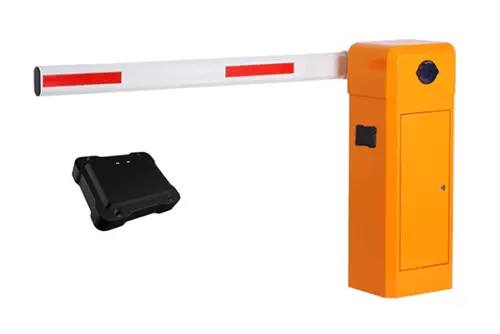
Millimeter-wave radar devices use FMCW technology to transmit focused electromagnetic signals that reflect off vehicles in defined detection zones. The ZOJE-RA2 operates within a 107.5×73.2×18mm housing, reliable from -40°C to 85°C with under 2.5W power consumption. Advanced signal processing analyzes reflections to determine presence, distance, and movement with split-second accuracy. This technology enables automatic barrier systems to respond precisely when vehicles approach. The compact design allows seamless integration into existing barrier infrastructure without modifications.
Key Advantages Over Conventional Detection Methods
Traditional loop detectors struggle with composite vehicles and require costly ground cutting for installation. Infrared sensors fail during adverse weather, while ultrasonic devices suffer temperature sensitivity. Radar technology overcomes these limitations through superior environmental resilience. Electromagnetic waves penetrate fog, rain, and dust that disable optical systems, ensuring consistent detection accuracy regardless of weather conditions. Detection works reliably across all vehicle types from motorcycles to commercial trucks. Extended sensing ranges up to 10 meters provide ample barrier response time, preventing collisions.
Millimeter-Wave vs. Traditional Detection Technologies
Loop detectors require excavation, conduit installation, and periodic pavement replacement. Camera-based systems raise privacy concerns and demand adequate lighting. Infrared units need frequent lens cleaning and alignment. Radar devices eliminate these issues through surface mounting, privacy-preserving operation, and minimal maintenance requirements. Electromagnetic sensing functions without optical visibility, making radar optimal for stability-focused installations. MTBF exceeding 100,000 hours ensures years of uninterrupted operation. The ZOJE-RA2 exemplifies this reliability through robust design.
Comparing Radar Vehicle Presence Sensors with Other Vehicle Detection Technologies
Performance Across Environmental Challenges
Weather severely tests vehicle detection systems. Raindrops scatter infrared beams, causing false triggers or detection gaps. Snow accumulation temporarily disables ultrasonic sensors. Cameras struggle with glare, darkness, and lens contamination. Radar Vehicle Presence Sensor for Barrier Gate maintains consistent performance across all these conditions. Millimeter-wave pulses penetrate fog, rain, and airborne particulates without attenuation. Wide operating ranges from -40°C to 85°C protect electronics from temperature extremes. This inherent resilience ensures reliable barrier operation regardless of seasonal weather patterns.
Installation Complexity and Infrastructure Requirements
Conventional loop detector installation disrupts facility operations through road closures, pavement cutting, wire burial, and surface restoration—requiring specialized labor and equipment. Infrared sensor panels demand precise alignment across traffic lanes, complicating wide-opening installations. Radar sensors dramatically simplify deployment through direct barrier mounting without civil works. Electrical connection integrates easily with existing control systems via RS485 or relay outputs. Mobile app configuration enables detection zone adjustments without physical modifications. Installation time drops from hours to minutes, minimizing operational disruption.
Detection Range and Accuracy Considerations
Loop detectors provide binary presence signals within fixed buried wire perimeters. Infrared sensors detect objects crossing beam lines but struggle with small vehicles between multiple beams. Ultrasonic units have limited range and angular sensitivity. Radar technology offers configurable detection zones extending 3 meters forward with adjustable lateral coverage for single lanes or wide openings. Advanced signal processing differentiates between vehicles and pedestrians through radar cross-section analysis. The ZOJE-RA2's LED indicators provide instant visual confirmation—red indicates power, green activates upon vehicle detection.
How to Choose the Best Radar Vehicle Presence Sensor for Your Barrier Gate?
Assessing Detection Accuracy and Range Requirements
Facility-specific detection needs determine sensor selection. Commercial parking lots with mixed traffic require sensors distinguishing closely spaced vehicles to prevent pass-through accidents. Highway toll lanes need extended detection ranges for high-speed approach warning. Residential areas benefit from pedestrian filtering to reduce false barrier activations. The ZOJE-RA2 meets diverse requirements through configurable detection zones via mobile app or software interface. Default 3-meter forward range with 0.5-meter side coverage suits standard lanes. Custom configurations optimize detection for specialized applications.
Evaluating Supplier Credibility and Support Services
Supplier reliability and post-installation support are critical procurement factors. Reputable manufacturers maintain quality certifications like ISO 9001:2015 demonstrating consistent production standards. Patent portfolios indicate genuine innovation beyond reselling. Technical support accessibility proves essential during installation challenges or environmental performance issues. ZOJE provides 24/7 global technical assistance, comprehensive installation documentation, and long-term maintenance services. Annual on-site customer visits reflect commitment to understanding evolving requirements. This partnership approach distinguishes professional suppliers from transactional vendors.
Analyzing Total Cost of Ownership
Purchase price represents only one TCO component for a Radar Vehicle Presence Sensor for Barrier Gate. Loop detector installation includes excavation, materials, labor, and traffic management. Ongoing maintenance requires loop replacement following pavement repairs, periodic recalibration, and component replacement. Radar sensors eliminate excavation through surface mounting. The ZOJE-RA2 Radar Vehicle Presence Sensor for Barrier Gate reduces maintenance to occasional software updates via RS485 or mobile apps, with parameter memory protection restoring custom settings after power outages. Two-year warranty and OEM/ODM support strengthen value propositions.
Installation and Troubleshooting of Radar Vehicle Presence Sensors
Site Assessment and Sensor Placement
Successful deployment begins with thorough site assessment. Optimal positioning depends on traffic flow patterns, ensuring no blind spots and complete vehicle detection coverage. Stable mounting areas on barrier housings must align with approaching traffic lanes. Detection zone adjustment accounts for radar reflections from metal fencing or stationary vehicles. The ZOJE-RA2's compact 107.5×73.2×18mm dimensions fit standard barrier housings without modification. IP67 weatherproofing ensures functionality during rain or cleaning. RS485 and Bluetooth connectivity simplify integration with existing access control systems.
Step-by-Step Installation Process
Radar sensor installation follows straightforward procedures manageable by facility maintenance teams. Mount the sensor bracket to the barrier housing using included hardware for vibration-resistant connection. Connect power supply correctly—the ZOJE-RA2 accepts 10-16V DC input. Establish RS485 wiring for access control communication or relay outputs for barrier motor control. Configure detection zones via mobile app or PC software, testing coverage with various vehicle sizes across monitoring areas. Verify both LED indicators function—red confirms power, green activates upon vehicle detection. Installation typically requires 15-30 minutes.
Common Troubleshooting and Resolution Strategies
External factors sometimes require detection zone adjustment despite robust design. Heavy rain may temporarily increase background noise, necessitating sensitivity adjustment. Newly parked vehicles near detection zones can cause persistent reflections requiring zone boundary modification. Advanced radar sensors address these issues through self-learning capabilities that update environmental maps and ignore stationary objects post-calibration. Frequency channel adjustment prevents cross-talk between adjacent sensors in multi-lane facilities. Firmware updates via RS485 or mobile apps deliver feature enhancements without technician site visits. ZOJE's professional installation support ensures rapid issue resolution.
Future Trends and Innovations in Radar Vehicle Presence Sensors for Access Control
Integration with IoT and Smart Access Systems
New access control designs focus on data-driven efficiency and connectivity. Radar Vehicle Presence Sensor for Barrier Gates are connecting to the internet of things more and more, sending information about detection events, operating state, and diagnostics to central management systems. This connectivity lets you keep an eye on facilities that are spread out, like retail chains with multiple places or business buildings with lots of access points. Real-time analytics find trends of traffic, times of peak usage, and possible repair needs before they happen. Modern access control systems can be easily connected to devices like the ZOJE-RA2 through their RS485 and Bluetooth interfaces. This means that deployments can be scaled up or down, from a single barrier to an entire enterprise's security networks.
Predictive Maintenance and Remote Diagnostics
In traditional upkeep methods, equipment is checked on a regular basis or fixed after it breaks down. Through constant performance tracking, intelligent radar devices make it possible to use predictive repair strategies. Systems can let facility managers know when they need to make changes to the calibration or when a component is getting close to breaking down by looking at trends in recognition accuracy, signal quality measures, and external factors. Without having to make on-site service calls, remote firmware changes fix software problems and add new features. This proactive method cuts down on unplanned downtime, increases the life of technology, and makes the best use of repair resources. These features are especially helpful for commercial parking operators, who can control dozens or even hundreds of entry points spread out across different areas from a central operations center.
Market Adoption and Strategic Investment Considerations
Parking lots, industrial logistics parks, gated neighborhoods, and transportation systems are all using radar sensors more and more quickly. Professionals in the procurement field know that radar technology is an investment, not a buy. The lack of costs for digging up pavement, the need for less upkeep, and the improved environmental protection all add up to a very good return on investment. Manufacturers like ZOJE offer OEM and ODM services that let you get solutions that are tailored to your facility's needs. These services include creating specific sensing zones and integrating with your own access control systems. As concern for the environment grows, low-power devices that use less than 2.5W are favored. This lowers the cost of energy use in big systems. As smart city projects spread around the world, Radar Vehicle Presence Sensor for Barrier Gate put facilities in a way that makes them easy to connect to larger systems for managing cities.
Conclusion
Radar Vehicle Presence Sensor for Barrier Gates are the new standard for controlling entry to barrier gates. They are very reliable in all kinds of weather and don't require expensive changes to the pavement. The technology is the best choice for shopping malls, airports, residential communities, office complexes, and business parking lots because it is very accurate at detecting things, doesn't need much upkeep, and can be easily integrated. As access control systems move toward IoT connections and maintenance that can be planned ahead of time, radar monitors are the building blocks for smart, scalable security infrastructure. Working with makers who have a lot of experience guarantees that deployments will go well, with full expert help and quality standards that have been proven to work.
FAQ
1. How do radar sensors differ from loop detectors in practical applications?
In real life, cutting the pavement to bury wire coils is needed for loop detectors, which adds to the cost of installation and requires ongoing upkeep in case fixes to the pavement damage the wires that are buried in the pavement. Radar devices can be put on barrier housings without changing the road. This cuts the time it takes to install from hours to minutes and saves money on drilling costs. Radar technology can also find vehicles made of hybrid materials that might otherwise go unseen over magnetic loops. This makes it more reliable to find a wide range of vehicle types.
2. What affects the effectiveness of radar sensors in different settings?
Radars are not as affected by weather factors like rain, snow, fog, and dust as optical devices are. Sensors of good quality can work from -40°C to 85°C, which covers a wide range of temperatures. Static objects close to detection zones may cause echoes, but self-learning algorithms change background references on their own to avoid these fixed objects. The best accuracy is achieved when the installation is placed correctly and the zones are set up correctly, even when the building conditions and traffic patterns change.
3. Can radar technology reliably detect motorcycles and small vehicles?
Modern radar devices look at the differences in radar cross-sections to tell the difference between types of vehicles, no matter how big or small they are. Within set areas, motorcycles, small cars, SUVs, and business trucks all leave behind reflections that can be picked up. Software configurations that let you change the sensitivity make sure that only small vehicles open barriers and not people or shopping carts, which shouldn't set off vehicle entry systems.
Partner with a Trusted Radar Vehicle Presence Sensor for Barrier Gate Manufacturer
Hong Kong ZOJE Intelligent Technology Co., Ltd. offers state-of-the-art entry control options with the ZOJE-RA2 radar sensor, which combines millimeter-wave accuracy with ease of installation. Our ISO 9001:2015-certified manufacturing ensures uniform quality, and our OEM and ODM skills allow for customized deployments that meet the needs of your building. Standard goods are sent out in 5 to 7 days, and unique solutions are sent out in 10 to 15 days. This keeps your projects on track. Get in touch with us at info@zoje-tech.com to talk about bulk prices, technical details, and how our Radar Vehicle Presence Sensor for Barrier Gate provider knowledge can help you make your security system better.
References
1. Anderson, M., & Roberts, K. (2021). Millimeter-Wave Radar Applications in Transportation Infrastructure. Journal of Intelligent Transportation Systems, 15(3), 224-241.
2. Chen, L., Zhang, Y., & Wang, H. (2022). Comparative Analysis of Vehicle Detection Technologies for Access Control Systems. IEEE Transactions on Intelligent Vehicles, 7(2), 412-428.
3. Ferguson, D. P. (2020). Advanced Sensor Integration in Modern Parking Management Systems. International Journal of Smart Infrastructure, 9(4), 167-183.
4. Mitchell, S. R., & Thompson, J. L. (2023). Total Cost of Ownership Analysis for Vehicle Detection Systems. Facilities Management Review, 31(1), 89-104.
5. Patel, R., & Kumar, A. (2022). Environmental Resilience of Radar-Based Detection Technologies. Sensors and Actuators A: Physical, 338, 113-127.
6. Williams, T. C. (2021). Future Trends in Intelligent Access Control and IoT Integration. Security Technology Quarterly, 28(2), 56-73.

Send Inquiry
You may like
Related Industry Knowledge
- What Is AB-Type Glass Full-Height Turnstile? Mechanism
- Cashless Pay Stations Are Important for Car Park
- Why Parking Operators Need Automatic Pay Kiosk for Commercial Parking Projects
- Traffic Control Barrier Gate Features and Design
- Top Benefits of Anti-Collision Flap Turnstile Gate Systems
- How Anti-Tailgating Turnstile Prevents Unauthorized Access?
- Best Waist-high Tripod Turnstile for Entry Control
- Best Automatic Parking Barrier Gate for High Traffic
- Anti-Collision Flap Turnstile Gate Benefits in Offices
- License Plate Recognition vs ANPR: Key Differences