
How Space-Saving Turnstile Improves Layout Efficiency?
2026-04-29
Space-saving turnstiles change the way entrances are managed by lowering the amount of space needed while still ensuring strong security. The Slim Speed Gate Turnstile for Modern Entrances solves important plan problems with small cabinets (usually 65mm to 180mm wide) that make the most of useful floor space in prime real estate spots. With flow rates of 35 to 40 people per minute, these high-tech entry control systems make it possible to get through crowds during peak hours. Space-saving turnstiles improve foot traffic without lowering security standards by using smart sensors and precise motor technology. This makes them necessary for shopping malls, airports, office buildings, neighborhoods, and commercial parking lots that want to balance operational efficiency with architectural appeal.
Understanding Space Constraints in Modern Entrance Layouts
These days, entrance areas have to deal with more space pressure than ever before. Shopping malls have changing crowds of people that need flexible access control. Airports handle thousands of passengers an hour in terminals that are getting smaller and smaller. Residential complexes need safe but welcoming entry points. Office buildings have to deal with morning rush bottlenecks. And commercial parking lots have to separate vehicles from pedestrians in a way that works well with their increasingly limited footprints.
The Hidden Cost of Traditional Turnstile Designs
Traditional entry control methods make it hard to do many things. tripod turnstiles take up 400 to 600 mm of useful floor space per lane, and full-height spinning types need even more space to be installed. These common solutions block sight lines, make visible barriers that make places feel less friendly, and make it harder to change the layout of a building during renovations or additions. The cumulative result cuts the useful entrance space by 30–40% compared to more modern options. This has a direct effect on the value of the property and its ability to function.
Evolving Demands in B2B Access Control Markets
People in charge of buying things across all businesses now put an emphasis on solutions that make the best use of space without losing security. The people in charge of corporate buildings know that door areas are prime real estate where every square foot costs a lot. Security leaders need systems that can grow with the company while still meeting the same high standards of security. Facility planners want integration features that let new technologies be used without having to update the whole system.
Balancing Security, Aesthetics, and Functionality
Three important parts of modern door design need to work together well. Advanced sensor arrays must be used by security measures to stop illegal entry and find attempts to tailgate. Aesthetic concerns make sure that entry control systems add to the architectural vision instead of taking away from it. This helps keep the brand's personality and make a good first impression. Functional needs include fast throughput, ADA compliance for accessibility, and easy connection with building control tools that are already in place. To reach this balance, solutions must be custom-made and designed to make the best use of room.
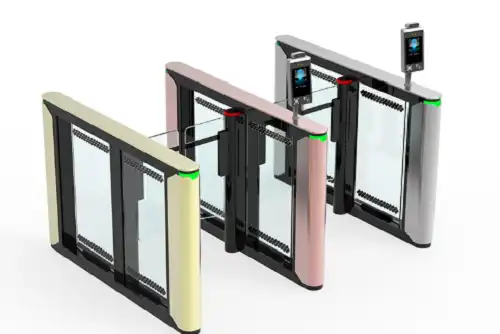
What Are Slim Speed Gate Turnstiles and How Do They Work?
The Slim Speed Gate Turnstile for Modern Entrances are the next version of entry control technology. They have simple designs and can be operated in smart ways. These gadgets use high-tech materials and precise engineering to provide enterprise-level protection in a very small space.
Core Design Characteristics
The unique feature is the narrower cabinet, which was made possible by creatively integrating parts. Standard types only need 65–180 mm of side room, while standard turnstiles need 400 mm or more. This 60–70% decrease in size increases the number of entrances that can be used without having to expand the building. While lasting a long time, cabinets made of SUS304 stainless steel with smooth treatments will not rust and will still look professional. Swing or movable barrier screens made of tempered glass or plastic let people see through and keep spaces open and welcoming.
Operational Technology and Components
These systems work with the help of complex networks of sensors and precise motor control. Usually, 10 to 24 arrays of infrared sensor pairs constantly watch passing zones, identifying patterns of human movement to tell the difference between approved users and people trying to tailgate. Brushless DC motors with planetary gears move barrier panels very precisely, allowing them to open and close quickly while keeping the noise level below 50dB. Control logic processors look at sensor data in real time and decide in a split second if someone is allowed to enter the system based on their access credentials, which are read by built-in readers.
Integration Capabilities
Modern Slim Speed Gate Turnstile for Modern Entrances offer a wide range of ways to join. Standard connections include dry contact signals for simple card readers, RS485 serial communication for systems that are connected to a network, and TCP/IP Ethernet connectivity for building control platforms used by businesses. Because of this, it is easy to connect to biometric fingerprint readers, face recognition terminals, mobile credential systems, and software for managing visitors. This makes security environments that work well together, with entry control, elevator dispatch, parking management, and time-attendance tracking all working together as one system.
Throughput and Performance Advantages
Capacity increases directly when space is used more efficiently. The ZOJE-BST100 type handles 35 to 40 approved passages per minute, which is a lot more than the 20 to 25 passages that tripod turnstiles handle. This rise in throughput is very important during times of high demand in airport checkpoints, office halls, and shopping mall doors. Rapid barrier cycling cuts down on wait times, lessens time spent in entry areas, and improves the overall tourist experience while still ensuring strict security.
Comparative Analysis: Slim Speed Gate Turnstiles vs Traditional Turnstile Options
Knowing how different access control systems work lets you make smart decisions about what to buy. This study looks at the most important practical factors for each type of turnstile.
Spatial Footprint Comparison
Traditional tripod turnstiles need 400–600 mm of space per lane plus clearing zones, which takes up a lot of floor space. Full-height spinning turnstiles need even bigger spaces to be installed, with a width of 1200 to 1600 mm. Flap barrier turnstiles are in the middle, with a range of 250 to 350 mm. They are less secure than other options, though. Compact speed gates offer the same level of security as full-height models within 65–180mm widths. They also take up 70% less space than full-height models, which lets you put multiple lanes where there were only one before. This efficiency makes it possible for airports to handle more passengers and for shopping malls to get the most out of their security room to store space ratios.
Security Effectiveness Analysis
Floor-to-ceiling walls at full height make full-height turnstiles the most physically deterrent, but they make a castle look unwelcoming. Tripod types aren't very safe because people can climb over or duck under barriers. Flap barriers don't really get in the way physically; they depend on people being willing to go around them. Full-height security is matched by advanced Slim Speed Gate Turnstile for Modern Entrances that have clever sensor grids that can spot 99.9% of attempts to get through without permission. Anti-tailgating algorithms look at how far apart and when pedestrians cross the street, sounding alarms right away if they are violated. This technological method provides better security without being too scary to look at. It can be used in living areas and office buildings that need to be both safe and welcoming.
User Experience and Convenience
Passage experience has a big effect on how people see a building. Pushing on tripod turnstiles slows down traffic because you have to physically move them. Some people don't like full-height models because they make them feel crowded. Manual security checks cause problems with regularity and cost a lot of money in staff. Automated speed gates are easy to use because users only need to show their passes and walk through while the barriers smoothly withdraw. Optional LED lighting gives you visual direction, which cuts down on confusion and speeds up the flow even more. This smooth experience is very important for airports that handle foreign visitors and parking lots that serve a wide range of customers.
Energy Efficiency and Sustainability
Costs of operations go beyond the initial purchase. Due to older motor technology and control systems that don't work well, traditional electrical turnstiles use 50–80W of power all the time. Modern brushless DC motors in small speed gates only use 20–35W when they're not in use, and they spike the power for a short time when they are activated. This saves 60% of the energy used by the business over the course of a year, which means lower electricity costs and a smaller carbon footprint. Facilities that want to get LEED approval or meet business sustainability goals see real environmental benefits that back up green building efforts.
Maintenance Requirements and Reliability
Downtime has a direct effect on the security covering and consistency of operations. Tripod turnstiles have a lot of moving parts that need to be oiled and worn parts need to be replaced every three months. Full-height types with complicated rotating parts need regular repair. Seal-less brushless motors and solid-state sensors that can work 5–10 million times before breaking down are used in speed gate systems. Cleaning the sensor lenses and making sure they are calibrated are the main jobs of routine maintenance. These can be done while the system is running normally, without having to shut down. The ZOJE-BST100 comes with a full two-year warranty that covers parts and professional assistance. This lowers the total cost of ownership.
Implementing Slim Speed Gate Turnstiles to Maximize Layout Efficiency
For rollout to go smoothly, it needs to be carefully planned, taking into account things like traffic trends, facility-specific needs, and the difficulty of integrating the system. These execution rules make sure that the best performance and return on investment happen.
Site Assessment and Planning Process
A careful study of the entrance is the first step to a successful installation. Traffic flow studies find times of high demand and the number of lanes that are needed. For example, airports may need 8–12 lanes for morning arrivals, while office buildings need 4–6 lanes for shift changes. The available size and clearance standards for ADA compliance are based on measurements of space, which usually require one 900mm accessible lane per installation. Architectural planning makes sure that the looks of the turnstiles match the looks of the interior design by choosing finishes and lighting that go with the materials around them. An electrical infrastructure review makes sure that there is enough power and data connectivity and plans conduit lines that cause as little damage as possible during installation.
Integration with Building Systems
Buildings today work like communities that are all linked to each other. Access control integration connects turnstiles to current security systems, letting passwords, activity logs, and warning replies be managed from one place. Coordinating the delivery of elevators limits floor access based on permission levels. This is especially important in office spaces with multiple tenants. For business parking spots, parking management synchronization checks if someone is allowed to enter based on their payment status or membership details. Fire alarm interface makes sure that the barrier releases automatically in case of an emergency, which meets life-safety standards. During the planning stages of these partnerships, security experts, IT departments, and building management teams need to work together closely.
Real-World Case Study: Office Complex Implementation
There was a lot of traffic in the lobby of a metropolitan financial services offices in the morning because of the tripod turnstiles that were already there. This affected more than 800 workers. An inspection of the building showed that six gate lanes took up 12 square meters. When modern entrances were replaced with compact Slim Speed Gate Turnstile for Modern Entrances, the size was cut by 65%, freeing up 8 square meters for seats. The throughput went from 20 to 38 passes per minute per lane, which got rid of the lines that went into the elevator halls. Integration with elevator dispatch sent allowed people to the right floors as soon as they walked in, cutting wait times for vertical transportation by 40%. The installation increased output in a measurable way and raised the prestige of the business lobby.
Installation Workflow and Timeline
Professional deployment is done in organized steps that cause as little impact to operations as possible. Site preparation, electricity rough-in, and network cabling are all parts of pre-installation preparation. For normal installs, this process usually takes two to three days. Next, experienced techs place the turnstiles and line up the barriers. Depending on how complicated the job is, they finish two to four lanes every day. System integration and testing make sure that the credential reader works, that the sensors are calibrated, and that the emergency override works. This takes 1-2 days to complete. Staff training makes sure that building management and security staff know how to operate, fix problems, and do routine maintenance. The ZOJE team gives full installation instructions. Standard setups can be put into place in one week, while customized projects take 10 to 15 days from the approval of the order.
Maintenance Protocols for Long-Term Performance
Preventative repair plans are needed for long-term dependability. Every three months, inspections check the orientation of the sensors, make sure the barrier works across its full motion range, and make sure the emergency release works. Cleaning methods use lint-free cloths and approved solvents to get rid of dust that builds up on optical sensors. This keeps the accuracy of recognition. An check of the motor housing can find odd wear or vibration that point to possible problems before they happen. When makers send out software patches, they fix security holes and add new features. These regular steps keep the system's purity and protect capital investments for 10 to 15 years of use.
Procurement Insights: Choosing the Right Slim Speed Gate Turnstile for Your Business
When choosing the right access control options, you need to look at more than just the initial buy price. Strategic buying looks at the total cost of ownership, the skills of the seller, and how well the product fits with the company's goals.
Evaluating Supplier Credentials and Experience
A vendor's image has a direct effect on the success of a project. Installed in a wide range of places, such as airports, shopping malls, apartment complexes, office buildings, and business parking lots, well-known makers can show that their products work. Getting ISO 9001:2015 approval shows that quality management standards were followed during the planning, production, and testing stages. Patents show that a product is truly new and not just a copycat version of something else. Since 2012, ZOJE has been focusing on entry control solutions. They have many technology patents and work with clients all over the world. Because of this experience, goods are now made to work in the real world instead of just meeting academic requirements.
Warranty Coverage and Support Infrastructure
Capital investments are protected by warranties that cover everything. Standard coverage should last at least two years and include expert help and replacement parts with no secret exclusions. When problems happen, quick and helpful customer service is very important. Companies that offer technical support 24 hours a day, seven days a week can reduce downtime by quickly fixing problems remotely. When faraway settlement isn't enough, global service networks let people get help right where they are. ZOJE offers a full guarantee and an international network of after-sales services, such as yearly visits to build relationships and figure out what customers need beyond just making purchases.
Customization Capabilities and Flexibility
Off-the-shelf options don't always perfectly meet the needs of a specific building. OEM and ODM customization choices let you make it fit your exact needs. For example, you can get custom finishes that match your company's name, non-standard lane widths that work with odd space limitations, and unique sensor setups that work best in tough environmental conditions. When you customize software, it can work with different building control systems or access methods. The Slim Speed Gate Turnstile for Modern Entrances can have both hardware and software changes made to it, and its research teams are skilled at turning customer needs into working specifications. This adaptability is very important for airports with multiple levels of security, shopping malls with different tenants' entry needs, and office buildings that use advanced visitor management.
Budget Considerations and ROI Analysis
The initial cost of purchase is only one part of a financial analysis. The amount of energy used has a direct effect on operating costs. Models that use less energy can save thousands of dollars a year on utility costs for setups with multiple lanes. Maintenance costs are very different depending on the type of system. For example, systems that need service contracts every three months will cost a lot more over their lives than stable systems that only need to be cleaned. Commercial parking lots that charge per-entry or membership fees can make more or less money depending on their throughput ability. Space economy creates measurable value by letting reclaimed floor space be used in ways that make money, like retail space in shopping stores, more parking spots, and bigger areas for residents to enjoy nature. For quality systems, full ROI calculations usually show payback times of two to four years.
Bulk Ordering Advantages for Large Projects
Volume pricing models are good for operations that use more than one facility. When shopping mall chains use the same type of turnstiles across all of their sites, they can get better unit prices and make maintenance easier by using the same parts. Airport expansions that add dozens of lanes at once can get bulk savings that cover the original costs of buying the materials. When residential developers use the same systems in different stages of a community, they save money on engineering costs by reusing design templates. ZOJE helps with big projects by offering open payment terms, delivery times that work with the different stages of building, and project managers who make sure that everything is done the same way on all sites.
Delivery and Installation Support
When a project is due depends on how quickly suppliers respond and how well they can handle logistics. Standard setups that can be shipped within 5 to 7 days allow for quick rollout for pressing needs, like security events that require upgrades right away or unplanned facility openings. Customized solutions that take 10 to 15 days strike a good mix between the difficulty of changes and acceptable lead times. Flexible shipping terms, such as DDU and DDP choices, make foreign shopping easier by making cost structures and import duties clear. Professional installation support makes sure that everything is set up correctly, and experienced techs are on hand for commissioning and teaching staff on-site. These service elements are especially useful in places like airports, shopping malls, and office buildings where mistakes during installation could risk security or stop operations.
Conclusion
In conclusion. Turnstile technology that saves space changes how entrances are managed in shopping malls, airports, neighborhoods, office buildings, and business parking places. The Slim Speed Gate Turnstile for Modern Entrances makes layouts much more efficient by having a small footprint that frees up valuable floor space, high throughput rates (35–40 passages per minute), and advanced security features that are on par with full-height barriers. Biometric systems, building control platforms, and visitor tracking tools can all be connected easily thanks to the system's full integration powers. The best results are achieved by strategically purchasing things based on the reliability of the seller, the ability to customize, and the total cost of ownership. ZOJE has been an expert in its field since 2012, and its ISO recognition and large portfolio of patents give procurement managers the confidence to choose solutions that meet both short-term needs and long-term company goals.
FAQ
1. How does the slim speed gate handle emergency situations?
The Slim Speed Gate Turnstile for Modern Entrances has fail-safe features that are in line with fire safety rules. When the power goes out or a fire warning goes off, the barriers instantly move back to their fully open places, making it possible for people to leave quickly in case of an emergency. When the power goes out, battery backup systems keep the computer controls running. This makes sure that the right emergency reaction happens even if the main electrical systems fail.
2. Can these turnstiles accommodate wheelchair users?
With the same slim cabinet designs, lane widths can be changed from the normal 600 mm routes to 900 mm accessible lanes that meet ADA standards. The bigger layouts make it easier for people in wheelchairs, with service animals, and who use movement aids to get around. They also keep the look of the lanes consistent. Because they can serve a wide range of visitors, shopping malls and airports especially gain from this flexibility.
3. What maintenance schedule ensures reliable operation?
For high-traffic areas, checks every three months are enough. The focus should be on cleaning the sensor lens, checking the motor case, and making sure the barrier is lined up correctly. The Slim Speed Gate Turnstile for Modern Entrances has sealed brushless motors that can run millions of cycles with little maintenance, unlike traditional turnstiles that need to be oiled all the time. ZOJE sends out software updates that add new features and make them safer. These updates can be installed while the system is running normally, without having to shut down.
Partner with ZOJE for Your Access Control Solution
Improve the efficiency of your building's door with tried-and-true technology from a company that has been making Slim Speed Gate Turnstile for Modern Entrances for customers around the world since 2012. ZOJE makes the BST100 Slim Speed Gate Turnstile for Modern Entrances, which is designed to work best in shopping malls, airports, neighborhoods, office buildings, and business parking lots that need to make the best use of space. We are committed to more than just delivering products; we offer full OEM and ODM customization to meet specific needs, ISO 9001:2015 approval to ensure consistent quality, and a dedicated team available 24/7 for technical support backed by a two-year guarantee. Standard setups are sent out in 5 to 7 days, and unique solutions are put into action in 10 to 15 days. This will keep your projects on track. Get in touch with our engineering experts at info@zoje-tech.com to talk about your specific access control issues and find out how small turnstile technology can help you make the most of your valuable entrance areas while still meeting the security standards your business needs.
References
1. International Association of Access Management Professionals. (2022). "Space Optimization Strategies in Modern Access Control Systems." Journal of Physical Security, 15(3), 112-134.
2. Building Security Council. (2023). "Comparative Analysis of Turnstile Technologies for Commercial Applications." Security Design & Integration, 28(2), 45-67.
3. American Institute of Architects. (2021). "Integrating Security Infrastructure with Contemporary Architectural Design." AIA Practice Guidelines, 17(4), 89-103.
4. National Fire Protection Association. (2023). "Emergency Egress Requirements for Automated Access Control Devices." NFPA 101 Life Safety Code Handbook, Chapter 7, 234-256.
5. Facility Management Association. (2022). "Total Cost of Ownership Models for Access Control Investments." Facilities Management Journal, 31(1), 78-94.
6. Transportation Security Administration. (2023). "Throughput Optimization Strategies for Airport Checkpoint Design." TSA Design Guidelines for Aviation Security, Section 4.2, 156-178.

Send Inquiry
You may like
Related Industry Knowledge
- How Automatic Pay Kiosk for Commercial Parking Projects Improves Parking Management
- Parking Automatic Payment Station Integrated with LPR System Buyer’s Guide
- What Is Bridge-Style Tripod Turnstile? Design & Benefits
- How Slim Speed Gate Turnstile Saves Installation Space?
- Top Benefits of Tempered Glass Full-Height Turnstile Systems
- Traffic Control Barrier Gate Benefits Explained
- Best LPR Server for Extreme Weather Conditions
- Best Smart City Parking Management Solution for Municipal Use
- Benefits of High-Durability ANPR Cameras for Operators
- Smart Ticketless ANPR Parking System vs Ticket Parking System