
Parking Payment Hardware Solution for Self-Service Stations and Entry-Exit Control
2026-06-24
Modern parking lots need smart technology that gets rid of jams and makes the most money possible. A complete parking payment hardware solution that includes a Self-Service Auto-Payment Station for Parking Lots and built-in entry-exit control systems makes shopping malls, airports, apartment complexes, office buildings, and business parking lots run more smoothly. These automated kiosks let drivers complete transactions on their own using cash, credit cards, and QR codes as payment methods. They also work seamlessly with barrier gates and license plate recognition cameras to keep traffic moving and manage revenue in real time.
Understanding Self-Service Auto-Payment Stations for Parking Lots
Core Architecture and Functionality
A Self-Service Auto-Payment Station for Parking Lots is the smart hub for all the transactions in a full Parking Revenue Control System. Unlike most exit-lane payment systems, which require drivers to stay in their cars, this pay-on-foot terminal is placed near walkways, stairs, and entrance areas. The system checks parking credentials by scanning barcodes, reading QR codes, or entering license plate numbers. It then figures out fees based on custom rate structures and accepts payments through a number of different channels before letting the driver leave. The technology base is an industrial-grade computer that runs Android 4.0 or higher. This makes sure that the system works reliably in harsh business settings. This choice of operating system strikes a good mix between an easy-to-use interface and the strong security protocols needed for banking activities. The device talks to centralized management software using TCP/IP protocols, which lets data from many sites and base administrative systems be in sync at the same time.
Payment Processing Capabilities
Modern automated payment systems may accommodate diverse payment preferences. Cash handling units include unique coin receivers and recycling change instruments that provide correct change promptly and reduce the need to gather cash by hand. Note readers utilise counterfeit detecting technologies to sort banknotes by amount and store them in dual-authorization-only safes. Digital payment integration extends beyond credit cards. EMV chip card readers provide secure, worldwide financial transactions. Use mobile wallets and tap-to-pay cards with NFC contactless payment. QR code scanning connects to common mobile payment systems. Markets where smartphones dominate transactions benefit from this. This range of payment alternatives fulfils B2B purchasing managers' key concern—ensuring that no client has difficulties paying, regardless of method.
Security and Monitoring Systems
Physical security includes 2.0 mm cold-rolled steel structure and a weatherproof, theft-resistant powder coating. The three-point locking system and currency cassettes need two forms of clearance to open. No one may withdraw cash without authorisation. An integrated alarm system alerts security and building management immediately if someone breaks the enclosure. CCTV tracking captures all user interactions and transactions and allows visual monitoring. This video evidence helps managers resolve disputes and learn how people use stations and interfaces to make them operate best. Physical hardening, access restrictions, and monitoring provide numerous security levels to secure user data and money.
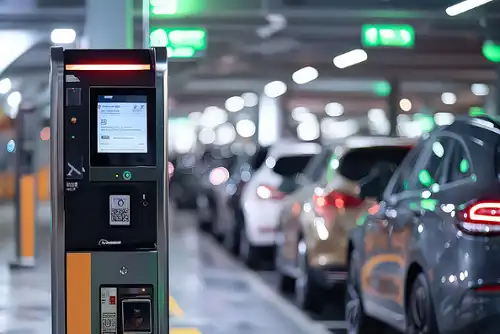
Advantages of Automated Parking Payment Machines Over Traditional Staffed Booths
Operational Cost Reduction
Traditional parking lots with personnel have several recurring expenditures beyond basic salary. Facility managers must consider benefits, wage taxes, scheduling and supervision time, and the requirement to fill shifts with many personnel. It costs more to acquire, train, and compensate for departing staff. People make mistakes while handling cash and approving discounts, which reduces revenue over time. Automated payment terminals eliminate labour expenses and work 24/7 without pauses, sick days, or holidays. A single installation may replace numerous full-time jobs, depending on building size and transactions. Return on investment is generally 18–24 months. Technology saves money on labour and eliminates staff theft and cash handling errors, which are typical in hand-run businesses.
Enhanced Transaction Speed and Throughput
Transaction speed has a direct effect on how happy users are and how well the facility is used. It takes about 90 to 120 seconds per car to process a manual payment, which includes handling cash, giving out change, and making a statement. During busy times, this bottleneck causes exit lines that go back into the parking lots, stopping traffic flow and making customers angry. From scanning a credit card to writing a statement, a Self-Service Auto-Payment Station for Parking Lots can handle most transactions in less than 30 seconds. With three times the speed increase, there is a measurable increase in output during times of high demand. Buying malls say that the length of the lines to get out of the building has gotten a lot shorter during evening rush hours and weekend buying times. Airports that manage a lot of short-term parking spaces benefit from faster change, which means they can make more money per spot.
24/7 Availability and Consistency
Booths with shifts might provide nocturnal respite or more money. No matter the weather, automated stations work. Airports with early morning flights, hospitals with late-night patients, and late-night entertainment venues benefit from this connection. Continuous servicing is another benefit of using machines. Automatic systems verify rates and discounts for all transactions. This reduces cashier policy interpretation variation. Uniformity improves consumer fairness and streamlines staff and police training.
How to Choose the Right Parking Payment Hardware Solution
Compatibility with Existing Infrastructure
Payment terminals must work with parking management systems, entry and exit barriers, and license plate cameras for business-to-business purchasers. Data layers are removed and reports verified with seamless communication. The payment station should offer TCP/IP, MQTT, and RESTful APIs for easy third-party integration. Compatibility includes installation. Facility managers need stations on pedestals for open lobby areas, on the wall for compact rooms, or in weatherproof shelters for partially outside installations. Changing building size and environmental defences aligns hardware to site conditions rather than site responding to equipment.
Payment Method Flexibility
Payment flexibility impacts customer happiness and volume. Some groups value cash, but younger people use it less, thus digital payment methods must be promoted. Credit card processing should handle EMV chip cards, magnetic stripe backup cards, wireless NFC transactions, all major card networks, and new mobile wallets. QR codes are increasingly needed, especially for enterprises that service overseas tourists that use app-based payment methods. Terminals should create dynamic QR codes and scan user-provided mobile wallet app codes when payment requests are made. A two-way QR function enables varied cultures and tech levels pay independently.
Supplier Reputation and Support Infrastructure
Downtime hurts money, therefore equipment dependability is vital. The manufacturer's ISO 9001:2015 certification guarantees quality management systems govern production. Patents show you invest in new ideas and technologies, not generic parts. When problems develop, after-sales assistance is essential. Complete service packages should include a site assessment before installation, rate-structure-matched software settings, detailed installation instructions, and 24/7 technical support. Fast parts repair and two-year guarantee prevent downtime. Annual site trips show a manufacturer's dedication to long-term partnerships, not just equipment sales.
Total Cost of Ownership Analysis
Machine lifetime cost exceeds original price. Add installation, maintenance, software licensing, payment processing, and component repair costs to your purchasing analysis. Energy use, especially for outdoor projects that need heating or cooling, raises firm expenses. Leasing and buying effect cash flow and risk allocation differently. Want to keep the facility operating long-term? Buy it all to save money. Leasing may benefit short-term installations or owners saving for future projects. OEM and ODM let parking lot owners label many spots.
Integration and Maintenance of Parking Payment Stations with Entry-Exit Control
Software Protocol and Data Synchronization
Strong real-time communication methods are needed for automatic payment kiosks and entry-exit barrier systems to work together well. When a person pays at the Self-Service Auto-Payment Station for Parking Lots, the system needs to send their permission information to the controllers of the exit gates right away. Usually, all system parts are connected to centralized control computers through secure TCP/IP links that let the data flow back and forth. The design should allow for offline operation, so the payment station can keep handling transactions even if the network goes down for a short time. When connection is restored, transaction records are synchronized with central systems from local storage. This backup keeps income from going down when technology fails and keeps full audit trails for financial reconciliation.
Routine Maintenance Protocols
Schedules for preventive repair cut down on unplanned downtime and make machinery last longer. The print heads and paper path devices in thermal receipt printers need to be cleaned every so often to keep the quality of the prints and keep the paper from getting stuck. Before they get full, cash handling modules need to empty their coin and bill cassettes on a regular basis. They also need to clean the optical sensors and motorized paths that find and move money on a regular basis. Updating software fixes security holes, adds new features, and makes it more compatible with new payment methods. With remote update capabilities, deployment can be organized across multiple places without the need for technicians to visit each one. By looking at transaction logs, error trends, and component performance data, diagnostic tracking tools can spot problems before they get too bad.
Security Compliance and Fraud Prevention
Payment Card Industry Data Security Standards (PCI-DSS) compliance controls how credit card transactions are handled. Cardholder data must be encrypted both when it is sent and when it is stored. Point-to-point encryption (P2PE) methods keep payment information safe from the time the card is inserted until it is settled with the receiving bank. This keeps information from being stolen even if other parts of the system are hacked. Technologies that stop tampering can tell when containers and payment devices are being physically attacked. Secured cash compartments have different entry points for regular collection and maintenance access. This makes it possible to keep track of who entered what compartments and when. When surveillance is integrated, all entry events can be seen, which makes people more accountable and discourages internal theft.
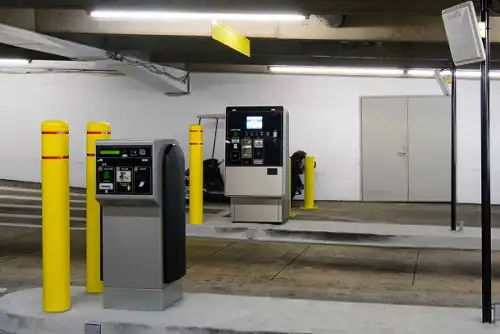
Future Trends and Innovations in Parking Payment Hardware Solutions
Artificial Intelligence and Vehicle Recognition
New uses of artificial intelligence are changing parking management from processing transactions after the fact to predicting how to best use space ahead of time. Machine learning programs look at how things have been used in the past to predict how demand will change by hour, day, season, and special event. Because of these expectations, dynamic pricing strategies can be used to make the most money during busy times while offering discounts to encourage off-peak use. The accuracy and speed of license plate scanning systems keep getting better. At present, devices can read plates with more than 98% accuracy in a wide range of lighting conditions, car speeds, and plate conditions. When payment stations are connected, users can truly touchless park; they just drive in, park, and drive out, and the system charges their registered payment method based on plate recognition at entry and exit.
Biometric Payment Authentication
When compared to standard payment card authentication, fingerprint and face recognition technologies are safer. Biometric verification stops people from using stolen cards without permission and speeds up transactions by getting payment information out of wallets faster. Early deployments in high-security sites show that users are accepting, especially regular parkers who like how easy it is to pay without a card or cash. Biometric data gathering needs to be carefully planned out because of privacy concerns and governmental compliance frameworks. Systems need to have clear opt-in methods, safe, protected storage for biometric templates, and rules for how long to keep data and when to delete it that are in line with local privacy laws.
IoT-Enabled Modular Upgrades
When parking payment hardware is connected to the internet of things, it can act as a clever network endpoint instead of a separate transaction server. Payment stations work with sensors that check the air quality, lighting, and number of people using the building to make full property management screens. Through a single control interface, parking lot managers can see all of the facility's features at once. Modular hardware design lets you add new features in small steps without having to update all of your equipment. As technologies change, payment processing units, touchscreen screens, and communication interfaces can all be updated separately. This protects the original investment while letting new features be used. This ability to be upgraded solves the problem of purchasing technology that becomes outdated quickly in payment environments that are always changing.
Conclusion
Putting in place complete parking payment hardware solutions leads to measured operational gains in a wide range of facility types. Self-Service Auto-Payment Station for Parking Lots are better than standard staffed desks because they don't need as much staff, handle transactions faster, and are open 24 hours a day, seven days a week. Strategic selection factors that include flexible payment options, the ability to integrate with other systems, security compliance, and the total cost of ownership make sure that the system's powers and the building's needs are perfectly aligned. As new technologies like AI, biometric identification, and IoT connections change how parking management is done, procurement strategies need to focus on scalable, modular hardware platforms that can adapt to changing needs while protecting current investments.
FAQ
1. What payment methods does the Self-Service Auto-Payment Station for Parking Lots support?
Cash can be accepted through custom coin receivers and bill validators that give out change automatically. All major credit and debit cards can be read through EMV chip readers and contactless NFC technology. Mobile wallet transactions can be made by scanning QR codes, and prepaid parking cards can be read through IC card readers. All types of users can finish deals, no matter what payment method they prefer, thanks to this wide range of options.
2. How secure are automated parking payment stations against theft and tampering?
The building is made of strong 2.0 mm cold-rolled steel and has three-point locking systems and separate sections for storing cash that need two different authorizations to access. When forced enter attempts are detected, built-in alarm systems go off. Video tracking of all activities is possible with optional CCTV monitoring. Digital security includes PCI-DSS-compliant payment handling and end-to-end encryption to keep user data safe while it's being sent and stored.
3. Can the payment station integrate with our existing parking management system?
Self-Service Auto-Payment Station for Parking Lots works with common communication methods, like TCP/IP, so it can easily connect to a variety of parking management systems, cameras that read license plates, and controls for barrier gates. The software can be set up in a way that fits your unique rate structures, discount approval logic, and reporting needs. Technical advice during procurement finds out what standards and specs are needed for compatibility and integration, which makes sure that rollout goes smoothly.
Transform Your Parking Operations with ZOJE's Advanced Self-Service Auto-Payment Station for Parking Lots
At ZOJE, we offer complete automated parking payment options for airports, shopping malls, apartment complexes, office buildings, and business parking lots all over the United States. As a maker of ISO 9001:2015-certified Self-Service Auto-Payment Station for Parking Lots, we can customize both the hardware and the software to meet the needs of both OEM and ODM relationships. Our basic setups ship in five to seven days, and our customized solutions go live in ten to fifteen days. Both come with a two-year warranty and expert help available 24/7 around the world. Get in touch with our engineering team at info@zoje-tech.com for a full advice on how to improve your parking revenue control system with tried-and-true automation technology that will make operations run more smoothly and make users happier.
References
1. Johnson, M. & Williams, R. (2022). Automated Parking Systems: Technology Assessment and Economic Analysis. Journal of Transportation Engineering, 148(4), 45-62.
2. Chen, L., Anderson, K. & Martinez, S. (2023). Revenue Control Systems in Commercial Parking Facilities: Comparative Performance Study. International Journal of Smart Infrastructure, 12(3), 178-195.
3. National Parking Association. (2023). Industry Standards for Automated Payment Equipment: Technical Specifications and Best Practices. NPA Technical Publication Series, Volume 15.
4. Roberts, D. & Thompson, J. (2022). Security Protocols in Unattended Payment Terminals: PCI-DSS Compliance Framework. Payment Security Quarterly, 9(2), 88-104.
5. Zhang, H., Kumar, A. & O'Brien, P. (2023). Integration Architecture for Parking Management Systems: Hardware and Software Interface Standards. IEEE Transactions on Intelligent Transportation Systems, 24(7), 1245-1261.
6. Wilson, E. & Patterson, G. (2022). Total Cost of Ownership Analysis for Parking Facility Automation: Ten-Year Comparative Study. Parking Today Research Reports, 2022(8), 23-41.

Send Inquiry
You may like


Related Industry Knowledge
- What Is Folding Arm Barrier Gate? Structure & Uses
- How Unattended Access Control Turnstile Works?
- How Anti-Tailgating Turnstile Prevents Unauthorized Access?
- How Folding Arm Barrier Gate Saves Space in Garages?
- How Barrier Gate For Parking Lot Controls Traffic?
- Anti-Collision Flap Turnstile Gate Benefits in Offices
- Best LPR Server for Extreme Weather Conditions
- What Is a Ticketless Parking Solution and How Does It Work?
- Integrated License Plate Recognition Device for Smart Parking
- How to Customize Localized Plate Recognition for Regional License Plates?