
Vehicle Loop Detector for Parking Management System Features You Should Know Before Buying
2026-07-07
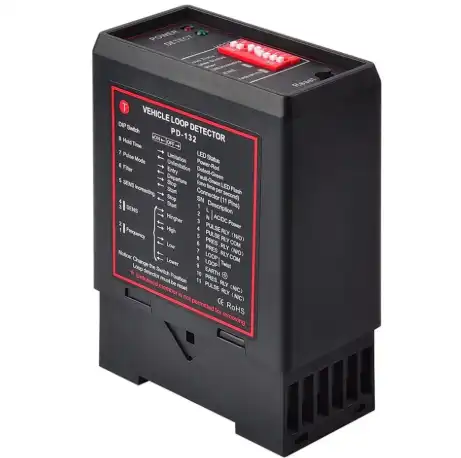
To make a smart purchase choice when looking at a Vehicle Loop Detector for Parking Management System, you need to know about its main features. These inductive sensors, which are buried under the sidewalk, use changes in electromagnetic fields to find metallic cars. They are the most important part of automated parking control. Some of the most important features are auto-tuning for quick setup, Advanced Signal Boost (ASB) mode for finding vehicles with different ground clearances, frequency settings that can be changed to stop crosstalk between lanes, and dual-relay outputs that let you control multiple devices at once. Modern units also have industrial-grade housings and LED monitoring signs that are made to work in tough environments. These features collectively ensure effective 24/7 operation across diverse applications, from shopping mall entry gates to airport security checks.
Understanding Vehicle Loop Detectors: Core Technology and Operating Principles
Electromagnetic induction is the basis of loop detection technology, which has been used in millions of sites around the world and has been shown to work reliably. An electromagnetic field is made when an insulated wire loop is put into cuts made by a sidewalk saw and connected to a detecting unit. The metal chassis changes the inductance value when a vehicle enters this monitoring zone. This sends a signal to your parking management platform, which it reads as a vehicle presence or passing.
The ZOJE-LD132 is an example of this tried-and-true technology that has been improved to meet the needs of current parking. Instead of visual sensors that have trouble in bad weather, inductive loop devices work the same way whether it's raining, foggy, snowing, or shining directly in the sun. Because they don't get damaged by weather, they are great for use outside in places like airports, shopping malls, and business parking lots where the weather changes a lot throughout the year.
Types and Configuration Options
Detection systems have two main ways of working that are used for different things in parking structures. In presence mode, a certain area is constantly watched, making it perfect for placing under barrier arms to avoid hitting them by mistake. This setup keeps both tools and cars safe while ensuring smooth traffic flow at entry and exit points. On the other hand, pulse mode only works for a short time when a car crosses the detection zone. This makes it great for setting off ticket machines or counting systems.
Adjusting the sensitivity lets you make it fit different types of vehicles. For example, sensitivity ranges need to be wider in shopping malls that accommodate everything from small cars to delivery vans than they do in home parking lots that mostly serve passenger vehicles. The ZOJE-LD132 meets this need with multiple levels of sensitivity options that change based on your traffic patterns without the need for advanced programming skills.
Critical Performance Parameters
When your revenue collection and security measures in the Vehicle Loop Detector for Parking Management System rest on accurate recognition, accuracy is still very important. Professional-grade monitors are accurate more than 99.9% of the time for as long as they are working. This dependability comes from a number of technical factors that B2B buyers should carefully consider when making a purchase.
The inductance range that is compatible usually goes from 20µH to 1000µH, which allows for different loop sizes and mounting arrangements. Response time has a direct effect on processing capacity at entry points with a lot of traffic. Units with response times between 10 and 50 milliseconds keep office buildings and shopping malls from getting backed up during busy times. Changes in temperature and ground moisture are taken into account immediately by drift correction algorithms. This gets rid of false triggers that stop operations and annoy users.
Key Benefits of Implementing Loop Detection in Parking Operations
Implementing loop detectors can improve operational efficiency in many more ways than just confirming the presence of a car. These systems provide the basic data that allows for complex parking management strategies, which have a direct effect on how profitable your facility is and how happy your customers are.
Real-time occupancy tracking changes how visitors feel when they visit big buildings. When airports and shopping malls use dual-loop directional recognition, the system figures out the direction of a vehicle's trip by looking at which loop triggers first. Parking industry study shows that this kind of directional thinking goes into parking guidance systems that show the number of open spaces on variable message signs. This cuts down on search time by an average of 43%. When search times are cut down, pollution goes down, traffic gets better, and customer happiness goes up.
Security and Access Control Enhancement
Stopping unauthorized entry is a very important issue for office buildings and apartment complexes where parking places are very valuable. Loop monitors at exit lanes stop people from tailgating by making sure that only one car passes for each approved transaction. This anti-passback logic keeps the building safe and saves income streams without adding more staff or expensive camera systems.
These safety benefits are increased by the fact that advanced loop monitors can be integrated. The ZOJE-LD132 has two relay outputs that can control the movement of a barrier and start recording from a security camera at the same time when it is linked to an access control platform. This teamwork between multiple systems makes full audit trails for looking into incidents and managing responsibility.
Cost-Effectiveness Compared to Alternative Technologies
In recent years, video-based detection systems have gotten more attention. However, loop detectors are still more cost-effective for many uses. The cost of installation is cheaper when it is done during the initial building of the pavement or during planned resurfacing jobs. The system doesn't need much maintenance because it doesn't have any moving parts that could be damaged by weather or theft.
When comparing energy use, magnetic sensing wins by a large margin. A normal loop detector uses 2 to 5 watts of power all the time. Camera-based systems, which need power for processing and lighting, use 15 to 30 watts per detection point. For a parking garage with 500 spaces that is always open, this difference adds up to big savings over the system's 10 to 15-year life.
When commercial parking owners automate tasks that used to be done by hand, they see a return on their investment within 18 to 24 months. Lowering labor costs, protecting income by getting rid of tailgating, and better room utilization all work together to make a strong financial case for adopting technology.
Selecting the Right Loop Detector for Your Specific Application
The features of your parking lot will determine which detection features are the most useful. Shopping malls with a lot of people coming and going need different requirements than apartment buildings, where people move in and out at regular times. Understanding these differences keeps you from having to pay a lot of money to fix problems where technology doesn't meet your needs.
Site Assessment and Traffic Analysis
Detector selection is affected by the difficulties that come with parking garages with more than one level. The amount of the reinforced concrete rebar changes how electromagnetic fields travel, so you need to set the sensitivity higher or change how the loops are set up. Estimates of the amount of traffic help figure out the reaction times and backup systems that are needed. Entry lanes that handle more than 300 vehicles an hour need faster responses than private garage gates that handle 50 users every day.
Having a variety of vehicle types in your building in a Vehicle Loop Detector for Parking Management System has a big effect on sensitivity needs. Office parks that only allow passenger cars can get the best detection for normal sedans, but logistics centers that handle big trucks need wider detection ranges. The ZOJE-LD132's ASB mode handles situations with mixed traffic by increasing sensitivity automatically when initial recognition happens. This makes sure that even high-clearance cars can reliably trigger the alarm.
Technical Specifications Comparison
When looking at different monitor choices, there are a few things that need extra attention besides how well they work. The ability to change frequencies keeps interference from happening in setups with more than one lane where multiple recognition zones work close together. The ZOJE-LD132 has more than one frequency channel, so lanes next to each other can work without interference that could lead to fake alerts.
Reliability in harsh areas is affected by temperature tolerance. Units that can work in temperatures ranging from -40°C to +85°C can handle both northern winters and locations that are in direct sunlight without losing any performance. Industrial-grade housings keep gadgets safe from getting wet and breaking while they are being serviced.
Integration with the parking control software you already have keeps you from having to pay a lot of money for a new system or special programming. Almost all barrier gates and ticketing equipment can talk to standard relay outputs, but some users may gain from using different communication methods. The ZOJE-LD132's dual-relay setup lets it handle a wide range of control situations without the need for extra interface units.
Warranty and Support Considerations
A two-year warranty shows that the maker is confident in the product's reliability and helps with planning upkeep budgets. This warranty should cover both the hardware in the detector and the materials used to put it. This way, you won't have to pay extra money if the loop wire breaks early. In addition to checking the length of the guarantee, you should also check the support system to see if problems cause hours or days of downtime.
ZOJE Intelligence Technology offers expert support 24 hours a day, seven days a week, so problems are always fixed. Parking lots are open all the time, so they need help available 24 hours a day, seven days a week to keep making money and keeping customers happy. When compared to general technical support services, having access to experienced experts who know both the technology and how the parking system works speeds up fixing.
Installation Best Practices and Common Issues to Avoid
If you don't place your loop detector correctly, it could break down after a few years or keep giving you trouble and costing you more than you thought. Even though the technology works well, startup hacks leave holes that make the system less effective.
Site Preparation and Loop Embedding
All construction work starts with a pavement inspection. Cracks or corrosion that are already there near where the loop is supposed to go need to be fixed before the loop is cut. This is because these flaws let stress spread and damage the insulation on the loop wire. Specifications for saw cut depth and width have a direct effect on the effectiveness of detection. For most uses, 1.5 to 2 inches deep and 0.25 inches wide works best.
Many workers don't realize how important it is to choose the right loop wire. XLPE-insulated wire doesn't break down as quickly as regular wire insulation does when it comes into contact with seals and water. The wire diameter affects both how long it lasts mechanically during installation and how it works electrically, which in turn affects the detecting range. Three to five turns of wire make an electromagnetic field strong enough for accurate detection without adding too much inductance, which limits the system's adaptability.
Wiring Standards and Electromagnetic Interference
To keep electromagnetic interference sources from getting in the way of the lead-in line from the loop to the detection unit, careful planning is needed. When you run wires next to power lines or through a pipe that has high-voltage circuits inside it, noise gets in and makes things act strangely. Signal integrity is maintained over longer distances, which is common in big parking lots, thanks to twisted pair wire construction and shielded jacketing.
The ZOJE-LD132's auto-tuning feature makes commissioning easier by adjusting itself to your loop inductance when power is applied. This feature gets rid of the need to make adjustments by hand, which takes special test tools and technical know-how. The system doesn't force your software to fit into a small set of parameters; instead, it adjusts to it.
Preventative Maintenance and Troubleshooting
Loop wire insulation checking during placement stops problems from happening in the future. Before making closing saw cuts, Megohm testing makes sure that the insulation resistance is higher than 100 megohms. This finds a broken wire that will break soon. This easy step of proof gets rid of callbacks and keeps the system reliable for the whole service life.
Most of the time, external factors, not detector failures, are to blame for common troubleshooting situations. Heavy rain can temporarily make saw cuts less sensitive because water can get in if they aren't properly sealed. When pavement fixes cut loop wires, it's clear that the detectors don't work, but sometimes problems happen when the wires make partial contact. The ZOJE-LD132's LED diagnostic signs show right away what's going on with the loop, which speeds up finding problems and cuts down on diagnostic time.
Procurement Guide: Sourcing Reliable Detection Equipment
When looking for loop detection tools, business-to-business buyers have a lot of supplier choices, each with different skills and levels of commitment. It's just as important to choose partners who understand how parking works and can offer full help as it is to have the right tools.
Supplier Evaluation Criteria
Manufacturers with histories going back more than ten years in Vehicle Loop Detector for Parking Management System show the steadiness needed for long-term technical knowledge and parts supply. ZOJE Intelligence Technology was established in 2012, and its ISO 9001:2015 certification shows that its operations are mature and that it has quality management systems in place to make sure that products always work well. Multiple technical and design patents show that the company is still coming up with new ideas instead of just selling the same old stuff.
When your building has specific needs that standard goods don't meet, the ability to customize is important. Experience with both OEM and ODM shows that engineers have the tools and producers can change designs without affecting reliability. Because ZOJE lets you change both the hardware and the software, you can make systems that work perfectly for tricky situations like industrial parks that have a lot of electromagnetic interference.
Pricing and Value Assessment
When judging competitive pricing, you need to look at the total cost of ownership, not just the original buy price. In the end, units that need to be replaced often or that cost a lot for repair calls cost more than high-quality goods that last longer. The industrial-grade build of the ZOJE-LD132 is meant to give it a 10+ year useful life, spreading the cost of purchase over a longer period of time while lowering the cost of upkeep.
For big projects that use dozens or hundreds of sensing points, buying in bulk can lower the cost per unit. Shopping stores and airports with lots of parking lots can benefit from group prices, which lower the cost of the project. Delivery times affect project plans and carrying costs. Zoje's normal product delivery times of 5–7 days and customized solution delivery times of 10–15 days help with planning without having to pay too much for inventory.
After-Sales Service and Long-Term Partnership
Installation support services cut down on rollout risks and speed up the time it takes to start using the system. Suppliers who offer on-site or online help during initial setups help build teams build up their own skills that they can use in future projects that involve growth. Your support staff will be able to fix problems on their own if you give them detailed technical paperwork that includes both installation instructions and troubleshooting methods.
Suppliers who visit their customers once a year show that they care about building relationships with their customers beyond just selling them tools. ZOJE holds in-person talks with clients all over the world, which helps them share information about how parking management is changing and how technology can help. These exchanges help you find ways to improve things and make sure that your systems can adapt to new operating needs.
Conclusion
When choosing a Vehicle Loop Detector for Parking Management System, you need to think about both short-term operating needs and long-term support and stability needs. The ZOJE-LD132 meets important needs by being easy to auto-tune, accurate at detecting ASB, able to avoid changeable frequency interference, and flexible in dual-relay control. Industrial-grade construction makes sure that the building will last in tough places like airports and shopping malls, and a full support system keeps operations running smoothly. B2B buyers should not only look at the price of a product, but also at the supplier's production knowledge, ability to customize, and commitment to customer service after the sale. When you install the system correctly by following best practices in the industry and using high-quality equipment, you get accurate monitoring that improves both facility efficiency and user happiness over the system's long life.
FAQ
1. How long does loop detector installation typically take?
How long it takes to install varies depending on the conditions of the spot and how many detection points are being put in place. It usually takes two to four hours to complete a single loop, which includes cutting the ground, putting in the wires, closing them, and connecting them to the detector unit. Crews with a lot of experience that can do four to six loops a day are best for multi-lane setups. The ZOJE-LD132's auto-tuning feature gets rid of the need for calibration, which normally takes hours, and makes setting up a detector take much less time.
2. Can loop detectors work with existing parking management software?
These days, loop monitors have standard relay outputs that work with almost all parking management systems and barrier gate controls. The relay contacts are like simple switches that your current equipment reads as signals that a car is present. They don't need to be programmed or compatible with a specific system. This worldwide compatibility keeps your software investment safe and improves the accuracy of identification.
3. What causes loop detector failures, and how can they be prevented?
Most loop failures are caused by damage to the wire insulation from a bad fit or a worn-out ground. Using XLPE-insulated wire that is approved for burying and properly sealing saw cuts stops water from getting in and breaking down regular insulation. System life is greatly increased by regular maintenance on the ground that fixes cracks before they spread through loop sites. The ZOJE-LD132 has diagnostic signs that let repair staff know about loop problems before they become totally broken.
Partner with a Trusted Vehicle Loop Detector Manufacturer
ZOJE Intelligence Technology is ready to help your parking lot with detection tools that have been used successfully for more than ten years. Because we've installed thousands of systems in shopping malls, airports, office buildings, and housing developments around the world, our team knows how hard it is to keep these places running smoothly. The ZOJE-LD132 has both advanced features and easy setup, which lowers the risks of your project and gives you performance that grows with your facility.
In addition to selling equipment in Vehicle Loop Detector for Parking Management Systems, we offer a partnership model that includes expert help 24/7, full installation instructions, and a two-year warranty that protects your investment and makes sure it keeps working. Standard products are shipped within a week, and we can customize them to meet specific needs that off-the-shelf goods can't. Our tech team has the knowledge and quick response time to keep your project on track, whether you need a single monitor or full systems for parking garages with multiple levels.
Get in touch with us right away at info@zoje-tech.com to talk about your unique parking control needs. Visit zoje-parking.com to see our full line of products and learn why facility managers in six countries choose ZOJE as their loop detector provider of choice. Our team is excited to learn about your problems and show you how the right recognition technology can turn your parking operations into competitive benefits.
References
1. Smith, J. & Anderson, K. (2021). Inductive Loop Detection Systems: Design and Implementation for Intelligent Transportation. Transportation Engineering Press.
2. National Parking Association. (2022). Parking Facility Technology Standards and Best Practices Manual. NPA Technical Publications.
3. Chen, M. (2020). Comparative Analysis of Vehicle Detection Technologies in Parking Management Applications. Journal of Intelligent Transportation Systems, 24(3), 287-302.
4. International Organization for Standardization. (2019). ISO 9001:2015 Quality Management Systems: Requirements and Implementation Guidelines. ISO Standards Collection.
5. Williams, R. & Thompson, E. (2023). Modern Parking Systems: Technology Integration and Operational Efficiency. Urban Infrastructure Publishing.
6. Garcia, L. (2022). Electromagnetic Interference Mitigation in Multi-Lane Loop Detector Installations. Parking Technology International Quarterly, 18(2), 45-58.

Send Inquiry
You may like

Related Industry Knowledge
- OEM Interlocking Full-Height Turnstile Gate Guide
- Best Anti-Tailgating Turnstile for Secure Facilities
- OEM Anti-Collision Flap Barrier Turnstile Guide
- Is High-Security Full-Height Turnstile Worth Investment?
- Is Unattended Access Control Turnstile Reliable?
- Top 24/7 Unattended Parking Systems to Cut Labor Costs
- Benefits of Unattended License Plate Recognition Tech
- What Is a High-Performance License Plate Recognition Camera?
- How to Deploy an Internet-Free Parking Management System?
- Why License Plate Recognition Camera Improves Parking Security?