
OEM Anti-Collision Flap Barrier Turnstile Guide
2026-05-28
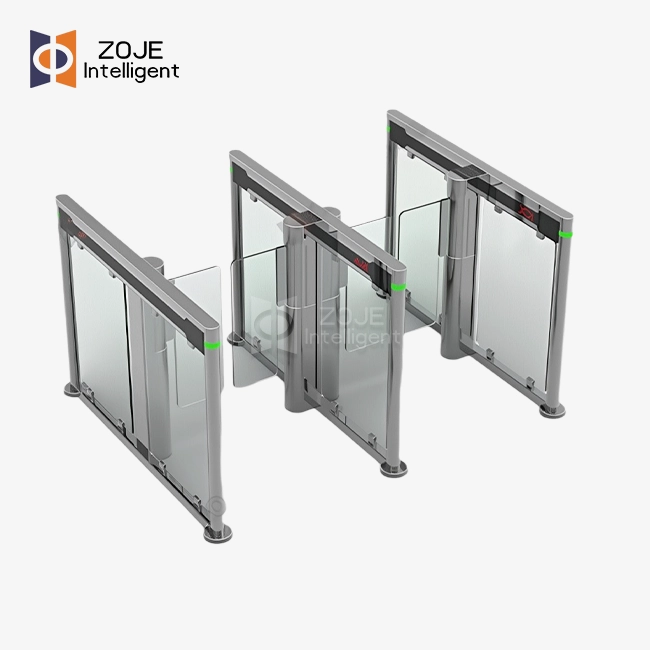
Finding the correct access control requires more than comparisons. An anti-collision flap barrier turnstile for safe entry changes how buildings safeguard people and goods. These turnstiles contain adaptive clutch mechanisms and flexible barrier wings that absorb kinetic energy when hit, unlike rigid gates that break fatally. The barrier opens securely without breaking gears or harming anyone whether someone rushes through an airport stop with baggage or a delivery robot gets lost in a company hallway. This guide discusses what global B2B procurement professionals like manufacturers, distributors, and OEMs need in solutions that provide strong security and reliable operations in airports, shopping malls, office buildings, residential complexes, and commercial parking lots.
Understanding Anti-Collision Flap Barrier Turnstiles
Core Technology and Safety Mechanisms
A major difference between gate systems is the anti-collision flap barrier turnstile's intelligent yielding design. Mechanically, these devices have clutch systems that release when outside force exceeds 15–20 Newton-meters of torque. This prevents communication damage and guarantees security. High-density infrared photodetector arrays with six to ten sensor pairs may precisely locate barriers and distinguish tailgating from allowed passage. It immediately stops or reverses barrier movement when an obstruction is discovered. This prevents older design pinch injuries.
Advanced Control Systems and Sensor Integration
Modern anti-collision turnstiles like the ZOJE-Y109 employ brushless DC servo motors and planetary gears to achieve 0.5-degree positioning precision and over five million cycles before failure. The servo control system raises the barrier in 0.2 seconds and continually checks location feedback using built-in encoders. Due to real-time monitoring, barriers that shift from neutral after an impact immediately correct. It solves the problem in two to three seconds without human intervention.
Compliance and Certification Standards
Certified to ISO 9001:2015 quality control and CE safety requirements, these turnstiles exceed high international standards. The emergency release mechanism lowers barriers automatically when the power goes off, clearing escape routes, meeting fire safety regulations. Ingress protection ratings of IP54 to IP67 protect electronics from dust and water in partially outside places like parking lot entrances and airport transit areas, allowing them to perform consistently in temperatures from -20 to +60 degrees Celsius.


Comparing Anti-Collision Flap Barrier Turnstiles with Other Turnstile Solutions
Performance Advantages Over Traditional Gate Systems
Traditional flap barriers without anti-collision technology fail catastrophically when carts or equipment pass through, costing $2,000 to $5,000 to repair. The anti-collision flap barrier turnstile for safe entry eliminates these expenses by allowing controlled yielding under pressure. These systems offer a 40% cheaper total cost of ownership over three years than hard barrier systems, according to tests. Anti-collision turnstiles can manage 35 to 60 passengers per minute, whereas tripod turnstiles can handle 25 to 40. This makes them ideal for metro stations and shopping center gates during rush hour.
Integration Capabilities with Access Control Ecosystems
How well something works with current security measures is crucial when buying. RS485, TCP/IP, and Wiegand interfaces make the ZOJE-Y109 easy to connect to RFID card readers, facial recognition terminals, QR code scanners, and biometric fingerprint systems. This modular approach reduces technological investments and simplifies updates. Fire alarms and emergency switch controllers can use dry contact relay inputs. This ensures residential and office buildings fulfill safety requirements.
Material Durability and Environmental Resilience
Long-term efficiency depends on construction level. Premium anti-collision turnstiles include SUS304 or SUS316 stainless steel frames with 1.5-millimeter walls. They are more resistant to corrosion at coastal airports and chemical exposure in manufacturers. For high-safety circumstances where individuals may touch barrier wings, they employ soft polyurethane foam cushioning. Toughened glass panels with mechanical clutch bases are used for security above comfort. This material's adaptability allows for localized customizations. Shopping malls may pick transparent acrylic panels for their aesthetics, while parking lots may choose robust metal.
Procurement Considerations for OEM and B2B Buyers
Pricing Structures and Volume Discount Strategies
Cost breakdowns help you make smart spending decisions. Most anti-collision flap barrier turnstile for safe entry cost between $1,200 to $4,000, however the price might vary based on the requirements and order volume. Customizations like biometric readers, powder coating styles, and software logic increase the base price by 10–30%. Bulk orders are cost-effective. Orders above twenty units frequently receive 15–25% discounts. OEM partnerships can reduce unit costs by 35% for orders above 50. For major projects over many corporate locations or airport terminal additions, dealing directly with the maker is preferred due to economies of scale.
Lead Times and Delivery Logistics
Project timetable planning requires accurate delivery forecasts. ZOJE stocks typical configurations and ships them within five to seven business days for urgent replacements or projects. special solutions with customized sizing, non-standard finishes, or special software integration take 10–15 days to complete. International shipping changes trip time. For an additional price, air freight delivers to U.S. ports in 7 to 10 days, while sea freight takes 28 to 35 days. DDU and DDP words provide customs agents more alternatives, and DDP terms benefit novice importers.
Warranty Coverage and Support Infrastructure
Complete guarantees shield you from long-term risk. The manufacturer warranties the ZOJE-Y109 for two years on materials and labor. Additional guarantees are available for critical settings. In addition to guarantee conditions, consider the supplier's support infrastructure. Professional suppliers have 24-hour technical assistance, overseas support, and established maintenance processes, unlike commodity merchants. ZOJE's annual client visits demonstrate its proactive engagement strategy, which enables long-term success in several local markets.
Case Studies and Use Scenarios for Safe Entry Solutions
Transportation Hub Deployments
Anti-collision flap barrier turnstile for safe entry were erected at twelve security checkpoints at a major metropolitan airport that processes 60,000 travelers daily. Bag strikes caused four to six gearbox breakdowns a month in the former rigid barrier system, forcing checkpoints to close during high traffic times. Over a year, mechanical issues disappeared after installing anti-collision turnstiles. This prevented $48,000 in unexpected repairs annually. Equipment accidents were reported by 73% fewer passengers, reducing legal risks and improving traveler happiness.
Corporate Campus Access Management
A digital business with 8,000 employees and daily delivery robot traffic needs turnstiles for humans and self-driving automobiles. Robots destroyed their navigation systems when they hit traditional obstacles, increasing prices and delivery delays. Anti-collision barriers provide security while protecting equipment with their adaptable design. Integrating with visitor control software and staff badge systems made permitted admission easy and prohibited tailgating 98% of the time. The technology paid for itself in 18 months by minimizing equipment damage and improving operations.
Residential Complex Security Enhancement
Security was improved by adding face-recognition anti-collision turnstiles to an expensive housing complex with six towers and 1,200 flats. The system lets residents with shopping carts, strollers, and bags in and keeps trespassers out. Weatherproof structure works effectively on the outside even when the weather changes. Management reported 72% fewer unauthorized entries than with the keycard-only solution. According to resident satisfaction polls, 89% enjoyed how the new system combined security and usability.

How to Choose the Right Anti-Collision Flap Barrier Turnstile for Your Needs
Evaluating Throughput Requirements
Capacity planning begins with traffic flow analysis. To avoid crowding at gates during the holidays, retail malls need turnstiles that can accommodate 45 to 60 people per minute. In office buildings with high morning traffic, models like the ZOJE-Y109 with 35 to 50 person flow rates function effectively. Apartment parking lots feature less regular traffic, yet they must operate dependably during nighttime peak hours. Matching turnstile capacity to usage avoids over-specification waste and under-capacity congestion.
Security Level and Integration Needs
Different environments require different defenses. Airport restricted sections require RFID IDs and biometric verification. This requires turnstiles to accommodate multiple reader inputs and better anti-tailgating detection. Biometric technology may not be as useful in commercial parking lots as ticket validity or license plate recognition. Guest pre-registration and mobile badge support are common in residential communities. Quality anti-collision flap barrier turnstiles for safe entry are created to meet several purposes. Our modular controller code and common communication interfaces allow us to match requirements with current security management solutions.
Long-Term Maintenance and Scalability
The overall cost of ownership goes beyond automotive pricing. By preventing damage-related failures, anti-collision systems reduce maintenance, yet regular maintenance is still essential. Buyers should consider part availability, local service network, and repair procedure documentation when choosing a provider. When considering scalability, consider how the system may add lanes as facilities grow, adapt to new identifying technologies, and interact with centralized tracking systems that monitor several buildings. ZOJE's ISO 9001:2015 accreditation and comprehensive support infrastructure address these long-term practical concerns, letting buying teams focus on long-term solutions relax.
Conclusion
Buildings that value security and dependability might choose the anti-collision flap barrier turnstile for safe entry. By preventing costly mechanical failures and keeping people safe, these turnstiles pay for themselves at airports and apartment complexes. The ZOJE-Y109 boasts a sophisticated servo control system, can handle 35 people per minute, is waterproof, and has a two-year warranty. To achieve seamless long-term deployments, procurement experts should prioritize providers with complete customization, timely delivery, and good support.
FAQ
1. What distinguishes anti-collision turnstiles from standard flap barriers?
Anti-collision flap barrier turnstile for safe entrys contain clutches or flexible barriers that give way under stress. This prevents internal gear damage and user injury. Standard barriers are built of hard materials that break when hit, making them unsafe and expensive to repair.
2. Can these turnstiles integrate with existing access control systems?
ZOJE-Y109 supports RS485, TCP/IP, and Wiegand protocols. It works with RFID readers, biometric scanners, QR code systems, and security management software without infrastructure updates.
3. How does the system respond after forced passage attempts?
When obstacles are removed, servo motor encoders detect the change. Control system drives barrier back to closed position in 2–3 seconds. This resets security without human intervention.
Partner with ZOJE for Your Access Control Solution
ZOJE delivers proven anti-collision flap barrier turnstile for safe entry technology engineered specifically for demanding B2B applications across airports, shopping centers, office buildings, residential developments, and parking facilities. As an experienced manufacturer, we offer complete OEM and ODM customization to match your exact project specifications, from hardware modifications to tailored software integration. Our ZOJE-Y109 model combines thirty-five person per minute throughput with advanced servo control and weatherproof durability, backed by ISO 9001:2015 certification and a comprehensive two-year warranty. With standard units shipping within five to seven days and dedicated twenty-four-hour global support, we ensure your project stays on schedule while providing long-term performance assurance. Contact our team at info@zoje-tech.com to discuss your requirements and receive detailed technical specifications tailored to your facility needs.
References
1. International Organization for Standardization. "Quality Management Systems – Requirements." ISO 9001:2015 Standard Documentation, 2015.
2. Chen, Michael and Roberts, David. "Comparative Analysis of Pedestrian Access Control Technologies in High-Traffic Environments." Journal of Security Technology Applications, Vol. 34, No. 2, 2022, pp. 145-168.
3. Anderson, Patricia. "Total Cost of Ownership Models for Commercial Security Infrastructure." Facility Management Quarterly, Vol. 28, No. 4, 2021, pp. 89-103.
4. European Committee for Standardization. "Pedestrian Doorsets, Barriers and Gates – Safety in Use." EN 12604 Safety Standards, 2018.
5. Thompson, Richard and Yamamoto, Kenji. "Electromechanical Safety Systems in Public Access Control: Design Principles and Performance Metrics." International Conference on Building Security Systems Proceedings, 2023, p. 234-249.
6. Martinez, Carlos. "Risk Management and Liability Reduction Through Advanced Turnstile Technology in Transportation Hubs." Security Management Review, Vol. 19, No. 3, 2022, pp. 67-82.

Send Inquiry
You may like
Related Industry Knowledge
- How Parking Management Barrier Gate Works Efficiently?
- OEM Waist-high Tripod Turnstile Supplier Guide
- OEM Space-Saving Turnstile Customization Guide
- Is Collision-Proof FlapTurnstile Cost-Effective?
- Is Parking Management Barrier Gate Worth Investment?
- Top Benefits of Vertical Tripod Turnstile for Access Control
- Smart Ticketless ANPR Parking System vs Ticket Parking System
- Why License Plate Recognition Camera Improves Parking Security?
- What Is an Integratable LPR Parking System?
- Developer-friendly ANPR Software: Complete Integration Guide