
Commercial Parking Efficiency Boost with ANPR System Explained
2026-04-20
The ANPR system for Commercial Parking is a high-tech facility management tool that uses Optical Character Recognition (OCR) and high-definition images to automatically control car entry and collect fees in places that are important to the business. This commercial-grade system, unlike private access readers, is made to handle a lot of vehicles, complicated tariff structures, and connecting to Parking Revenue Control Systems (PARCS). It fixes some of the biggest problems in the industry, like how money is lost due to lost tickets or staff fraud, how inefficient it is to use manual payment machines, and how crowded it is at entry and exit places. The system uses the license plate number as a unique digital credential to make ticketless parking, dynamic price models, and smooth free-flow experiences possible in shopping malls, office parks, and mixed-use projects.
Understanding ANPR Systems for Commercial Parking
Modern parking lots are under more and more pressure to increase traffic while keeping things safe and making as much money as possible. ANPR system for Commercial Parking technology has become the most important way to deal with these problems, changing how we control car entry in business settings.
How Automatic Number Plate Recognition Works?
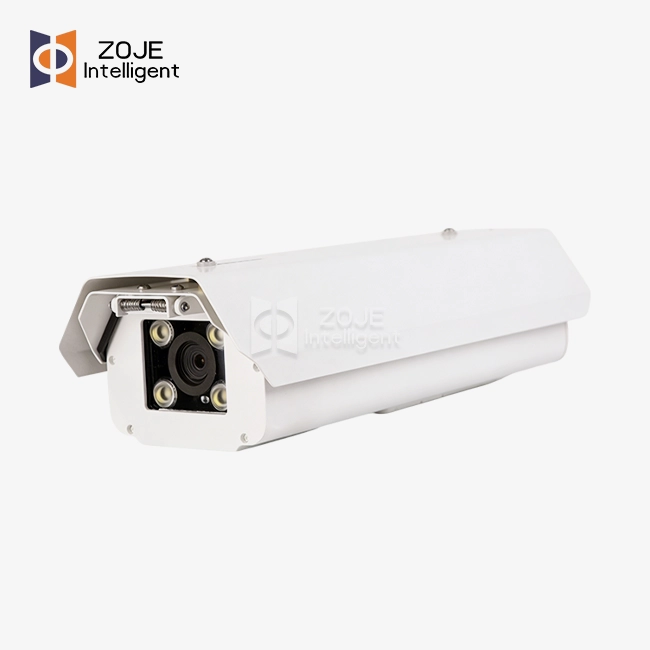
License plate recognition captures images of cars at entry or exit points, using Global Shutter cameras of 4MP or higher to prevent motion blur up to 40 km/h. Edge computing processes images instantly, while OCR algorithms extract plate numbers within milliseconds. Commercial-grade systems use high-power 850nm infrared lights and dynamic range optimization to read plates in darkness, bad weather, or uneven lighting conditions.
Key Technologies Behind Plate Recognition Systems
Advanced models like the ZOJE-LPR216 read plates across 70-degree wide angles and handle multiple vehicle directions. Onboard front-end recognition reduces latency below 200ms and avoids network delays. Deep Learning enables global plate recognition, while edge computing allows offline billing and instant syncing when networks recover. Integration with protocols like Wiegand, TCP/IP, and RESTful APIs supports complete parking system automation.
Environmental Challenges and Solutions
Outdoor LPR systems endure -30°C to +65°C and must meet IP66 and IK10 standards for water, dust, and vandal protection. Adaptive image processing handles changing light and dirt on plates, while algorithms detect partial or customized plates. Low-confidence reads trigger backup methods, like manual verification or alternative IDs, ensuring continuous and reliable operation in commercial environments.
Benefits of ANPR Systems in Commercial Parking Management
Implementing ANPR system for Commercial Parking technology leads to huge gains in many areas of operations. These benefits go far beyond simple automation and will completely change how business buildings handle parking.
Enhanced Enforcement and Security Integration
Automatic tracking enforces parking rules efficiently, recording exact entry and exit times to prevent disputes and detect violations early. Real-time checks against watchlists improve safety at sensitive locations, while anti-tailgating features protect revenue and security. Shopping malls can also automate rewards, confirming customer privileges instantly.
Operational Efficiency and Cost Reduction
Automated systems cut transaction times from 20–30 seconds to under two seconds, increasing throughput and asset utilization. Labor costs drop as multiple guards are replaced by a single LPR unit. The ZOJE-LPR216 requires minimal maintenance, with no moving parts and simple cleaning and software updates, reducing operational expenses.
Scalability and Multi-Site Management
Modern ANPR systems allow centralized control of multiple lots via cloud-based platforms while edge processing continues locally during network issues. APIs and software updates support new features, like mobile payments or EV charging, letting hardware adapt without replacement and ensuring flexible, long-term scalability.
Comparing ANPR Systems with Traditional and Emerging Parking Technologies
When choosing parking technology, you need to carefully weigh your options. Procurement managers can make choices that are in line with the organization's goals when they know how the ANPR system for Commercial Parking stacks up against other methods.
ANPR Versus RFID Technology
RFID systems work well for regular users but require distributing tags, replacing lost ones, and dealing with sun damage. License plate recognition removes these problems, handling both regular and occasional visitors without extra inventory, making it more flexible for malls and airports. Plate-based systems also scale economically, charging per camera instead of per user, unlike costly RFID tags.
Manual Ticketing Systems and Their Limitations
Traditional paper-ticket systems create multiple failure points: lost tickets, jams, fraud, and high labor needs. Staff must manage entries, payments, and disputes across shifts, making operations slow and costly. The ZOJE-LPR216 eliminates these issues by letting vehicles pass without stopping, processing each car in under two seconds and reducing staff requirements significantly.
Cost-Benefit Analysis and Return on Investment
Automatic number plate recognition has higher upfront costs but quickly pays for itself through labor savings, reduced maintenance, and lower service needs. Installation per lane ranges $15k–$30k, with payback in 18–30 months. Revenue protection from fewer evasion losses adds extra, often unmeasured, value, securing 5–15% more potential income for parking facilities.


Implementing ANPR Systems in Commercial Parking Facilities
For rollout to go smoothly, it needs to be carefully planned so that it takes into account the conditions and needs of the place. If you apply the ANPR system for Commercial Parking correctly, they will work at their best from the start, and the installation process will be as smooth as possible.
Site Evaluation and Camera Placement
Accurate license plate recognition depends on precise camera placement. Site surveys identify optimal angles, typically catching plates 10–20° off-center, balancing accuracy with mounting constraints. Lane width, vehicle approach, and lighting conditions influence which cameras are used and where. The ZOJE-LPR216 adapts to wide roads, short-depth setups, and multi-directional traffic, while infrared illuminators and software simulations handle night and challenging lighting. Network planning ensures stable power and data connections for both edge computing and cloud management.
Hardware Installation and Software Configuration
Physical installation involves secure mounting, protected cable paths, and proper electrical connections to integrate with barriers. Software setup includes whitelists, pricing rules, and recognition of over 1,500 vehicle models, enabling automatic billing via credit cards or mobile payments. Testing confirms detection under varied vehicle types, lighting, speeds, and environmental conditions, ensuring system reliability before going live.
Ongoing Maintenance and Performance Optimization
Ongoing upkeep includes monthly lens cleaning and software updates for security and plate recognition improvements. Performance monitoring tracks recognition rates, processing time, and uptime; adjustments are made for misalignment, environmental changes, or business growth. Selecting an ANPR system considers accuracy, speed, operational reliability, integration flexibility, vendor reputation, support quality, and delivery times. ZOJE-LPR216 offers high recognition rates, <200ms processing, offline capabilities, open APIs, ISO-certified quality, global support, fast delivery, and flexibility for diverse facilities—from indoor garages and shopping malls to airports and office buildings.
Making the Right Choice: How to Select an ANPR System for Your Parking Needs?
Long-term choices about procurement affect how well operations run and how happy customers are. Systematically judging systems against well-defined criteria makes sure that choices meet the needs of the company and provide long-term value. One of the primary considerations is selecting the right ANPR system for Commercial Parking.
Critical Selection Criteria
Recognition accuracy is the top priority. Systems claiming 99% may measure it differently—per letter or per plate. The ZOJE-LPR216 achieves 99% real-world accuracy in bad weather, variable lighting, and vehicles up to 40 km/h. Processing speed directly affects facility flow; edge computing enables sub-200 ms processing, avoiding lines and maximizing capacity. Operational reliability is critical—offline capabilities ensure continued function during network outages. Integration flexibility reduces long-term costs, and open APIs keep technology adaptable.
Vendor Reputation and Support Quality
Choosing a supplier involves more than specs; expertise and commitment matter. ZOJE has worked on projects since 2012, holds ISO 9001:2015 certification, and offers 24/7 global support. Their ability to provide hardware/software customization, OEM/ODM collaboration, and solutions for unique sites ensures flexibility. Fast delivery—5–7 days for standard units, 10–15 days for customized setups—minimizes downtime during installation or upgrades.
Matching Systems to Facility Requirements
Different sites require tailored solutions. Small indoor garages benefit from simple whitelist management, shopping malls need vehicle classification and reward program support, and airport parking demands enterprise-level reliability with 24/7 operation, pre-booking verification, and security integration. Office buildings focus on permit management and peak-hour efficiency. The ZOJE-LPR216 adapts to all these scenarios, identifying vehicles at speeds up to 40 km/h without stopping, maintaining smooth traffic flow across diverse facility types.
Conclusion
In conclusion, ANPR system for Commercial Parking technology has grown up and is now an important part of managing parking for businesses. These systems offer great value across a wide range of building types by getting rid of manual tasks, lowering costs, increasing security, and making the customer experience better. The ZOJE-LPR216 shows what this technology can do because it has 99% recognition accuracy, front-end processing for offline resilience, full car classification capabilities, and wide-angle recognition that works in difficult installation settings. To have a successful execution, the site must be carefully evaluated, the system must be installed correctly, and it must be maintained by providers who are dedicated to the success of their customers. Parking lots are under more and more pressure to be as efficient as possible while keeping costs low. Automated number plate recognition systems are no longer just a choice; they are a strategic necessity for running a competitive business. The technology keeps getting better, with cloud integration, mobile payment support, and AI-enhanced features. This means that these systems will continue to provide more value for a long time to come, protecting facility investments while letting them adapt to changing customer needs and operational requirements.
FAQ
1. Can automated systems handle international plates or damaged plates?
Deep Learning techniques are used in advanced ANPR system for Commercial Parking that can recognize places all over the world and can instantly adjust to different plate formats, fonts, and layouts. When the system comes across dirty, broken, or modified plates, it looks at the plate layout and partial data to figure out what characters are missing. If trust levels drop below acceptable levels, the system either marks the entry for manual verification from afar or tells drivers to use backup credentials like QR codes. This keeps security high and makes sure that no valid user is refused access.
2. What happens during power or network failures?
Professional systems have many levels of resilience to keep working even when there are problems with the infrastructure. The ZOJE-LPR216 does front-end recognition and local processing, so it doesn't need to be connected to a network to work. During power blackouts, cameras keep reading license plates, processing whitelist access for approved users, and saving transaction data on SD cards locally. When the power and network come back on, the buffered data instantly syncs with the central management systems. This makes sure that no transaction or income data is lost.
3. Does this technology comply with privacy regulations?
Privacy compliance is a very important thing for businesses that have to follow the GDPR, CCPA, and other related rules. For professional use, it has data masking features that hide license plate numbers while they are being stored, automatic retention plans that get rid of old data based on legal requirements, and encrypted transfer methods that keep data safe while it's being sent. Different governmental bodies in different countries can use the ZOJE-LPR216 with changes made to it. The compliance framework is finished with clear customer notice and proper policy paperwork. This lets facilities use recognition technology while still respecting privacy rights.
Partner with a Trusted ANPR System for Commercial Parking Manufacturer
ZOJE is ready to use cutting edge ANPR system for Commercial Parking technology to change the way your parking lot works. The ZOJE-LPR216 has been tested and shown to work well. It has 99% recognition accuracy, front-end processing for operation without a network, and full car classification for advanced price models. Our ISO 9001:2015-certified manufacturing ensures consistent quality, and our open customization options let us meet specific operating needs that standard solutions can't. With a two-year guarantee, expert help available around the clock, seven days a week, and fast delivery (standard goods within 5-7 days, customized configurations within 10-15 days), ZOJE gets rid of the problems that make it take too long to improve parking efficiency. Every year, our experienced team goes to see customers in person to learn about their changing needs and to improve relationships that are based on mutual success. ZOJE has the knowledge, technology, and support infrastructure to make sure that your investment gives you long-term operating and financial results, whether you are in charge of shopping malls, airports, office buildings, or business parking lots. Get in touch with us at info@zoje-tech.com to talk about your unique needs and find out how the right ANPR system for Commercial Parking provider can improve the performance, safety, and customer satisfaction of your facility.
References
1. International Parking & Mobility Institute (2022). "Automated Enforcement Technologies in Commercial Parking: Implementation Best Practices and ROI Analysis." IPMI Research Foundation, Madison, Wisconsin.
2. Chen, M. & Robertson, K. (2021). "Comparative Performance Analysis of ANPR Technologies Under Adverse Environmental Conditions." Journal of Transportation Technology and Infrastructure, Vol. 47, No. 3, pp. 234-251.
3. European Parking Association (2023). "Data Privacy and ANPR Systems: Compliance Guidelines for Commercial Parking Operators." EPA Technical Standards Committee, Brussels, Belgium.
4. Williams, J., Harrison, P., & Chang, S. (2022). "Cost-Benefit Analysis of Parking Access Technologies: ANPR, RFID, and Traditional Ticketing Systems Compared." Facilities Management Quarterly, Vol. 18, No. 2, pp. 89-107.
5. National Parking Association (2023). "Technology Integration Roadmap for Commercial Parking Facilities: Planning for Digital Transformation." NPA Education Foundation, Washington, D.C.
6. Thompson, R. & Martinez, L. (2021). "Edge Computing Architecture in Vehicle Recognition Systems: Performance and Reliability Advantages for Mission-Critical Applications." International Journal of Intelligent Transportation Systems, Vol. 29, No. 4, pp. 412-428.

Send Inquiry
You may like



Related Industry Knowledge
- Everything You Need to Know About Self-Service Kiosks
- Top Benefits of Anti-Collision Flap Turnstile Gate Systems
- Is Slim Speed Gate Turnstile Durable and Efficient?
- LPR Server Buyer’s Guide for High-Durability Needs
- Top Outdoor ANPR Cameras Built for Harsh Parking Conditions
- Top Self-service Parking Systems for Automated Parking
- Guide to 24/7 Unattended LPR Parking Operations Deployment
- What Is a High-Performance License Plate Recognition Camera?
- What Is Ticketless Vehicle Access Control in Smart Parking?
- Why LPR Camera for Parking Management Improves Efficiency?