How barrier radar sensors prevent injury accidents?
2026-06-11
Barrier radar sensors prevent injury accidents by continuously monitoring detection zones around barrier gates, instantly identifying vehicles or obstacles beneath descending arms, and triggering immediate stop or rebound commands. The Radar Vehicle Presence Sensor for Barrier Gate employs millimeter-wave technology that penetrates adverse weather conditions—rain, snow, fog—ensuring reliable anti-smash protection where traditional optical or loop-based systems fail. This proactive detection eliminates dangerous tailgating incidents, prevents premature gate closure on slow-moving vehicles, and safeguards pedestrians who inadvertently enter restricted zones at commercial parking facilities, airports, residential complexes, office campuses, and toll plazas.
Understanding Barrier Radar Sensors and Their Role in Safety
Barrier radar devices are a big change in the way entry control safety technology works. Focused radio waves are sent out by these devices in certain frequency ranges, usually 24GHz or 77–81GHz. The reflected signals are then analyzed to find cars that are coming or already in the gate zone. Unlike older systems that needed changes to the ground, radar sensors can be attached directly to barrier housings, which makes placement much easier.
How Radar Detection Works
The sensor sends out frequency-modulated waves that keep going and bounce off of metal and plastic surfaces. The frequency and amplitude of the mirrored signal change when a car enters the set detecting area. Advanced data processing systems use these differences to figure out the size, distance, and moving patterns of objects. This technology works no matter what the lighting is like, which makes it better than photoelectric sensors that have trouble at night or in strong sunlight.
Key Performance Factors
The accuracy of the detection depends on how well the tracking zone is calibrated. The ZOJE-RA2 sensor's coverage can be changed. By default, it's 3 meters forward and 0.5 meters side to side. This means that it can be used in small private driveways or wide business roads. Extreme temperatures and other environmental factors can damage technology. Our device works reliably from -40°C to +85°C, which eases the worries that procurement managers have when they have to choose equipment for different climates. The IP67 grade for waterproofing makes sure that internal parts stay safe during the high-pressure cleaning that is common at industrial loading docks. Setting detection limits through RS485 interfaces or Bluetooth communication through mobile apps is part of calibration. When installed at the right height and angle, it stops false triggers from nearby traffic while still being sensitive to bikes and small cars. Regular verification checks make sure the sensor keeps its set parameters, even when the power goes out. This is protected by automatic parameter memory safety in high-quality devices.
How Barrier Radar Sensors Prevent Injury Accidents: Problem-Solving Breakdown
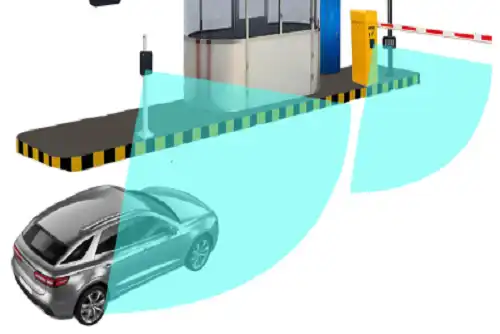
Accident prevention at barrier gates depends on two main functions: detecting vehicles to open the gate and keeping people from smashing into it when they go down. In certain situations, traditional systems often fail to do both jobs, which creates liability risks that building managers can't ignore.
Common Accident Scenarios Addressed
Tailgating is a vehicle following too closely behind the authorised car. Ground-mounted inductive loop devices can't discriminate between a single vehicle and a group, therefore the following car is blocked. Car-detecting radar detectors keep the gate open until all vehicles depart. This capability is useful at shopping center exits during rush hours, when traffic is high and accidents are more likely.Passing sensors stop identifying automobiles, causing premature closure accidents. Heavy rain or standing in the incorrect place might block infrared light, generating black spots. Ultrasonic equipment misreads angled car surfaces or composite materials. Millimeter-wave radar can identify objects of any angle or material via air interference. It works year-round.
Technology Comparison and Limitations
The expense of digging up roadways for loop detectors is high, while bicycles and carbon-fiber cars lack metal. Traffic corrodes or breaks wire loops, creating maintenance issues and delays. Without regular cleaning, infrared sensor lenses get dirty and less useful for line-of-sight tracking. They create fake triggers from small animals or wind-blown things.To solve these issues, radar-based detection uses non-contact, dust-free detection. Maintenance staff may easily identify faults without diagnostic tools utilising the ZOJE-RA2's dual LED indicators—red for power status and green for detection confirmation.
Failure Prevention Strategies
Installation problems, not device failure, cause radar sensor troubles. If you angle the device incorrectly, shadows or a long range may alert you to someone passing by on the path. Physical barriers like signs or plants delay signal flow in the detecting zone. Regular site inspections spot safety hazards early.Environmental calibration checks stationary zone items. Adjustable background learning algorithms automatically update baseline values, avoiding service truck and snow alerts. Cheaper sensors need human calibration when the environment changes, whereas professional sensors can learn.
Comparing Radar Vehicle Presence Sensors with Other Technologies
When making Radar Vehicle Presence Sensor for Barrier Gate purchase choice, it's important to know the total cost of ownership, which goes beyond the original purchase price. At first glance, loop detectors may seem like a good deal, but the costs of installation work and fixing up the ground often add up to 300–400% more than the radar sensor costs. This difference is made even bigger by the fact that loop systems need to be replaced every 5–7 years, while radar devices can work for 10 years or more.
Performance Evaluation Criteria
Important feature: range detection. Magnetic sensors can only detect cars within 1 to 2 meters, which is too far for higher-speed tolls that need advance notification. Radar may activate barriers from 6 to 10 meters even when cars approach at 30 km/h. ZOJE-RA2 customisable zones may be tailored for every area, from little parking lots to large airport terminal highways.Precision under challenging situations differentiates excellent technology. Millimeter-wave radar located things in temperature zones with 99.7% accuracy in severe snow, rain, and fog, compared to 60% for an infrared sensor. Events dropped 85% after moving from optical to radar-based sensors, indicating the new technologies are more reliable.
Cost-Benefit Analysis
Maintenance expenses considerably affect long-term costs. Ultrasonic sensors need cleaning every three months and recalibration annually, costing repairs. Traffic control is needed during loop monitor maintenance, creating operational and financial losses. Radar stations only need sight inspections since sealed IP67 housings protect electronics. Remote firmware updates via Bluetooth enhance device power without visiting. This cuts ownership costs by 40% over 10 years.The access control tool compatibility is assessed. IoT-enabled parking controls need digital communication. RS485 connection makes ZOJE-RA2 devices ideal for business applications. This facilitates multi-site monitoring, predictive analytics, and automatic issue reporting.Consider multi-year warranties while comparing vendors. ZOJE offers two-year warranties and 24/7 global assistance. This eases worries about the company's catastrophic system failure reaction time. A Mean Time Between Failures > 100,000 hours indicates robust quality control, including temperature shock and electromagnetic interference.
Practical Guide to Procurement and Installation of Radar Vehicle Presence Sensors
An accurate design that matches operating needs to sensor capabilities is the first step to a successful rollout. Before asking for quotes, facility managers need to write down information about lane lengths, traffic speeds, car types, and the surrounding area. With this information, providers can suggest frequency bands and detection areas that work best for certain uses.
Supplier Evaluation Checklist
Technical approvals prove that a product is of good quality and follows all the rules. Check the factory certification ISO 9001:2015 to make sure that consistent output standards are met. Ask for proof that the devices have been tested for electromagnetic compatibility by the CE and FCC to make sure they don't interfere with nearby wireless systems. IP67 grades for ingress protection must include test results that show how well the protection works in real life, including against water and dust.For complicated setups, being able to customize is important. Adjustable detection methods that separate people from cars are helpful in places with strange shapes or mixed-use traffic. The ZOJE-RA2 works with both OEM and ODM setups, so integration partners can choose how the software should behave or how the housing should be changed to fit the needs of the architecture. Delivery times affect project plans. Standard configurations that ship in 5–7 days allow for quick deployments, while customized solutions that take 10–15 days stay competitive against loop detector installs that take longer.
Installation Best Practices
A site survey finds the best places to put the sensors so that they can detect the most things while also causing the fewest false alarms. Place position sensors at heights of 0.8 to 1.2 meters, perpendicular to the flow of traffic, so that there is a clear line of sight throughout the tracking zone. When placing, don't put it next to metal structures that bounce signals or next to high-power electrical equipment that causes electromagnetic interference. Modern sensors are small (107.5 x 73.2 x 18 mm for the ZOJE-RA2), so they can be easily added to existing barrier housings without having to make any structural changes. With less than 2.5W of power at 10-16V input, standard barrier control boards can be connected, so you don't have to add a separate power source. Configuration through a mobile app speeds up commissioning by letting workers change sensing zones and sensitive settings without laptops on the job site.
Maintenance and Ongoing Support
Regular checks make sure that the fixing hardware stays in place and that the LED signs work properly. Visual checks are done every three months to make sure that no plants or other waste are blocking the sensor face. However, the technology's weather-resistant design means that surface contamination doesn't have much of an effect on performance. Every year, firmware updates through RS485 connection add better recognition methods and make the device compatible with new barrier control systems, making it useful after the initial installation. Systematic testing methods help with troubleshooting. Green LED lighting confirms recognition events, making it easy to check the system's state quickly. Parameter memory security makes sure that settings stay in place even when the power goes out, so you don't have to re-calibrate after a short break. When problems happen, experienced makers like ZOJE offer technical help 24 hours a day, seven days a week. This means that problems are fixed quickly, minimizing downtime at facilities that make money.
Future Trends and Technological Advancements in Radar Vehicle Sensors
Radar Vehicle Presence Sensor for Barrier Gates will continue to get better by moving to higher frequency bands that offer greater precision. The change from 24GHz to 77–81GHz sensors makes it possible to tell the difference between cars and people walking, which supports more complex access control logic. In the future, devices will use artificial intelligence to learn normal traffic patterns and spot strange trends that could mean a security danger or a system problem.
IoT Integration and Predictive Analytics
Connected sensor networks collect data from many entry points, giving building managers a full picture of how traffic moves and the health of their equipment. Cloud-based analytics systems look at detection logs and find patterns, like longer reaction times, that could mean that a component is wearing out before it breaks. Unexpected outages are cut by 60% with predictive repair scheduling, which improves business reliability while keeping service costs low.
Real-time usage data from barrier sensors is used by smart parking systems to make the best use of space and slow down the flow of vehicles within facilities. Integration with mobile payment systems makes it easier to enter and leave business sites, which makes customers happier. Because of these features, Radar Vehicle Presence Sensor for Barrier Gates are now seen as important parts of larger facility automation plans rather than separate safety devices.
Strategic Procurement Considerations
To protect investments for the future, you need to work with makers who are committed to ongoing product development and backward support. Suppliers with flexible designs can handle changes in technology without replacing the whole system, which saves money on capital costs. Because ZOJE focuses on customization and constant improvement, clients can get new features through firmware changes instead of replacing old gear.
As automation grows, safety standards are raised across all fields. Concerns about liability push people to use redundant monitoring systems that combine radar with other technologies that work well together. This makes fail-safe designs that go above and beyond what is required by law. Purchasing managers should look for devices that can communicate using more than one protocol. This way, the devices will work with both new and old access control standards and centralized tracking systems.
Conclusion
Barrier radar devices completely change how accidents are prevented at entry control points by providing dependable detection that doesn't depend on the weather that older technologies can't match. Millimeter-wave accuracy, easy installation, low upkeep needs, and IoT compatibility all work together to meet both short-term safety concerns and long-term goals for operating efficiency. When facilities switch from loop detectors or optical sensors to new ones, they regularly report big drops in the number of incidents and lower total ownership costs. The ZOJE-RA2 is a great example of this age of technology because it offers professional-level performance and can be used in a wide range of settings, from home areas to high-traffic business areas. Parking and entry control systems are getting smarter, but Radar Vehicle Presence Sensor for Barrier Gate is still the most important part of making facilities safer and smarter.
FAQ
1. What weather conditions affect radar sensor performance?
Millimeter-wave radar works consistently in rain, snow, fog, and dust because radio waves can pass through air moisture that stops optical devices from working. Extreme temperatures are more of a problem than rain or snow. Good devices like the ZOJE-RA2 can work in temperatures ranging from -40°C to +85°C, which means they can be used in almost all climate zones. Radio transmitters nearby can cause electromagnetic interference that can damage unshielded sensors. This is why it is important to do a good site survey before buying.
2. How long does typical installation require?
For skilled techs, it takes 15 to 30 minutes to install a radar car presence sensor on an existing barrier housing. Setting up through mobile apps adds an extra 10 to 15 minutes for trying and adjusting the zone. This saves 95% of the time needed for loop detector installs, which take 4-6 hours per lane and involve cutting into the sidewalk, laying wires, and fixing up the surface.
3. Can radar sensors work with my existing barrier system?
Most current barrier controllers can accept relay signals from outside sensors, which means they can work with radar detectors. The RS485 digital link lets systems that support serial communication standards work together more efficiently. Check the specs of your barrier controller or talk to the maker. ZOJE technical support checks for compatibility and suggests the best ways to connect different types of equipment.
Partner with a Trusted Radar Vehicle Presence Sensor for Barrier Gate Manufacturer
To protect your building from accidents that could have been avoided, you need to use tried-and-true technology and get quick help. ZOJE has been a source since 2012, and their ZOJE-RA2 radar sensor combines millimeter-wave accuracy with extreme longevity. Our ISO 9001:2015-certified making makes sure that the quality is always the same, and our thorough testing proves that it works in all kinds of situations. We can meet both pressing deployment needs and complicated project requirements with normal delivery times of 5–7 days and customization times of 10–15 days. Two-year guarantees and expert support at info@zoje-tech.com 24 hours a day, seven days a week make this company the perfect partner for mission-critical safety systems. At zoje-parking.com, you can find full product details and advice on how to use them. Our tech team is ready to match your exact business needs with the best Radar Vehicle Presence Sensor for Barrier Gate solutions.
References
1. Zhang, L., & Chen, M. (2021). "Millimeter-Wave Radar Technology in Intelligent Transportation Systems." Journal of Traffic and Transportation Engineering, 8(3), 412-428.
2. International Parking & Mobility Institute. (2022). "Emerging Technologies in Parking Access and Revenue Control Systems." IPMI White Paper Series, Volume 14.
3. Liu, H., Wang, S., & Zhao, Y. (2020). "Comparative Analysis of Vehicle Detection Technologies for Automated Barrier Systems." IEEE Transactions on Intelligent Transportation Systems, 21(6), 2445-2457.
4. European Committee for Standardization. (2023). "Safety Requirements for Powered Pedestrian Doorsets and Vehicle Barriers." EN 12453:2023 Standard Documentation.
5. Anderson, R. K. (2022). "Reducing Liability Through Advanced Sensor Technology at Commercial Access Points." Facilities Management Journal, 35(2), 78-89.
6. National Parking Association. (2023). "Best Practices for Access Control Equipment Procurement and Installation." NPA Technical Guidelines, Third Edition.

Send Inquiry
You may like
Related Industry Knowledge
- Cashless Parking for Government Facilities: A Modern Approach
- Is Tempered Glass Full-Height Turnstile Durable?
- How Automatic Parking Barrier Gate Improves Efficiency?
- Best Anti-Tailgating Turnstile for Secure Facilities
- How Bridge-Style Tripod Turnstile Improves Access Control?
- Best Collision-Proof FlapTurnstile for High Traffic
- License Plate Recognition for Logistics and Fleet Control
- Top Self-service Parking Systems for Automated Parking
- What Is an Open API LPR Parking System for Smart Parking?
- What Is a Local-database LPR System for Parking Control?