
How to choose a uhf rfid tag reader? How does it work?
2026-07-02
To pick the best UHF RFID Tag Reader for Parking Management System, you need to look at its read range, compatibility with other protocols, stability in harsh environments, and ability to work with other systems. These readers work by sending out radio waves in the 860-960 MHz range, which can wirelessly read passive tags that are stuck to car windshields. When a car with a tag enters the detection zone, the reader reads the tag's unique identifier and sends it to the parking management software. This allows automatic, hands-free entry control so drivers don't have to stop or show real credentials.
Understanding How UHF RFID Tag Readers Work for Parking Management
Ultra-high frequency RFID technology has changed how parking lots control who can get in and out of their lots. UHF RFID Tag Reader for Parking Management System devices can talk to passive tags from a long way away, unlike card-based systems or barcode scanners. This means that there is no need for direct touch or manual intervention. This way of contactless recognition makes it much easier to get in during busy times.
Core Components of RFID Parking Systems
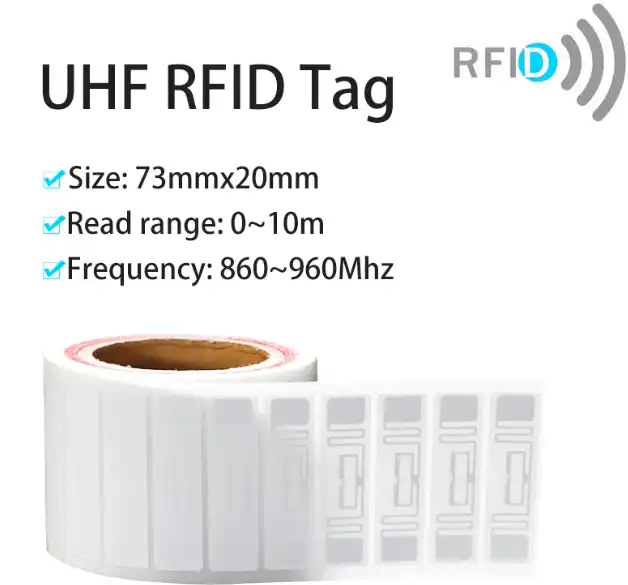
RFID parking systems need four essential parts. RFID tags, dormant window stickers with microchips and antennae, store a unique ID. UHF readers send electromagnetic waves to nearby tags and receive their signals. Antennas with circular polarization and gains between 8dBi and 12dBi allow tag questioning independent of vehicle angle or tag orientation. Middleware software authorizes and monitors entries by verifying data against access control, payment, and database management systems.
Communicating takes milliseconds. Questioning signs appear as cars approach the entry gates. Compatible tags use radio waves to power their electronics and provide their ID number to the reader when they encounter the electromagnetic environment. This complex electromagnetic communication dance permits read lengths from six meters for modest setups to twenty meters for high-performance ones like the ZOJE-6890H.
Technical Operation and Read Range Factors
Many factors affect real-life read distance. Quality readers may transmit 0.1W to 1W, affecting coverage. Power increases range, but it must be managed to minimize lane interference. Windscreen tags work best, but dashboard tags and metallic window tinting diminish signal. Rain, fog, and nearby equipment electromagnetic noise need strong reader designs with high receiver sensitivity—usually -85dBm or more in professional systems.
Reader device shape matters too. Circular polarization antennas work independent of tag orientation. This is significant because cars ascend from different heights and angles. Linear polarisation antennas are inexpensive but function poorly when tags are misaligned. Advanced readers use FHSS (Frequency Hopping Spread Spectrum) to quickly hop between frequency channels to preserve transmission reliability in noisy Wi-Fi networks, mobile phones, and industrial equipment.
Real-World Performance in Parking Applications
They boost efficiency in retail malls, airports, and neighbourhoods. A properly configured UHF RFID Tag Reader for Parking Management System can process automobiles in under a second. Traditional card-swipe systems require 5–10 seconds. The quicker speed of long-range RFID allows a single lane to manage 600 to 800 automobile movements per hour, compared to 300 to 400 for manual techniques. These performance measurements are important in corporate parking lots and office buildings with high foot traffic, where early morning crowds produce irritating waits.
Airport installation presents challenges and risks. Rental cars, staff shuttles, and passenger drop-offs occur often, proper identification is essential for all of them, even if they travel at various speeds. In busy holiday travel periods, long-range scanners 15 to 20 meters from the approach offer ample processing time for system verification and barrier activation to keep traffic flowing smoothly. Our industrial-grade readers can function in temperatures as low as -20°C in winter and as high as 70°C in summer.
Key Criteria to Consider When Choosing a UHF RFID Tag Reader
When buying parking RFID systems, it's important to carefully consider a number of success factors. Choosing the wrong equipment has effects that go beyond the initial installation costs. These effects include ongoing upkeep costs, user happiness, and the system's ability to work reliably over a period of years.
Performance Specifications That Matter
The most often read range must be contextualized. Manufacturers specify the longest ranges under ideal lab conditions with correctly set tags and little interruption. In practice, performance is 60–75% of claimed maximums. In a normal parking lot with concrete buildings, cars, and RF noise, a 20-meter scanner can only reach 12–15 meters.
Read speed and accuracy impact mood. Readers must almost always identify allowed cars without lane or traffic errors. Anti-collision algorithms may differentiate tags when several cars stop near office building entrance gates during shift changes. Even near cars, the ZOJE-6890H can recognize tags via FHSS.
Protocol compatibility lets systems interact and protects against the future. ISO 18000-6B and EPC Class 1 Gen 2 readers read several tags. Building managers may use their tags while embracing new technologies. This independence helps businesses with several parking lots and antiquated systems.
Environmental Durability and Protection Standards
Parking lots outside put readers in difficult circumstances they seldom experience at work. Cold nights and scorching afternoons stress electronics, while UV radiation deteriorates plastic housings and wire insulation. Quality UHF RFID Tag Reader for Parking Management Systems include die-cast aluminum or UV-stabilized ABS casings with IP65 or IP67 ingress protection. These values inhibit dust in dry areas and rain in strong rainstorms.
Winter road salting and coastal locations promote corrosion. Reader housings, connectors, and mounted tools can withstand 18–24 months of salt spray without electrical or weatherproofing damage. Despite extended sub-zero exposure, cold-weather readers like the ZOJE-6890H are reliable due to its preheating function. This means no more morning mistakes from obsolete or malfunctioning equipment.
Integration and Maintenance Considerations
Readers can access barriers, payment kiosks, database servers, and mobile apps in modern parking lots. Communication ports come in numerous styles for modern systems. RS-232 for older controllers, RS-485 for multi-device serial networks, Wiegand for access control panels, and TCP/IP with Power over Ethernet for networked systems. System integrators may change functions without reverse engineering utilizing VB, VC, Java, and Python SDK packages.
The reader's lifetime cost of ownership is greatly affected by maintenance frequency. Every three months, antennas should be cleaned of bird droppings, dirt, and other pollutants that reduce RF transmissions. Modular readers with replaceable antenna connections save maintenance and component costs. Professional manufacturers provide a two-year warranty and rapid support, unlike cheap suppliers. Annual calibration tests verify RF power output, receiver sensitivity, and anti-collision capability. This prevents performance from declining, which frustrates users and stresses facilities.
Comparing UHF RFID Tag Readers: How to Make an Informed Decision
RFID readers from both well-known brands and newcomers are available in large numbers in the market. To tell the difference between marketing claims and real changes in performance, you need systematic review methods and to be aware of common procurement mistakes.
Technology Comparison: RFID Versus Alternative Identification Methods
Instead of RFID, barcodes and QR codes are usually utilised for parking. Trucks must stop in specified spots for camera-based scans since these optical systems must see well and be properly installed. Rain, fog, and nighttime darkness reduce categorisation accuracy, and filthy or damaged codes can't be read. Drivers must remember to display codes on their devices, making laws tougher to obey. Due to its ability to scan from any direction, function in all weather, and be permanently attached to the window, UHF RFID Tag Reader for Parking Management System technology solves these issues.
Automating parking lots using Automatic Number Plate Recognition (ANPR) is popular since it can identify automobiles without tags. However, ANPR scanners have problems reading filthy license plates, temporary plates, and automobiles from other countries with different numbering systems. Processing accuracy decreases when it rains a lot or spotlights wipe off camera photos. ANPR also raises privacy concerns in homes where capturing license plates seems intrusive. UHF RFID Tag Reader for Parking Management System characteristics complement ANPR. ANPR handles casual visitors, whereas RFID handles residents, workers, and monthly subscribers promptly so they don't wait.
Evaluating Manufacturers and Brand Positioning
RFID procurement panels commonly cite Impinj, Alien Technology, and Zebra Technologies, who have decades of RF experience and various products. Scientific expertise, worldwide assistance, and proven products that work under difficult industrial settings are offered by these businesses. However, superior engineering is not the primary reason for their higher price. Channel sales and brand promotion cost money.
New manufacturers, especially in tech-forward nations, may now provide equivalent technology at lower prices. Through simplified processes and modern production techniques, firms like ZOJE give readers more features at a lesser cost than prior generations. ZOJE-6890H specifications equal or surpass well-known rivals. Several protocols, 20-meter read range, adjustable RF power, and FHSS anti-collision are supported. Cheap enough for budget-conscious building managers and system integrators.
Cost Analysis and Bulk Procurement Strategies
Purchase price is just one cost analysis factor. Location considerably affects installation costs. Underground conduits, network equipment upgrades, and custom installation might treble reader hardware costs. Power consumption (5–15 watts per reader in active mode), cloud-connected device network access fees, and periodic maintenance are continuous costs. Budget for initial vehicle plates and repairs when new tenants or workers arrive. Passive UHF tags cost $1–3 in bulk.
Volume procurement discussions may provide considerable discounts for multi-site and yearly orders. Based on commitment, distribution partners with system designers charge differently. OEM cooperation provide the most branded resale reductions. Companies deploying software across locations in stages should create framework agreements with consistent pricing and availability. Market changes and component shortages may interrupt supply lines, but this will protect them.
Installation and Maintenance Best Practices for UHF RFID Parking Systems
If you don't set or keep your UHF RFID Tag Reader for Parking Management System properly, even the best reader won't give you good results. Structured methods that take into account site-specific problems and practical needs are used in successful operations.
Pre-Installation Site Survey and Planning
Full site assessments identify RF interference sources, optimal placements, and coverage gaps that need more gear. Handheld spectrum detectors detect UHF RF radiation from mobile phone towers, wireless networks, and industrial equipment. This enables you plan frequencies to avoid full channels. A physical site study documents driveway lengths, approach angles, obstructions, and subterranean utilities that restrict cable paths.
Where you install the antenna greatly affects setup performance. Overhead canopy arrangement provides the optimum top-down windshield illumination with the least vehicle body interference and most consistent reading zones. Single-lane exits benefit from side-mounted bollards or poles, but the angle must be modified to maintain tag coupling. The reader has adequate time for database verification, audit recording, and mechanical barrier activation 12–15 meters from the decision point (barrier or gate). This prevents automobiles from idlely waiting for the system.
Integration with Infrastructure Already in Place
Modern parking control systems include several pieces that must operate together. Readers should easily communicate with barrier controls, loop detectors, traffic signals, payment booths, and central management systems. Wiegand enables readers link directly to older access control panels, while TCP/IP lets readers act as smart nodes that report to cloud-based management systems in current networked designs.
Planning electricity generating infrastructure is crucial. If there are nearby PoE network switches, readers that need 10 to 15 watts may be placed more easily. Independent systems need local AC power and weatherproof power and surge protector enclosures. Underground cable routes should contain spare conduits for future extensions and backup tracks for critical regions where interruption might disrupt operations.
Preventive Maintenance and Troubleshooting
Structured maintenance schedules avoid persistent performance degradation, which frustrates users and causes support calls. Every three months, the antenna is cleaned of dirt, bug nests, and other exterior pollutants that weaken RF signals and restrict read range. The system is tested every six months to verify RF power output, receiver sensitivity, and collision avoidance. Wear is detected before it breaks using calibrated test tags at predetermined distances.
Damaged joints, antennas, and tag triggers in moving traffic are common field concerns. Systematic troubleshooting isolates hardware problems from setup and environmental changes. Additional antennas, cables, and power sources prevent downtime when a component fails, while seller technical support hotlines provide expert advice for complex difficulties. Technical support from ZOJE is available 24/7 globally. Therefore, facility managers will never have to handle important system difficulties without expert help while establishing or modifying a system.
Future Trends and Innovations in UHF RFID for Parking Management
RFID technology is still changing because of improvements in semiconductors, the Internet of Things (IoT), and shifting patterns of movement. Companies that are looking to the future keep an eye on these trends to make sure that their infrastructure investments will pay off and to take advantage of new capabilities.
Enhanced Reading Performance and Tag Innovation
Next-generation reader chipsets have better receiver sensitivity, which means they can reliably read from farther away while keeping small sizes and using less power. Adaptive power control techniques change the send power based on the strength of the tag signal in real time. This makes the read zone limits work best and keeps interference from neighboring lanes to a minimum. Battery-assisted passive tags, which use small batteries to boost the strength of the backscatter signal, allow accurate readings from very far away, up to 50 meters. This means they can be used in big logistics yards and for managing parking on college campuses.
Tag innovation is mainly about making things last longer and having specific shapes. Ceramic-based tags can handle the rough conditions of the outside of a car and can be permanently attached to license plate frames or bumpers. UHF RFID Tag Reader for Parking Management System tags made for metal surfaces get around the problem of RF shielding, which makes it possible to identify delivery cars, service vehicles, and equipment carts. Facilities that want to switch from older NFC-based systems to more modern long-range designs can use multi-frequency tags that work with both UHF and HF protocols.
IoT Integration and Smart City Connectivity
RFID and IoT solutions transform parking readers into smart sensors that develop smart city infrastructure. Edge-enabled readers analyse traffic, occupancy, and unusual use patterns without straining central systems. Demand spikes are predicted using predictive algorithms using real-time data. Prices may be changed instantly and capacity regulated beforehand.
Smart city networks improve transport system integration. RFID-enabled parking structures tell guide apps of available spots. This helps cars identify available places and reduces traffic and pollution from circling. Multi-modal transportation hubs that coordinate parking and transit schedules make it easier for commuters to utilise both. Emergency car ranking systems bypass authorisation processes and allow first responders to enter.
Security Enhancements and Privacy Protection
More parking gadgets using networks and cloud services raise cybersecurity concerns. Encrypted tag communication prevents surveillance and copy attacks that might compromise the facility. Blockchain-based audit trails record cars' unchangeable whereabouts. This aids criminal investigations and regulatory compliance. RFID tags with mobile credentials or biometric verification make it simpler to enter high-security zones like government buildings and commercial sites.
Privacy-protected vehicle designs reduce concerns about ongoing monitoring. Anonymous identifiers separate personal data from vehicle movement data. This enables facilities to analyse data without compromising user privacy. Instead of transmitting personally identifying information to central systems, decentralised authentication models verify access privileges locally. This reduces data breaches and GDPR/CCPA compliance.
Conclusion
How to Choose and Use a UHF RFID Tag Reader for Parking Management System? You have to think about the technical specs, how long it will last in different environments, how well it will work with other systems, and how long you will need to get help with it. When properly specified and professionally put, the technology offers significant operating benefits, including faster processing of vehicles, reliability in all weather conditions, and higher security. Readers with strong construction, full protocol support, open integration options, and quick maker support should be given top priority by organizations. The ZOJE-6890H is a great example of these ideas because it has a 20-meter read range, works with multiple protocols, has adjustable RF power, FHSS anti-collision, and cold-weather preheating. It also comes in a properly designed package with a two-year guarantee and global technical support.
FAQ
1. What Read Range Should I Expect in Real-World Parking Applications?
Normal working conditions allow a UHF RFID Tag Reader for Parking Management System setups to read tags from 8 to 15 meters away. This range is wide enough to fit normal parking lanes and far enough away for the system to work and the barrier to go up. Some things that lower the potential maximum ranges are interference from the car body, signal reflections from concrete buildings, and electrical noise from nearby equipment. The ZOJE-6890H reader works reliably up to 10 meters and can be extended to 20 meters in the best setups, which is more than most facilities need.
2. How Does UHF RFID Compare to HF and NFC Technologies?
UHF systems work between 860 and 960 MHz, and their read ranges are measured in meters instead of centimeters. This makes them perfect for identifying vehicles in places where drivers shouldn't stop. HF (13.56 MHz) and NFC technologies need to be very close to each other—usually less than 10 centimeters—which is fine for entry cards for pedestrians but not so good for cars. UHF inactive tags are a lot cheaper than active or battery-powered tags, which helps big sites keep their car populations low.
3. Can RFID Readers Integrate with My Existing Parking Management Software?
Modern UHF RFID Tag Reader for Parking Management System devices can connect to a wide range of business parking management systems thanks to their support for multiple integration protocols, such as Wiegand, RS-485, and TCP/IP. Manufacturers usually give SDK packages and API instructions to help developers build unique integrations. The ZOJE-6890H comes with pre-built drivers for popular parking software, which makes it easier for system developers to set up and lowers the technical risk.
Partner with ZOJE for Superior Parking RFID Solutions
ZOJE specializes in providing industrial-grade UHF RFID Tag Reader for Parking Management System solutions that are specifically made to meet the needs of businesses, transportation hubs, and residential areas. Our ZOJE-6890H reader combines tried-and-true technology—the ability to read from up to 20 meters away, compatibility with all major protocols, and a durable, weatherproof design—with useful business benefits such as fast delivery (7 days for standard configurations), flexible OEM/ODM customization, and a full two-year warranty. As an experienced manufacturer, we help system developers, building managers, and procurement teams with technical advice, thorough site planning, and quick, friendly support around the clock, seven days a week at info@zoje-tech.com.
References
1. Finkenzeller, Klaus. RFID Handbook: Fundamentals and Applications in Contactless Smart Cards, Radio Frequency Identification and Near-Field Communication. 3rd Edition. Wiley, 2010.
2. Dobkin, Daniel M. The RF in RFID: UHF RFID in Practice. 2nd Edition. Newnes, 2012.
3. Lahiri, Sandip. RFID Sourcebook. IBM Press, 2005.
4. Sweeney II, Patrick J. RFID for Dummies. Wiley Publishing, 2005.
5. Weinstein, Ron. "RFID: A Technical Overview and Its Application to the Enterprise." IT Professional, Vol. 7, No. 3, 2005, pp. 27-33.
6. Want, Roy. "An Introduction to RFID Technology." IEEE Pervasive Computing, Vol. 5, No. 1, 2006, pp. 25-33.

Send Inquiry
You may like
Related Industry Knowledge
- How Does a UHF RFID Tag Reader for Parking Management System Work?
- How Does Radar Vehicle Presence Sensor for Barrier Gate Work
- Is Unattended Access Control Turnstile Reliable?
- Barrier Gate For Parking Lot Benefits Explained
- Best Automatic Parking Barrier Gate for High Traffic
- Guide to 24/7 Unattended LPR Parking Operations Deployment
- What Is a High-Performance License Plate Recognition Camera?
- LPR Parking System for Automated Parking Access Control
- Smart Ticketless ANPR Parking System vs Ticket Parking System
- Developer-friendly ANPR Software: Complete Integration Guide