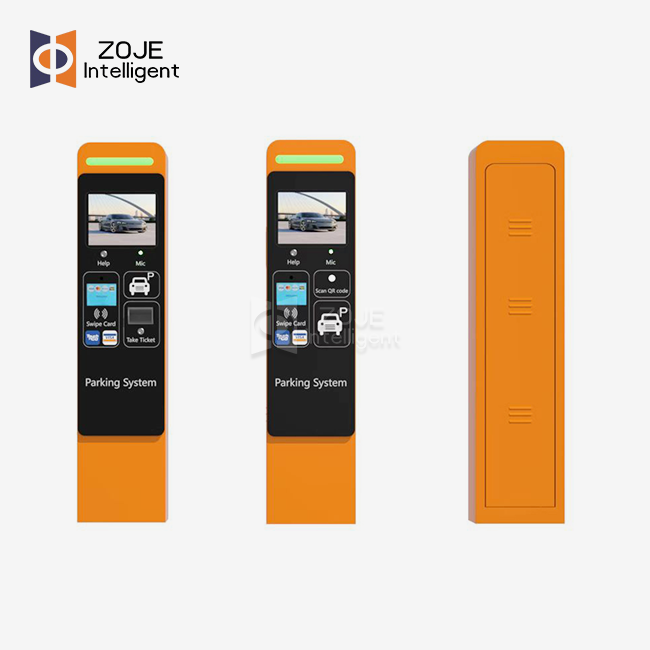
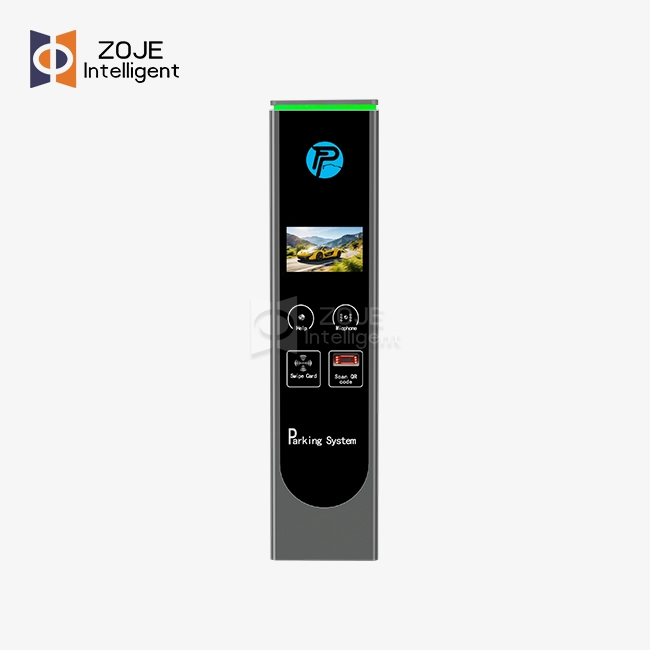
Parking Exit Card and Ticket Validation Machine
2. Multi-recognition (IC/ID/BT/UHF) support.
3. High-performance ARM-Linux architecture.
4. HD screen with video intercom interaction.
5. Ultra-wide temperature range (-40℃ to 80℃).
6. Abundant I/O ports for easy expansion.
7. Global language support for 30+ countries.
8. Warranty: 2 years

- Face to Face Discussion
- Quality Assurance
- 24/7 Customer Service
Product Introduction
Parking Exit Card and Ticket Validation Machine – ZOJE-TB102
The Parking Exit Card and Ticket Validation Machine ZOJE-TB102 is a commercial-grade exit terminal for paid parking facilities. Those facilities need exit control to be fast and correct. It also has to run unmanned. An ARM-Linux embedded platform powers the unit. It supports IC, ID, Bluetooth, and UHF recognition. Operating range is -40℃ to 80℃. A sunlight-readable HD display with built-in IP video intercom comes as part of the terminal. It fits operators who want less manual cashier dependency and steady exit lane throughput.
What Is This Product?
A parking exit validation machine is the final checkpoint in a Parking Revenue Control System (PARCS). Positioned at the exit lane, it automatically verifies whether a driver has paid before triggering the barrier gate.
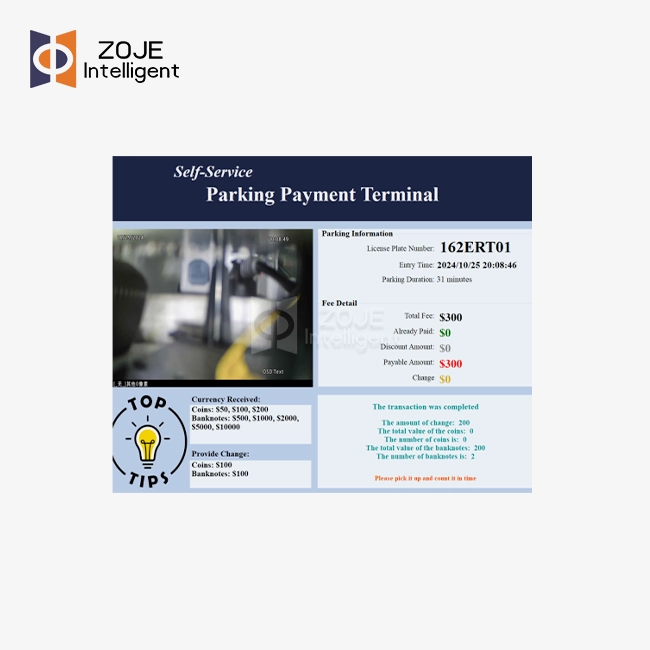
A basic card reader cannot do what this terminal does. It can work out parking duration. Merchant-validated discounts can be applied. Payment status is checked against a central server. Multiple credential types are processed too. Each transaction usually finishes in under 2 seconds.
Manual cashier reliance drops. Exit lane congestion goes down. The facility can also run continuously without staff being involved all the time.
Key Features of the ZOJE-TB102
Multi-Recognition Technology
One unit reads IC cards, ID cards, Bluetooth credentials, and UHF long-range RFID. So a single exit terminal can serve monthly passholders, drivers with transient tickets, and shoppers who got their ticket validated. No extra hardware is needed at the lane.
ARM-Linux Processing Core
Payment logic runs in real time on an ARM-based embedded Linux platform. The same platform handles anti-passback checks and talks to the server. When the network drops, processing carries on locally. Transactions keep going and no data is lost.
HD Screen with Video Intercom
Even in direct sunlight, the high-brightness HD display stays readable. A driver who needs help can reach a remote operator through the built-in IP intercom. Exceptions get handled, and the exit queue keeps moving.
Expansion I/O Ports
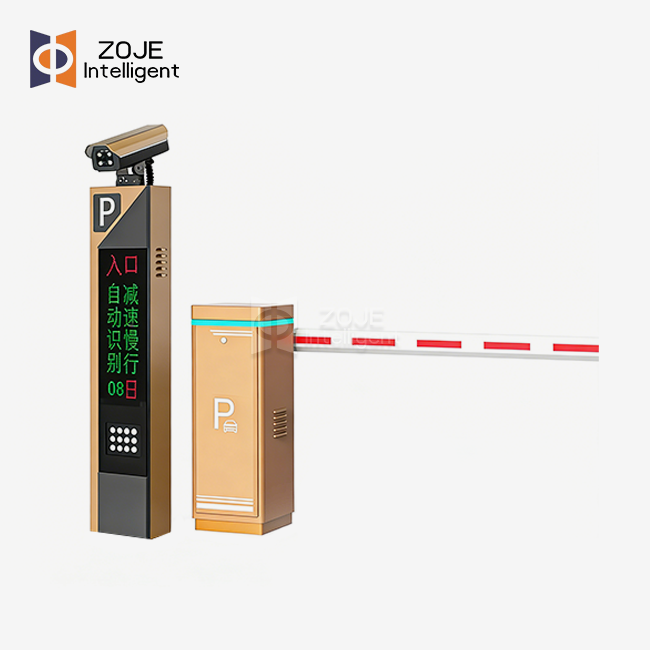
The ZOJE-TB102 comes with several I/O ports. You can hook up barrier gates, LPR cameras, and payment terminals. Third-party PARCS software connects the same way. No extra hardware adaptor is needed.
Wide Temperature Operation
The unit is rated for -40℃ to 80℃. That range suits airport parking structures and coastal facilities. It also fits other sites where temperatures swing a lot.
Technical Specifications
| Parameter | Specification |
|---|---|
| Model | ZOJE-TB102 |
| Dimensions | 1600 × 370 × 455 mm |
| Input Voltage | 110V-240V 60HZ |
| Operating Temperature | -40℃ to 80℃ |
| Operating System | Linux System |
| Main Processor | ARM Chip |
| Input/Output | 4 Inputs / 4 Relays |
| Display | 10.1" Industrial LCD (1024×600) |
| Communication | RJ45, RS232, RS485, Dual Wiegand |
| Language Support | 30+ Languages |
| Warranty | 2 Years |
Quality Control
The TB102 goes through structured testing with a Parking Exit Card and Ticket Validation Machine before shipment to verify mechanical and electronic performance under operational conditions.
Mechanism Endurance
The ticket transport mechanism is tested to a Mean Cycles Between Failure (MCBF) rate of over 2,000,000 operations, with jam rates held below 0.01%.
Environmental Stress Screening
Units go through a high-temperature chamber test at 70°C for 48 hours. Salt spray testing is also used to check corrosion resistance. These tests confirm that PCBs and mechanical parts hold up in harsh outdoor settings.
EMC and Network Stability
The machine is tested against power surge scenarios and network latency events. Transaction data is stored locally during server disconnection and synced upon reconnection.
Reader Calibration
Interference conditions are part of the test setup for RFID readers. Read range has to stay consistent there, so every unit gets calibrated. Barcode scanners face crumpled and wet paper tickets during validation. Read rates in testing came in above 99%.

Application Scenarios for Parking Exit Card and Ticket Validation Machine
Shopping Malls with Retail Validation
Multi-tier discount logic is handled by the ZOJE-TB102. A free-parking period granted by a retail partner is one example. Validated ticket data gets read, and any remaining balance is worked out. Then the gate opens, or the driver is sent to a Pay-on-Foot station.
Airports and Transportation Hubs
Busy sites that run around the clock can link the machine to LPR camera systems. That link helps with lost-ticket recovery. Open-air structures face a fair amount of climate exposure. The operating temperature range covers deployment in those sites.
Homes and Offices in the Same Complex
Visitor tickets are handled during business hours. At commute peaks, UHF RFID reads at the Parking Exit Card and Ticket Validation Machine give tenant monthly passes priority. One card cannot work in more than one vehicle. Anti-passback rules prevent it.

Customization and OEM/ODM Services
For operators with project-specific needs, ZOJE offers custom hardware and software. The choices include:
- Custom branding or enclosure color
- Software integration via SDK and API (JSON/XML over socket connection)
- Language configuration for local markets
- Specific reader module combinations
OEM and ODM cooperation is available. Standard products ship in 5–7 days; customized configurations take 10–15 days. Sea freight and air freight shipping are available, with DDU and DDP trade terms supported.

FAQ
Q: What happens when a ticket is unpaid at the exit?
A: The machine talks to the central database over TCP/IP. When a ticket is unpaid, a payment prompt shows on the screen and voice guidance starts. The barrier stays down. Drivers on units with intercom can reach an operator directly, or they can walk back to a Pay-on-Foot station.
Q: Does the machine still run with no network connection?
A: Yes. Offline mode is standard. For monthly cardholders, the system uses a locally stored whitelist. For transient tickets with encrypted entry-time data embedded in the barcode, the machine can calculate validity locally without a server connection.
Q: How does anti-passback work?
A: When a card exits, its status is flagged as "Outside." If the same card is presented at the exit again without a recorded entry event, the machine blocks the transaction. This prevents one pass from being shared across multiple vehicles.
Q: How does the TB102 integrate with third-party parking software?
A: ZOJE provides SDK documentation and API support. The hardware communicates with third-party PARCS or building management systems using standard JSON or XML requests over socket connections.
Q: What maintenance does the ticket reader require?
A: Clean the ticket transport belts and scanning heads monthly to remove paper dust accumulation. If a thermal print head is installed, clean it with alcohol to maintain optical sensor accuracy and prevent false jam alarms.
Contact Us
For project inquiries or a customized quote, email info@zoje-tech.com. We're ready to discuss your parking exit card and ticket validation machine requirements.
Send Inquiry
You may like