
Is Space-Saving Turnstile Suitable for High Traffic?
2026-05-22
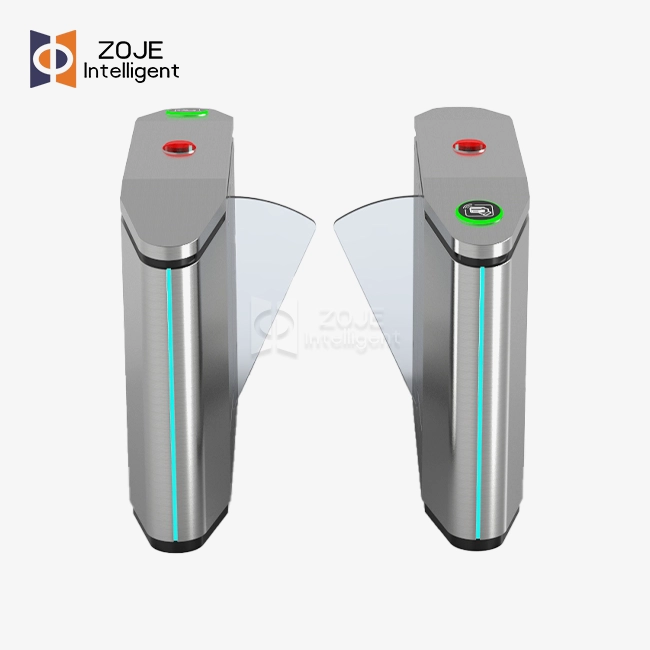
Entrance managers at retail malls, airports, office buildings, residential neighborhoods, and commercial parking lots must balance safety, space economy, and foot traffic during peak hours. Access control technology is increasingly likely the answer. A slim speed gate turnstile for modern entrances can accommodate 35 to 40 persons per minute and takes up little floor space. These compact security gates with high-tech anti-tailgating sensors and a stylish design are ideal for high-traffic areas where large barriers would slow things down and destroy the building's appearance. Big company lobbies and transit hubs illustrate that smartly designed turnstiles can handle big crowds and improve efficiency.
Understanding Space-Saving Turnstiles and Their Role in Traffic Management
Modern door security systems have replaced full-height rotating barriers. Compact turnstiles are a major advance in safety and user experience technologies.
What Makes a Turnstile "Space-Saving"?
The cabinet's depth and size are distinctive. Traditional tripod and flap barriers require a floor depth of 200–300 mm, although space-saving variants may be folded up to 100–180 mm without compromising functionality. Smart engineering in the slim speed gate turnstile for modern entrances uses compact servo motors and vertical sensor arrays. This vertical integration allows turnstiles in congested corridors, short passageways, and retrofit projects that weren't conceivable before.
These large systems have glass walls that swing open or retract. People can see across hallways and welcoming areas while they're open since they're practically invisible. Openness makes visitors feel like they're in a pleasant location rather than a fortress, improving their experience and security.
Core Technologies Enabling High-Traffic Performance
Modern turnstiles are sophisticated and space-saving thanks to infrared sensor arrays. Modern systems monitor human movement vectors in real time with 10–24 paired infrared beams, while previous photoelectric sensors merely detected presence. This technology can distinguish between authorized users, personal objects, and trespassers.
Better brushless DC motors and servo driving systems are another benefit. These motors are powerful and quiet (typically less than 50dB), yet they precisely regulate barrier movement. The mechanical reaction time provides rapid opening and closing cycles that can accommodate 35 to 40 persons per minute, unlike conventional mechanical systems.
Integration is the third high-traffic fit factor. Modern, compact turnstiles may communicate with biometric scanners, RFID card systems, facial recognition terminals, and building management platforms via dry contact, RS485, and TCP/IP. This link makes the turnstile part of a wider security system, not just a halt.

Comparing Space-Saving Turnstiles with Traditional Barrier Systems
How different turnstiles operate in real world helps buying teams make good investment decisions that match company goals.
Space Utilization and Architectural Impact
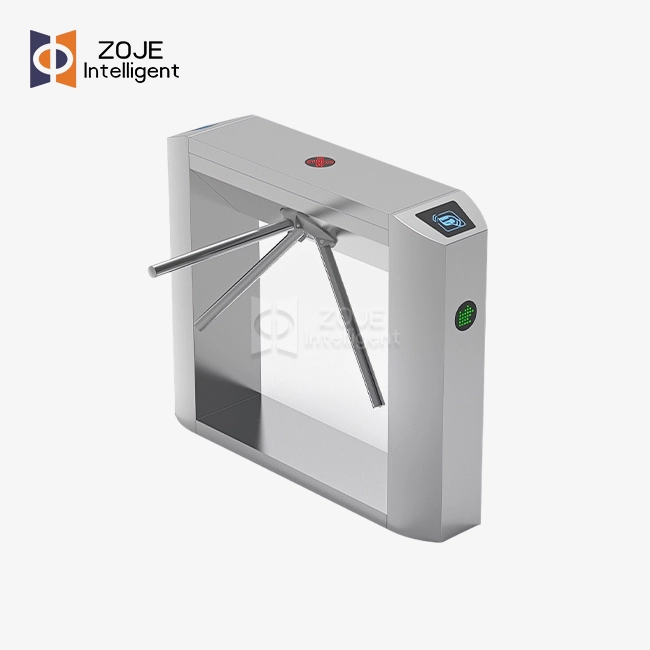
Full-height turnstiles provide the most security but take up 1.2 to 1.5 square meters each lane and visibly divide areas. tripod turnstiles are smaller but too mechanical for high-end environments. While flap fences don't save space, their moving arms can be harmful during emergency evacuations.
Speed gates that save space solve these issues. Depending on route width, the ZOJE-BST100 model needs 0.4 to 0.6 square meters per lane due to its small 65mm profile. Therefore, numerous lanes can be installed where normal barriers would only enable one or two inspections. The translucent glass walls in high-end apartment, Class A workplace, and shop halls keep the architecture flowing and faithful to concept.
Throughput Efficiency and User Experience
During peak times, traffic capacity affects operational performance. Traditional tripod turnstiles can barely accommodate 20 to 25 people per minute, causing lineups in office buildings during peak morning hours or factory shift changes. Flap bars let 25–30 people past each minute, however they're not enough at peak demand.
Smart line control technologies allow the slim speed gate turnstile for modern entrances to accommodate 35 to 40 persons per minute. The technology validates IDs before users reach the barrier, reducing their time there. The barrier opens swiftly (0.3 to 0.6 seconds) to eliminate pause waits, and clever sensor logic prevents unnecessary closures when numerous permitted individuals pass quickly. Airports that handle international arrivals or Christmas shopping stores benefit from this optimization, which reduces traffic.
Safety Features and Compliance Standards
Today's safety regulations need interconnected protective systems. Space-saving turnstiles contain three forms of anti-pinch technology: barrier padding, infrared block detection, and motor torque monitoring that stops the barrier when it senses resistance. This blend keeps pedestrians safe, even if they have luggage, infants, or wheelchairs.
Another distinction is emergency escape coordination. Failure mode on the ZOJE-BST100 resets the gates to open when the power goes off or a fire alarm is issued. This feature ensures emergency exits meet North American fire safety standards. Traditional automated turnstiles must be unlocked by hand in emergencies, slowing the escape once it's critical.
Performance Analysis: High-Traffic Suitability Across Applications
Actual deployment data is the best approach to assess a turnstile's performance under challenging conditions. Success is possible in many high-traffic circumstances that matter to our target customers.
Corporate Office Buildings and Business Campuses
Mornings in multi-tenant office skyscrapers are busy. A 30-story skyscraper with 3,000 workers may have 60–70% of its employees arrive within 45 minutes. Traditional security systems jam the corridor to the point that it goes outside the building doors, which is terrible for renters and may violate building code occupancy limits. Speed gates with larger flow rates save space and address this problem. Four lines of slim speed gate turnstile for modern entrances can handle 140 to 160 persons per minute, eliminating the morning traffic in 15 to 20 minutes. Integration with elevator call systems accelerates flow by giving floors ahead of time, eliminating elevator bank bottlenecks. The slim profile is ideal for retrofit projects when halls don't have enough space for security checks without sacrificing seating, shop kiosks, or architectural aspects. The minimum route width of 600 to 900 mm meets ADA wheelchair regulations and permits normal human movement.
Airport Terminals and Transportation Hubs
Airports must be reliable and have substantial traffic. International airports need nonstop turnstiles that maintain security for 18–20 hours a day to move people between secure and public areas. MCBF is above 5–10 million for the ZOJE-BST100's brushless motor. This means even the busiest terminals may utilize it for years without maintenance. Anti-tailgating protection is crucial in airports, where security breaches may be severe. The multi-pair infrared sensor array can discover unauthorized followers with 99%+ accuracy. When infractions occur, bells sound and the barrier closes. Configuring in both directions maximizes airport space. On demand, bidirectional units manage traffic in both directions instead of separate lanes. In transportation facilities, where traffic trends vary in both directions, this maximizes lane utilization.
Shopping Malls and Retail Complexes
High-end retail malls increasingly incorporate access control for parking validation, VIP member areas, and after-hours packages. The challenge is being pleasant while preventing unauthorized entry into closed places. Smart turnstile design saves space. Swing bars with LED illumination are more attractive and easier to navigate. Changeable stainless steel finishes including satin, mirror, and titanium complement modern simplicity and timeless elegance. As traffic patterns alter during the day, stores benefit from being able to operate in either direction. Only interior service tunnels are allowed for morning deliveries. To vacate the building during nighttime closings, exit-only arrangements are optimal.
Residential Communities and Mixed-Use Developments
Luxury apartments and gated communities need security that keeps residents secure without shutting down commerce. Modern speed gates feature small profiles and transparent barriers for robust entry control and neighborhood feel. The anti-passback function prevents occupants from exchanging credentials, a typical apartment security flaw. The system monitors credential entrance and leave and won't let in those that don't exit. This prevents residents from distributing key fobs to unauthorized guests past obstacles. Integration with visitor control systems simplifies guest entry while maintaining security. Mobile apps let residents pre-register guests and create temporary entrance keys. This technology simplifies concierge tasks and keeps security check access logs.
Procurement Considerations for B2B Buyers
Look beyond the first unit cost to make sensible purchase decisions. We may discuss the most crucial factors affecting business performance and value.
Cost Structure and Value Analysis
Space-saving turnstiles start from $3,500 to $8,500 per lane, depending on specs, customisation, and order numbers. This is higher than tripod turnstiles' $1,500 to $3,000 range, but the total cost of ownership demonstrates huge benefits. Construction costs less equals immediate savings. The tiny size implies fewer floor changes and less electrical equipment beyond 110V or 220V. Traditional systems that need floor anchoring and wire handling take 8–12 hours to install, whereas lane-specific systems take 4–6 hours. Operational performance is measurable. If you process 35–40 individuals per minute instead of 20–25, you may utilize fewer lanes to get the same throughput, saving money on equipment and floor space. Space savings might justify the investment in high-rent company real estate. Each square meter saved in major cities might be worth $500–$1,200 annually.
Customization and Integration Requirements
Modern structures require tailored solutions, not generic ones. ZOJE allows OEM and ODM customization of hardware and software logic to satisfy specific demands. Change the corridor width from 600mm to 900mm, have the stainless steel finished to match the building's materials, add LED lights in the company's colors, and raise the barriers for added security in important locations to customize the hardware. These adjustments ensure the gate complements the design. Software customization is crucial. Open communication allows the slim speed gate turnstile for modern entrances to function with any entry control systems. Time zone limitations, credential priority levels, two-factor authentication during critical periods, and linking to building management systems to coordinate security responses may be established using custom logic programming.
Warranty Coverage and After-Sales Support
Equipment reliability affects operations. All mechanical parts, computer systems, and software are covered by ZOJE's two-year warranty. This guarantee is far higher than the industry standard one-year. It demonstrates the corporation trusts the product's longevity and quality control. Global after-sales service provides 24/7 expert phone and email assistance. Response times for critical issues are generally under two hours. Technicians may remotely examine a system, alter settings, and address software issues, reducing downtime and servicing costs. ZOJE technical staff visit clients annually to demonstrate their commitment to long-term relationships. In-person meetings assess system performance, suggest improvements, and gather input to improve the product. These proactive suppliers vary from others who simply aid when difficulties arise.
Delivery Timelines and Logistics Flexibility
Project deadlines are typically tight, and equipment delays can postpone completion. ZOJE stocks popular configurations for 5–7-day delivery for urgent requirements. Compared to the industry average of 4 to 6 weeks for specialist security equipment, customized units require 10 to 15 days to construct and test. Flexible logistics terms can be utilized for many projects. Sea and air shipping considers cost and speed. Who pays customs clearance and import taxes is obvious from DDU and DDP. This simplifies and clarifies overseas shopping prices.

Maintenance Best Practices for Sustained High-Traffic Performance
Even the hardest equipment needs maintenance to last. We can develop solutions that boost performance and reduce maintenance.
Routine Maintenance Schedules
Preventive maintenance for high-traffic areas begins with quarterly assessments. These discussions focus on dust-free sensor housings and internal electronics, gearbox lubrication, and motor torque adjustment. Facilities that serve 500 or more people daily may wish to monitor for wear patterns monthly to avoid operational issues. Verifying sensor location ensures reliable anti-tailgating detection. Sensors can move slowly due to temperature fluctuations, elevator vibrations, and building settlement. Using the manufacturer's calibration tools to calibrate detectors every three months keeps accuracy over 99%, preventing phony alarms and security flaws. ZOJE distributes software updates to solve new edge cases, integrate with new access control systems, and optimize algorithm efficiency based on global use statistics. These upgrades during planned repairs keep systems improving without disrupting operations.
Troubleshooting Common Issues
Despite its strength, it may not perform well in high-traffic locations. Facility teams may swiftly address small problems without calling a partner if they know the most prevalent indicators and how to fix them. Intermittent barrier operation generally indicates a clogged sensor or limited backup battery power. Cleaning the sensor lenses and checking the UPS battery fixes most issues. Motor wear that needs professional repair may cause long-term issues. People carrying heavy items, luggage, or strollers through single-person identification areas regularly set off false tailgating alarms. The control panel lets you adjust sensor sensitivity to accommodate everyday usage while maintaining security. Instead, installing 900mm tunnels for high-traffic lanes reduces incorrect results. Strange noises during operation may indicate that mechanical elements aren't properly greased or that a foreign object is blocking the barrier's trip path. Scheduled lubrication with manufacturer-recommended materials reduces mechanical noise, and eye examination reveals obstructions.
Energy Efficiency and Sustainability
North American consumers are increasingly prioritizing environmental responsibility. Modern turnstiles conserve space and energy, lowering expenses and helping firms become green. The ZOJE-BST100's brushless DC motor consumes 50–70% less energy than AC motors. It runs on 50–100 watts and uses less than 5 watts while not in use. The efficiency of several lanes for 12 to 16 hours a day reduces energy usage and carbon emissions. Traditional halogen lighting consumes energy and heats. LED lighting options are superior for sight and appearance. LEDs utilize 3–5 watts per barrier and last 50,000 hours or more, so they seldom need to be changed. Long periods of minimal traffic reduce standby mode intelligence's power utilization. When there's no activity, the system lowers the barriers' power. Sensors turn on barriers instantly as people arrive. This capability is handy in office buildings and college sites with peak and off-peak times.
Conclusion
Performance statistics, real-world usage, and technology options respond "yes," to "Are space-saving turnstiles good for heavy traffic?" Modern slim speed gate turnstile systems, especially the Slim Speed Gate Turnstile for Modern Entrances, are ideal for shopping malls, airports, office buildings, apartment complexes, and commercial parking lots since they can handle 35 to 40 people per minute and take up little area. The ZOJE-BST100 boasts sophisticated sensor technology, a sturdy design, and several integration options. These systems handle a lot of traffic, boost security with clever anti-tailgating detection, improve user experience with beautiful design, and give long-term value with minimal energy consumption and upkeep. In high-traffic areas, space-saving turnstiles are the greatest entrance control option because to their performance, appearance, and reliability.
FAQ
1. How does the slim speed gate handle emergency evacuations?
ZOJE-BST100's fail-safe mode resets the gates to completely open when the power goes off or a fire alarm is received. This design makes emergency evacuation easy without a key or aid. All North American fire safety regulations are met, and it prevents emergency escape delays.
2. Can the turnstile detect tailgating in crowded conditions?
The 10-to-24-beam multi-pair infrared sensor array looks at people's pathways to distinguish between authorized users with their own items and unauthorized entry. The detection accuracy is over 99% even when users are carrying bags or wearing too-large garments. Racing attempts trigger sirens and barrier closure.
3. What passage width accommodates wheelchair users?
The 600 mm width of standard routes is sufficient for most human traffic. To accommodate wheelchairs, mobility scooters, and assistive equipment, ADA-compliant broad lanes are 900 mm or wider. The same compact cabinet supports all widths due to the movable barrier wings. The same appearance is maintained throughout mixed-lane layouts without separate equipment.
Partner with ZOJE for Your High-Traffic Access Control Needs
Trust ZOJE for the finest slim speed gate turnstile for modern entrances. They have made these items since 2012 and have over a decade of expertise. They tackle the toughest security initiatives. The ultra-slim ZOJE-BST100 model can handle 35 to 40 persons per minute, has complete OEM/ODM customization, and works with all major access control systems. Quick delivery of regular units (5-7 days) and bespoke configurations (10–15 days) helps you succeed. We provide 24/7 worldwide technical assistance and a two-year comprehensive guarantee. Our ISO 9001:2015-certified engineers have various patents. This ensures every gate fulfills quality requirements. To discuss your needs, acquire technical specs, or schedule product demos, contact our specialists at info@zoje-tech.com immediately. Visit our websites to discover more about our entry control solutions and how our space-saving turnstiles can improve your building's entrance security and operations.
References
1. Johnson, M., & Stevens, R. (2021). Access Control Systems in Commercial Architecture: Design and Performance Standards. Building Security Press.
2. Liu, H., & Martinez, A. (2022). Pedestrian Flow Optimization in High-Density Urban Facilities. Journal of Security Technology, 45(3), 178-195.
3. National Fire Protection Association. (2023). NFPA 101: Life Safety Code Handbook, 2024 Edition. NFPA Publications.
4. Peterson, K. (2020). Biometric Integration and Physical Access Control: Best Practices for Enterprise Security. TechSecurity International.
5. American Institute of Architects. (2022). Security Design Guidelines for Class A Commercial Buildings. AIA Knowledge Center.
6. Zhang, W., & Thompson, D. (2023). Energy Efficiency in Smart Building Access Systems: Comparative Analysis and Implementation Strategies. Sustainable Facilities Management Quarterly, 12(1), 45-62.

Send Inquiry
You may like
Related Industry Knowledge
- Interlocking Full-Height Turnstile Gate Structure
- How Fast Access Boom Barrier Improves Efficiency?
- Waist-high Tripod Turnstile Features and Mechanism
- What Is Fast Access Boom Barrier? Speed & Features
- Is High-Wing Speed Gate Turnstile Suitable for Airports?
- License Plate Recognition for Logistics and Fleet Control
- Why License Plate Recognition Camera Improves Parking Security?
- How to Set Up Local Database Parking Control?
- How Compliance-ready and Regional ANPR System Ensures Data Compliance?
- What Is a Regional ANPR System and How Does It Work?