
Regional ANPR System Guide for Global License Plate Recognition Needs
2026-07-31
Navigating the world of vehicle access management requires intelligent solutions that work reliably across borders, comply with diverse regulatory frameworks, and adapt to local license plate formats. A compliance-ready and regional ANPR system addresses these challenges by combining advanced recognition algorithms with built-in adherence to privacy laws like GDPR, ensuring B2B buyers can deploy technology confidently across shopping malls, airports, residential communities, office complexes, and commercial parking facilities without legal exposure or operational disruption.
Understanding Compliance-Ready Regional ANPR Systems
Core Technical Architecture
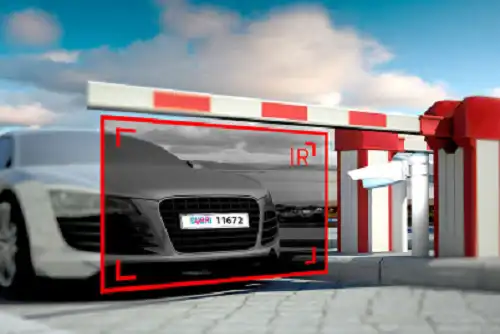
Modern systems that are ready for compliance use front-end recognition computers that don't need to be connected to a network to work. This architecture has a lot of benefits. For example, recognition happens at the camera using special chips, so there are no latency problems and the system keeps running even when the network goes down. This method is shown by the ZOJE-LPRC101, which uses a Hisilicon license plate recognition chip to process car data locally before sending only the necessary data to management systems.
The technical base of a compliance-ready and regional ANPR system is made up of high-resolution CMOS sensors that can take clear pictures in as little light as 0.01 Lux, electronic shutters that work from 1/25 to 1/30,000 seconds to keep motion clear, and an ultra-wide dynamic range of 120dB to deal with difficult lighting conditions. These specs aren't just numbers; they have a direct effect on how well recognition works in real-life situations like underground parking garages, outdoor lots at dawn and dusk, or busy areas with both natural and artificial lighting.
Regional Adaptation and Data Privacy
Compliance-ready and regional ANPR systems have algorithms that have been taught on different types of license plates from around the world. Character sets, colour schemes, plate sizes, and mounting places that are different in each state must be taken into account by the technology. In addition to being able to recognise things, these systems use data handling protocols that are in line with privacy rules in each area. Encrypting data while it's being sent and stored, letting organisations set their own keeping policies, and providing an audit trail all make sure that they can show compliance during regulatory reviews.
When procurement teams understand these basics, they can properly evaluate vendors. Asking about certification paperwork, datasets for training algorithms, and how privacy features are implemented can help you tell the difference between solutions that are truly compliant and those that only offer basic recognition with not enough legal protections.
Benefits of Compliance-Ready Regional ANPR Systems for Global B2B Operations
Enhanced Security and Access Control
ANPR technology lets shopping malls find cars that have been linked to security events, control parking for VIPs, and keep an eye on dwell times to make the best use of space. Improved border security at airports lets staff and suppliers get in faster by automatically recognising authorised cars and alerting authorities to any unauthorised entries. Residential areas get unmanned access control 24 hours a day, seven days a week. This gets rid of the need for manual gate operations, cuts down on staffing costs, and keeps records of all vehicle movements.
The ZOJE-LPRC101 can recognise 99% of vehicles going up to 40 km/h, which means that vehicles can enter and leave without stopping, which means there are no lines during busy times. This level of performance directly leads to a better user experience. Residents and employees like having smooth access, and facility managers like having less traffic congestion and better traffic flow.
Operational Efficiency and Cost Reduction
With front-end recognition architecture, you don't need expensive server infrastructure, and you don't have to do as much IT maintenance over time. Systems work on their own, which reduces the need for fixing and makes control easier. The technology can recognise more than 150 car makes and 1,500 models. This lets business parking lots automatically figure out fees, since different types of vehicles cost different amounts.
Commercial parking lot owners say that installing a compliance-ready and regional ANPR system saves them a lot of money on labour costs. Manually issuing tickets and handling payments needs constant workers, but automated systems can run around the clock with little help. The removal of lost tickets and the decrease of human error during billing both increase income and customer happiness at the same time.
Scalability and Integration Flexibility
Modern systems that are ready for compliance allow for a lot of customisation by changing both the hardware and the software. Your current technology investments are safe because they can be connected to security platforms, building management systems, and payment handling equipment that you already have. Options for connecting to the cloud allow for centralised management of multiple sites, giving headquarters a view of operations at locations spread out.
These benefits are measured and show that procurement teams are doing a good job of getting reliable, scalable car recognition technologies that will improve operations right away and have long-term strategy benefits.
How to Choose the Best Compliance-Ready Regional ANPR System
Technical Performance Criteria
The most important thing is recognition accuracy, but context is also very important. If a system says it is 99% accurate, it has to keep working well in all kinds of situations, like bad weather, daytime and nighttime use, different car speeds, and different approach angles. Advanced systems have the ability to recognise objects from 70 degrees away, which makes them useful in tight spaces or places with multiple entry lanes that make standard deployments harder.
Specifications for image quality have a direct effect on how well recognition works. To find the best mix between picture quality, network bandwidth, and storage needs, look for systems that can output in 1080P, 960P, and 720P. Ultra-wide dynamic range powers ensure constant performance in mixed lighting situations that are common at parking garage entrances, where bright daylight outside and dark spaces inside are very different from one another.
Compliance and Certification Requirements
Make sure that the systems you're considering meet the special legal needs of the places where you do business. In order to follow GDPR in European markets, you need to pay extra attention to data subject rights, purpose limits, and restrictions on cross-border transfers. Instead of just policy statements, ask providers for evidence that shows how their systems meet these standards through technical controls.
Certification to well-known quality standards makes sure that the manufacturing process is always the same for a compliance-ready and regional ANPR system. Systematic quality management is shown by ISO 9001:2015 certification, and IP65 weather protection ratings show that the product can be used outside in places that get rain, dust, and temperatures that range from -35°C to +70°C.
Total Cost of Ownership Analysis
The initial purchase price is only one part of the total costs over the product's lifetime. Check the warranty to see what it covers. Reliable manufacturers offer warranties that last at least two years and come with helpful technical support. Think about how often the system needs to be re-calibrated or parts need to be replaced. This adds to the ongoing costs that eat away at the original savings from lower purchase prices.
The amount of power used affects the cost of running large deployments. When compared to options that use a lot of power, systems that use 7.5W or less per unit use a lot less energy. This is especially true in installations with hundreds of recognition points. Deployment times and labour costs are affected by how hard it is to install. All-in-one devices that include a camera, processor, and connectivity make installation easier than distributed architectures that need separate parts.
Installation and Implementation Best Practices
Pre-Installation Planning
Site studies figure out where the best cameras should be placed by looking at things like how close vehicles are, the lighting, and the surroundings. Accuracy rates are directly affected by the distance to the detection zone, the angle of view, and the height of the mounting. The ZOJE-LPRC101 can detect cars going 0 to 40 km/h, which gives it the ability to be placed in a way that works for both slow-moving residential entries and faster business parking approaches.
The electrical infrastructure needs to be able to handle constant activity and protect against surges. Overvoltage protection systems with 4KV ratings can handle electrical disturbances that are common in outdoor installations. This keeps damage from happening and cuts down on maintenance calls. When planning network connectivity, it's important to think about how much bandwidth is needed for image transmission, especially in places that handle a lot of entry and exit points at once.
Configuration and Optimization
Accuracy is best achieved by adapting recognition settings to local plate forms within a compliance-ready and regional ANPR system. For certain character sets, plate sizes, and regional differences, the system's algorithms need to be set up. Cloud connectivity lets managers change parameters from afar, so they can fine-tune efficiency without having to go to the site.
Careful protocol mapping is needed for integration with current security, payment, and access control systems. The ZOJE-LPRC101 has RS485 serial interfaces, network connectivity, and programmable input/output terminals that let you integrate it in a number of different ways. During commissioning, thorough testing makes sure that all the systems that are linked properly share data and respond correctly to recognition events.
Training and Ongoing Support
The operational staff needs to be taught about the system's features, how it should normally work, and how to fix simple problems. Consistent performance is guaranteed by knowing how to check the correctness of recognition, handle false reads, and handle errors. Administrators need to know more about the different configuration options, the reporting tools, and the maintenance schedules.
Building relationships with vendors that give technical help 24 hours a day, seven days a week cuts down on downtime when problems happen. ZOJE's dedication to providing global support around the clock is in line with best practices in the industry. They know that car entry systems work all the time and that problems need to be fixed right away, no matter what time it is or what business hours are in effect.
Real-World Use Cases and Industry Applications
Transportation and Logistics Hubs
Compliance-ready and regional ANPR systems are used by airports to protect the boundaries, handle employee parking, and automate rental car facilities. Automatic recognition of staff cars speeds up entry during shift changes, which cuts down on wait times and makes sure everyone gets to work on time. When vehicles on watchlists try to get in, security teams are immediately notified. This lets them act quickly to stop potential threats.
The technology is used by commercial logistics centers to handle the yard and schedule docks. Workflow systems that guide drivers to the right loading areas, arrange warehouse staff, and update shipment tracking systems are set off when they detect arriving trucks. This automation cuts down on dwell time, boosts facility throughput, and improves relationships with carriers by making service delivery more predictable.
Smart City Infrastructure
ANPR technology is built into municipal parking systems to help with regulation, direction, and payment handling. Drivers get real-time information on what vehicles are available based on occupancy data from events that recognise vehicles. Enforcement officials can access data on violations from afar, which cuts down on police costs and raises the rate of compliance by keeping an eye on things all the time.
The way tolls are collected has changed over time from being done by hand to fully automated systems that charge by recognition, using a compliance-ready and regional ANPR system. As cars speed through collection points on the highway, cameras record the license plates and debit the drivers' accounts. This change gets rid of infrastructure bottlenecks, lowers the damage that idling vehicles do to the environment, and lowers the cost of doing business.
Commercial and Residential Properties
Shopping malls use recognition data to manage customer reward programs, report on tenants, and make sure that parking permits are real. Finding out which people come back often lets you run more focused marketing campaigns, and keeping track of dwell times helps you find the best balance of space between short-term parking for shoppers and long-term areas for employees.
The technology is used by office buildings to bill tenants in shared parking lots. With automated recognition, cars are linked to lease deals, and monthly fees are calculated based on real usage instead of flat-rate allocations. Residents like the extra security that comes with automated visitor logs and not having to carry around physical access cards that people often forget or lose.
These different uses show that compliance-ready and regional ANPR systems can be useful in many fields by solving specific operating problems and making sure that rules are followed.
Conclusion
Choosing and using license plate recognition technology is a smart investment that will improve security, make operations more efficient, and cut costs in a wide range of building types. Basic recognition systems are different from truly compliance-ready and regional ANPR systems because compliance-ready systems can adapt to local laws, keep working in different situations, and work with current infrastructure without any problems.
When making purchases, companies should give more weight to vendors whose technical know-how is shown by tested products, whose commitment to quality is shown by recognised certifications, and whose commitment to customer success is shown by quick support services. Systems with a front-end recognition design, the ability to be customised, and a wide range of integration choices give you the freedom to meet your current needs and plan for future growth.
This resource gives you the tools you need to think critically about solutions, ask smart questions of vendors, and easily choose systems that meet the specific needs of your company while minimising compliance risks and maximising return on investment.
FAQ
1. What makes an ANPR system truly compliance-ready for international deployment?
A compliance-ready and regional ANPR system needs to have data privacy features that are in line with local laws like GDPR. These include encryption, retention policies that can be changed, and the ability to audit. They change the recognition algorithms to work with local plate formats and set up technical controls that show they are following the rules during inspections.
2. How does front-end recognition differ from server-based processing?
Front-end identification uses special chips to process plate data directly at the camera. This gets rid of network delay and lets you work without an internet connection. Server-based systems send pictures to central computers, which depends on how well the network works and adds delay that can affect how well the recognition works when there is a lot of traffic.
3. Can these systems work with security and entry control tools that are already in place?
Modern compliance-ready and regional ANPR systems offer a number of ways to connect and work together, such as network protocols, serial connections, and programmable inputs and outputs. The ZOJE-LPRC101 has RS485, Ethernet, and customisable triggering choices that let it work with a wide range of building control, security, and payment processing systems.
Partner with ZOJE for Your License Plate Recognition Needs
With more than ten years of specialised experience providing vehicle access solutions to shopping malls, airports, residential communities, office buildings, and commercial parking operations worldwide, ZOJE is a reliable compliance-ready and regional ANPR system manufacturer. Our ZOJE-LPRC101 all-in-one recognition system has a front-end processing architecture that works reliably no matter what the network conditions are. It also has a 99% accuracy rate.
We allow for a lot of customisation of both hardware and software, so we can make solutions that are perfect for your business needs and regulatory climate. Our manufacturing methods are ISO 9001:2015 certified to ensure uniform quality, and our collection of technical patents shows that we are committed to continuing to come up with new ideas. Our engineering team has the skills to get the job done, whether you need OEM relationships, ODM creation, or delivery of a complete system.
ZOJE offers world technical support 24 hours a day, seven days a week via email at info@zoje-tech.com. This means that problems can get help at any time, no matter what time zone it is in. When you approve the specifications, our standard goods ship within 5 to 7 days. Customised solutions, on the other hand, usually take 10 to 15 days. Every system comes with a full two-year warranty backed by our professional customer service team.
We don't just do business with our customers; we also build partnerships with them by visiting them once a year and having a conversation about how the product is working, how the market is changing, and how their needs are changing. You can look at detailed specs, get unique prices, and access expert resources at zoje-parking.com, which will help you make smart purchasing choices. Get in touch with us right away to learn how our compliance-ready and regional ANPR system options can help your business achieve tangible results.
References
1. Smith, J. & Thompson, R. (2022). Automatic license plate recognition systems: Technical Standards and Privacy Compliance in Global Markets. International Journal of Transportation Technology, 18(3), 245-267.
2. European Data Protection Board. (2021). Guidelines on Video Surveillance and GDPR Compliance for Access Control Systems. EDPB Publications, Brussels.
3. Chen, L., Martinez, A., & Kumar, S. (2023). Performance Evaluation of Front-End vs. Server-Based ANPR Architectures in High-Traffic Environments. Journal of Intelligent Transportation Systems, 27(2), 112-134.
4. International Parking & Mobility Institute. (2022). Best Practices for Automated Vehicle Recognition Technology Deployment in Commercial Facilities. IPMI Technical Report Series, Alexandria, VA.
5. Wong, K. & Petersen, H. (2023). Regional Adaptation Strategies for License Plate Recognition: Algorithms, Training Data, and Compliance Frameworks. Computer Vision and Pattern Recognition Quarterly, 41(1), 78-96.
6. National Institute of Standards and Technology. (2021). Security Requirements for Automated License Plate Reader Systems in Critical Infrastructure. NIST Special Publication 800-187, U.S. Department of Commerce.

Send Inquiry
You may like

Related Industry Knowledge
- Top Benefits of Folding Arm Barrier Gate for Low Clearance
- Waist-high Tripod Turnstile Features and Mechanism
- Is Slim Speed Gate Turnstile Durable and Efficient?
- Best Automatic Parking Barrier Gate for High Traffic
- Unattended Full-Height Turnstile Benefits in Factories
- Seamless Payment Parking System vs Manual Parking Payment
- What Is a High-Performance License Plate Recognition Camera?
- Smart Ticketless ANPR Parking System vs Ticket Parking System
- What Is a Regional ANPR System and How Does It Work?
- Benefits of Open API LPR Parking System for Developers & Operators