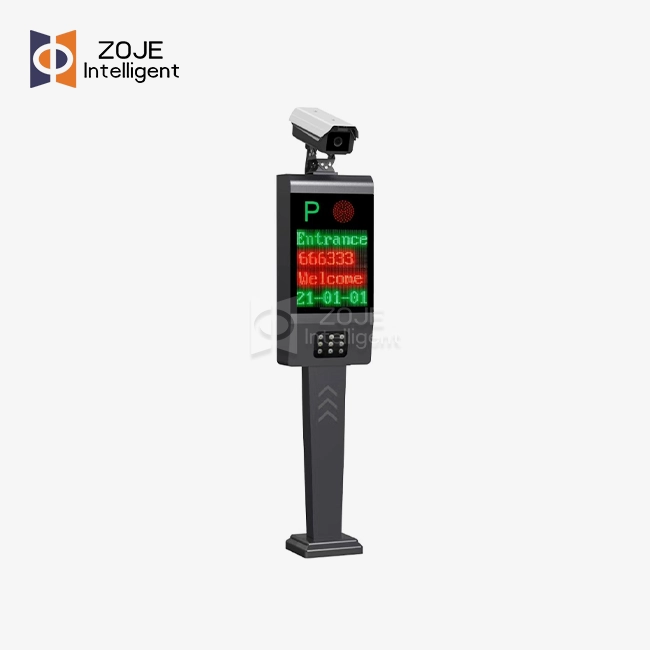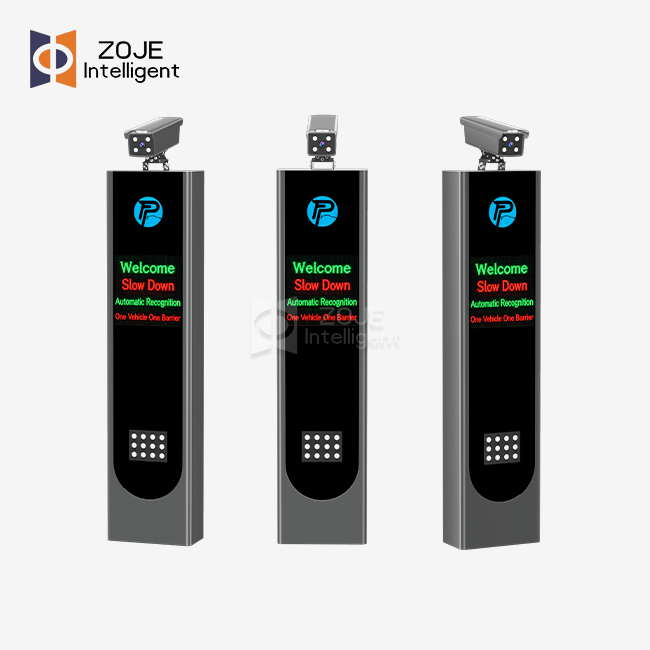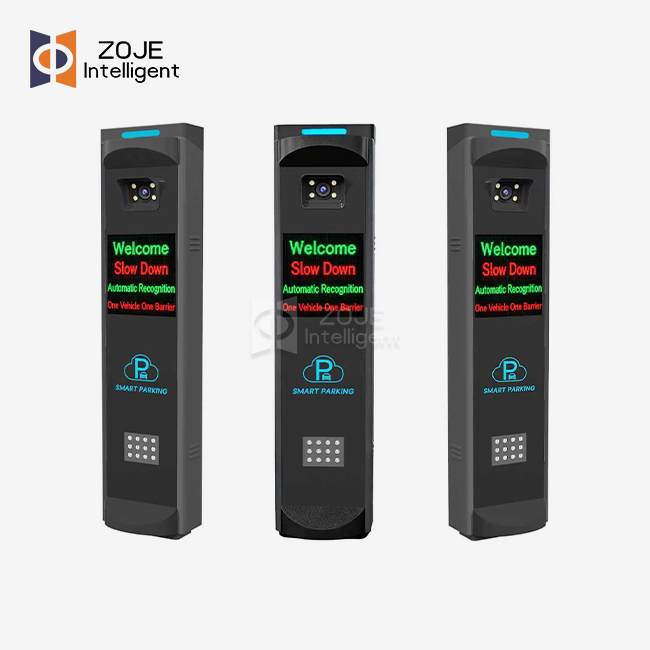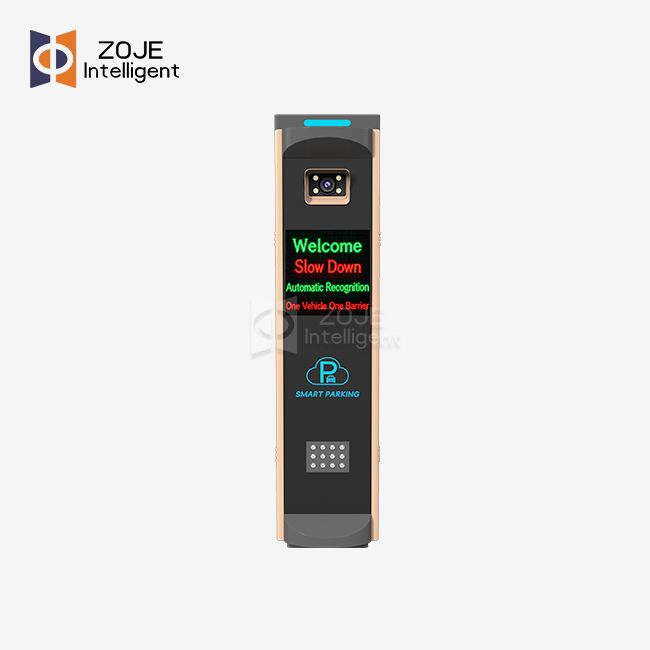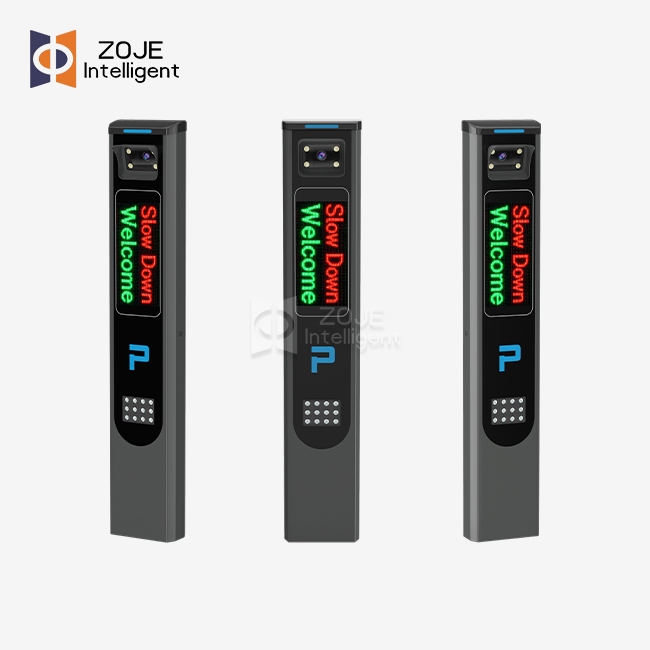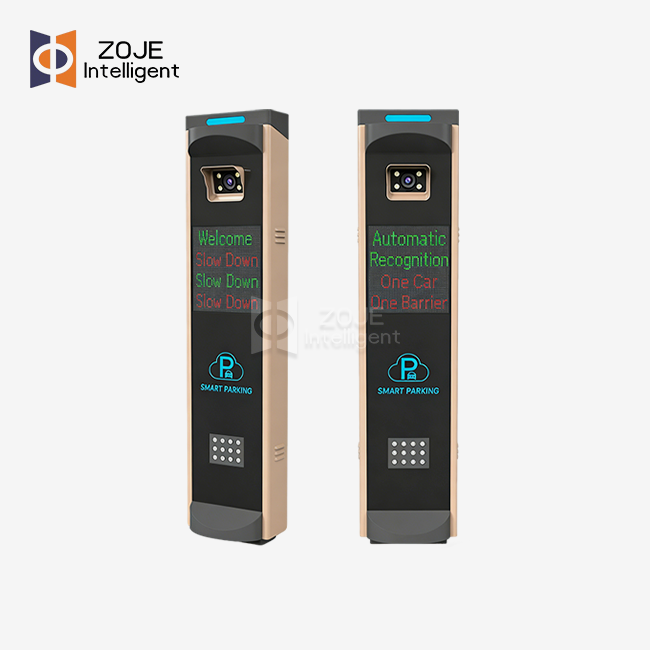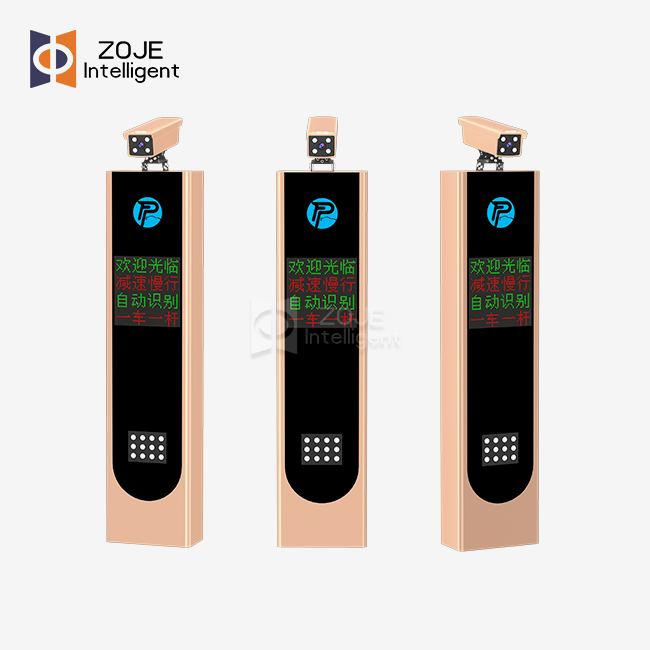
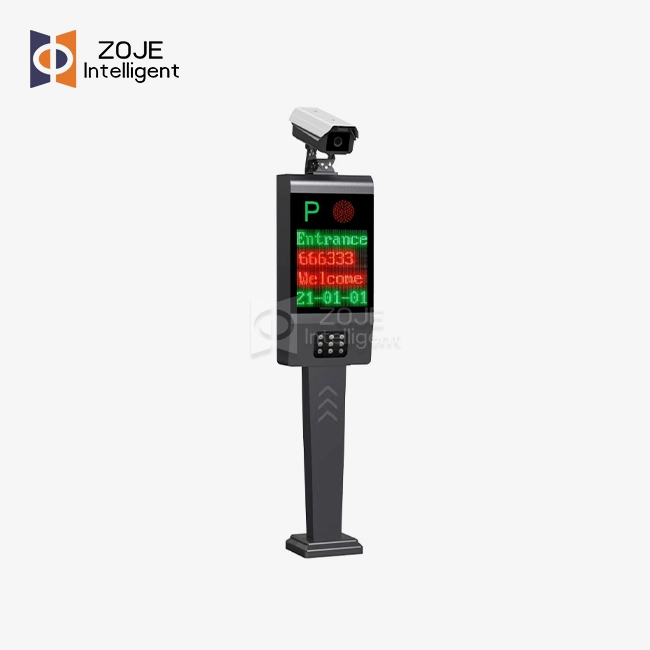
Industrial-Grade LPR Server for 24/7 Operation
2.Recognition rate:99%
3.Recognition Regions:Around world
4.Support offline use:Front-end recognition, unaffected by network delay/offline
5.Support hardware/software customized,support various types of secondary development
6.Support outdoor use
7.24/7 service
8.Support OEM and ODM

- Face to Face Discussion
- Quality Assurance
- 24/7 Customer Service
Product Introduction
Industrial-Grade LPR Server for 24/7 Operation — Edge AI Platform for Smart Transportation & Parking Management
A server that lives in a roadside cabinet has a rough life. Highway gantries treat it no better. Nor does the inside of a parking structure with no walls. Off-the-shelf commercial hardware will not survive out there. Hong Kong ZOJE Intelligent Technology Co., Ltd. built the Industrial-Grade LPR Server for 24/7 Operation for work like this. The company started in 2012 and holds ISO 9001:2015 certification. On this fanless edge computing platform, License Plate Recognition algorithms run without a break, in recognition regions all over the world. Cold down to -40°C and heat up to +75°C cause it no trouble. You never need to plan downtime.
Why Standard Servers Fail in LPR Deployments
A commercial server is built to sit in a data center with controlled air. Move one into a roadside cabinet, or out into an open-air parking structure. Four things start to fail almost right away.
Thermal crashing: in a sealed box, heat off the GPU and CPU has nowhere to go. It piles up until the system throttles or shuts itself down. This chassis has no fans, and it bonds the CPU and GPU parts straight to a heavy-duty aluminum or copper alloy shell. Convection then moves that heat out into the air around it. Nothing can break, since there are no fans. Dust has no vents to slip through either. The unit makes no noise at all.
Dust and particulate damage: The fan vents let most conductive dust in. On an industrial site, that is entry route number one. Sealed, fanless construction closes the path completely. Internal components stay clear of short circuits, even on dusty highway jobs and construction sites.
Recognition latency from cloud dependency: Push a plate read up to the cloud and the network round-trip rides along with it. Edge AI does that work right here instead. Delay stays under 50 ms. Toll gates and parking barriers keep lifting, network or no network.
Unrecoverable software freezes: What the OS is up to gets watched by a hardware Watchdog Timer (WDT). Let the heartbeat signals stop arriving, and a hard reset fires from the WDT on its own. No one has to step in.
Key Technical Specifications
| Hardware Specifications | |
|---|---|
| Model | ZOJE-LPRC101 All-in-one License Plate Recognizer |
| Processor | Hisilicon specialized license plate recognition chip |
| Sensor | 1/3" Progressive Scan CMOS |
| Minimum Illumination | 0.01 Lux |
| Electronic Shutter | 1/25 to 1/30,000 seconds |
| Lens Options | 6mm fixed / 2.8-12mm electric zoom |
| Fill Light | 4 high-power LED white lights |
| Performance Parameters | |
| --- | --- |
| Recognition Rate | 99% |
| Triggering Mode | Video/Coil trigger, ≥99% capture rate |
| Image Resolution | 1080P, 960P, 720P, D1, CIF |
| Picture Output | 2 megapixel JPEG |
| Dynamic Range | 120dB |
| Video Format | H.264 High/Main/Baseline Profile, MJPEG |
| Interface & Power | |
| --- | --- |
| Network | 10/100M adaptive RJ45 |
| I/O Interface | 2 input/2 output terminals |
| Audio | 1 input/1 output |
| Storage | Micro SD card up to 32GB |
| Serial Communication | RS485 |
| Power Supply | AC 110-240V |
| Power Consumption | ≤7.5W |
| Operating Temperature | -35℃ to +70℃ |
| Protection Rating | IP65 |
| Dimensions | 452×148×120mm |
| Weight | 2.75kg |
Core Platform Features
Fanless Passive Cooling Architecture
Heavy-duty aluminum or copper alloy is machined into the chassis. CPU and GPU parts get thermally bonded straight onto the chassis wall. Heat moves into the outer surface. Natural convection carries it off from there. No fans sit inside. That takes out the most common mechanical failure point in outdoor servers. The unit also stays quiet.
Plate Reading at the Front End, No Cloud Needed
Every LPR task gets handled on the device itself. When the network drops, plates still get read. Parking barriers rely on this, and so do toll gates and border checkpoints. One hiccup in processing blocks traffic at once. Latency holds below 50 ms under normal load.
Rich I/O for Direct System Integration
IP cameras get their power straight from the server over several PoE+ ports. That removes a lot of the wiring for external power supplies. Gate barriers and loop detectors hook up straight to the Isolated Digital I/O (GPIO). The setup stays compact. Field wiring ends up with fewer spots where something can fail.
Industrial Components and Industrial-Grade LPR Server for 24/7 Operation for Long Deployment Cycles
A lifecycle of 7–10 years is what the industrial SSDs and ECC memory make possible. Pulling out embedded hardware and fitting new parts costs a lot in labor and lost uptime. On infrastructure projects that bill gets heavy, so this longevity turns into a real operational factor.
Wide-Range DC Power Input
Input range covers 9V–48V, with built-in OVP, OCP, and surge protection. Vehicle-mounted jobs work with this. So do fixed outdoor cabinet installs. When power drops out, the system comes back up by itself. Nobody has to restart it by hand.
Deployment Environments
Highway Toll Collection (ETC)
The server hangs on highway gantries. Footage comes in from vehicles moving at highway speeds. Exhaust, heavy vehicle vibration, and outdoor temperature swings are all part of the job. Recognition latency stays under 50 ms, so billing happens in real time.
Smart Parking and Urban Access Control
Multi-level garages and open-air lots count on this server to run their entry and exit points all day. HDR video is processed right on the box. Direct headlights are one hard case. Deep shadows and lens glare are others. Nothing gets sent off-site.
Border Control and Weigh Station Enforcement
Dust levels are high at these remote enforcement points, and the power supply there is far from stable. Inside, the sealed fanless build keeps the internal parts protected. Plate reads get matched by the server against weight sensors and the databases it is linked to. Should the connection drop, offline mode keeps the system working.
Quality Control Process for Industrial-Grade LPR Server for 24/7 Operation
Every unit ships after completing four validation stages.
Environmental Stress Screening (ESS): Temperature swings hit each unit fast, going from -40°C up to +85°C. The CPU and GPU run at 100% load through those cycles. Long, sustained stress is what proves the thermal management holds up.
Burn-In Testing: Each unit runs flat out, without a break, for 24 to 72 hours. Parts that would quit early show up during this test. It takes place before the unit leaves the factory.
Vibration and Shock Validation: Vibration tables are used for this test, and the procedure follows IEC 60068-2-64. The point is to check that nothing works loose. Memory modules have to stay seated after shipping and installation, and so do the internal cables and the expansion cards.
AI Inference Stability: LPR benchmark algorithms get left running for long stretches. That way you can see if memory leaks appear, or if speed slowly drops off over time.

Customization and OEM/ODM Services
Each project comes with its own requirements, and ZOJE builds the hardware and software around them. That includes changes to the I/O configuration and branded hardware builds. Custom LPR software integration with our Industrial-Grade LPR Server for 24/7 Operation is possible too. System integrators who are developing their own parking management or traffic enforcement platforms can work with us through OEM and ODM cooperation.
Standard products ship within 5–7 days. Plan on 10–15 days for customized configurations. Every product includes a 2-year warranty. Technical support remains available once installation is done.
Sometimes a project needs something the standard spec does not cover. Talk to the ZOJE team about which configurations are feasible before you lock in a design.

Frequently Asked Questions
Q: How does a fanless design manage heat from continuous AI inference workloads?
A: The chassis itself is the cooling system. It is built from aluminum or copper alloy. CPU and GPU are bonded to the chassis wall. Convection carries the heat straight from them into the surrounding air. No fans means nothing to wear out, seize, or swap out over a deployment that runs for years.
Q: How many camera streams can this server handle at the same time, at most?
A: The card you put inside is what sets the limit. With an NPU or a GPU, it runs 4 to 16 channels of 1080p video at once. What your LPR software needs for frame rate and resolution also plays a part in your pick.
Q: What happens if the operating system freezes during live operation?
A: OS activity gets watched all the time by the hardware Watchdog Timer. Should the system stop sending heartbeat signals, the WDT fires off an automatic hard reset. Back up the server comes, with nobody touching it.
Q: Can this server run the AI development frameworks that people usually work with?
A: Yes. It boots both Linux (Ubuntu) and Windows IoT Enterprise. Drivers for NVIDIA CUDA, Intel OpenVINO, TensorFlow, and PyTorch come fully installed. Your current LPR setup keeps running the way it does today. Nothing needs to change.
Q: A power surge hits an outdoor cabinet. How does the server come through it undamaged?
A: The power supply design includes Over-Voltage Protection (OVP). Over-Current Protection (OCP) is there as well, and so is surge protection. For outdoor cabinet installs, put an industrial UPS upstream of the server. Input voltage then gets extra regulation.
Contact Us
Got a project in mind? Maybe you just have a technical question. Either way, the ZOJE Industrial-Grade LPR Server for 24/7 Operation team is reachable at info@zoje-tech.com.
Send Inquiry