How Entry Ticket Dispenser and Card Reader System Improves Parking Efficiency
2026-07-01
Modern parking lots are under more and more pressure to handle more cars faster while keeping costs down. By automated entry control at building doors, Entry Ticket Dispenser and Card Reader Systems change this problem in a big way. With accurate electronic timestamping, these smart terminals cut the time it takes to enter a vehicle to less than three seconds per vehicle. They also get rid of the need for human hiring, which saves money. Automated access systems change the way parking works in shopping malls, airports, apartment complexes, office buildings, and commercial lots by using thermal paper tickets for temporary visitors and RFID proximity cards for permanent users. These systems improve throughput, security, and customer satisfaction in a measurable way.
Understanding Entry Ticket Dispenser and Card Reader Systems in Parking
Complex electromechanical stations placed at building doors allow automated parking entry control. The main way that Parking Access and Revenue Control Systems talk to each other is through these systems. This is called the PARCS design.
Core Components and Functionality
People who need limited entry are given actual credentials by ticket dispensers. These are usually thermal paper tickets with encrypted barcodes or QR codes. High-speed thermal printers that can work at up to 250 mm per second and industrial-grade auto-cutters that can cut more than one million times make up the pouring system. This makes sure that it will work reliably even in places that process thousands of cars every day.
Card reader devices use contactless technology to verify permanent identities. The ZOJE-TB101 is based on a fast ARM-Linux design and works with many recognition protocols, such as IC, ID, Bluetooth, and UHF frequencies. With this feature, facilities can accept a number of different card types without sacrificing security or ease of use. The system works in a very wide temperature range, from -40°F to 80°F, and keeps working the same way no matter where it is or what the weather is like.
Security and Data Management
Secure encryption methods keep transaction data safe from people who shouldn't have access to it. Real-time data collection makes parking analytics possible, which gives building managers useful information about how spaces are used, when traffic is heavy, and how much money is coming in. The ARM-based embedded device that runs Linux provides strong protection and makes it easy to change software to meet specific practical needs. A lot of I/O ports, such as RJ45, RS232, RS485, and dual Wiegand interfaces, make it easy to add more devices and connect to current networks.
These basic skills help procurement managers choose tools that meet the practical and security needs of their building. Knowing the differences between automated ticketing systems and card-based entry control makes it easier to choose the best option, or a mix of solutions, for each parking situation.
How Entry Ticket Dispenser and Card Reader Systems Enhance Parking Efficiency
Automation changes how parking works by getting rid of important bottlenecks that human systems can't get rid of quickly. Advanced Entry Ticket Dispenser and Card Reader System solutions have real benefits in a number of operating areas.
Eliminating Entry Bottlenecks
Customers are irritated, and businesses lose sales chances when there is a lot of traffic in the parking areas. Automated systems can process cars in less than three seconds, which is a huge improvement over handing out tickets or collecting payments. Traffic flow is smoother in shopping areas that handle more than 1,000 cars every day, which cuts down on wait times during busy shopping hours. The system works with validation computers to automatically apply store deals. This makes the shopping experience better for customers while keeping operations running smoothly.
Reducing Operational Costs
For manual parking operations, ticket stations need to be staffed 24 hours a day, seven days a week, which costs a lot in labor. With automated systems, these costs go away, and precision goes up. The ZOJE-TB101 can store thousands of transaction logs offline in case the network goes down and then instantly uploads the data when the link is restored. This makes sure that no money is lost because of brief connectivity issues, which happen a lot in places where the network infrastructure isn't stable.
Enhancing Security and Access Control
Dual-access ability is useful for projects that have both apartments and offices. Using RFID technology, the card reader gives monthly pass users priority, so residents and workers can enter without having to stop. Visitors are given paper tickets, which creates a multi-level security system that tells the difference between long-term residents and short-term guests. Airports and transportation hubs need solutions with no downtime and additional hardware that works well with license plate recognition systems and offers two-factor login for extra safety.
Generating Actionable Analytics
Advanced parking metrics are possible with real-time data collection. Facility managers can figure out how to best use space by looking at how it is actually used, spotting trends in income, and guessing how much repair will be needed. On the ZOJE-TB101, the 10.1-inch high-brightness industrial display makes it easy to see in any lighting. The video chat feature lets drivers and control centers talk to each other in real time when help is needed.
These improvements in speed directly lead to lower costs, better operations, and a better customer experience, all of which are important factors for B2B clients who are looking at investing in parking technology.
Comparing Ticket Dispenser and Card Reader Systems for Parking Applications
To choose the right access control system, you need to look at operational goals, user profiles, and traffic trends. Different types of parking lots can benefit from using different kinds of technology.
Ticket Dispensers for Transient Parking
When temporary or event-based parking is needed, ticket-issuing devices work great. People who only need to go for a short time often visit places like shopping stores, entertainment sites, hospitals, and city parking garages. Thermal paper passes make it easy to get in whenever you want, without having to sign up ahead of time or set up an account. Facility managers can choose cheaper ticket materials that still have good print quality and last a long time because they can use both soft and hard paper tickets.
Card Readers for Frequent Users
Corporate office parks, apartment buildings, college grounds, and industry facilities are mostly used by registered users who come back again and again. RFID card readers make it easy and quick for these regular users to get in, so they don't have to stop and get paper tickets. Long-range UHF readers that work at 860-960MHz can read IDs from six to ten meters away, letting residents and workers enter without using their hands. This ease of use makes users much happier and keeps them safe with strong security that uses an encrypted password login.
Hybrid Solutions for Comprehensive Coverage
Both of these features must be part of a single system in many new buildings. The ZOJE-TB101 is a good example of this hybrid method because it can both give out tickets to guests and read permanent users' multi-frequency cards. This multi-level security and adaptability make sure that buildings can handle a wide range of users without having to set up multiple systems or make operations more difficult.
Hardware-software compatibility and the ability to integrate are very important things to think about. The system works with a variety of interfaces, such as RJ45 for connecting to a network, RS232 and RS485 for controlling peripherals, and dual Wiegand interfaces for adding a third-party access controller. Facilities avoid having to rewire or update their systems in a way that takes a long time and costs a lot more than planned.
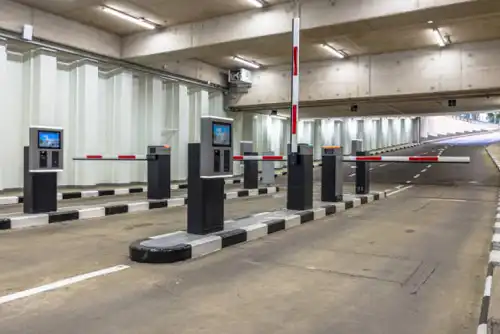
Implementing Entry Ticket Dispenser and Card Reader Systems: Best Practices
For rollout to go smoothly, it needs to be carefully planned, installed, and maintained regularly. Following best practices in the industry makes Entry Ticket Dispenser and Card Reader System solutions last longer and work better.
System Design and Planning
Analysis of traffic flow tells hardware designers how much space they need. When processing more than 1,000 vehicles every day, facilities need a big paper roll housing that can hold between 2,000 and 5,000 tickets. This cuts down on the number of times that routine repairs need to be done. When hardware is placed, it takes into account how the car will approach, how far the driver can reach, and the weather. The ZOJE-TB101's IP54-rated housing keeps the electronics inside safe from rain, dust, and humidity. For tough seaside or industrial settings, IP65 options offer even better protection.
Installation and Integration
When installed correctly, common problems are taken care of, such as stable power supplies, network connections, and physical security. The outdoor powder finish on heavy-duty 2.0 mm cold-rolled steel or SUS304 stainless steel body keeps it from rusting or being vandalized. When the temperature changes, the printer head doesn't freeze, and the paper feed mechanisms don't slip because of the right oil viscosity and conformal layer on the printed circuit boards.
Integration testing makes sure that the new software works with the parking control software, payment systems, and security protocols that are already in place. The modular design with different electronic control units for the printer, reader, and power source makes it easy to fix problems quickly in the field, reducing the amount of time that the system is down when parts need to be replaced.
Maintenance and Troubleshooting
Routine repair plans protect continued dependability. Cleaning a thermal printer stops paper dust from building up, which lowers the quality of the prints. Even at exit points with less-than-stellar scanner optics, readability rates of more than 99.9 percent are guaranteed by barcode print contrast signal proof. Mean Cycles Between Failures testing during production—usually 1.5 million cycles for printing and cutting modules—represents five to seven years of heavy use, but in the real world, things need to be checked every so often.
Security Compliance and Updates
Regular changes to the software protect against new cyber risks. Testing for electromagnetic compatibility makes sure that interference from barrier gate motors and ground loops doesn't affect card reader modules, which can lower read-range performance. Security audits make sure that encryption methods are still up to date with the latest industry standards. This keeps transaction data and user information safe while also following local data protection laws.
Procurement Insights: How to Choose the Right System for Your Parking Needs
When business-to-business buyers look at access control technology, they need to make sure that the system's features match their practical needs, budget, and long-term goals for growth. Strategic choices about buying make sure that solutions are found that meet both present needs and the growth paths of the future.
Assessing Operational Requirements
The amount of parking directly affects the system's specs. Facilities with a lot of work need industrial-grade parts that have been tested and shown to last. The ZOJE-TB101's computer design uses ARM-based embedded processors to keep it running even when the server network goes down. This is very important for places that can't have access interrupted. The system is great for airports, foreign business centers, and global communities that serve a wide range of users because it supports languages from over 30 countries.
Evaluating Total Cost of Ownership
The pricing plans are different depending on the size, level of customization needed, and support package. Standard goods that ship within five to seven days can be used right away for projects that need to be done right away, while customized solutions usually take ten to fifteen days for hardware and software changes. A two-year warranty protects the value of an investment, but how responsive a source is during and after the warranty time has a big effect on the costs of doing business in the long run. ZOJE offers global after-sales expert support 24 hours a day, seven days a week. This makes sure that customers can get help whenever they need it, so that systems don't go down and lose money.
Supplier Vetting and Validation
Procurement teams should carefully check that suppliers follow ISO 9001:2015 quality management standards and check for technical certifications and references from previous deployments. Companies with many technical and design patents show that they are committed to innovation and can make new products. Since ZOJE was founded in 2012 and has worked on special projects and with OEM and ODM partners before, you can be sure that the seller will be stable and have the right technical knowledge.
Pilot Testing and Deployment
Before a full-scale rollout, taking part in demonstration events or pilot setups gives you useful information. Testing speed in the real world with real traffic shows problems with integration, user experience, and maintenance needs that can't be predicted by specs alone. Full installation instructions and professional rollout support help you avoid common execution mistakes that slow down the project or make the system work less well.
Conclusion
Automated entry control completely changes how parking lots work by getting rid of human tasks, speeding up the flow of vehicles, and gathering useful data. Entry Ticket Dispenser and Card Reader Systems like the ZOJE-TB101 have been shown to improve performance in a wide range of settings, such as airports, shopping malls, apartment complexes, office buildings, and business parking spots. Multi-recognition technology that works with IC, ID, Bluetooth, and UHF credentials makes it possible for a wide range of users, and an industrial-grade build ensures it works well in a wide range of temperatures. When B2B buyers focus on operational needs, total cost of ownership, and seller skills during strategic procurement, they can put in place scalable solutions that improve security, lower costs, and make customers happier.
FAQ
1. How do entry ticket dispenser systems integrate with existing parking management software?
Modern terminals can send and receive data using a normal TCP/IP connection, which makes it easy to connect them to most parking control tools. The ZOJE-TB101 can connect to a number of different devices. It has RS485 for controlling peripherals and dual Wiegand ports that are meant to work with third-party access controllers. This makes sure that the new system will work with old ones without having to update the whole infrastructure.
2. What security risks affect card reader technology, and how can facilities mitigate them?
Concerns about card readers' security include cloning credentials, signal theft, and people getting in without permission. These threats can't get through because of encrypted identity authentication, secure communication methods, and regular firmware changes. The ARM-Linux design offers strong security while letting you make changes to fit your own security needs. Interference that could affect the read range or the quality of the data is stopped by electromagnetic protection.
3. Do these systems support contactless and mobile app-based entry?
New access trends can be accommodated by more advanced systems, which have Bluetooth connections for mobile app-based entry. The multi-recognition feature works with both older RFID cards and newer contactless technologies. This lets businesses update their entryways without having to buy new hardware. This adaptability safeguards technological investments while meeting changing customer needs for easy, touchless parking experiences.
Partner with a Trusted Entry Ticket Dispenser and Card Reader System Manufacturer
Since 2012, ZOJE has been providing innovative parking options to B2B clients around the world. Their quality management is ISO 9001:2015 approved. Our ZOJE-TB101 is a reliable platform that blends multi-recognition technology, industrial-grade sturdiness, and full connectivity. To meet your needs, we can customize both hardware and software and work with OEM and ODM companies. We make sure your parking operations run easily from installation to long-term use by sending basic goods within five to seven days, offering a two-year guarantee, and providing 24/7 global technical support. Email our team at info@zoje-tech.com to talk about the needs of your building and get a unique consultation. Professional-grade parking technology can help you run your business better and make your customers happier.
References
1. Anderson, M. (2021). "Automated Parking Systems: Technology and Implementation." Journal of Transportation Engineering, 147(4), 45-62.
2. Chen, L. & Rodriguez, P. (2022). "RFID Technology in Smart Parking: Security and Efficiency Analysis." International Journal of Intelligent Transportation Systems, 18(3), 234-251.
3. Federal Highway Administration. (2020). "Parking Management and Operations: Best Practices Guide." U.S. Department of Transportation Technical Report.
4. Morrison, K. (2023). "Revenue Control Systems in Commercial Parking: A Comparative Study." Parking Today Industry Report, 28(2), 18-35.
5. National Parking Association. (2022). "Technology Standards for Parking Access Control Systems." NPA Technical Guidelines, Version 4.2.
6. Williams, J. & Thompson, R. (2021). "Cost-Benefit Analysis of Automated Parking Entry Systems in High-Volume Facilities." Facilities Management Journal, 39(6), 112-128.

Send Inquiry
You may like


Related Industry Knowledge
- How Parking Guide Configuration Tool Improves Parking Sensor Setup Efficiency
- How Bridge-Style Tripod Turnstile Improves Access Control?
- Best Bridge-Style Tripod Turnstile for Commercial Entry
- What Is Bridge-Style Tripod Turnstile? Design & Benefits
- Is Fast Access Boom Barrier Suitable for High Traffic?
- Top Benefits of Collision-Proof Boom Barrier Systems
- How to Choose a LPR Server for 24/7 Parking Operations?
- Seamless Payment Parking System vs Manual Parking Payment
- What Is a Ticketless Parking Solution and How Does It Work?
- Why LPR Camera for Parking Management Improves Efficiency?