
How to Choose a Barrier Gate for Parking Lot OEM Supplier
2026-08-13
Choosing the right barrier gate for parking lot applications demands careful evaluation of your OEM supplier. The decision extends beyond simple product specifications—it encompasses manufacturing quality, customization capabilities, integration compatibility, and long-term service reliability. Whether you're managing shopping malls, airports, residential complexes, office buildings, or commercial parking facilities across the United States, partnering with a dependable OEM supplier directly influences your access control system's operational efficiency, security outcomes, and total cost of ownership. This guide walks you through a structured evaluation framework covering technical considerations, supplier assessment criteria, and practical selection strategies tailored to B2B procurement professionals seeking optimal parking management solutions.
Understanding Parking Lot Barrier Gates: Key Concepts and Types
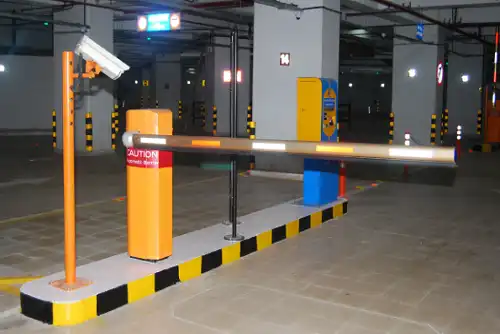
Access control methods for parking lots have changed a lot over the years, from simple manual gates to complex automatic ones. The main physical regulation tool for parking lot settings is a barrier gate for parking lot, which regulates car entry and exit through electromechanical operation in conjunction with verification systems.
Fundamental Operating Principles
Nowadays, automatic parking gates are powered by DC brushless motors that move a boom arm with the help of precise gearboxes. When outside devices like license plate readers, RFID readers, QR code scanners, or loop detectors send signals to the control unit, it tells the motor to raise or lower the arm based on those signals. Encoder technology in more advanced models keeps track of the arm's position during the movement cycle. This lets the user precisely control the speed and smoothly slow down.
The mechanical design is based on a counterbalanced crank arm mechanism that lowers the load on the motor and makes parts last longer. The weight of the boom arm is balanced by the tension of the springs. This means that the motor only has to fight rotating inertia and not gravity. This engineering method cuts energy use by a large amount while also making things more stable over millions of rounds.
Automatic vs. Manual and Electric vs. Hydraulic
Automated barrier gates are most common in commercial settings because they can handle more traffic and require less work. Manual systems can still be used in low-traffic situations where cost worries are greater than working efficiency issues. The benefit of automation is especially clear during rush hours, when a system that can be set to any speed between 1.5 and 8 seconds can handle many more cars per hour than human systems.
In parking uses, electric motor systems have mostly taken the place of hydraulic controls. Electric barriers respond more quickly, need less maintenance, and work more cleanly because they don't use hydraulic fluid. Hydraulic systems are still used for extreme heavy-duty tasks that need very long boom arms or in harsh industrial settings, but brushless motor technology is getting better all the time, closing the performance gap.
Safety Features and Durability Standards
Modern parking barriers have several safety layers that work together to keep people safe and make sure that emergency access is easy to get to. Three types of anti-crushing technology—pressure sensors, infrared photocells, and loop detection—work together to find obstacles and quickly reverse the arm. This backup makes sure that people and cars are safe even if one sensor fails.
Stability at different temperatures is another important measure of durability. Professional-grade units work the same way in temperatures ranging from -35°C to 70°C because they have special motor insulation, weatherproof housing materials, and electronic parts that are sealed and have an IP54 rating or higher. Cold-rolled steel cabinets with a powder covering that is more than 80 microns thick protect against corrosion, which is important for outdoor installs that will be exposed to rain, humidity, and changes in temperature.
Critical Criteria for Selecting the Right Barrier Gate OEM Supplier
Choosing the right supplier has a huge effect on the success of a project, and not just when buying products. A thorough evaluation system looks at the ability to manufacture, the methods for quality assurance, the ability to customize, and the service infrastructure.
Certified Product Quality and Manufacturing Standards
ISO 9001:2015 approval means that quality management is carried out in a planned way throughout the whole production process. This standard makes sure that all parts have the same specs, are tested in the same way, and can be tracked back to their original source. When looking at possible OEM partners, it's better to ask for real certification documents than marketing claims as proof of compliance.
Certain quality control measures show that a manufacturing company is doing a great job. Premium suppliers put control boards through 72 hours of high-temperature "burn-in" testing to make sure that no early component failures happen before the boards are put together. Testing for spring wear makes sure that the tension stays the same over millions of rounds. Motor endurance testing mimics 24 hours of continuous high-traffic operation to make sure that thermal performance stays within the limits of the insulation class. Testing with salt spray proves that the covering will last against corrosion in the surroundings.
Patent portfolios give you more information about what technologies can do. Suppliers with multiple design and usefulness patents show that they are truly innovative, not just putting together products. These intellectual property rights usually cover one-of-a-kind parts that make the machine work better, like advanced sensor integration methods, secret control algorithms, or special crank arm geometries.
Delivery Reliability and Logistical Strength
Timelines for projects depend a lot on how well suppliers deliver. Standard products can be delivered in 5 to 7 days, which works for quick rollout plans. For more complex projects, unique solutions can take up to 10 to 15 days. When suppliers keep enough goods on hand and make sure production runs smoothly, delays that affect installation schedules are kept to a minimum.
International logistics skills are very important for projects in the U.S. that need to buy things from manufacturers overseas. Experienced OEM partners offer both DDU and DDP shipping terms to meet the needs of different projects when it comes to customs clearance. For large orders, sea freight is cheaper, while air shipment is better for urgent replacements or small pilot deployments.
Responsive After-Sales Support Infrastructure
The level of technical help is what sets great suppliers apart from average ones. Look for global service that is available 24 hours a day, seven days a week, and that guarantees a response time of 30 minutes or less. This is the best response time in its class. This instant technical access is very helpful when operating problems threaten parking lots that make money.
The length and spread of the warranty covers show how confident the supplier is in the product's reliability. A full two-year warranty that covers all parts shows that the engineering is mature, while limited warranties that don't cover wear parts could mean that the quality isn't as good. Lifelong maintenance service availability makes sure that parts and technical support are always available, even after the warranty has expired.
Making yearly trips to customers shows that you care about their relationships beyond just making sales. When suppliers meet with customers in person, they can get first-hand operational feedback, learn about how needs are changing, and form partnerships that will make future projects run more smoothly. This consultative method helps people who are in charge of buying things find sellers who can work with them as strategic partners instead of just vendors.
Matching Barrier Gate Solutions to Your Parking Lot Requirements
To make good specifications, you need to know how the working environment affects the technical requirements. Different types of facilities have different problems that affect the best way to set up a barrier gate for parking lot.
High-Traffic Commercial Applications
Airports and shopping stores are two examples of high-volume places where processing capacity has a direct effect on how customers feel and how much money is made. Barrier gates for parking lot access that can be quickly cycled through without compromising safety are required for these uses. Setting the speed to the faster end of the range (1.5 to 3 seconds) speeds up the vehicle's processing during busy times.
In business settings, the ability to integrate becomes very important. When systems work seamlessly with License Plate Recognition (LPRS), they can automatically check against pre-approved databases or verify payments. Connecting to the cloud lets you run things without being there, and it also lets you monitor and analyze them in real time. The ability to accept switch signals from different access control devices for wired control makes it flexible as technology changes.
Heavy-duty construction standards take into account patterns of heavy use. DC brushless motors that are rated for 100% duty cycle can work nonstop without getting too hot. Mean Time Between Failures of more than five million cycles gives systems the durability they need to run every 30 seconds during busy times.
Residential and Office Environments
Residential areas and business buildings usually have regular traffic patterns with a lot of cars coming and going during rush hours. In these places, residents' comfort and the way things look are more important than speed. The operation settings can be changed from 4 to 6 seconds, which makes the movement smoother and quieter. This lowers noise complaints while still allowing enough throughput for most building populations.
In private settings, security features become more important. Triple anti-crushing protection with a fake alarm stops people who aren't supposed to be there from getting in and keeps resident cars safe. When the power goes out, an automatic arm lift makes sure that emergency vehicles can get in and keeps people from getting trapped. The manual clutch release device gives security staff an extra way to handle the vehicle.
Specialized Industrial and Government Applications
Specialized skills are needed for government buildings and commercial parking lots that serve logistics needs. Wide lane coverage with boom arms that can reach up to 8 meters lets trucks and situations with more than one lane work. When used in exposed areas, reinforced arm designs can handle higher wind loads without deflecting too much.
When working with complex access management platforms, advanced motor choices like servo systems allow for precise positioning control. Barrier position relay switches with external signal outputs make it easier to connect to surveillance systems, traffic management infrastructure, and central monitoring stations. These professional-level features support more complicated operating needs than just controlling the flow of vehicles.
Installation, Maintenance, and Troubleshooting: Ensuring Long-Term Performance
When barrier gate for parking lots are set up and cared for properly, they last longer and cause fewer problems with operations. Procurement experts can make more accurate project budgets and hiring plans when they know what needs to be installed and how to maintain it.
Site Assessment and Installation Planning
A thorough site evaluation is the first step to a successful installation. The right length and shape of the boom arm are determined by the lane width measures. An overhead clearance assessment finds problems that might happen with utility lines, building structures, or lighting fixtures. The type of base affects the choice of mounting method, such as whether to use surface mounting on reinforced concrete or embedded foundation boxes for asphalt installs.
Assessing the electrical infrastructure makes sure that there is enough power and that control wires can be routed through the right conduits. Modern barrier gates for parking lots usually work on 110V AC power with low-voltage DC motor systems, but making sure of the exact needs ahead of time can save you a lot of money on changes that need to be made during installation. Planning for network connection takes into account how IP-based LPR cameras, cloud control platforms, and remote tracking systems need to work together.
Routine Maintenance Protocols
Preventive repair plans that are tailored to the level of use increase the life of equipment and cut down on sudden breakdowns. Installations that get a lot of use should have checkups every three months to make sure the spring tension is correct, the torque on the chassis fasteners is checked, and, if necessary, the gears are oiled. For sites with less traffic, repair may be done every six months instead of every year to keep things reliable.
As part of the checking process, the boom arm balance needs to be adjusted. This keeps the motor from having to work too hard because the spring tension isn't right. Cleaning electronic sensors gets rid of the dust that builds up and makes detection less accurate. A visual inspection of the control board can find signs of component stress, such as capacitors that have changed color or connections that are loose. Checking the motor's temperature while it's running makes sure that the heat performance stays within the limits.
Common Issues and Resolution Strategies
Knowing how to deal with common operating issues speeds up the process of finding and fixing them. When an arm jitters while moving, it's usually because the springs aren't balanced right or there are loose parts in the chain that need to be adjusted and tightened. It's possible that the loop detectors aren't lined up right or that the sensors' tuning has changed. This can be fixed by realigning the loop detectors or adjusting the sensors' sensitivity.
Electrical connections that aren't tight, contacts that are corroded, or voltage changes that need to be checked by the power source could cause intermittent operation. If your motor makes strange noises, it could be because the bearings are wearing out or there isn't enough oil in them. This is usually fixed by doing regular maintenance. Control board problems are rare in high-quality equipment, but they do happen and need to be replaced. Having extra parts from the OEM seller on hand is essential for keeping downtime to a minimum.
Comparing Market Options: Automated vs. Manual and Other Key Decisions
When choosing strategic tools, you have to weigh the pros and cons of a number of factors, such as working efficiency, lifecycle costs, security performance, and environmental friendliness.
Efficiency and Throughput Analysis
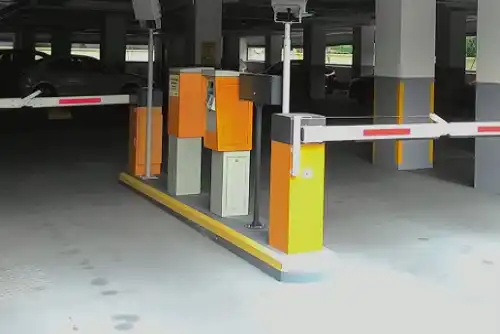
Automated barrier gate for parking lots are much more efficient than manual ones because they cycle faster, work consistently, and need less staff. Depending on the speed setting and the way traffic flows, a barrier gate for parking lot entrances that can be opened in 1.5 to 8 seconds can handle 450 to 2,400 vehicles per hour. Manual systems have a hard time handling more than 200 cars an hour and need staff to be present all the time.
Total Cost of Ownership Considerations
The prices of purchase are only a small part of the total costs over the product's lifetime. When compared to simple manual options, high-quality automatic systems with changeable speed controls, weatherproof construction, and a lot of safety features cost more. Depending on the specifications and needs for customization, the cost ranges from $2,500 to $8,000 per barrier gate.
Security and Safety Performance
Automated systems have more advanced security features than human gates can offer. Three types of sensors work together to make triple anti-crushing technology, which protects against both car damage and pedestrian harm. When a barrier is detected, the arm automatically turns around in milliseconds, which is much faster than a person's reaction time.
Environmental Sustainability Impact
Energy-efficient designs help companies meet their sustainability goals while also cutting down on operational costs. Variable speed control saves the most energy by matching motor output to actual needs. For example, moving more slowly during off-peak times uses less power than moving at full speed all the time. Intelligent sleep settings lower the amount of power used when nothing is being used.
Conclusion
To find the best barrier gate for parking lot OEM provider for parking lot projects, you need to weigh technical requirements, the seller's skills, and the operational needs of your facilities. Quality automated solutions with variable speed settings, weatherproof construction, a wide range of safety features, and the ability to work seamlessly with other systems work better in shopping malls, airports, apartment complexes, office buildings, and business parking lots. Tough supplier evaluations that look at things like manufacturing standards, customization options, delivery dependability, and after-sales support systems make sure that the partnership works after the initial purchase. When you match the right barrier gate configuration to the right operational situation, whether you're focusing on throughput capacity, security features, or long-term durability in harsh environments, you get the best of both short-term and long-term value.
FAQ
1.What is the typical lifespan of a quality parking barrier gate?
Automated barrier gates made for professionals with DC brushless motors, balanced crank arm systems, and weatherproof construction usually last between 10 and 15 years with normal business use. In high-traffic areas, this could be cut down to 8–10 years, but in low-traffic residential areas, it could last longer than 15 years. Ratings of Mean Time Between Failures that are higher than five million rounds give us a way to objectively compare how durable a barrier gate for parking lot is.
2.How do I verify an OEM supplier's customization capabilities?
Ask for specifics about past special projects, such as requirements, timelines, and client references. Original Equipment Manufacturers (OEMs) have design patents and engineering staff that can change the configurations of boom arms, control logic, sensor integration, and cabinet specifications. For customization, ask about the minimum order quantity. Suppliers that are flexible will allow for smaller pilot deployments instead of asking for too big of commitments.
3.Can barrier gates integrate with my existing parking management software?
Modern barrier gates for parking lots can be integrated with wired control interfaces that can receive switch signals from different access control devices. Most parking control software can work with LPR cameras, RFID readers, Bluetooth systems, and cloud platforms without any problems. Make sure that the supplier supports specific protocols and asks for integration documentation as part of the evaluation process to make sure that it will work with your current infrastructure before you place an order.
Partner with ZOJE for Premium Barrier Gate Solutions
Hong Kong ZOJE Intelligent Technology Co., Ltd. provides professional barrier gate for parking lot provider partnerships that help airports, shopping malls, apartment complexes, office buildings, and business parking lots all over the United States. Our automated access control systems have speeds that can be changed from 1.5 to 8 seconds, aluminum boom arms with steel housings that stay stable in temperatures ranging from -35°C to 70°C, triple anti-crushing protection with tamper alarms, and seamless LPR/ETC/Bluetooth integration that lets them run without being watched from the cloud. We offer full warranties for two years, global technical support 24 hours a day, seven days a week, with a 30-minute response time for remote help, and maintenance services for life. Email our team at info@zoje-tech.com to talk about your specific project needs and get detailed technical specifications that are made to fit your business.
References
1. Thompson, M.R. (2022). Automated Parking Systems: Design, Implementation, and Management. Transportation Engineering Press.
2. Chen, L. & Rodriguez, A. (2021). "Comparative Analysis of Electric versus Hydraulic Actuators in Traffic Control Applications." Journal of Intelligent Transportation Systems, 26(4), 412-428.
3. National Parking Association (2023). Best Practices for Commercial Parking Facility Management. NPA Industry Standards Committee.
4. Williams, J.K. (2020). "Lifecycle Cost Analysis of Automated Access Control Systems in Multi-Use Developments." Facilities Management Quarterly, 18(2), 67-83.
5. International Organization for Standardization (2021). ISO 9001:2015 Quality Management Systems – Requirements and Implementation Guidelines. ISO Press.
6. Bennett, S.R. & Park, H.J. (2023). "Integration Strategies for License Plate Recognition and Automated Barrier Systems." Security Technology Review, 31(1), 94-110.

Send Inquiry
You may like


Related Industry Knowledge
- Why Choose an Unattended Full-Height Turnstile for Secure Sites?
- Innovative Parking Guidance Solutions with ZOJE
- Video Parking Guidance Zone Controller Installation Guide Step by Step
- Parking Automatic Payment Station Integrated with LPR System for Commercial Projects
- OEM Interlocking Full-Height Turnstile Gate Guide
- What Is License Plate Recognition and How It Works in 2026?
- Best License Plate Recognition Systems for Parking
- Intelligent Plate Recognition Parking vs Manual Parking Systems
- Why License Plate Recognition Camera Improves Parking Security?
- What Is an Integratable LPR Parking System?