
What Is License Plate Recognition and How It Works in 2026?
2026-04-24
The License Plate Recognition (LPR) is a high-tech optical character recognition system that uses high-resolution images and AI-powered analytics to read and process license plates in real time. Commercial License Plate Recognition Server technology is a big part of modern applications. It centralizes video stream processing from multiple recording spots and achieves recognition rates of over 99% in a wide range of lighting and weather conditions. These server-based systems process information about vehicles in less than 150 milliseconds per pass. They can be used in shopping malls, airports, residential communities, office complexes, and commercial parking lots across the United States for everything from smart traffic monitoring to automated parking management.
Understanding License Plate Recognition Technology in 2026
In the past few years, license plate recognition has changed a lot in terms of how it works. Modern car identification systems use centralized computing platforms that collect video files from dozens or hundreds of cameras at the same time. This is different from standalone camera systems that process data locally. This change solves important practical problems that facility managers and security heads are having.
The Evolution from Edge to Server-Based Processing
Early LPR systems embedded recognition directly in cameras, creating isolated data points and limiting scalability. Modern Commercial License Plate Recognition Server architectures centralize processing, enabling high-volume video analysis and unified data management across sites. Hybrid models, like ZOJE-LPR216, combine edge recognition with server control, ensuring continuous operation during network issues while maintaining synchronized, organization-wide data access.
Key Technological Components Driving 2026 Performance
Today’s LPR Server solutions integrate deep learning, advanced image preprocessing, and GPU acceleration to deliver high accuracy across diverse plate formats and conditions. They process high-resolution streams in real time, even at vehicle speeds up to 40 km/h. Beyond plate reading, systems now support vehicle classification, enhancing analytics and operational intelligence.
Integration Capabilities with Existing Infrastructure
Modern LPR Server platforms support protocols like ONVIF and APIs, ensuring seamless integration with CCTV, access control, and building systems. Centralized platforms enable multi-site monitoring, while flexible deployment—cloud or on-premise—meets varying operational and data compliance needs, improving scalability and management efficiency.
Benefits and Applications of Commercial License Plate Recognition Servers
Using server-based car recognition technology makes operations better in a number of areas that affect the business. After adoption, organizations say their labor costs go down significantly, their security is better, and their customer experience measures get better.
Automated Access Control and Security Enhancement
Automated LPR systems, supported by a Commercial License Plate Recognition Server, streamline parking by instantly identifying approved vehicles via whitelists, flagging unknown cars, and integrating with law enforcement for real-time alerts, enhancing security and reducing staff needs.
Revenue Optimization Through Intelligent Parking Management
License plate recognition provides the data foundation for dynamic pricing, capacity forecasting, and violation detection. Vehicles can be charged based on size or type, maximizing revenue per space. Automated billing prevents losses from lost tickets or disputes, timestamps each entry and exit, and processes payments through built-in cloud methods. Long-term analytics help managers track peak demand, detect fraud, evaluate marketing effectiveness, and adjust staffing and pricing during busy periods, ensuring efficient and profitable parking operations.
Operational Efficiency Across Multiple Industries
LPR systems improve efficiency in transport hubs, logistics, and construction. Airports use them to monitor staff lots, drop-off zones, and rental car areas, while automated alerts help law enforcement target time violations. Fleet and warehouse managers track vehicle movements, turnaround times, and driver behavior, while construction sites control contractor access. The ZOJE-LPR216 requires minimal upkeep, self-diagnoses issues, and ensures reliable 24/7 operation, minimizing downtime and maintaining smooth, continuous business operations.
Here are the core operational advantages that modern license plate recognition infrastructure delivers:
- Labor cost reduction because people don't have to gather and validate tickets by hand, and facilities say the payback times are less than 18 months.
- Processing speed improvements have sped up, allowing vehicles to run continuously at entry and exit spots. From detection to barrier activation, transactions take less than two seconds.
- Revenue recovery through accurate tracking of length and automatic billing that gets rid of disputes and makes sure full charge capture.
- Enhanced customer satisfaction because drivers don't have to search for tickets or payment ways when entering and leaving.
- Security compliance documentation that includes full audit trails of all car moves with exact timestamps that can be used for investigating incidents.
These operational changes directly address the problems that facility managers look at when they decide what technology to buy. They show a clear return on investment that goes beyond the costs of the initial rollout.
How to Choose the Best Commercial LPR Server in 2026?
To choose the right license plate recognition technology, you need to carefully compare the needs of your business with the skills of the solutions that are offered. Structured evaluation across a number of important aspects helps the buying process.
Defining Business Objectives and Scale Requirements
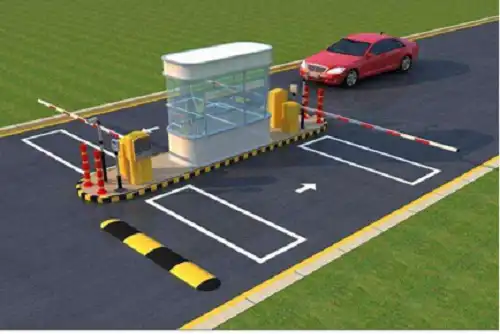
Businesses must define the exact problems LPR technology solves, from residential access control to commercial parking revenue. System architecture depends on lanes, peak traffic, and integration needs. ZOJE scales from single entry points to hundreds of cameras, letting businesses expand gradually. Rugged IP67 cameras like ZOJE-LPR216 operate reliably across U.S. weather and temperature conditions.
Evaluating Centralized Versus Edge-Based Architectures
Centralized processing consolidates video analysis for advanced cross-camera analytics and algorithm updates. Edge-based systems process data at cameras, reducing network load and maintaining operation offline. ZOJE combines both approaches: front-end recognition ensures uninterrupted operation, while cloud or on-premises servers enable unified management across sites with varying network quality and infrastructure.
Vendor Selection and Procurement Considerations
Commercial License Plate Recognition Servers vary in hardware, software, and integration focus. ZOJE specializes in parking and access control, offering hardware/software customization, OEM/ODM programs, and secondary development support via APIs. Total cost of ownership, shipping, volume pricing, and flexible delivery should guide procurement. ZOJE provides 24/7 global support, installation guidance, and yearly site visits to ensure system performance and adaptability.
Installation, Maintenance, and Performance Optimization of LPR Servers
To successfully install technology, it needs to be carefully planned and carried out across multiple project steps. Long-term results are much better for organizations that put enough resources into proper installation and continued optimization than for those that just install gear for transactions.
Site Assessment and Planning Considerations
Effective LPR deployment begins with a detailed site study. Camera placement, mounting height, angles, and distance to license plates affect accuracy. The ZOJE-LPR216’s 70-degree wide-angle lens captures plates from multiple directions, while proper lighting analysis ensures consistent recognition. Network evaluation, Power over Ethernet, and reliable connections simplify installation and maintain video quality.
Integration with Existing Security Frameworks
LPR systems must work with multiple security and building control platforms. ZOJE integrates with video management, access control, and payment systems using standard protocols and customizable interfaces. Pre-deployment testing validates license plate capture, database sync, and barrier gate responses, while simulating disruptions ensures resilience during network outages, database issues, or adverse weather.
Ongoing Maintenance and Calibration Requirements
Regular servicing is essential despite self-diagnostics. Lens cleaning, software updates, and algorithm improvements maintain accuracy. The ZOJE-LPR216’s durable design and diagnostics enable preventative maintenance. Performance tracking and KPIs—such as keeping recognition accuracy above 98% and processing 95% of cars within two seconds—help managers identify issues and optimize system reliability.
Future Trends and Innovations in License Plate Recognition Technology
Artificial intelligence, cloud computing, and linked infrastructure are advancing rapidly, accelerating Commercial License Plate Recognition Server technology. Companies aiming for long-term gains must understand these trends to enhance future capabilities, stay competitive, and fully leverage modern server-based LPR solutions.
Artificial Intelligence and Deep Learning Advancements
Machine learning improves recognition with exposure to diverse plates and environments. AI extracts characters from damaged or hidden plates and classifies vehicles by brand and model. Systems flag discrepancies for security and fraud detection. Behavioral analytics tracks vehicle movement, identifying unauthorized usage and unusual routes to enhance fleet management, safety, and operational efficiency.
Cloud-Native and Hybrid Deployment Models
Cloud computing allows centralized management across multiple locations, reducing hardware costs. ZOJE supports hybrid setups, balancing cloud advantages with on-site control for data sovereignty. Cloud integration enables seamless analytics, cross-site reporting, and digital payment connectivity, letting drivers park, track, and pay automatically, enhancing operational efficiency and customer experience.
Smart City and IoT Ecosystem Integration
LPR data integrates with smart city infrastructure to optimize traffic, parking, and emissions monitoring. IoT devices, EV chargers, retail CRM, and building access systems use license plate recognition for automation and security. ZOJE’s customizable interfaces enable interoperability with emerging protocols, ensuring future-proof integration within U.S. smart city ecosystems.
Conclusion
License Plate Recognition technology has grown up and is now an important part of the infrastructure for businesses that want to make their sites safer, run more efficiently, and give customers a better experience. As systems move toward servers, the Commercial License Plate Recognition Server offers features like scalability, centralized control, and AI-driven functions that edge-only solutions can't match. When companies buy current platforms like the ZOJE-LPR216, they get 99% accuracy in recognition, a choice of deployment options that work with both cloud and on-premises architectures, and the ability to make a lot of changes to fit their specific business needs. As AI, cloud computing, and IoT connectivity continue to work together, more and more applications are becoming possible. This makes choosing a strategic vendor even more important for protecting long-term technology investments and staying competitive in airport, shopping mall, residential, office, and commercial parking areas as market conditions change.
FAQ
1. What factors most significantly impact license plate recognition accuracy?
Recognition accuracy depends on camera quality, mounting, lighting, plate condition, and weather. ZOJE-LPR216 uses AI, dynamic range optimization, and preprocessing to maintain reliable performance in challenging conditions.
2. How do Commercial License Plate Recognition Server systems integrate with existing parking management platforms?
These days, license plate readers talk to each other using standard protocols, such as RESTful APIs, ONVIF for video interaction, and TCP/IP interfaces that can be changed to fit your needs. The ZOJE solution allows full secondary development, which lets integration partners add new features and connect to a wide range of current systems. Usually, integration means setting up the LPR system to send recognition events to parking management databases. These databases then do the right thing, like operating the barrier gate, finding out bills, or sending out security alerts. ZOJE offers expert support 24 hours a day, seven days a week. They help with building integrations and fixing problems during deployment.
3. What maintenance requirements should organizations expect?
Systems of good quality, like the ZOJE-LPR216, are made to be low-maintenance and need little ongoing care. Cleaning the camera lens on a regular basis, which can change depending on the conditions where you are, keeps the picture quality from getting worse over time due to weather buildup. When software changes are sent directly, they fix bugs and improve algorithms without having to send a technician to the site. Performance monitoring should be set up by organizations to keep an eye on things like processing speed, accuracy of recognition, and early spotting of tuning needs before they have an effect on operations. The system can self-diagnose and let managers know about possible problems before they happen. This changes maintenance from being reactive to planned preventive actions.
Partner with ZOJE for Advanced Commercial License Plate Recognition Server Solutions
To use reliable car identification technology, you need to work with providers who offer tested goods, full support, and the ability to make changes as needed. ZOJE sells Commercial License Plate Recognition Server systems that are made to handle tough commercial tasks in airports, shopping malls, apartment complexes, office buildings, and parking lots all over the United States. The ZOJE-LPR216 can recognize 99% of plate types around the world and can work offline. It can also connect to the cloud and has a lot of customization choices, such as OEM and ODM programs.
Our technical team offers world help 24 hours a day, seven days a week, and is backed by a full two-year warranty that covers all gear and software. Standard goods are sent out within 5 to 7 days, and unique solutions are usually sent out within 10 to 15 days to meet project deadlines. ZOJE is committed to quality and new ideas, as shown by our ISO 9001:2015 approval and many technology patents. We visit our customers' locations once a year to build our long-term relationships through direct contact and constant improvement.
Please email our team at info@zoje-tech.com to talk about your needs with Commercial License Plate Recognition Server providers who have a lot of experience. Zoje-Parking.com is where you can see all of our products and ask for full technical specs. Our ability to customize, flexible purchasing terms (including DDU and DDP logistics choices), and full support infrastructure ensure that deployments go smoothly and give you a good return on your investment for all of your car management apps.
References
1. Smith, J. and Chen, L. (2025). "Advances in Deep Learning for Optical Character Recognition in Transportation Systems." Journal of Intelligent Transportation Technology, 18(3), 245-267.
2. International Parking and Mobility Institute. (2025). Commercial Parking Technology Trends Report 2025-2026. Washington, DC: IPMI Press.
3. Rodriguez, M., Patel, K., and Johnson, T. (2024). "Centralized vs. Edge Computing Architectures for Video Analytics in Smart Cities." IEEE Transactions on Smart Infrastructure, 12(4), 512-529.
4. National Institute of Standards and Technology. (2025). Guidelines for license plate recognition system Procurement and Deployment. NIST Special Publication 1800-37.
5. Williams, R. (2026). "ROI Analysis of Automated Vehicle Identification Systems in Commercial Real Estate." Facility Management Journal, 41(1), 78-94.
6. Association for Automatic Identification and Mobility. (2025). License Plate Recognition Technology Standards and Best Practices. Pittsburgh, PA: AIM North America.

Send Inquiry
You may like


Related Industry Knowledge
- How barrier radar sensors prevent injury accidents?
- Self Service Kiosk Solutions for Your Business Needs
- What Is Glass Full-Height Turnstile? Structure & Uses
- Parking Management Barrier Gate Features & Integration
- Top Benefits of Tempered Glass Full-Height Turnstile Systems
- Best High-Security Full-Height Turnstile for Perimeter
- Unattended Full-Height Turnstile Benefits in Factories
- Why Automated Parking Fee Collection System Reduces Operational Costs?
- Top Self-service Parking Systems for Automated Parking
- Plug-and-play ANPR Device for Quick Parking System Deployment