
How to Use a Parking Exit Card and Ticket Validation Machine: Full Step-by-Step Guide
2026-07-09
Running a modern parking garage means managing exits in a way that keeps traffic moving and keeps the money coming in. A Parking Exit Card and Ticket Validation Machine checks the validity of exit tickets and payment cards automatically at exit lanes before letting cars go. These smart terminals can read barcode tickets, magnetic stripe passes, and RFID cards in just two seconds. This means that there is no need for a cashier, and compared to traditional booths with staff, they can cut costs by up to 40% while still preventing revenue leakage through strict authentication protocols.
Understanding Parking Exit Cards and Ticket Validation Machines
Automated systems are needed in modern parking lots to keep the flow of cars smooth. Before letting a car out, these devices act as important checks that make sure the driver's ID and payment status are correct.
What Is a Parking Exit Card and Ticket Validation Machine?
In parking income control systems, the Parking Exit Card and Ticket Validation Machine is the last line of defense. Validation tools do a lot of complicated logic work, unlike simple card readers that only read passwords. They figure out how long a stay will last, check to see if retailer discounts were applied at stores, and talk to central computers to make sure that full payment has been made. The system handles temporary guest tickets with barcodes or magnetic stripes, and it also handles monthly parker passes with RFID chips at the same time. Because they can handle both types of traffic, these stations are essential for buildings that have a mix of short-term and long-term renters.
Core Technologies Behind Exit Validation Systems
Parking readers become smart sensors with RFID and IoT solutions for smart city infrastructure. Edge-enabled readers evaluate traffic, occupancy, and unusual usage without taxing central systems. With real-time data, predictive algorithms forecast demand surges. Instant price changes and pre-set capacity.
Transport systems integrate better in smart cities. RFID-enabled parking structures notify guide applications of available spaces. Circled traffic and pollution are reduced by helping drivers find open spaces. Multi-modal transportation hubs that synchronise parking and transit schedules let travellers use both. Emergency vehicle ranking systems let first responders access without approval.
Security Enhancements and Privacy Protection
More parking devices employing networks and cloud services increase cybersecurity risks. Encrypted tag transmission avoids facility compromise by surveillance and copy assaults. Blockchain audit trails track automobiles' constant whereabouts. Helps with criminal investigations and regulatory compliance. RFID tags with mobile credentials or biometric verification simplify entry to high-security government and commercial premises.
Vehicles with privacy protection lessen surveillance issues. Anonymous IDs isolate vehicle movement data from personal data. It lets facilities examine data without violating user privacy. Instead of sending personal data to central systems, decentralised authentication methods evaluate access credentials locally. This decreases GDPR/CCPA compliance and data breaches.
Step-by-Step Guide to Using Parking Exit Card and Ticket Validation Machines
Understanding working processes helps both end users and building staff get the most out of the system while keeping problems to a minimum. Parking Exit Card and Ticket Validation Machines ensure smooth operations through automated verification.
How Exit Cards Are Issued and Validated
Automatic parking lot dispensers provide drivers IDs. Temporary guests get paper tickets with ID barcodes and access times. Monthly parkers get RFID cards with vehicle information and time limits. Once users leave the site, confirmation tools decrypt their passwords.
As they depart, the driver shows their ID to the confirmation device. The scanner instantly reads barcodes, magnetic stripes, and RFID chips. When sensors discover data, reading starts in 0.3 seconds. For the parking session, the system searches the central database for entry time, savings, and payment status.
Ticket Insertion and Scanning Methods
Paper tickets need suitable formatting for processing. Terminals usually include input directions and lit holes. Drivers should insert tickets with the barcode up and readable text. Motorised rollers elevate tickets 10 cm while optical scanners read barcodes. According to how the facility handles paid entry, the machine returns the ticket to the driver or keeps it after scanning it.
Touchless RFID card verification simplifies. Drivers just hold their card to the reader panel, usually marked with a card symbol and located at window height. The reader's electromagnetic field wakes up the card's chip, transferring data. Ultra-high-frequency scanners detect windshield-mounted tags from up to 10 meters away, enabling licensed monthly parkers to use the system without touching.
Manual entering may be utilised if credentials are lost or automatic reading fails. Touch screens let cashiers enter paper pass ticket numbers. Intercom buttons may link remote staff who can open the gate without a key after verifying payment and name.
Payment Processing Integration
Modern validation machines provide different payment alternatives to suit consumer needs. Without pre-payment, drivers may use the exit terminal's built-in payment capability. Contactless NFC credit card scanners allow tap-and-go payments in under three seconds. Drivers may use popular wallet apps to pay using terminal-generated QR codes on their cellphones. Payment systems without pay booths simplify building design and save equipment expenses.
Shop validation methods are complicated yet crucial in retail. Participating establishments scan parking tickets and apply discount coupons to reduce or eliminate parking expenses at checkout. The exit ID verification machine retrieves discount records from the central database. If the refund covers parking, the gate unlocks instantly. The screen changes after partial discounts, encouraging drivers to pay the difference before leaving.
Troubleshooting Common User Issues
Even with a solid strategy, exit activities might fail. Ticket identification is usually impossible with folded or wet barcodes. Users may video chat with distant support personnel by pressing "assistance" when automatic reading fails. Support staff may manually find parking sessions by license plate or admission time.
Anti-passback systems detect odd behaviour and create credential mismatches. If a monthly parker's card shows an attempt to leave without a recent entrance record, the system suspects fraud and requests confirmation. Database sync difficulties or separate door entry may cause this. Remote operators may circumvent restrictions after validating entry camera video.
When network connection prevents exit terminal and central payment system communication, payment verification fails. The ZOJE-TB102 stores monthly cards and recently bought ticket UUIDs in memory whitelists offline. During network outages, locally stored data stops machine operations. To avoid data loss and sustain operations, transaction logs are uploaded quickly after connection restoration.
Maintenance and Troubleshooting for Parking Exit Card and Ticket Validation Machines
Regular repair schedules keep equipment working longer and prevent expensive downtime that causes problems with parking and makes customers angry. Consistent Parking Exit Card and Ticket Validation Machine upkeep ensures that revenue streams remain protected.
Routine Maintenance Tasks
All credentials are read properly after sensor cleaning. Dusty outdoor barcode scanner screens are less apparent. Weekly cleaning with isopropyl alcohol-dampened microfibre cloths eliminates dirt and grime without breaking glass. RFID transmitter surfaces need the same upkeep, although electromagnetic devices can handle more surface debris than optical systems.
Security fixes and custom features are in software upgrades. Downloading software to USB sticks, inserting them into verifying machine service ports, and following on-screen instructions to install are common updates. To prevent fresh breaches, parking facilities need critical security upgrades within 48 hours.
Hardware inspection reveals mechanical wear before a major failure. Motorised ticket transit systems are checked regularly since they break more while moving. Techs align the paper route, grease guide wheels, and check belt tension. MCBFs of over two million processes are extended by proactive maintenance in quality systems.
Addressing Technical Issues
Misread passwords annoy users and impede exits. Recalibrating barcode scanners often improves ticket-reading issues. Technicians use service codes to access troubleshooting panels and automate scanner sensitivity and focus depth calibration. Recurring difficulties may need LED light replacement.
Unopened barriers, gate control issues, and sensor failure after payment verification. Check the validation terminal-gate driver connection for damage to start troubleshooting. Loose RS485 or Wiegand adapter wires might impede communication. Technicians test control circuit voltages for wire defects using multimeters.
Connection difficulties between exit devices and central systems limit real-time payment verification. Hardware issues like router failures or excessive facility-wide network traffic often originate outside the validation machine. I/O ports for direct Ethernet connections are on the ZOJE-TB102. These connections fix wireless network difficulties and allow seamless communication. Detail error codes in machine diagnostic logs help IT fix problems fast.
Security and Compliance Considerations
Touching control panels and cash boxes is tried. Tamper-evident maintenance seals indicate unlawful entrance between service visits. High-risk facilities benefit from validation terminal-focused surveillance cameras and cage-stress vibration sensors.
Multiple levels of cyberdefense are required. Encrypted communication between validation tools and central systems protects credential data. Without authorisation, updating administrator account settings is tough with frequent password changes. Due to firewalls, validation devices can only access network data from certified management sites.
Compliance with industry and local rules enables legal operations and insurance. ISO 9001:2015 accreditation shows manufacturing quality management, which equipment suppliers need. Validation tools that directly handle credit card transactions must comply with PCI DSS security and data management requirements. Local accessibility laws may require bright displays with audio options for blind or low-vision persons.
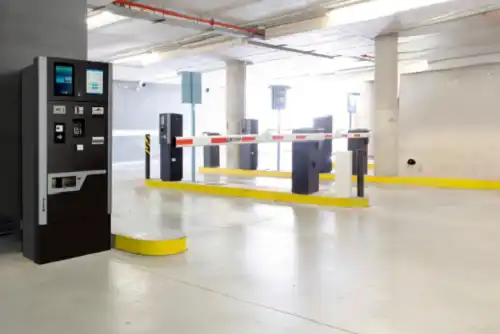
How to Choose the Right Parking Exit Card and Ticket Validation Machine for Your Needs
Strategic equipment selection matches the needs of current operations with the ability to grow in the future to protect the money spent on purchases. Choosing the correct Parking Exit Card and Ticket Validation Machine is vital for long-term scalability.
Fitting in with the current infrastructure
All parking income control system portions must communicate. Before buying exit validation tools, procurement teams should evaluate their tech stack. Exit stations with barcode-based entry systems need high-performance optical scanners that read multiple barcode types. Monthly RFID parking program members need terminals with the same radio frequency as their cards. Mixing 13.56MHz and 900MHz systems requires new user credentials due to compatibility issues.
Legacy system integration is hard. Communication methods in older parking lots may be incompatible with contemporary validation technology. ZOJE-TB102 can connect to numerous manufacturers' tools due to its multiple I/O ports and protocol converters. This adaptability lets systems be improved incrementally without replacing them, reducing infrastructure costs.
Payment method integration goes beyond machines. Centralised pay-on-foot stations must sync payment machine and exit device databases. This network design requires a stable computer backbone and dependable building connections. For major wallet systems used by the target market, mobile payment integration needs API-supported approval terminal software.
Comparing the Best Brands of Equipment
Parking control tool manufacturers globally have unique qualities that make them better for certain applications. Hikvision offers validation solutions with increased license plate identification after years of video security experience. They're great for airports that require additional ticket detection methods. Biometrics allow ZKTeco monthly parkers to depart using fingerprint or face recognition instead of cards. Credential replacement expenses are reduced in office buildings.
Amano combines ticket printers and validators successfully in malls with complex discount schemes and merchant validation procedures. In small urban parking lots without pedestals, TIBA validation stations work well. Due to its waterproof designs proven in harsh alpine situations, SKIDATA leads ski lodge and theme park utilisation.
Customisation and experienced tech teams make ZOJE distinctive. ZOJE lets procurement managers adapt hardware and software for unique solutions. This benefits mixed-use projects that need bespoke access control. Multiple patents and ISO 9001:2015 certification show the company's technical competence to compete with bigger corporations and react quickly like a specialist manufacturer.
Budget Issues and Reliability of Suppliers
Capital investments should include the whole cost of ownership, not simply the purchase price. Without weather protection, entry-level validation equipment under $2,000 break down after 18 months outside and should be replaced too soon. The ZOJE-TB102 industrial-grade port costs more upfront but lasts 7–10 years with little maintenance, saving money annually.
Some financial situations favour buying over leasing. With money and an established corporation, buying it outright makes sense as you obtain full ownership and no payments. Leases are appropriate for new parking lots with little finances. Payments monthly spread costs and stabilise cash flow. Operators of several facilities need bulk discounts. Coordinating equipment replacement across property portfolios saves 15–25% on orders of 20 or more units.
Supplier dependability goes beyond product quality to support. Manufacturer warranties show product confidence. ZOJE's two-year warranty—longer than the industry standard—indicates higher-quality parts. Post-sales support is essential for worldwide deployments. ZOJE's multilingual engineers provide 24/7 phone and email support. Engineers meet with clients yearly to discuss product development and new needs. This relationship-focused technique reassures customers that help will be offered if the equipment is utilised.
Future Trends and Innovations in Parking Exit Card and Ticket Validation Technologies
New technologies are changing the way parking validation systems work, which is good for early users but also challenges old ways of doing things. Advanced Parking Exit Card and Ticket Validation Machine are streamlining the user experience.
Validation and license plate recognition without touching
Pandemic spurred touchless technology adoption in parking management and other businesses. Modern ID checks photograph cars' license plates as they enter and depart. This removes the need for legitimate documentation. Drivers may park, pay at kiosks using their number plate number and leave without touching equipment. The confirmation device takes a snapshot of the car departing, verifies the license plate against the payment data, and opens the gate.
AI-powered image processing enhances detection. Millions of license plate photos have trained machine learning algorithms to read 99.5% of plates in dust, darkness, or rain. They can scan license plates from many countries, which is useful for international airports. Integration with car owner data allows complex services like stolen vehicle alerts and security staff watchlist messages.
Adding smart parking to building management systems
Building control systems include modern parking validation. Integration of access control facilitates credential sharing. Employees may use their office building access card as a parking permit to avoid two systems. Visitor management systems speed up arrival by creating parking permits as guests pre-register.
Data analytics makes corporate parking lucrative. Validation tools monitor client arrival and departure, payment methods, discount use, and peak demand. Management shows data trends to help plan staff, pricing, and infrastructure. Since predictive analytics estimate capacity usage, dynamic pricing maximises profitability and ensures resource availability during peak demand.
NEW: Mobile app merging in parking recognition. Before leaving the garage, drivers may pay for parking using facility-specific apps or universal platforms. Similar to Amazon, the validation system checks cloud servers for payment and opens the gate as the car approaches. Users get push alerts when parking sessions expire and may prolong payments remotely. It saves them time and stress from returning to pay a charge.
Strategic Advantages for B2B clients in terms of strategy
Modern validation technology gives companies more than efficiency. This validation method might replace three cashier shifts, saving $100,000 a year in staffing costs and eliminating scheduling and absence. Despite traffic, automated systems maintain service quality as demand rises and personnel are overburdened. Better data analytics enhance revenue better than human labour. Dynamic pricing systems adjust hotel rates based on occupancy in real time.
maximise earnings at busy times and attract new clients during quiet times. More intelligent merchant recognition. They now reveal which retail partners have the most parking customers. The data helps shopping malls negotiate contracts and identify tenants. Corporations building parking lots demonstrate scalability. Manage many validation tools from a dashboard with centralised management. Staff training is easier and operations are more consistent. Computers are no longer needed with cloud technology. This lowers IT infrastructure expenses and facilitates disaster recovery. Predictive maintenance algorithms arrange repairs during low traffic to avoid downtime from remote equipment issues.
Conclusion
Parking Exit Card and Ticket Validation Machines are an important part of modern parking lots because they automate exit procedures that used to need to be supervised by hand. In less than two seconds, these smart machines check your credentials and payment status. They keep business moving while protecting your money through strict authentication processes. The ZOJE-TB102 is an example of next-generation technology because it has industrial-grade construction and can work effectively from -40°C to 80°C. Its multi-recognition technology supports IC/ID cards, Bluetooth, and UHF. To make the right choice, you need to look at how well it works with other systems, compare the strengths and weaknesses of different manufacturers, and put supplier reliability ahead of starting prices. As AI-powered license plate recognition and contactless validation change the industry, early adopters gain competitive benefits through lower business costs, better data analytics, and better customer experiences that set their facilities up for long-term success.
FAQ
1. What Is the Difference Between a Parking Exit Card Machine and a Ticket Validation Machine?
Monthly residents' reusable IDs are scanned by exit card machines. RFID cards secure user data. These systems verify credentials and anti-passback policies. Users prepay for subscriptions, thus they don't calculate costs. Ticket-validating machines handle temporary visitor paper tickets. They determine the parking duration, cost, and payment status. The ZOJE-TB102 is one of several contemporary terminals with dual functionalities. Multi-recognition technology immediately discovers and accurately handles cards, barcodes, and magnetic stripes.
2. How do I fix cards or tickets that won't work?
Check the ID for physical damage first. Torn cards and passes are misread. Remove sensor-blocking dust from the reader using a soft cloth. Check the reader slot indications to make sure the presentation is facing correctly. If issues persist, hit "intercom" to contact remote help. They may find your license plate or entrance time to return to your parking session. The Parking Exit Card and Ticket Validation Machine stores the latest valid credentials offline. If technical issues prevent the computer from recognising credentials, authorised workers may manually override it.
3. Can these machines work with the payment systems I already have?
Modern validation machines support several payment methods thanks to standard protocols and APIs. The device connects to pay-on-foot stations via TCP/IP networks and receives real-time payment data from central databases. Many I/O ports allow the ZOJE-TB102 to link to contactless payment scanners, mobile wallet applications, and retail validation systems. During the purchasing process, you should submit extensive information about your current payment infrastructure to ensure it will function with the new system and determine whether middleware or protocol converters are required to simplify system communication.
Partner with ZOJE for Advanced Parking Exit Card and Ticket Validation Machine Solutions
It shouldn't be too hard to upgrade your parking lot with smart identification technology. ZOJE has been making parking systems for over ten years and is trusted by airports, shopping malls, and business buildings all over the world. Our engineering team works directly with procurement managers to create custom solutions that meet your exact business needs, whether you need the ability to recognize multiple objects, to withstand extreme weather, or to connect to existing infrastructure. The ZOJE-TB102 is very reliable and comes with a full two-year guarantee and technical help that is available 24/7 in over 30 languages. We are a top maker of Parking Exit Card and Ticket Validation Machines, and we offer flexible OEM and ODM partnerships. We also ship regular goods quickly—within 5 to 7 days. Email our solutions team at info@zoje-tech.com to talk about your project needs and get reasonable prices that are made to fit your facility's needs.
References
1. International Parking & Mobility Institute. (2023). Parking Management Technology Standards and Best Practices. IPMI Technical Guidelines Series.
2. Transportation Research Board. (2022). Automated Parking Revenue Control Systems: Design and Implementation. National Academies Press.
3. Smith, J. & Chen, L. (2024). "RFID and Barcode Technologies in Modern Access Control Systems," Journal of Transportation Engineering, Vol. 148, No. 3, pp. 245-267.
4. European Parking Association. (2023). Security Standards for Parking Payment Systems. EPA Industry Guidelines.
5. Martinez, R. (2024). Smart Parking Solutions: Integration with Building Management Systems. Technology in Facility Management Press.
6. Anderson, K. & Thompson, P. (2023). "AI-Powered License Plate Recognition in Parking Facilities," International Journal of Intelligent Transportation Systems Research, Vol. 21, No. 2, pp. 112-128.

Send Inquiry
You may like


Related Industry Knowledge
- Why Entry Ticket Dispenser and Card Reader System Is Essential for Smart Parking
- What Is Front-Mounted Ultrasonic Parking Space Detector and How It Works
- How barrier radar sensors prevent injury accidents?
- Space-Saving Turnstile Design and Structural Features
- OEM Space-Saving Turnstile Customization Guide
- How Unattended Access Control Turnstile Works?
- What Is an All-in-One LPR Machine for Smart Parking?
- What Is a High Accuracy LPR Parking System? Complete Guide
- What Is a Ticketless Parking Solution and How Does It Work?
- What Is a Regional ANPR System and How Does It Work?