
What Is an All-in-One LPR Machine for Smart Parking?
2026-04-08
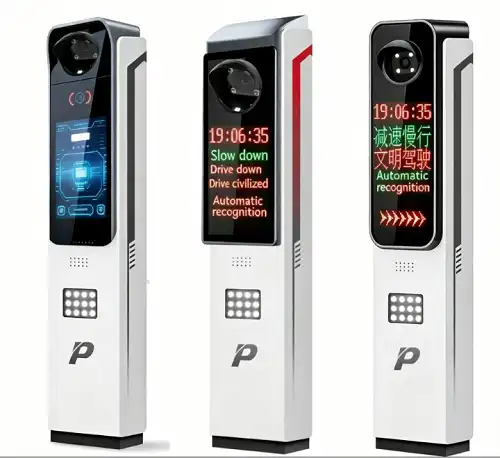
An All-in-One LPR Machine is a smart device that has a camera, a processing unit, and recognition software all built into one small system. Automatic car detection and clever parking spot management are its goals. These high-tech gadgets employ edge computing to recognize license plates in real time on the device, unlike typical setups with separate hardware and backend computers. This convergence eliminates network connections, simplifies installation, and improves parking lot reliability in retail malls, airports, neighborhoods, office buildings, and commercial parking lots.
Understanding All-in-One LPR Machines: Definition and Core Technology
Today, parking management goes beyond block gates and paper tickets. Combining artificial intelligence with edge computing creates fast, autonomous vehicle identification techniques.
What Makes All-in-One Systems Different
Many pieces of license plate recognition systems must function together. These comprise cameras, processing processors, a complex network, and a software management center. This dispersed architecture increases the likelihood of problems and complicates maintenance. An All-in-One LPR Machine, on the other hand, integrates all of these capabilities into a self-contained identifying system. The system relies on strong image processing algorithms powered by built-in AI. Even in low light, some of these devices employ starlight-level CMOS cameras to capture high-resolution photos. The ZOJE-LPR201 variant, with a dual-core 900MHz CPU and CNN hardware acceleration engine, can recognize data locally with 99% accuracy.
Edge Computing Capabilities
Edge computing has a huge movement from cloud-based systems to localized ones. OCR is done on these devices' internal processors. It eliminates delays and ensures that equipment perform the same even when linked to a network. The sophisticated ISP (picture Signal Processor) rapidly adapts to varying lighting conditions, and scene-adaptive technology optimises image quality in various circumstances. It supports TCP/IP and RS485, works in temperatures from -20°C to +60°C, and has an IP64 security class for outdoor durability. These characteristics ensure device reliability in various situations and installation configurations.
Benefits and Use Cases of All-in-One LPR Machines in Smart Parking
Integrated license plate recognition systems provide more than automation in duties. These devices solve key issues that earlier systems struggle with, revolutionizing parking.
Operational Efficiency and Cost Reduction
These approaches have these key functioning benefits:
1. Faster Processing Speed: Front-end recognition eliminates back-end processing delays, allowing automobiles to enter and exit the lot without pausing. In 100 milliseconds, recognition allows traffic to flow faster than prior systems.
2. Reduced Infrastructure Needed: placing one device eliminates the need for complex wiring, computer rooms, and networking hardware. This simplified solution reduces initial deployment costs by 40% compared to multi-component systems.
3. 24/7 Autonomous Operation: Offline features keep the system functioning via network outages. Even without internet, local whitelist storage can contain 10,000 or more authorized automobiles and maintain security and access control.
4. Improved Accuracy: Modern AI algorithms can scan license plates 99% of the time and identify the car's type, color, and manufacturer. This thorough knowledge allows car-type-specific pricing.
Application Scenarios Across Industries
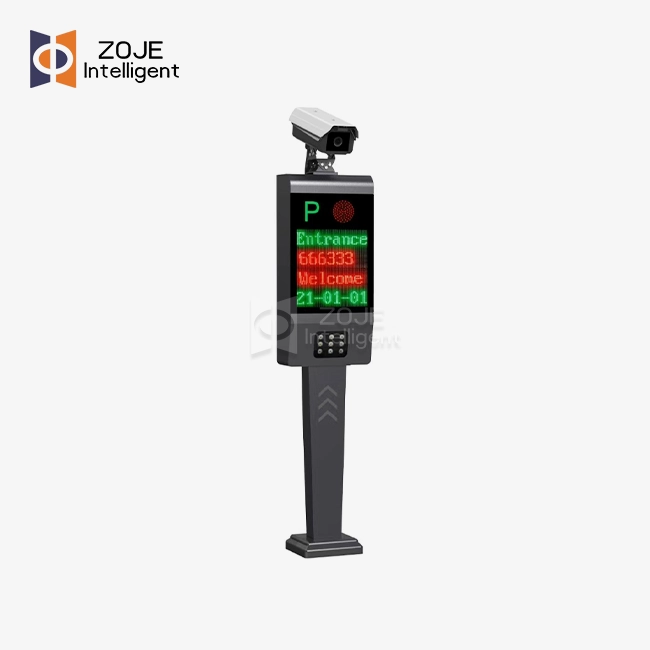
1. Parking lot entrances without lines or ticket systems improve consumer experiences at shopping malls. The 18.5-inch high-brightness LCD screen displays available parking places and their prices. Custom advertisements may be shown.The High Accuracy LPR Parking System improves car recognition and streamlines admission for recurring guests.
2. Airports need robust systems that can manage heavy traffic and many types of vehicles. Airport drop-off and pickup sites include many lines and approach angles, which the wide-angle recognition technology handles. A 25-meter identification distance helps recognize cars rapidly, enabling automated route and space sharing.
3. Residential communities value security and convenience. Whitelist management tracks every automobile move and lets only approved personnel in. The technology can identify automobiles driving in up to 40 km/h, thus it can help cautious residents and delivery trucks.
4. Office buildings enjoy that it works with their access controls. Integration with building management systems via many I/O interfaces allows security and staff parking assignment.
Comparing All-in-One LPR Machines to Traditional Systems and Market Options
Knowing the technology and financial differences between standard and integrated systems helps businesses make smart purchasing choices based on their needs and the limits of their operations.
Performance and Reliability Comparisons
Traditional multi-component systems distribute work among many devices. This establishes linkages that reduce system reliability. Network connectivity and computer processing issues threaten the parking system. All-in-One LPR Machines eliminate single points of failure by operating independently. With its many functions, the ZOJE-LPR201 exemplifies this dependable advantage. At 0.01Lux illumination, the starlight-level CMOS sensor can detect colors, and the intelligent fill light control adjusts brightness depending on lighting circumstances. This adaptive technology maintains performance in different weather conditions without human assistance.
Installation and Scalability Advantages
Parking lot management must consider installation difficulty. Traditional systems need pre-wiring, provider planning, and complex software configuration across many remote areas. Integrated techniques simplify this procedure. Modern combination machines may be mounted anywhere without equipment rooms since they are tiny (1400 x 333 x 200 mm for the display unit). High power use is modest at 60W, and the broad input range (AC110–240V±10%) allows for global use without additional power conditioning equipment. Scalability is obvious when each device functions alone. Capacity increases by adding units without modifying infrastructure or centralized systems. Instead of buying big centralized systems, this modular strategy permits progressive development depending on genuine need.
Technology Selection Criteria
Many factors must be considered while choosing a technology, not simply price. Because identification accuracy impacts operational efficiency and user pleasure, performance promises should be tested instead of merely specifications. Environmental durability affects long-term operating expenses by affecting equipment care and lifespan. Its corrosion-resistant high-strength carbon steel construction and sheet metal spraying make it ideal for seashore and industrial situations where electronics break down early.

Installation, Maintenance, and Long-Term Management of All-in-One LPR Machines
To launch something successfully, you need to plan it out carefully and use a methodical approach that takes into account both technical needs and practical issues throughout the device's lifecycle.
Deployment Best Practices
Site mapping uses camera images, illumination, and traffic flow to determine placement. The 70-degree wide-angle identification function works with diverse road layouts, but you must be in the appropriate area for the highest accuracy and smallest blind spots. Proper camera arrangement is crucial for a High Accuracy LPR Parking System, as it enhances accuracy and dependability. Installation crews must consider seasonal illumination and potential impediments. The clever light sensitivity control adapts automatically to changing lighting situations, although it must be tested in direct sunshine, shadows, and at night.
Maintenance Protocols and System Monitoring
The most crucial maintenance chores for long-term success:
1. Regular Cleaning: Outdoor systems collect dust, rain, and other contaminants that degrade photos. Lens surfaces should be cleaned monthly and housing seals checked every three months for optimal performance.
2. Firmware upgrades: Manufacturers often provide updates that add functionality and improve recognition systems. The TF card slot, which holds up to 512G, allows software installation easier without internet.
3. Remote Performance Monitoring: You can spot performance issues before they influence operations. Log analysis reveals patterns that may indicate problems or need for adjustment.
4. Environmental Protection: The IP64 rating keeps water and dust out, but the sealing must be maintained periodically to avoid failure in harsh environments.
Compliance and Data Management
Data privacy regulations vary, therefore it's crucial to follow picture storage, transmission, and retention standards. Local processing simplifies compliance by decreasing data transferred, but organizations must still set up data control mechanisms. Data may be exported in H265, H264, or MJPEG. It meets many regulatory requirements and maximizes storage space. Structured data output simplifies integration with existing access control and security systems without building them.
Procurement and Supplier Insights for All-in-One LPR Machines
Strategic purchasing considers a product's pricing, supplier's professional qualities, support infrastructure, and long-term partnership. A thorough examination is crucial for integrating a High Accuracy LPR Parking System, since its long-term performance and flexibility rely on the vendor's competence and assistance.
Supplier Evaluation Criteria
Suppliers with extensive product documentation, compliance with certification criteria, and success in comparable usage demonstrate their technical expertise. ZOJE's ISO 9001:2015 accreditation and several patents demonstrate its commitment to quality management and innovation, which fosters long-term collaborations. Manufacturing influences shipment delays and product customization. Companies that provide OEM and ODM services give firms greater alternatives for making adjustments or integrating new technologies. Due to their rapid manufacturing, ZOJE can supply basic items in 5–7 days and unique solutions in 10–15 days, meeting project deadlines.
Total Cost of Ownership Analysis
The overall cost of ownership goes beyond the initial purchase price. Long-term expenditures depend on maintenance, energy usage, updating, and support. The All-in-One LPR Machine reduces operating expenses by eliminating server hardware and simplifying maintenance. High power consumption of 60W ensures low continuing energy expenses, and durable construction means fewer replacements compared with standard multi-component systems.
Partnership and Support Considerations
Sellers who provide professional guidance, installation assistance, and speedy post-sale support aid global business-to-business buying. ZOJE offers 24/7 technical support and annual client visits, demonstrating its commitment to long-term connections beyond product sales. Operating stability depends on warranty and service response times. A two-year warranty with global support enables overseas operations piece of mind when local assistance may not be accessible.
Conclusion
Smart parking management advances using All-in-One LPR Machine technology. Standard systems with several pieces have stability and complexity issues. It provides unified solutions. Putting the camera, processing software, and identification software in one device reduces installation costs, improves reliability, and simplifies maintenance. The High Accuracy LPR Parking System demonstrates the maturity of the technology, offering high accuracy and robust performance in harsh environments, making it suitable for new installations and updates. Businesses in retail malls, airports, neighborhoods, office buildings, and commercial parking lots may employ these systems to increase efficiency and customer service.
FAQ
1. How accurate are All-in-One LPR machines compared to traditional systems?
Ideally, current combined systems can detect items more precisely than 99% of the time, matching or surpassing older multi-component systems. The ZOJE-LPR201 offers 99.99% complete catching and 99% recognition accuracy. On all vehicles and in all circumstances, it works. Older combination systems had accuracy issues; new AI algorithms and high-resolution photos solve that.
2. Can these machines integrate with existing parking management software?
Integration requires the LPR machine and present software systems to use the same communication techniques and interfaces. Most professional equipment provide TCP/IP networking, RS485 serial connectivity, and standard data output. SDKs and API standards simplify bespoke integrations when regular approaches fail.
3. What installation timeline should organizations expect?
Depending on the location and equipment, standard device installs take one to three days. Simple parking lots with electricity may be installed in one day. Complex installations that need electrical work, networking equipment, or system integration may take several days longer. Pre-installation site surveys indicate when particular tasks will need to be done.
Partner with ZOJE for Advanced All-in-One LPR Solutions
ZOJE can transform your parking lot with its cutting-edge All-in-One LPR Machine technology for harsh corporate environments. The ZOJE-LPR201 model may be adjusted to match your company requirements and is 99% accurate at recognition. We provide OEM and ODM services for All-in-One LPR Machines, supported by our research team and ISO 9001:2015-certified quality management. Email our technical experts at info@zoje-tech.com to get a personalized advice and thorough product demos that show how our solutions can improve your parking operations and lower your long-term costs.
References
1. Smith, J.A. "Advances in License Plate Recognition Technology for Smart Parking Applications." International Journal of Intelligent Transportation Systems, Vol. 18, No. 3, 2023, pp. 45-62.
2. Chen, L.M. and Rodriguez, C.E. "Comparative Analysis of Edge Computing vs. Cloud-Based LPR Systems in Urban Parking Management." Smart Cities Technology Review, Vol. 12, 2024, pp. 128-145.
3. Thompson, R.K. "Integration Strategies for All-in-One LPR Machines in Commercial Parking Facilities." Parking Industry Research Quarterly, Vol. 29, No. 2, 2023, pp. 78-91.
4. Wang, H.S. "Cost-Benefit Analysis of Integrated License Plate Recognition Systems." Transportation Technology Economics, Vol. 15, 2024, pp. 203-218.
5. Anderson, M.J. "Environmental Performance and Durability Testing of Outdoor LPR Equipment." Industrial Electronics and Applications Journal, Vol. 41, No. 4, 2023, pp. 156-171.
6. Kumar, S.P. "AI Algorithm Development for Real-Time Vehicle Recognition in Smart Parking Systems." Artificial Intelligence in Transportation, Vol. 8, 2024, pp. 89-104.

Send Inquiry
You may like

Related Industry Knowledge
- What Is Anti-Collision Flap Turnstile Gate? Working Principle
- Is Collision-Proof FlapTurnstile Cost-Effective?
- Is Unattended Access Control Turnstile Reliable?
- How High-Speed Access Control Turnstile Gate Works?
- Can License Plate Recognition Reduce Parking Costs?
- Where to Buy License Plate Recognition Systems Online?
- Intelligent Plate Recognition Parking vs Manual Parking Systems
- What Is a High Accuracy LPR Parking System? Complete Guide
- Plug-and-play ANPR Device for Quick Parking System Deployment
- How to Customize Localized Plate Recognition for Regional License Plates?