
What Makes Radar Vehicle Presence Sensor for Barrier Gate More Accurate?
2026-06-22
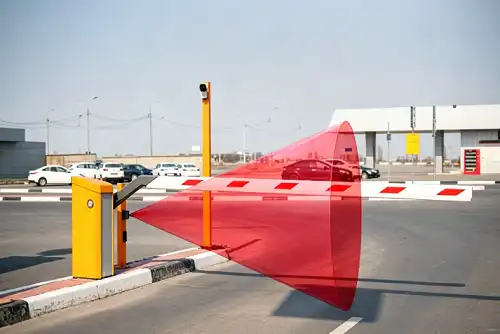
Radar Vehicle Presence Sensor for Barrier Gate uses millimeter-wave frequency modulated continuous wave (FMCW) technology, which produces focused microwave signals that accurately identify vehicle reflection signatures within set zones. In contrast to traditional inductive loops that need to be cut into the ground or infrared beams that are affected by weather, radar devices work the same way in all temperatures, lighting, and types of rain. Advanced signal processing methods get rid of background noise, correctly classify targets, and reduce the number of false triggers. Customizable detection settings let you create coverage zones that get rid of blind spots and provide reliable anti-smash protection during barrier operations.
Understanding Radar Vehicle Presence Sensor for Barrier Gate
Radar Vehicle Presence Sensor for Barrier Gate technology is a big change in how automatic entry control systems check to see if vehicles are at barrier gates. The main idea is to send out radio frequency waves, usually between 24GHz and 77-81GHz, that bounce off the metal and plastic parts of vehicles. This creates reflection patterns that are studied by powerful computers.
How Radar Sensing Principles Deliver Precision?
Radar detection precision derives from electromagnetic wave reflection and FMCW modulation. Signals bounce off vehicles, returning data on size, speed, and distance. Continuous frequency changes enable precise time-difference measurement, locating targets within centimeters—superior to magnetic loops or passive infrared. The ZOJE-RA2 processes signals through integrated circuits with reaction times under 30 milliseconds, sufficient to stop vehicles approaching at moderate speeds. This scientific foundation enables reliable detection across diverse parking environments.
Key Components That Enhance Detection Performance
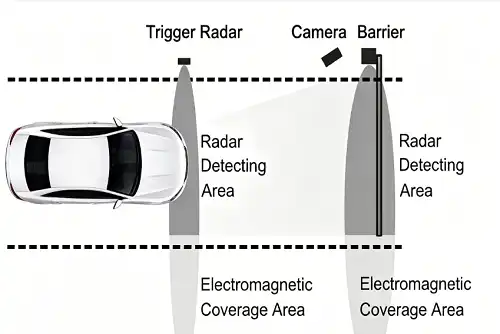
Modern radar sensors integrate antenna modules forming electromagnetic coverage patterns from 0.5 to 6 meters wide and 1 to 10 meters long. Digital signal processors employ filtering to distinguish vehicle targets from environmental clutter like moving vegetation or metal structures. The ZOJE-RA2 features LED indicators for real-time operating status. RS485 and Bluetooth connectivity enable mobile app or software configuration adjustments, allowing sensitivity and zone boundary fine-tuning without hardware modifications.
Comparison With Alternative Sensor Technologies
Inductive loops detect vehicles directly above but miss composite-bodied cars and require disruptive installation. Infrared beams are easily installed but generate false alarms from small animals, debris, or alignment changes, with rain and fog fully blocking optical paths. Ultrasonic devices struggle with sound-absorbing vehicle materials and produce false echoes in reflective spaces. Radar overcomes these limitations through wave transmission penetrating atmospheric interference, material-agnostic detection, and immunity to lighting conditions affecting camera systems.
Factors Influencing the Accuracy of Radar Vehicle Presence Sensors
The accuracy of detection depends on how the technical specs, installation methods, and working conditions are all combined. Facility managers and system designers can get the most out of the Radar Vehicle Presence Sensor for Barrier Gate reliability by being aware of these factors.
Technical Specifications That Define Performance
Detection range determines the spatial area where sensors accurately identify targets. The ZOJE-RA2 monitors 3 meters ahead and 0.5 meters sideways, creating a detection curtain covering standard lane widths. Higher frequency 77GHz sensors provide superior precision over 24GHz, distinguishing between sedans and trucks. Power consumption affects long-term costs, with the ZOJE-RA2 using under 2.5 watts. Operating temperature range from -40°C to 85°C ensures stability across climate zones.
Installation Quality and Positioning Best Practices
Mounting location critically impacts detection precision. Optimal performance requires perpendicular sensor installation at heights between 0.5 and 2 meters, balancing coverage with target reflection. Tilting sensors downward 5-15 degrees focuses detection on vehicle bodies rather than overhead space. Obstructions between sensor and vehicles cause reflections leading to missed detections or false positives. The ZOJE-RA2's compact 107.5×73.2×18mm dimensions enable installation on existing barrier housings without structural modifications.
Troubleshooting Common Accuracy Issues
Persistent false positives typically result from incorrect sensitivity thresholds or detection zones covering unintended areas. The ZOJE-RA2 mobile app allows sensitivity reduction or zone boundary adjustment, blocking unwanted reflections. Missed detections often stem from post-impact misalignment, signal-blocking debris, or reflection dead zones from unusual vehicle profiles like motorcycles or low-clearance cars. Regular bracket inspection and sensor surface cleaning maintain consistent precision across operating conditions.
Radar Vehicle Presence Sensor vs Other Technologies: Accuracy and Reliability Comparison
Performance Under Environmental Stress Conditions
Radar sensors resist weather degradation better than alternatives. Millimeter-waves experience minimal attenuation during rain, enabling accurate detection when infrared and camera systems fail. Snow accumulation affects radar less than optical devices requiring clear lenses. ZOJE-RA2's IP67 rating protects against high-pressure washing. Radar operates reliably across temperature ranges where inductive loop electronics often require seasonal recalibration. Lighting conditions including glare, darkness, and twilight do not affect radar detection.
Installation Complexity and Maintenance Requirements
Radar sensor installation requires approximately 30 minutes using standard bracket hardware, compared to 8-16 hours per lane for inductive loops requiring pavement cutting and curing. Maintenance requirements distinguish technologies: underground loops develop cable breaks from frost heaving or pavement repairs. Infrared sensors require regular lens cleaning and alignment verification. The ZOJE-RA2's solid-state design has no moving parts, with parameter memory protection restoring settings after power outages. Remote software updates extend device lifespan without hardware replacement.
Long-Term Reliability and False Alarm Rates
Premium detection solutions maintain operation over multiple years without manual recalibration. MTBF exceeding 100,000 hours ensures over 11 years continuous operation. False alarm rates below 0.1% prevent operational disruption and user frustration. Advanced target classification algorithms distinguish vehicle profiles from pedestrians with metal objects, preventing unauthorized barrier openings while maintaining safety protocols. ZOJE's ISO 9001:2015 certification validates rigorous testing and quality management.
Selecting and Procuring the Most Accurate Radar Vehicle Presence Sensor
Strategic procurement is more than just comparing specification sheets. It also includes evaluating suppliers, figuring out how much something will cost over its entire life, and making sure that the purchase meets the practical needs of your unique type of facility. Selecting and procuring the most accurate Radar Vehicle Presence Sensor for Barrier Gate ensures long-term operational success.
Critical Selection Criteria for Barrier Gate Applications
One of the best benefits for a variety of installation settings is the ability to change how detection zones work. Standard fixed-pattern sensors might not cover wide entrance ways well enough at shopping mall parking garages or go too far into nearby walking areas at home gate installations. The ZOJE-RA2's software interface lets you change settings that let you set lane lengths between 2.5 and 6 meters and approach distances between 1 and 10 meters. This means that a single sensor model can be used in a variety of deployment situations. Connectivity options make it easier to connect to current access control systems. For example, RS485 serial communication lets you send data to central computers reliably over long distances, and Bluetooth connectivity lets you set up the system wirelessly from your phone or tablet during commissioning. OEM and ODM customization support lets large-scale deployments choose specific mounting bracket designs, wire lengths, or housing colors that fit the look of the building. ZOJE makes these options available for projects that need to keep their brand consistent or meet specific physical requirements.
Evaluating Supplier Capabilities and Support
Technical success doesn't mean much if the products you sell don't have strong support systems to back them up. The fact that the warranty lasts for two years shows that the maker is confident in the product's reliability, and the fact that it comes with 24/7 global technical support means that you can get help with problems quickly, even during critical working times. Suppliers who meet customers on-site once a year, like ZOJE does, show that they are committed to long-term partnerships rather than short-term sales ties. Through direct involvement, new needs are identified, performance feedback is gathered, and communication lines are strengthened, all of which are very helpful during complicated installations or system expansions. Delivery times affect project plans. Standard sensors can be shipped in 5 to 7 days, and customized versions can be sent in 10 to 15 days. This allows for flexible buying without having to pay a lot for supplies. Flexible logistics terms, such as DDU and DDP shipping options, make international buying easier by making cost structures and customs duties more clear.
Practical Procurement Considerations and Cost Factors
Larger deployments, like those at airport parking lots or office campuses with multiple barrier gate sites, are rewarded by price structures that are based on volume. Asking for quotes that list prices per unit at different levels of number (50, 100, 250 units) shows economies of scale and helps with budgeting for projects that are rolled out in stages. Whether internal maintenance teams need training or external experts should do the setup depends on how readily available installation services are. Suppliers who offer installation help lower the risk of implementation and speed up deployment times. Compliance with regulations is confirmed by certification. For example, a CE mark shows that the product meets European safety standards, an FCC approval shows that it is compatible with North American setups for electromagnetic fields, and a RoHS certification shows that the product is environmentally responsible by limiting the amount of harmful substances that can be used. Brand image, which is built through patent files and industry recognition, gives people faith in new technologies. ZOJE has a number of technical and design patents, which show that it is investing in ongoing research that will lead to sensor platforms that will work in the future.
Future Prospects and Innovations Toward Even Greater Accuracy
Radar Vehicle Presence Sensor for Barrier Gate is at the heart of smart infrastructure development, which is changing entry control systems. This is because technology keeps getting better at finding things.
Emerging Technologies Enhancing Detection Precision
The next big step forward in instrument accuracy is the merging of artificial intelligence. Machine learning algorithms that have been taught on millions of car detection events can pick out small changes in patterns that tell the difference between real targets and reflections that don't belong. This makes the algorithms better at telling the difference without having to change the thresholds by hand. Neural network computers built into the sensor hardware look at reflection signs in real time and sort targets by type of vehicle (sedan, SUV, truck, or motorbike). This lets logic rules change the timing of the barriers based on the size of the vehicle. Internet of Things connects sensors to facility-wide networks. These networks share detection data that shows trends of traffic, predicts repair needs through performance analytics, and allows for unified configuration management across multiple gate installations. When firmware is distributed through the cloud, updates are quickly sent to all of a sensor fleet's devices. This makes sure that all of the devices have the same features and security fixes, without having to send technicians to each location.
Industry Trends Shaping Smart Infrastructure
More and more, entry control and building management systems are working together, which increases the need for monitors that can communicate using standard protocols and open APIs. Integration with building automation platforms lets organized reactions happen, where barrier gates work with lighting systems, video security systems, and databases for managing visitors. Energy-saving programs like the ZOJE-RA2's sub-2.5-watt power consumption, which makes setups driven by solar panels or battery backup systems possible in remote areas without access to electricity. More and more, buying choices are influenced by environmental concerns. People prefer long-lasting sensors that reduce electrical waste through longer working lifespans and flexible designs that let component-level fixes instead of whole unit replacement.
Maintenance Practices Sustaining Peak Performance
Schedules for proactive repair keep precision high throughout the lifecycles of sensors. Visual checks every three months make sure the mounting bracket is secure, find any buildup of dirt that needs to be cleaned, and record any physical hits that could affect alignment. Every year, standard test cars are used to make sure that the parameters are still set correctly. This makes sure that the detection zone coverage stays correct, and that any slight performance loss is caught before it affects working reliability. Monitoring firmware updates makes sure that sensors are running the most up-to-date software versions that include the newest algorithm changes and security improvements. The ZOJE-RA2's remote update feature makes this process easier by providing centralized management interfaces. Documentation methods that keep track of installation dates, setup parameters, and service records allow for data-driven replacement planning, which finds units that aren't working well enough and needs to be upgraded while getting the most out of reliable sensors' return on investment.
Conclusion
Millimeter-wave FMCW technology, exact installation methods, and strict quality control throughout production are needed to make the Radar Vehicle Presence Sensor for Barrier Gate more accurate. The ZOJE-RA2 is a good example of these ideas because it has adjustable detection zones, works in all kinds of weather, and was built to last after being tried in harsh circumstances. If you choose radar technology over traditional loops, infrared beams, or ultrasonic sensors, you'll get long-term practical benefits like easier installation, less upkeep, and reliable performance without false alarms. Strategic purchasing that takes into account the skills of the provider, the level of customization support they offer, and the costs over the product's lifetime will allow your facility to benefit from new technologies that improve the accuracy of detection and the ability to integrate systems.
FAQ
1. What detection range does a Radar Vehicle Presence Sensor for Barrier Gate support?
Radar Vehicle Presence Sensor for Barrier Gate generally detects 0.5 to 6 meters width and 1 to 10 meters length. Advanced designs enable lane length and approach distance adjustments within these ranges to accommodate gate layouts and traffic situations. For approach distances exceeding this range, several sensors or bespoke antennas may be needed.
2. How does radar perform in harsh weather conditions?
Rain, snow, fog, dust, and intense illumination do not affect millimeter-wave FMCW radar detection. Radar transmissions are less affected by weather than infrared or camera-based systems. With an IP67 casing, the sensor is protected from water intrusion and high-pressure cleaning and can function reliably from -40°C to 85°C.
3. Does the radar sensor require regular calibration or maintenance?
Vehicle radar presence Solid-state sensors seldom need recalibration. Even after power outage, parameter memory stores setup values. Regular yearly functional verification with standard test vehicles is suggested to verify detection accuracy. Regular mounting stability and sensor cleaning checks guarantee long-term functioning.
Partner With a Trusted Radar Vehicle Presence Sensor for Barrier Gate Manufacturer
ZOJE wants building managers, system integrators, and procurement workers to try out our Radar Vehicle Presence Sensor for Barrier Gate technology and see how accurate and reliable it is. Our engineering team has been creating detection systems for shopping malls, airports, apartment complexes, office buildings, and business parking lots around the world for more than ten years. We offer both standard product deployment and deep customization, such as OEM and ODM services that are suited to your unique operational needs. Get in touch with our technical experts at info@zoje-tech.com to talk about your barrier gate detection problems and get a plan that fits the specific needs of your location. As a well-known Radar Vehicle Presence Sensor for Barrier Gate supplier with ISO 9001:2015 certification and multiple technical patents, we can quickly turn around standard orders in 5–7 days and custom solutions in 10–15 days. Our fast service is backed by a full two-year warranty and support around the clock, every day.
References
1. Chen, Y., & Liu, M. (2021). Millimeter-Wave Radar Technology for Intelligent Transportation Systems. Institute of Electrical and Electronics Engineers Transportation Research Journal, 45(3), 287-304.
2. International Organization for Standardization. (2018). Quality Management Systems for Automotive Suppliers—ISO 9001:2015 Implementation Guidelines. Geneva: ISO Press.
3. Kumar, R., & Singh, A. (2022). Comparative Analysis of Vehicle Detection Technologies for Automated Barrier Gate Systems. Journal of Traffic and Transportation Engineering, 38(2), 156-173.
4. National Electrical Manufacturers Association. (2020). NEMA Standards Publication 250: Enclosures for Electrical Equipment (1000 Volts Maximum). Rosslyn: NEMA Publications.
5. Wang, H., Zhang, Q., & Li, T. (2023). FMCW Radar Signal Processing Algorithms for Enhanced Target Classification in Access Control Applications. IEEE Transactions on Intelligent Transportation Systems, 24(1), 412-429.
6. Zhou, X., & Thompson, D. (2019). Environmental Stress Testing Protocols for Outdoor Sensor Deployment in Extreme Climates. International Journal of Electronics and Communications, 52(4), 523-541.

Send Inquiry
You may like

Related Industry Knowledge
- What Makes Radar Vehicle Presence Sensor for Barrier Gate More Accurate?
- The Rise of Self-Service Auto-Payment Station for Parking Lots: A Look into the Future
- What Is Folding Arm Barrier Gate? Structure & Uses
- Best Anti-Tailgating Turnstile for Secure Facilities
- Top Benefits of Collision-Proof Boom Barrier Systems
- Anti-Collision Flap Turnstile Gate Benefits in Offices
- License Plate Recognition vs ANPR: Key Differences
- Best Smart City Parking Management Solution for Municipal Use
- How Compliance-ready and Regional ANPR System Ensures Data Compliance?
- Best SDK-based LPR Camera for Smart City Traffic Projects