
Guide to Choosing ANPR for Charge Parking Lots That Boost ROI
2026-04-16
If you choose the right automatic license plate recognition system, parking lots that charge fees can go from losing money to making money. ANPR for charge Parking Lots is a specialized technology that combines high-resolution images, optical character recognition algorithms, and revenue management software to automatically identify vehicles and bill them without using tickets or people having to do it by hand. This all-around plan fixes some of the biggest problems, like losing money on tickets, having trouble running the payment booths, and traffic jams during rush hours. When properly chosen and set up, these systems give measurable returns by speeding up throughput, getting rid of the need for consumables, and making it easier to enforce parking rules in US shopping malls, airports, neighborhoods, office parks, and commercial parking lots.
Understanding ANPR Technology for Charge Parking Lots
To make parking technology work, you need to know how current recognition systems work in places where making money is important. Automated plate recognition for paid facilities is more complicated than basic entry control. It needs to work with complex tariff structures, payment gateways, and enforcement processes while keeping accuracy rates above 99% no matter the setting.
Core System Architecture and Components
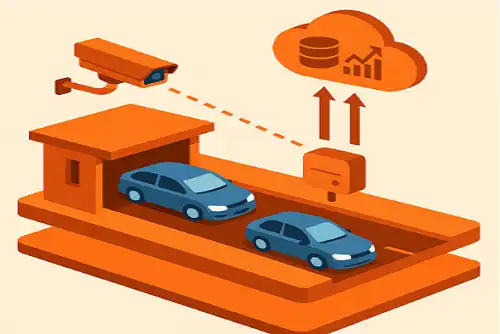
Modern ANPR for charge Parking Lots systems integrate hardware, AI recognition, and management layers. Infrared cameras capture clear images in all conditions, while deep learning enables fast plate identification. Data flows to billing and control systems for instant processing. Centralized architectures like ZOJE’s support scalable, multi-site management.
Key Performance Indicators That Drive ROI
Accuracy, speed, and uptime directly impact profitability. High recognition rates reduce revenue loss and disputes, while millisecond processing ensures smooth traffic flow. Reliable uptime supports continuous operations. Data logging enables analytics for pricing optimization, usage trends, and improved decision-making across facilities.
Privacy Compliance and Data Security Considerations
Privacy laws must be strictly followed when using automatic car recognition systems in business settings. Following GDPR rules isn't just for businesses in Europe; more and more privacy-conscious customers expect data safety everywhere. Reliable systems have privacy filtering that blurs out parts of images that aren't needed, AES-256 encryption for sending and storing data, and policies that let you choose how long records should be kept before they are deleted automatically after payment cycles end. These safety measures protect both facility owners and users, and they keep the data accurate so that disputes can be settled and finances can be checked.
Comparing ANPR with Alternative Parking Payment Technologies
Before making an investment choice, it's important to know how plate recognition stacks up against other methods. Because each technology is different, its pros and cons will depend on the needs of the business and the available funds.
RFID and Barcode Systems: Capability Gaps
RFID and barcode systems require physical tags or tickets, increasing costs and maintenance. They face issues with loss, damage, and scalability. ANPR eliminates these dependencies by using license plates as identifiers, enabling contactless access, faster throughput, and reduced operational complexity.
Cost Analysis: Initial Investment Versus Operational Savings
Although ANPR has higher upfront costs, it reduces long-term expenses by eliminating consumables and manual labor. Savings from automation, fraud reduction, and efficiency typically deliver ROI within 18–36 months. Leasing and phased deployment further lower initial financial barriers.
Integration Flexibility and Scalability Advantages
ANPR platforms support APIs and cloud-based management, enabling seamless integration with payment, property, and mobile systems. Browser-based architectures reduce IT workload. Scalable designs allow expansion from small sites to large multi-lane facilities without replacing existing infrastructure.
Selecting the Best ANPR System to Maximize ROI
When choosing a strategic system, you need to match technical skills with specific practical needs while also looking at the stability and support infrastructure of the provider. Methods that work in all parking lots rarely give the best results in all of them.
Critical Evaluation Criteria
ANPR for charge Parking Lots and cloud-based management, enabling seamless integration with payment, property, and mobile systems. Browser-based architectures reduce IT workload. Scalable designs allow expansion from small sites to large multi-lane facilities without replacing existing infrastructure.
Matching Features to Facility Types
Different environments require tailored solutions. Retail focuses on user experience and revenue, airports need complex pricing, residential areas require access control, and offices demand flexible billing. ANPR systems adapt through configurable rules and integrations for diverse operational needs.
Real-World Performance Data
Businesses that use advanced identification systems say their operations run more smoothly. When ticket fraud is stopped and strict regulation is put in place, revenue gain usually goes up by 12 to 18%. Thirty to forty percent less labor costs are due to automatic processes taking over tasks like collecting payments and enforcing them that used to be done by hand. When throughput speeds up and payment processes are made easier, customer happiness levels go up. This leads to more repeat business and a good image.
Procurement and Implementation Best Practices for ANPR Parking Systems
Excellent technical skills don't mean much without the right rollout and ongoing assistance. Structured methods that cover source selection, installation performance, and operating optimization are used in successful implementations.
Supplier Evaluation and Selection
Evaluate suppliers beyond specs by reviewing experience, market presence, and customer feedback. Long-established vendors with proven deployments indicate reliability. References from similar projects reveal support quality and system stability. Flexible OEM/ODM customization and open programming ensure adaptability and long-term integration control.
Installation and Configuration Strategies
Proper camera placement, network capacity, and power setup are critical for performance. Optimal angles and distances improve recognition accuracy, while stable connectivity ensures smooth data flow. Software configuration includes pricing, access rules, and testing. Phased deployment reduces risk and improves operational readiness.
Ongoing Optimization and Maintenance
Continuous optimization enhances long-term performance. Analyzing recognition data identifies issues and improvement areas. Regular updates strengthen security and accuracy. Basic maintenance like lens cleaning, network checks, and data backups ensures system reliability, minimizes downtime, and protects operational data integrity.
Conclusion
Automated license plate recognition technology has grown into a tried-and-true answer that works well in a wide range of parking situations, including ANPR for charge Parking Lots, where it enables efficient entry/exit management and accurate fee collection.
The systems we have now blend recognition accuracy that is better than human ability with operational reliability that is good for uses that need to work all the time and bring in money. For deployments to go well, the system's skills must be matched to the needs of the building, and suppliers must show that they are committed to technical excellence and customer service.
As system costs go down and labor and management costs go up, it becomes more financially sound to switch from standard ticketing or manual processes. Facilities that use current recognition platforms report not only direct cost savings and higher revenues, but also better customer experiences that give them a competitive edge in markets where the ease of parking affects location choices.
To move forward, you need to look at your specific business needs, get in touch with qualified suppliers for site surveys and personalized offers, and make plans for execution that cause as little trouble as possible while speeding up the time it takes to see a return. Switching to automated parking management is a smart move that will improve both business efficiency and customer happiness, with benefits that will last for a long time.
Frequently Asked Questions About Parking Recognition Systems
1. How accurate are recognition systems in challenging weather conditions?
Professional cameras have special image sensors and adaptable algorithms that keep them accurate for more than 95% of the time, even when it's raining, snowing, or foggy. Integrated infrared lighting makes sure that performance stays the same at night, no matter how bright it is outside. Extreme weather can sometimes make it hard to recognize cars, but systems with local caching keep logging them and sync deals once the weather gets back to normal, so no money is lost.
2. Can these systems integrate with our existing payment processing infrastructure?
Standard APIs and webhooks make it possible for modern platforms to connect to a wide range of payment providers. Some of the gateways that are compatible are big credit card companies, mobile payment apps, and payment systems designed specifically for parking. Using standard web protocols, the browser-based design that is common in complex systems makes integration easier. Technical teams from well-known companies help with planning and testing integration to make sure that all of your technologies work together smoothly.
3. What happens when you can't connect to the internet?
Edge processing and local data storage are used in robust systems so that operations can continue even when the network goes down. Entry and exit events are recorded locally, and once connectivity is restored, they are immediately synchronized. Whitelist data stores on edge devices let residents and permit holders get to data even when the database isn't connected in real time. This design keeps operations running smoothly and keeps full audit trails for balancing revenues.
Partner with ZOJE for Advanced Parking Automation Solutions
ZOJE is ready to change the way you manage parking with recognition technology that has been used successfully in shopping malls, airports, neighborhoods, office buildings, and other business buildings around the world. We are an experienced maker of ANPR for charge Parking Lots with ISO 9001:2015 certification and several technical patents. We bring twelve years of specialized knowledge to every operation. Our B0X-A30-IV system is very stable and guarantees five years of uptime. Its architecture is flexible and supports three to ten lanes. It also has customizable billing for temporary vehicles, fixed users, and special categories. All of this is combined with full data logging for financial audits and operational optimization. Email our technical team at info@zoje-tech.com to talk about your unique needs and set up a full consultation. Our full technical support includes review, rollout, and ongoing operations. We offer global support 24 hours a day, seven days a week to make sure your systems keep running smoothly.
References
1. American Parking Association. "Technology Integration in Modern Parking Facilities: Best Practices Guide." Parking Industry Research Report, 2023.
2. Chen, M., & Rodriguez, P. "Automated License Plate Recognition: Performance Analysis Across Commercial Applications." Journal of Transportation Technology and Innovation, Vol. 18, No. 3, 2022, pp. 145-162.
3. International Parking and Mobility Institute. "Revenue Optimization Through Parking Technology: Comparative Analysis of Payment Systems." Industry White Paper Series, 2023.
4. National Parking Association. "Return on Investment Metrics for Parking Technology Upgrades." Financial Analysis Report, 2022.
5. Smith, J., Thompson, R., & Lee, S. "Privacy and Security Considerations in Automated Vehicle Recognition Systems." Journal of Data Protection and Compliance, Vol. 12, No. 4, 2023, pp. 78-95.
6. Wilson, K. "The Evolution of Parking Management: From Manual Operations to Intelligent Automation." Urban Infrastructure Management Quarterly, Vol. 29, No. 2, 2023, pp. 112-128.

Send Inquiry
You may like


Related Industry Knowledge
- How Automatic Pay Kiosk for Commercial Parking Projects Improves Parking Management
- Tempered Glass Full-Height Turnstile Benefits & Design
- Is High-Security Full-Height Turnstile Worth Investment?
- Top Benefits of Vertical Tripod Turnstile for Access Control
- License Plate Recognition vs ANPR: Key Differences
- Best ANPR Solutions for Public Parking Efficiency & Flow
- Benefits of High-Durability ANPR Cameras for Operators
- Seamless Payment Parking System vs Manual Parking Payment
- What Is a Local-database LPR System for Parking Control?
- How to Build an Open-Platform Parking Management System?