LPR Camera: Ultimate Guide to License Plate Recognition
2026-09-09
License plate recognition has become essential for modern parking management, security systems, and smart city infrastructures. An LPR camera with open SDK offers technical teams unprecedented flexibility, allowing developers to build custom integrations without vendor lock-in. Unlike proprietary systems that restrict modifications, cameras with accessible software development kits enable algorithm tuning, interface redesign, and seamless connection to existing platforms. This guide addresses the core concerns of CTOs, algorithm engineers, and system integrators seeking robust hardware coupled with deep customization capabilities. We'll explore practical implementation strategies, procurement considerations, and technical specifications that drive successful deployments across global markets.
Understanding LPR Cameras with Open SDK
Modern license plate readers combine great optical quality with the ability to be programd to work in a variety of situations. System integrators have access to low-level image streams, recognition metadata, and hardware controls via well-documented APIs with an LPR camera with open SDK. This design is very different from locked systems, which only let you set up a few things.
Core Components and Architecture
A high-resolution imaging sensor, an edge computing processor, and software packages that handle multiple computer languages make up a usual setup. This method is shown by ZOJE's LPR-210 model, which has front-end recognition that handles data locally, so it doesn't need to connect to a network. As little as 0.01 Lux of light is needed for the 5MP JPEG output to work properly, so it can take clear pictures even at nite. A wide dynamic range of more than 100dB guaranties steady performance even in harsh lighting situations like direct sunlight or headlight glare.
SDK Capabilities and Developer Access
Through dynamic link libraries and COM components, real open SDK design works with C, C++, C#, VB, Delphi, and Java. Developers can change the trigger settings, recognition zones, and data output formats. Being able to see raw picture data lets teams use their own custom algorithms to make identification work best for different license plate styles or specific types of vehicles. This level of access is very important for companies that offer AI vision solutions that need to train their own models or add more than just license plate reading to vehicle attribute recognition.
Offline Operation and Edge Intelligence
Front-end processing design gets rid of the need for a server to be connected all the time. Recognition methods run directly on the camera's built-in processor, and the results are saved to a local SD card that can hold up to 32GB of data. When there are problems with the network, the system keeps collecting and storing data on the vehicles. Once connection is restored, the system instantly syncs with central databases. For sites in places where the internet isn't always dependable or for projects that need air-gapped security settings, this independence is very important.
Applications and Use Cases for LPR Cameras with Open SDK
Customizable recognition systems are useful in many fields where normal goods can't meet specific needs. The following examples show how open SDK designs can be useful in real life.
Smart Parking and Unattended Operations
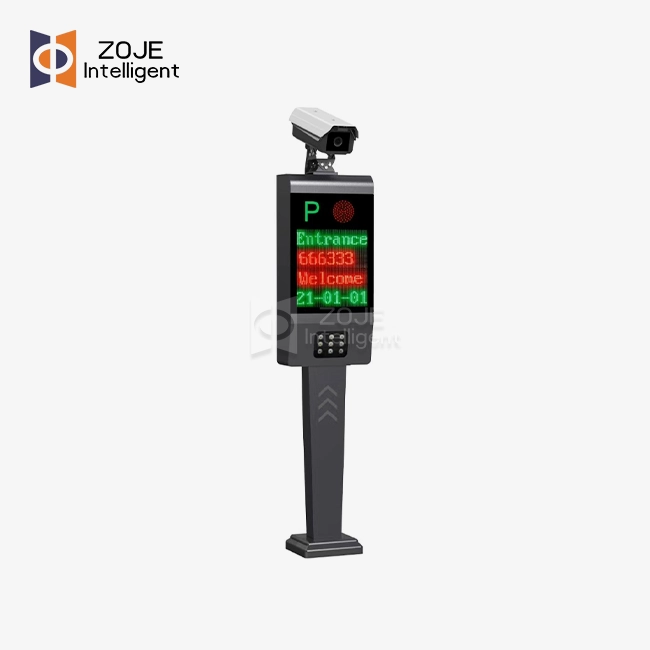
Commercial parking lots use programmable cameras to make management systems that don't need tickets. Integrators use SDK functions to connect to external payment databases, check the credentials of multiple vehicles, and use GPIO relay outputs to open barrier gates. The ZOJE-LPR210 can voice broadcast the state of a vehicle, such as "monthly pass vehicle" or "temporary vehicle." It also has an integrated LED screen that shows custom QR codes for mobile payment alerts. System builders like that they can set up their own business logic, like using time-based pricing rules, controlling whitelist priorities, or making real-time occupancy analytics without having to wait for software changes from vendors.
Carefully think about the structural needs of these kinds of options before putting them into action. Positioning of the camera affects how well it recognizes things; mounting height, angle adjustment, and lane width all have an effect on performance. The ZOJE unit's recognition position can be changed to fit different placement situations. When set up correctly, it maintains an accuracy rate of over 99%.
Logistics and Industrial Access Control
Manufacturing plants and distribution centers need to be able to identify vehicles and measure their weight, check the contents of their cargo, or verify the identity of the driver, often using an LPR camera with open SDK. Developers make systems that are connected so that license plate data and software on weighbridges are in sync. This makes entry and departure records automatically. The open SDK lets contact go both ways: the camera can send data about license plates and also receive authorization replies that manage real barriers. This closed-loop workflow cuts down on manual data entry and mistakes, and it makes transaction logs that can be checked for compliance. IP42-rated containers are good for harsh industrial settings because they can handle dust and water and work in temperatures from -10°C to 60°C.
Intelligent Transportation and Smart City Infrastructure
Municipal deployments need multiple cameras to work together and a central location to collect all the data. System developers make custom middleware that gathers recognition events from multiple cameras, studies traffic trends, and finds people who are breaking the law. Real-time data streaming to cloud platforms or edge computing groups is made easier by the SDK's support for the MQTT and HTTP protocols. Cities that use congestion pricing or low-emission zones need to be able to accurately classify vehicles. Developers add these features by adding custom algorithm layers that process the camera's output. Strong documentation is necessary for successful implementations. API references that are missing or out-of-date code samples can seriously delay project timelines, which is a problem that ZOJE solves by offering a wide range of development tools and quick tech support.
How to Choose the Best LPR Camera with Open SDK for Your Business
When making decisions about what to buy, you have to weigh the technical skills against the budget and the cost of upkeep over the long run. Systematic assessment is based on the evaluation framework below.
SDK Openness and Documentation Quality
Check to see if the seller gives full API references, sample code for common use cases, and integration guides for well-known development platforms. During the evaluation phase, ask to see the SDK documentation. Vague promises of "developer support" without concrete resources point to possible integration problems. Good SDKs have features for managing image capture, changing recognition parameters, getting results in different formats, and controlling hardware I/O. ZOJE's promise to provide a free SDK with support for multiple languages shows real openness, not just marketing placement.
Hardware Performance and Customization Support
How well the camera can handle unique algorithms along with basic recognition jobs depends on how much processing power it has. Check out the processor's specs, the RAM that's available, and the storage interfaces. In addition to basic plate reading, you need more computing power to be able to do other analytics like vehicle color detection, make-model classification, or occupancy counting. Physical customization is just as important: OEM and ODM support lets you change the form factor, add your own logo, and choose parts that work best in your unique deployment setting. For projects that need thousands of units, it's better to work with makers who know how to do custom engineering than with ones that only offer rigid catalog goods.
Technical Support and Development Partnership
Rapid technical support shortens the time it takes to develop software and quickly fixes problems with integration. Look at how the seller handles support, including whether they have specialized tech contacts, how long they usually take to respond, and whether they offer remote troubleshooting. ZOJE's annual customer visit program and 24/7 global technical support show that they care about their customers in ways that go beyond business relationships. These kinds of relationships are helpful for fixing tricky interface problems or making the system run better after it has been deployed. Manufacturers who offer firmware updates, security patches, and feature improvements protect infrastructure investments by making solutions last longer.
Integration and Implementation Guide for LPR Cameras with Open SDK
To make deployment work, you need to plan carefully for the steps of installing hardware, setting up software, and ongoing upkeep.
Hardware Installation and Environmental Optimization
Place cameras at the right heights—usually 1.2 to 1.5 meters above ground level—and make sure the views can be changed to account for differences in lanes. The front-mounted sunshade on the ZOJE-LPR210 reduces glare, which is a common problem in outdoor installations. Check the stability of the power source; the unit's 100W highest usage needs the right electrical infrastructure. Even if you can't link to the internet, planning for network access is still important. For example, set aside bandwidth for uploading images, managing remotely, and updating software. When routing cables, care should be taken to protect the environment and stop vandalism, especially in public areas.
Software Configuration and SDK Integration
First, development teams set up test setups that look like the technology that will be used in production for the LPR camera with open SDK. The first steps in integrating an SDK are to link libraries, set up login, and implement return functions. During testing stages, the accuracy of recognition is checked for all types of license plates, lighting conditions, and car speeds. Custom algorithm deployment needs iterative optimization, which means balancing the speed of recognition with accuracy goals. Pay close attention to data security protocols: use encrypted transmission for plate data that needs to be recognized, secure storage for local buffering, and access controls for API endpoints. These steps protect private information about vehicles and make sure that rules are followed in all areas.
Performance Monitoring and Maintenance Protocols
Set up baseline metrics like system response times, false positive rates, and recognition rates during commissioning. Continuous tracking finds performance drops caused by dirty lenses, bugs in the firmware, or changes in the surroundings. Plan regular upkeep, such as cleaning the lenses, updating the firmware, and making sure the recording media is working. The 32GB Micro SD card eventually fills up when you're not connected to the internet for long periods of time. Set up automated purging policies or remote storage expansion to fix this problem. The two-year warranty and full after-sales service from ZOJE protect against unexpected hardware failures and keep operations running smoothly.
Procurement Insights: Where and How to Buy LPR Cameras with Open SDK
Strategic buying includes evaluating vendors, negotiating contracts, and managing long-term relationships with them.
Vendor Assessment and Due Diligence
Look into the makers' past work, their certifications, and the list of clients they already have. Getting ISO 9001:2015 certification means that you have set quality control systems, which lowers the risk of product batches that don't work well together. Patents show real technical skills, not just renamed versions of common goods. Ask for examples of projects that have been successfully deployed in similar situations. For example, parking lot owners, logistics companies, or city governments can check the claims of performance. Logistics and support are affected by geography. Vendors with regional presence or established distribution networks can deliver goods faster and offer technical support in the area.
Pricing Structure and Total Cost Analysis
The price of hardware only covers a portion of the cost. Check the SDK licensing terms. Some vendors charge fees for each device or limit commercial use. These secret costs are taken care of by ZOJE's free SDK release, which makes budgeting easier. Total ownership estimates should take into account the cost of expert help, the length of the warranty, and the availability of spare parts. When you buy in bulk, the prices usually go down by 15 to 25 percent for orders over 50 units. This makes volume agreements appealing for large-scale operations. Payment terms, shipping methods, and who is responsible for paying import duties need to be made clear when the contract is finalized.
Building Strategic Partnerships
Long-term success depends on working together with vendors in ways that go beyond just buying things. Manufacturers that offer custom development services can help new needs like new plate forms, more data, or protocol changes be met without having to replace the whole system. Because ZOJE has worked on special projects and with OEMs before, it can adapt to changing business needs. Visits and consultations with clients once a year help both parties understand each other better, which leads to proactive problem-solving instead of reactive troubleshooting. When companies work together in this way, they become technology experts who care about their clients' success.
Conclusion
Figuring out which LPR camera with open SDK to buy means weighing technical specs, customization options, and vendor trustworthiness. Open SDK solutions are good for system integrators and OEM partners because they let them change algorithms, connect proprietary systems, and avoid being locked into one vendor. ZOJE's LPR-210 model has 99% recognition accuracy and full SDK support for many computer languages, meeting the main needs of companies that are focused on development. Hardware that is resilient, can work offline, and can be customized in a variety of ways make it possible for deployments ranging from small parking lots to citywide smart transportation networks. A careful look at the quality of the documentation, how quickly expert support responds, and the partnership approach helps make sure that long-term implementations work well and can change to changing business needs.
FAQ
1. What programming languages does the SDK support?
Professional systems come with tools for C, C++, C#, VB, Delphi, and Java, which lets them work together with a variety of development platforms. The API manual has code samples that show how to do basic things like getting images, parsing recognition results, and sending hardware control messages.
2. How does the camera handle network failures?
Front-end processing makes sure that operations keep going even when there are problems with connectivity. Data for recognition is stored on a local SD card, and when network access is restored, it instantly syncs with central computers. This independence keeps operations going even when the network isn't stable, so data doesn't get lost.
3. Can developers customize recognition algorithms?
Having access to raw picture streams lets you use your own OCR engines or machine learning models. Teams improve spotting for things like regional plate differences, unique fonts, or finding car attributes that aren't possible with standard tools.
Partner with ZOJE for Advanced LPR Solutions
ZOJE offers the best recognition technology in the business, made just for system integrators and original equipment makers (OEMs) who want a reliable LPR camera with open SDK supplier relationships. Our LPR-210 model combines tried-and-true hardware engineering with truly open development tools. This gets rid of the problems that come with licensing that isn't flexible and documentation that isn't full. Our engineering team helps directly during the evaluation, development, and deployment phases of custom integration projects, so we know what they need in terms of technical know-how. Standard goods usually ship in 5 to 7 days, while personalized versions usually arrive in 10 to 15 days, which is great for projects with tight deadlines. Email our team at info@zoje-tech.com to talk about your particular needs, get SDK documentation, or set up a product showcase. Visit zoje-parking.com to see all of our products and learn how our two-year warranty, ISO 9001:2015-certified manufacturing, and flexible OEM/ODM services can help your business succeed in the long term.
References
1. Smith, J. & Chen, L. (2023). "Automated Vehicle Identification Systems: Technology and Implementation Strategies." Journal of Intelligent Transportation Systems, Volume 27, Issue 4, pp. 312-329.
2. International Organization for Standardization (2022). "ISO/IEC 12233:2022 - Photography - Electronic Still Picture Imaging - Resolution and Spatial Frequency Responses." Geneva: ISO Press.
3. Rodriguez, M. (2024). "Open SDK Architectures in Computer Vision: Comparative Analysis of Integration Flexibility." IEEE Transactions on Industrial Informatics, Volume 20, Issue 2, pp. 1456-1471.
4. European Parking Association (2023). "Best Practices for license plate recognition system Procurement and Deployment." Brussels: EPA Technical Committee Report.
5. Zhang, W., Kumar, R. & Patel, S. (2023). "Edge Computing in Smart City Infrastructure: Performance Evaluation of Distributed Recognition Systems." ACM Computing Surveys, Volume 55, Issue 9, Article 187.
6. National Institute of Standards and Technology (2024). "Guidelines for Automated License Plate Recognition System Testing and Validation." NIST Special Publication 500-334, U.S. Department of Commerce.

Send Inquiry


Related Industry Knowledge
- Ticketless Parking System: Hassle-Free Solution For Your Car Park
- How to choose a uhf rfid tag reader? How does it work?
- Parking Guide Configuration Tool for Airport Parking System Configuration
- Cashless Pay Stations Are Important for Car Park
- How Parking Automatic Payment Station Integrated with LPR System Improves Efficiency
- Ultimate Guide to Cashless Parking Payment Station
- Best Waist-high Tripod Turnstile for Entry Control
- Interlocking Full-Height Turnstile Gate Benefits
- Unattended Full-Height Turnstile Benefits in Factories
- Uses of Efficient Parking Solutions for Urban Mobility