
Parking Exit Card and Ticket Validation Machine Features You Should Know Before Buying
2026-07-06
Choosing the right Parking Exit Card and Ticket Validation Machine is very important for operating parking lots for shopping malls, airports, neighborhoods, office buildings, or business lots. It affects how well the parking lots run, how much money they make, and how happy their customers are. At exit lanes, these automatic terminals are the most important control point. They check the state of payments and the validity of IDs before letting vehicles go. Learning about their main features, like their ability to recognize multiple objects and how long they last in harsh environments, helps procurement pros make smart choices that fit the needs of their building and its long-term growth goals.
Understanding Parking Exit Card Systems and Their Operating Principles
In Parking Revenue Control Systems (PARCS), modern exit validation systems act as smart guards. In contrast to simple card readers, these gadgets have built-in logic that figures out how long a parking spot will last, checks that the seller is real, and talks to central management computers to make sure the payment went through.
How Exit Validation Terminals Process Transactions
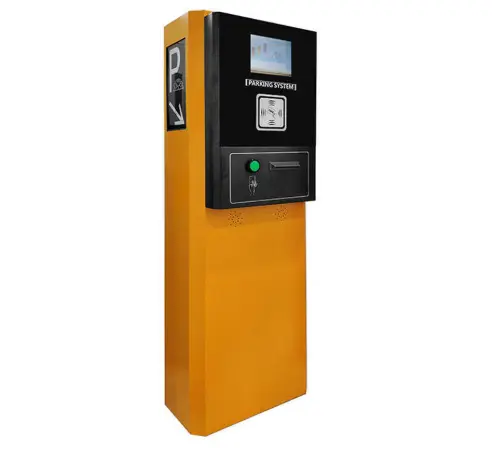
In their most basic form, these tools take credentials like barcode tickets, magnetic stripe cards, or RFID tags and compare them to a database of approved exits. The system checks to see if a temporary visitor has paid at a Pay-on-Foot stop or if a monthly permit user can still get in. Processing speed is very important here; the best models in the business finish proof in two seconds, so there are no lines during busy times. The ZOJE-TB102 has a fast ARM-Linux design that lets it make decisions quickly. This cuts down on traffic at exit points while still following strict payment verification rules.
Differences Between Exit Cards and Traditional Parking Tickets
Paper tickets with barcodes work well for short-term users but aren't sophisticated enough for long-term parkers or members of a reward program. Contactless exit cards, especially RFID-enabled credentials, are convenient and support advanced features like anti-passback enforcement, which stops a single card from letting multiple unauthorized people leave the building. This is why the ZOJE-TB102 supports multiple types of recognition technology, such as IC cards, ID cards, Bluetooth connection, and UHF long-range reading. Because it is so flexible, building managers can set up tiered entry systems where workers use RFID badges, and guests get QR-coded tickets. The whole process is handled by a single terminal.
Integration with Parking Management Software
Your exit validation machine works as a stand-alone unit or as part of a cohesive ecosystem, depending on how well its software integrates with other systems. The gadget has to send transaction data in real time so that occupancy counts can be updated, income reports can be made, and problems like using the same ticket twice can be found. Cloud-connected tools allow for distant tracking, which lets workers find broken lanes right away. When procurement managers are looking at their choices, making sure that a machine supports standard communication methods like TCP/IP, RS485, and Wiegand interfaces is important to make sure that it will work with the infrastructure that is already in place and avoid the need for expensive upgrades.
Key Features of Ticket Validation Machines You Should Consider
To choose the best Parking Exit Card and Ticket Validation Machine, you need to look at its technical features that affect its dependability, user experience, and return on investment.
Multi-Modal Recognition Technology
Buildings with many users benefit from equipment that can scan many identification kinds. ZOJE-TB102, which contains IC/ID card readers, Bluetooth modules, and UHF antennae on a stand, illustrates this technology. This simplifies maintenance and eliminates hardware installation. When shopping malls employ retailer validation schemes, this flexibility is particularly beneficial since consumers display paper coupons at some shops and scan QR codes at others, and the departure station must manage both without operator assistance.
Environmental Durability and Outdoor Performance
Equipment in parking lots faces harsh weather that systems inside never do. Unprotected electronics are readily damaged by extreme temperatures, humidity, direct sunshine, and airborne pollutants. The ZOJE-TB102 eliminates these issues by functioning in -40°C to 80°C, making it suitable for northern Canada and the Middle East. A powder-coated 2.0 mm cold-rolled steel casing. IP65 entry protection prevents dust and water jets from entering interior parts during cleaning. Airports and transportation hubs that operate 24/7 need these requirements to save downtime and lifetime expenses.
User Interface and Interactive Capabilities
Driver-facing displays must be visible in strong sunshine and plainly instructive. High-brightness LCD displays using TFT technology may overcome this issue by keeping viewing at 1,000 nits or greater. The ZOJE-TB102's HD screen and video chat allow for immediate assistance. Drivers may communicate to control room staff via voice button if a ticket fails. These persons may advise or override the system. Language or ticket issues often create lengthy wait periods at airports, thus this tool is beneficial. Global language support for over 30 nations ensures drivers read instructions in their native language, reducing confusion and speeding work.
Real-Time Data Processing and Reporting
Validation tools should process transactions quickly and provide detailed information. Procurement staff need to view average processing time, peak use periods, validation failure rates, and payment method-specific revenue. Modern systems date each action, allowing problem-solving analysis. Another consideration is offline capabilities. For internet outages to not disrupt operations, devices must maintain accurate credential lists locally. ZOJE-TB102's on-board whitelist enables authorized users exit during network outages. Data syncs automatically after reconnecting.
Standalone Versus Integrated System Architectures
Standalone units are ideal for small numbers or test projects with little involvement. Businesses with various sites require integrated systems to interface to centralized computers for remote reporting and administration. A single office building may employ stand-alone terminals, but a shopping mall corporation in numerous cities would require cloud-connected technology. The ZOJE-TB102's several I/O ports make module addition straightforward. Facilities may start with simple features and add license plate scanners, LED signage, and mobile payment systems as needed.
Comparing Parking Exit Card Systems and Ticket Validation Machines: What Fits Your Needs?
When making decisions about what to buy, it helps to know how different types of Parking Exit Card and Ticket Validation Machines deal with different practical problems and stick to budgets.
Market Overview and Pricing Considerations
There are well-known companies in the global parking access control market that sell everything from simple barcode readers to systems that use AI to verify information. Entry-level tools that can read simple barcode tickets cost around $2,000 to $4,000 each. More advanced systems that can read multiple types of barcodes and integrate intercoms and LPR cost around $6,000 to $12,000. The unit price, on the other hand, is only one part of the total cost of ownership. Think about the costs of installation, software licensing, ongoing support contracts, and the money you might lose if your system goes down. ZOJE's competitive stance stresses value by offering full two-year guarantees and technical help 24 hours a day, seven days a week. This cuts down on the secret costs that come up after launch.
Automated Validation Versus Manual Processes
Manual exit lanes need to be staffed 24 hours a day, seven days a week. When benefits and shift services are added in, the yearly cost of labor for each lane is more than $150,000. Automated validation gets rid of this extra work and makes things more accurate. Cashiers often make mistakes like missing coins, typing in the wrong amounts, or processing fake validations, all of which hurt income. Commercial parking lot owners have done studies that show automated systems cut down on mistakes in processing payments by 94% compared to human collection. Automated lanes handle cars in less than three seconds, compared to 15 to 30 seconds for manual transactions. This increases building capacity without having to physically expand.
Security and Fraud-Prevention Tools
Operators lose millions of dollars every year because of confirmation fraud, like using fake IDs or tickets more than once, or working together to do it. Modern machines that check IDs stop this by using anti-passback software that watches how credentials are used and alerts the machine if something strange happens, like a single card leaving the machine twice in minutes. Encrypted credential data stops copies, and real-time computer contact makes sure that payment proof happens right away. These security procedures are used by the ZOJE-TB102, which makes it suitable for high-stakes places like airports, where both protecting income and keeping the perimeter safe are important.
Scalability and Infrastructure Compatibility
Buildings change over time. Parking lots get bigger, the types of tenants move in, and technology gets better. Validation tools need to be able to grow with the business without having to be replaced completely. Modular designs that let you change the software protect investments for the future. The ARM-Linux architecture of the ZOJE-TB102 allows over-the-air updates, which let new features or security fixes be sent to the device from afar. Not being locked into one provider and keeping investments made in the past is possible by making new barriers, intercoms, and management tools compatible with old ones. Before making a final purchase, procurement teams should ask for integration paperwork that shows the new devices will be able to talk to the current infrastructure using standard protocols.
Procurement Guide: How to Buy the Right Parking Exit Card and Ticket Validation Machine
Strategic purchasing means being clear about what you need, buying from reputable Parking Exit Card and Ticket Validation Machine companies, and setting up support systems that make sure the product works well in the long run.
Defining Your Operational Requirements
Write out your issues and desired outcomes. Does traffic worsen at specific periods, requiring speedier processing? Do different users require separate credentials? Do tools break down frequently in harsh weather? Transaction volume matters. A mall lot that handles 5,000 exits each day demands are different from a residential garage that handles 200. Being able to distinguish many items and survive severe circumstances makes the ZOJE-TB102 worth the investment for intermediate to high-volume usage. Basic versions may suit basic facilities, whereas flexible designs with several I/O ports for adding additions may suit growing facilities.
Evaluating Vendors and Sourcing Options
Buying from reputable providers reduces your risk. ZOJE Intelligent Technology has many design patents and ISO 9001:2015 approval, making it a reliable provider. For 12 years, the firm has served consumers worldwide. Customers believe the items are high-quality and there is after-sales support. In volume, negotiating directly with the manufacturer frequently yields the greatest costs. But local dealers may assist with installation and guarantee servicing faster. How effectively these things are balanced relies on your team's competence and proximity to service centers.
Installation and After-Sales Support Considerations
Even high-tech equipment fails if not properly configured and updated. Sellers should provide installation instructions or on-site finishing. ZOJE meets clients worldwide once a year to discuss short-term technical issues and long-term optimization initiatives. These levels of participation distinguish suppliers that want their customers to thrive from those who simply want to sell. Check the guarantee details before comparing costs. Zoje's two-year warranty for the TB102 exceeds industry standards and indicates their confidence in its longevity. Make sure professional assistance is accessible 24/7 and new components are available for at least seven years.
Budget Planning and Financing Options
The project cost includes hardware, installation labor, software licensing, training, and network infrastructure upgrades. Premium validation devices cost $40,000–$60,000, installation $10,000–$15,000, and software maintenance $5,000 a year for a four-lane parking lot. Location and customisation affect these numbers. ZOJE offers bulk savings and flexible payment arrangements for multiple unit deployments. This makes large projects more affordable. Some customers use the additional parking revenues from less fraud to pay for new equipment, assuming it would pay for itself in 18–24 months. Tool leasing lets you pay over time and save cash for other company requirements.
Case Studies and Verification: How These Technologies Improve Parking Management
Implementations in the real world show measurable benefits that make investing in more advanced evaluation methods worthwhile.
Commercial Parking Facility Success Stories
A network of 12 regional shopping malls switched from manual exit lanes to ZOJE TB102 stations. The launch cut the average time it took to leave from 28 seconds to less than four seconds. This increased capacity by 22% during busy shopping times for the holidays without adding any new infrastructure. The accuracy of revenue accounting went from 91% to 99.7%, which means that about $180,000 a year was recovered from validation fraud that hadn't been found before. Drivers were happier when they could get out of the parking lot faster, and there were fewer problems with payments.
Airport and Transportation Hub Applications
Magnetic stripe readers that were getting old were changed at an international airport that serves 15 million people a year with multi-recognition terminals that can read IDs without touching them. Integration with systems that read license plates allowed backup tickets to be recovered, which cut down on help desk calls by 68%. The wide operating temperature range was very important—equipment kept working during a cold spell that shut down rival systems at nearby sites. The Mean Time Between Failures was more than 2.8 million cycles, which is much longer than the industry standard of 2 million cycles, and saved 34% on maintenance costs over three years.
Emerging Technology Trends
The Internet of Things (IoT) makes it possible for tools to self-report worn-out parts before they break. AI programs look at trends of transactions to find outliers that could mean fraud or broken equipment. Health worries have sped up the adoption of contactless technologies, which now make up most new installs. For example, Bluetooth and UHF RFID get rid of physical touchpoints while still keeping security high. The ZOJE-TB102's design can adapt to these changes through software updates, so the investment you make today will still be useful as standards change. Facilities that are expecting to keep tools for 10 years should give more weight to vendors who show they are committed to ongoing development over vendors whose product lines stay the same.
Conclusion
When picking the right Parking Exit Card and Ticket Validation Machine, you have to weigh the needs of the business right now against the needs of growth and technological progress in the long run. The ZOJE-TB102 has a lot of features, like the ability to recognize multiple objects, to work in harsh environments, to process information quickly, and to have easy-to-use interfaces. It can be used in shopping malls, airports, apartment complexes, office buildings, and business lots. When procurement workers look at the total cost of ownership, which includes installation support, warranty coverage, and how quickly the seller is, they can save money. Investing wisely in good validation terminals cuts down on labor costs, protects income, enhances the customer experience, and gives parking managers the freedom to change as they move toward fully automated, data-driven operations.
FAQ
1. How do validation machines enhance parking facility security?
Anti-passback algorithms in modern terminals stop people who aren't supposed to be there from leaving without permission when they see that the same login is used more than once in a short amount of time. Credential cloning can't happen when data sent between devices and servers is encrypted. Real-time tracking lets operators know about trends that aren't normal, like validation rates that are much higher than usual during off-peak hours, which could be a sign of organized fraud. When license plate recognition is added, it makes audit trails that connect specific cars to deals. This helps with investigations when there are disagreements.
2. Can these systems integrate with existing parking management software?
Validation terminals of good quality support common industry protocols, such as TCP/IP, RS485, and Wiegand interfaces, which means they can work with most well-known parking control systems. Ask for technical specs during the procurement process to make sure that your present software is on the list of compatible software. ZOJE does tests before the integration happens and works with clients to fix any communication protocol issues. This lowers the risks of rollout. More and more cloud-based systems use REST APIs, which make collaboration easier, no matter what kind of technology is already in place.
3. What maintenance requirements should facilities expect?
Cleaning card readers and barcode scanners once a month to keep dust from building up, checking the power lines every three months, and making sure the software is always up to date are all part of routine maintenance. The most worn-out parts are the mechanical ticket transport systems, which need to be serviced by a professional once a year or after about a million rounds. The 24/7 support team at ZOJE can do online tests that fix 78% of problems without having to come to the site, which cuts down on downtime. Annually, full servicing plans usually cost 8–12% of the price of the hardware.
Partner with a Trusted Parking Exit Card and Ticket Validation Machine Manufacturer
With the modern TB102 validation device, ZOJE Intelligent Technology is ready to change the way you run your parking lot. Our dedication to quality and innovation is shown by the fact that our manufacturing methods are ISO 9001:2015 approved, and we have multiple technical patents. As a Parking Exit Card and Ticket Validation Machine supplier, we know that each building has its own problems, like dealing with a lot of customers coming into stores, keeping airport perimeters safe, or making it easier for people to get into their homes. Because of this, we give full customization for both hardware and software, along with the ability to work with OEM and ODM partners. Our global after-sales network offers expert help 24 hours a day, seven days a week in more than 30 languages, so you'll never be alone when you have problems. Standard goods are shipped in 5 to 7 days, while customized solutions are put into action in 10 to 15 days, which cuts down on project timelines. Email our team at info@zoje-tech.com to set up a free meeting where we'll look at your needs and suggest the best options.
References
1. International Parking Institute. "Automated Revenue Control Systems: Best Practices for Procurement and Implementation." IPI White Paper Series, 2022.
2. National Parking Association. "Security Standards for Commercial Parking Facilities: Access Control and Validation Technologies." NPA Technical Guidelines, 2021.
3. Smith, J. and Chen, L. "Comparative Analysis of RFID and Barcode Technologies in Parking Management Systems." Journal of Transportation Engineering, Vol. 148, No. 3, 2023.
4. European Parking Association. "Environmental Testing Standards for Outdoor Parking Equipment." EPA Technical Bulletin 47, 2022.
5. Anderson, R. "Total Cost of Ownership Models for Parking Access Control Equipment." Parking Industry Review, Spring 2023.
6. Global Parking Technology Conference. "Emerging Trends in Contactless Payment and Validation Systems." Conference Proceedings, Las Vegas, 2023.

Send Inquiry
You may like


Related Industry Knowledge
- How to improve the detection accuracy of Vehicle Loop Detector for Gate?
- How to Choose Front-Mounted Ultrasonic Parking Space Detector for Parking Lots
- Why Vehicle Loop Detector for Parking Management System Is Essential for Smart Parking
- How barrier radar sensors prevent injury accidents?
- Is Tempered Glass Full-Height Turnstile Durable?
- What Is Folding Arm Barrier Gate? Structure & Uses
- OEM Space-Saving Turnstile Customization Guide
- Is High-Security Full-Height Turnstile Worth Investment?
- Unattended Full-Height Turnstile Benefits in Factories
- Best ANPR Solutions for Public Parking Efficiency & Flow