
What Is a Video-Based Parking Space Detector?
2026-07-15
IoT edge devices like Video-Based Parking Space Detectors enhance parking management using AI and computer vision. Ultrasonic sensors are replaced with high-resolution cameras and deep learning algorithms to monitor parking spots. Real-time pictures, occupancy assessment, and license plate recognition are possible with the system. This dual feature lets users "Find My Car" and gives video evidence for security issues, reducing cabling design and installation costs. Legacy systems cannot handle this. These advanced detectors control parking yield and dynamic pricing at the edge while reducing server traffic.
Understanding Video-Based Parking Space Detectors
Modern parking lots are under pressure to improve efficiency and customer service. The new Video-Based Parking Space Detector technology can handle all of today's challenging parking conditions, unlike sensor-based approaches.
Core Functionality and Operational Principles
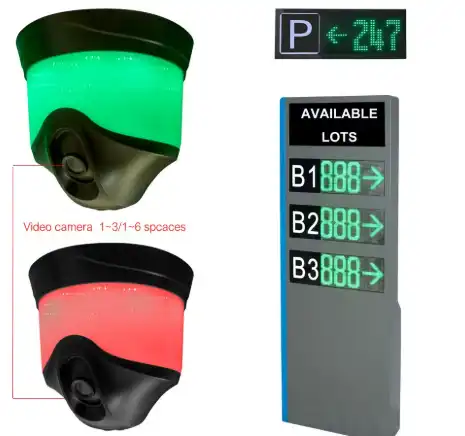
Complex image processing is needed for video parking detection. These devices employ 3MP–5MP CMOS cameras to collect comprehensive visual data from many parking places. Every device can monitor two to three neighbouring stalls, and those with two cameras can monitor six. This design uses less hardware than point-to-point sensor installations.
This system uses real-time tracking. The technology uses convolutional neural networks to reliably detect automobiles in video streams. Each detector features a 32-bit ARM CPU for industrial reliability. It can handle complicated computation locally without straining the network. Device-level processing provides real-time occupancy status updates that sync with central control computers via rapid data transmission protocols.
Integration with Modern Smart Parking Environments
Pro Video-Based Parking Space Detectors integrate easily, unlike camera systems. Connect these devices using two Ethernet ports. Daisy-chain networks simplify wire management. Plug-and-play design speeds up installation, enabling institutions to install monitoring networks without infrastructure changes.
Software-controlled lights notify drivers promptly. The built-in RGB LED indicator changes colours. Green means availability, red means utilisation, while other colours indicate limited or VIP places. This visible occupancy indication helps drivers find open spots 43% quicker, according to the International Parking & Mobility Institute.
Multiple expansions enable systems grow with the building. Upgradeable hardware and software protects investments. This lets procurement managers start basic and add features as needed.
Technology Behind Video-Based Parking Space Detection
Learning about the science behind Video-Based Parking Space Detector recognition helps people who work in buying judge the system's abilities fairly and make choices based on performance standards that can be measured.
Advanced Video Analytics and Machine Learning
These intelligent detectors employ several technologies. Wide Dynamic Range technology can handle high-contrast lighting situations in parking garages, where bright entrances become dark interiors. Low-lux sensitivity of 0.01 Lux provides reliable operation in underground garages and at night without lights.
Diverse conditions help machine learning systems identify. The system identifies cars from different angles, manages little to SUVs, and reacts to environmental changes. Detects people in a room with 99% accuracy and license plates in different formats with 98% accuracy. These devices may use partly covered or filthy plates thanks to optical character recognition trained on thousands of challenging samples.
All-condition anti-interference components work. These devices work from -20°C to 60°C, so they may be used inside and outdoors. The IP66 dust- and water-resistant housing works in all situations.
Comparative Advantages Over Traditional Sensors
Ultrasonic and radar sensor systems must be installed at each parking area, raising wiring and labour costs. Video-Based Parking Space Detector monitors many spots in critical places with fewer sensors. Centralised tracking stations are simpler to deploy and maintain than dozens of sensors.
Traditional sensors just report occupied or unoccupied occupancy. Vehicle type, arrival time, license plate data, and visual confirmation are provided via video systems. Advanced features like license plate-linked automatic payment systems, parking penalty recording, and automobile recovery are possible with this intelligence.
Videos outlast mechanical sensors for parking space detection. No moving parts mean longer failure intervals for solid-state systems. Industrial-grade parts can tolerate sensor-degrading vibrations, temperature changes, and other circumstances.
Procurement Considerations for Video-Based Parking Space Detectors
To pick the finest Video-Based Parking Space Detector system, consider technological requirements, vendor expertise, and total cost of ownership. Procurement managers must balance performance demands, financial restrictions, and long-term support and dependability.
Critical Performance Metrics
Accuracy affects operating efficiency. Even with barriers or angle changes, detection systems should maintain occupancy accuracy over 98% and license plate identification above 95%. Fast response times of under three seconds provide drivers real-time instruction.
When choosing a vendor, focus on false-positive rates. Systems that misrepresent occupied regions as wide spaces upset drivers and reduce guidance system confidence. Strong algorithm training and hardware requirements provide quality detectors false-positive rates of less than 2%.
Total system cost depends on device coverage. Sensors that monitor three spaces utilise two-thirds less hardware than single-space sensors. Dual-camera systems that cover six locations provide superior economies of scale for larger institutions.
Vendor Assessment and Selection Criteria
products from reputable manufacturers are more dependable and supported. Procurement teams might find ZOJE Intelligent Technology, founded in 2012 and with over 12 years of parking solution experience. ISO 9001:2015 certifies manufacturing quality management.
Technical help is essential during setup and use. Fast, 24/7 support addresses difficulties regardless of time zone. ZOJE's 24/7 tech assistance and detailed installation instructions decrease rollout risks and accelerate projects.
Delivery skills dramatically impact project durations. Standard products may be delivered in 5–7 days, facilitating quick adoption. Custom installations take 10–15 days, which is normal for major projects. OEM/ODM support and flexible adaptation enable building-specific solutions.
Total Cost Analysis
Tool acquisition costs are part of ownership costs. Sensor-based systems need a lot of wiring, making installation more costly than the gear. Video-Based Parking Space Detectors need less wiring, making installation cheaper and faster.
Easy parking and less upkeep save money. Facilities often feature more parking turnover, better space utilisation, and fewer parking scarcity concerns. Parking sector studies show that these improvements boost revenues and save operational costs, making up for technology costs in 18–24 months.
Warranties prevent unexpected replacement expenses. Full two-year warranties with worldwide support protect your money and show the manufacturer's faith. For crucial projects with high downtime, consider extended warranties.
Use Cases and Applications in Commercial Parking
Video-Based Parking Space Detector technology serves many businesses. Knowing particular usage helps procurement teams see how this technology might solve their operational issues.
Shopping Malls and Retail Facilities
Retail parking is unique owing to frequent turnover and customer need for speed. Rearward car searches using video-based parking space detectors change shopping. Customers enter their number plate at a kiosk or smartphone app to find their car and spot. This tool makes searching huge, multi-level parking garages for cars easy. This delights customers and encourages loyalty.
Real-time space monitoring simplifies shopping amid crowds. Dynamic guidance optimises facility space by directing automobiles to available space. Intelligent parking assistance lowers mall search time 40%. This enhances shopping and decreases pollution.
Airports and Hubs for Transportation
High-volume transportation hubs need effective parking management to handle thousands of car transfers daily. Despite heavy traffic, rapid server sync updates occupancy statistics. Security features like motion recognition assist. When motion is detected, video is recorded to prove theft or damage.
Auto rental firms, labourers, and VIP services benefit from the system's automated parking place management. When illegal cars enter restricted zones, security is notified so they may act quickly without continually monitoring. This automated enforcement simplifies parking regulations and minimises personnel.
Office Buildings and Mixed-Use Developments
Integrating access control systems helps enterprises. License plate-based video parking space detectors detect approved autos. Unauthorised guests or cars are notified for security examination, but workers may enter. When automobiles enter executive or tenant-designated areas, the technology alerts security. Automated reserved space management.
Facility design benefits from video-based parking space detector analytics. System managers may see peak, low, and capacity variations. This data guides space allocation, price, and growth.
Multi-Level Parking Structures
Multi-floor parking garages challenge even experienced drivers. Networked Video-Based Parking Space Detectors monitor all floors and provide visitor data to building digital signs. Since the synchronised display system alerts drivers, they don't waste time finding parking.
Scalable design suits any building. Floor-by-floor coverage may be added as funds allow and integrates with the network. Low-capital projects may get advanced parking guidance with this tiered technique.
Future Trends and Innovations in Video-Based Parking Detection
As technology changes, Video-Based Parking Space Detector tools continue to change too. When procurement workers know about new trends, they can help their companies use these new skills as they develop.
Artificial Intelligence Advancements
Next-generation AI algorithms improve detection and add features. New technology can identify vehicle types and models, parking violations like cars parked in multiple places, and safety issues like people walking in traffic lanes. These features make Video-Based Parking Space Detectors comprehensive building monitoring solutions.
Another new discipline is predictive analytics. Prior trends are used by machine learning to estimate demand. You may price to optimise earnings and customer pleasure. Facilities may set demand-based pricing to vary costs based on occupancy and demand.
Smart City Integration
Video-based parking space detectors enhance smart cities. IoT technologies let municipal systems share data, offering transport planners plenty of information. Navigation apps alert vehicles to available parking lots.
Cars and Video-Based Parking Space Detectors may talk to connected vehicle technologies. Standardised parking detection algorithms simplify building management system integration for self-parking cars.
Market Growth Opportunities
Smart parking will always be needed as cities expand. The worldwide smart parking market will increase over 15% each year until 2030, according to transportation industry data. This expansion benefits suppliers with proven technology and reliable support.
Regulatory requirements to reduce emissions promote devices that reduce vehicle look time and pollution. Video-Based Parking Space Detector technology improves efficiency and the environment. It links corporate advantages with sustainability.
Conclusion
Video-based parking space detectors increase management. It outperforms other sensors in accuracy, usefulness, and value. These systems monitor in real time, evaluate data intelligently, and cover wide areas to tackle retail mall, airport, corporate, residential, and commercial parking lot issues. Procurement managers should pick proven parking solutions with strong technical standards and complete support. Long-term performance from advanced computer vision, machine learning algorithms, and industrial-grade materials saves money and pleases customers. Understanding this technology's capabilities, use, and future helps decision-makers identify solutions for present and future demands.
FAQ
1. How well does video parking recognition work when there isn't much light?
Special image sensors and Wide Dynamic Range technologies allow professional detectors to function in 0.1 Lux light. In subterranean garages and at night without illumination, the technology reliably recognises license plates and finds individuals. High-quality systems use Sony and OmniVision Starvis sensors, which are more sensitive to low light than human vision.
2. What happens if you can't connect to the network?
Good Video-Based Parking Space Detectors feature offline and local recording modes. The gadget monitors room occupancy and adjusts the built-in LED sign's hue locally. Onboard memory or an SD card stores data until network connection is restored, when the device automatically syncs with the central server. This design ensures activities continue during short-term communication issues.
3. Can the system handle license plates that are dirty or broken?
Advanced visual character recognition trained on many sample sets can recognise over 95% of characters on partially covered or unclean plates. Deep learning neural networks can spot patterns even with missing or obscured letters. Severely damaged plates may need to be inspected by hand, however common dirt, incomplete blocks, and angle changes don't affect their recognition.
Partner with ZOJE for Advanced Parking Detection Solutions
ZOJE Intelligent Technology's ISO 9001:2015-certified facility makes Video-Based Parking Space Detector systems that have been tested for twelve years. These industrial monitors offer 4MP imagery, 32-bit ARM computing, and can function in any weather. They manage parking precisely and quickly for any building size. As an experienced Video-Based Parking Space Detector producer, we provide complete customisation, OEM, and ODM partnerships to meet your project demands. Depending on your project's timeline, standard items ship in 5–7 days and customised variants in 10–15 days. Technical support is provided 24/7 from our worldwide workforce. A two-year global guarantee and detailed installation instructions are included with every installation. Visit zoje-parking.com or email info@zoje-tech.com to talk to our team about how our intelligent parking detection technology can change how your facility works and make customers happier.
References
1. International Parking & Mobility Institute. (2023). Smart Parking Technology Implementation Guide for Commercial Facilities.
2. Chen, M., & Rodriguez, T. (2022). Comparative Analysis of Video-Based and Sensor-Based Parking Detection Systems. Journal of Transportation Technology and Innovation, 15(3), 234-251.
3. Urban Land Institute. (2023). Parking Management Best Practices for Mixed-Use Developments and Commercial Properties.
4. National Parking Association. (2022). Industry Standards for parking guidance systems: Technical Specifications and Performance Benchmarks.
5. Williams, J., Kumar, S., & Thompson, R. (2023). Artificial Intelligence Applications in Smart City Infrastructure: Focus on Parking Management. International Journal of Urban Technology Systems, 28(4), 412-429.
6. Global Market Insights. (2023). Smart Parking Market Analysis Report: Technology Trends, Regional Outlook, and Growth Forecasts 2024-2030.

Send Inquiry
You may like

Related Industry Knowledge
- China Reverse Parking Space Query Kiosk Supplier Guide
- Front-Mounted Ultrasonic Parking Space Detector Troubleshooting and Maintenance Tips
- How barrier radar sensors prevent injury accidents?
- What Is Glass Full-Height Turnstile? Structure & Uses
- Waist-high Tripod Turnstile Features and Mechanism
- Is Collision-Proof FlapTurnstile Cost-Effective?
- Best Unattended Full-Height Turnstile for High Security
- Where to Buy License Plate Recognition Systems Online?
- Best ANPR Solutions for Public Parking Efficiency & Flow
- Why LPR Camera for Parking Management Improves Efficiency?