
What is an LPR Camera? License Plate Recognition Cameras Explained
2026-08-03
Managing parking access at shopping malls, airports, residential communities, office buildings, and commercial lots demands precision, speed, and reliability. An LPR camera for parking management delivers exactly that—automating vehicle identification without requiring drivers to slow down or stop. License Plate Recognition (LPR) cameras use advanced optical character recognition (OCR) and artificial intelligence to capture, interpret, and process license plate data in real-time. This technology transforms how facilities control entry, monitor vehicles, and streamline payment processes, making operations smoother while reducing labor costs and human error.
Understanding LPR Cameras: Definition and Core Technology
What Makes an LPR Camera Different from Standard Surveillance?
In contrast to regular security cameras that only record video, LPR cameras use special hardware and smart algorithms to read license plates automatically. These gadgets have OCR software that turns plate images into digital text data and high-resolution photo cameras. The process only takes milliseconds, so cars moving at up to 40 kilometres per hour can still be identified without any problems. This feature is very useful in places with a lot of traffic, like drop-off areas at airports and entrances to shopping malls.
Key Technical Components That Drive Accuracy
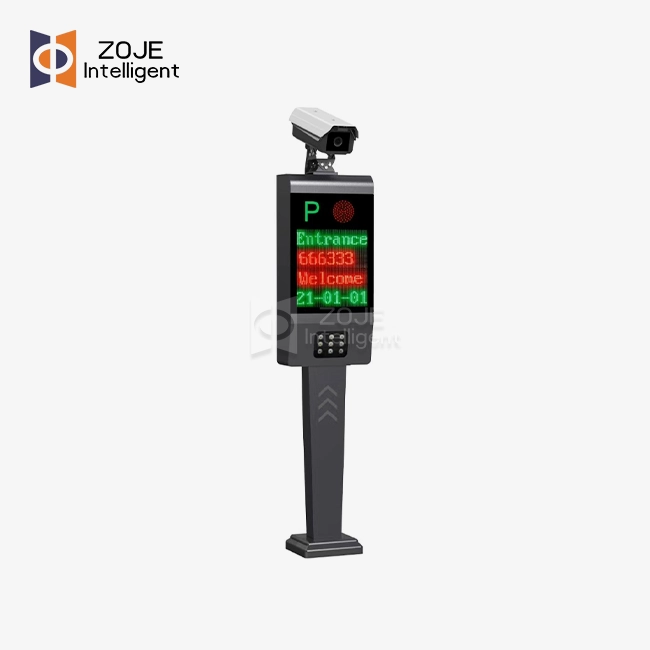
Several important parts of modern LPR camera for parking management systems need to work together for them to work. The image sensor takes high-quality pictures in a range of lighting conditions, and infrared LED fill lights make it easy to see the license plate at night or in parking garages that aren't well lit. Processing units with CNN hardware acceleration engines look at captured images right away and can accurately identify letters and numbers. The LPR-201 model from ZOJE has a 99% recognition rate thanks to its dual-core 900MHz processor and starlight-level CMOS camera, which can work in 0.01 Lux of light. With this front-end recognition architecture, the camera can process data without being affected by network delays or server downtime, which is very helpful when managing facilities with a lot of visitors.
How Outdoor Durability Impacts Performance
Gear in parking lots is exposed to harsh weather and conditions. Good LPR cameras have cases made of high-strength carbon steel that are rated IP64. These cases protect the electronics inside from rain, dust, and changes in temperature. Temperature ranges from -20°C to +60°C make sure that the equipment works the same way whether it is placed in a hot Arizona parking lot or a snowy Minnesota airport. The system's weather-resistant design and clever scene-adaptive ISP technology let it change picture settings automatically when it faces problems like backlighting, surfaces that reflect light when it rains, or plates that aren't always visible.
The Role of LPR Cameras in Parking Management Systems
Streamlining Access Control and Security Enforcement
LPR technology changes the way parking lots control which cars enter and leave. When an LPR camera for parking management sees a car coming up behind it, it instantly checks the license plate against whitelist databases. This lets authorised users get in without any problems and marks vehicles that aren't supposed to be there. This automated method gets rid of the need for people to hand out tickets by hand, which greatly reduces the need for security staff. Tracking how often customers visit shopping malls is helpful, and keeping an eye on all the cars that come into residential areas makes them safer. The system keeps detailed logs that building managers can look over for security checks or to look into incidents.
Integration Capabilities with Existing Infrastructure
Modern parking management tools need all of their parts to be able to join without any problems, and the LPR camera for parking management is a key component. Standard TCP/IP and RS485 methods let LPR cameras talk to each other, so they can be used with barrier gates, payment kiosks, and central control software. The ZOJE-LPR201 type has a 10/100Mbps Ethernet port, four IO input channels, two IO output channels, and other interface choices that make it compatible with a wide range of parking infrastructure setups. Because of this, facilities can gradually improve their systems without having to replace whole setups. The built-in 18.5-inch outdoor high-brightness LCD display makes it easy for drivers to see information about the vehicle and payment information. It also supports custom advertising content that can be used to make extra money.
Addressing Environmental and Privacy Considerations
LPR systems have a lot of perks, but managers have to deal with some problems. Damaged, dirty, or non-standard license plates can sometimes make it harder to recognise them, which means that extra steps need to be taken to make sure they are real. Plates can become briefly obscured by extreme weather events like heavy snowfall, but quality systems use ultra-wide dynamic picture optimisation to fix these problems. Different places have different rules about data privacy, so it's important to plan for compliance before deploying a system. Facilities should store data safely, set clear rules for how long to keep data, and make sure that the information they receive is only used for legal business reasons. Clear communication with users about how data is handled builds trust and makes sure that regulations are followed.


Choosing and Procuring the Right LPR Camera for Your Parking Needs
Critical Performance Criteria for B2B Procurement
To choose the right LPR tools, you need to look at a few important specs. Accuracy in recognition is very important—systems with 99% or higher accuracy rates have fewer false reads and less downtime. Capture rate is also important; complete systems should be able to get 99.99% capture rates so they don't miss any cars during rush hours. The ability of cameras to adapt to their environment determines how well they will work in your specific deployment situation. Facilities with wide entry ways need cameras that can see a wide area, like the 70-degree wide-angle feature found in more modern models that can handle multiple car approach directions at the same time. Tolerating different speeds is also important. Systems that can read license plates from cars going 0 to 40 km/h without stopping give drivers real non-stop access, which they like.
Comparing LPR Technology with Alternative Solutions
People who make decisions about entry control often compare an LPR camera for parking management to RFID systems or old-fashioned tickets methods. RFID doesn't work as well for managing visitors or pay-per-use situations because tags have to be given to people who are allowed to use them. Traditional tickets slows things down, causes traffic jams, and makes users angry because of it. LPR technology is more cost-effective because it gets rid of the need for disposable tickets and lessens the amount of work that needs to be done. It also works well for both registered and casual users. The system easily expands as the needs of the facility do, allowing for secondary development and customisation that can adapt to changing operational needs. Because it is so flexible, LPR is great for business parking lots that serve a wide range of customers.
Evaluating Vendor Reliability and Support Infrastructure
Buyers have to look at more than just the specs of a product; they also have to see what the vendor can do. Established makers offer important benefits, such as detailed technical paperwork, reliable guarantee coverage, and quick customer service after the sale. ZOJE backs up its goods with two-year warranties and expert support that is available 24/7 around the world. This makes sure that problems are fixed quickly, no matter what time zone they are in. The company's ISO 9001:2015 certification shows that it follows quality management standards, and its many technical and design patents show that it keeps investing in new ideas. When a vendor supports both OEM and ODM, it's possible to customise the equipment so that it fits the exact needs of a facility, whether that means custom software features, building designs, or language interfaces for different regions.
Installation and Implementation Guide for LPR Cameras in Parking Facilities
Pre-Installation Planning and Site Assessment
A thorough study of the surroundings is the first step to a successful LPR deployment. Site studies find the best places to put cameras so that they can get the best views of the plates while also taking into account the widths of the lanes, the paths that vehicles take, and the lights. By measuring the distances between camera positions and common places for vehicles to stop, you can make sure that the equipment works within its effective recognition ranges, which are usually between 3 and 8 meters, based on the lens specs. If extra wiring installations are needed, they are decided by looking at the current power and network infrastructure. Facilities should also think about how they can grow in the future, taking into account things like higher traffic volumes or more entry places that might mean the system needs to be expanded.
Hardware Installation and Software Configuration
To get the best results, mounting an LPR camera for parking management needs to be done carefully. The machine needs to be set up so that the front plates are captured at the right angle, which is usually between 15 and 30 degrees from horizontal. When you mount something securely to a rigid structure, vibrations can't hurt the image quality. Technicians set up database connections, configure network settings, and calibrate recognition parameters based on local plate formats and environmental conditions after the hardware has been installed. The ZOJE-LPR201 can work with a range of power supplies (AC110–240V±10%), which makes it easier to integrate electrical systems that meet different regional standards. Its small size (1400x333x200mm) and weatherproof design make it possible to install in places with limited space while still being durable.
Testing, Calibration, and Troubleshooting Procedures
After installation, the system is rigorously validated to make sure it meets working requirements. The testing should include a range of situations, such as different speeds, lights, and types of plates. Technicians can change the amount of fill light by using smart light sensitivity buttons that change instantly as the lighting changes around them. By fine-tuning picture capture parameters and OCR algorithm limits, calibration improves the accuracy of recognition. Problems like reads that don't match up are often caused by bad camera angles or things in the capture zone that get in the way. With a TF card slot that can hold up to 512GB of data, local data buffering is possible when the network goes down, so no transaction data is lost. Setting up regular maintenance plans that include cleaning the lenses, updating the software, and checking the system's performance is helpful for keeping it reliable over time.
Future Trends and Innovations in LPR Camera Technology
AI-Powered Analytics and Enhanced Recognition Capabilities
As artificial intelligence (AI) develops, LPR cameras keep getting better. Modern systems can do more than just read license plates. They can also tell what kind of car it is and what colour it is, which is useful for better security monitoring and parking violation enforcement. More than 150 car brands and more than 1,500 specific models can now be recognised by advanced algorithms. This lets different price plans that charge differently based on vehicle size classifications work. This detailed information helps advanced analytics platforms keep track of parking trends, guess how demand will change, and improve how well facilities run. Over time, machine learning models get better at recognising things by learning from edge cases and changes in the environment that are unique to each release site.
Integration with Smart Parking Ecosystems
LPR technology, particularly through an LPR camera for parking management, is being used more and more as part of smart parking systems that cover a wide range of needs. Integration of cloud systems allows for centralised control of multiple sites, giving operators a single view of real-time data for occupancy, income, and system health. Mobile payment connection lets cars link license plates to payment accounts, so they don't have to touch anything to enter or leave the parking lot. IoT connectivity helps with predictive maintenance by keeping an eye on camera performance metrics and letting staff know about possible problems before they break the system. These linked systems give a clear return on investment (ROI) by lowering operating costs, making better use of capacity, and raising user happiness levels.
Customisation and Scalability for Complex Requirements
Today's B2B customers want solutions that are personalised to their unique business needs. More and more, LPR makers are giving customers a lot of ways to customise their products, including changing the hardware setups and software features. Because ZOJE supports secondary development, it is possible to connect it to custom reporting tools, private management systems, and unique authentication processes. The ability to work without a network makes sure that business keeps going even when the network goes down. This is especially helpful for facilities that are far away and don't have a lot of ways to connect. As parking lots get smarter, scalable LPR systems that change with the needs of the space will continue to be useful for a long time instead of becoming useless after a few years.
Conclusion
LPR cameras have completely changed how parking lots work in shopping malls, airports, neighbourhoods, office buildings, and business places all over the United States. These smart gadgets are the most efficient way to identify vehicles because they do it automatically, cut down on labour costs, improve security, and make the user experience smooth. Quality systems, like the ZOJE-LPR201, use advanced recognition algorithms and technology that has been shown to work reliably for a long time. They can achieve 99% accuracy even in tough environments. As AI-powered analytics and smart ecosystem interaction make technology keep getting better, forward-thinking facility managers who use strong LPR solutions will be able to take advantage of new features while meeting the needs of today's operations.
FAQ
1. How accurate are LPR cameras in different weather conditions?
Because they have special features, good LPR systems can keep their high recognition rates in all kinds of weather. Infrared lighting makes it possible to see the plate clearly at night and when it's foggy, and ultra-wide dynamic image optimisation changes the exposure settings automatically when it rains, snows, or there are difficult lighting angles. Systems that achieve 99% complete recognition rates take these external factors into account when they are being designed and tested. This makes sure that they work reliably even when the seasons change.
2. Can LPR cameras work with the parking barriers we already have?
These days' LPR cameras work with common communication methods like TCP/IP and RS485, which means they can be connected to most modern barrier systems and parking control platforms. The most important thing to think about is making sure that the protocols work together and that the interfaces are set up correctly during installation. Manufacturers that give full expert support can help with the integration process, and many systems can be customised to meet the needs of older equipment.
3. What kind of regular upkeep do LPR camera systems need?
Compared to traditional ticketing systems, LPR cameras don't need as much maintenance. Regular chores include cleaning the lens every so often to keep the quality of the images, updating the code to make it work better, and checking the calibration every so often. Quality systems are built to last and are weatherproof so that they can be used outside for years without any parts breaking down. Vendors that offer technical help 24 hours a day, seven days a week make sure that any operating problems are fixed quickly, reducing downtime.
Partner with a Trusted LPR Camera Manufacturer
People who run parking lots or handle facilities and want reliable license plate recognition solutions can get a lot out of working with suppliers who have been in the business for a while and know what commercial parking spaces need. In shopping malls, airports, residential areas, office complexes, and other business buildings, ZOJE specialises in providing complete LPR camera for parking management systems. Our ZOJE-LPR201 model has front-end recognition technology, a 99% success rate, and is built to last outside. It can also be customised in a number of ways, and both hardware and software changes can be made. We provide full turnkey solutions that include expert advice on the best system design, professional installation services, options for buying in bulk, and 24/7 global after-sales support. ZOJE offers parking management solutions that improve business efficiency while lowering costs. These solutions are backed by ISO 9001:2015 approval, multiple technical patents, and proven OEM/ODM capabilities. Visit zoje-parking.com or email info@zoje-tech.com to talk about your specific needs and find out how working with a dedicated LPR camera supplier can change how your facility works.
References
1. International Parking & Mobility Institute, "Automated Parking Technology Standards and Best Practices," 2023.
2. Transportation Research Board, "license plate recognition systems in Parking Management: Performance Analysis," National Academies Press, 2022.
3. Smith, J. and Chen, L., "Optical Character Recognition in Traffic Management Systems," Journal of Intelligent Transportation Systems, Vol. 27, No. 4, 2023.
4. American National Standards Institute, "ANSI/ITS Standard for Automatic Vehicle Identification Technologies," 2022.
5. Wilson, R., "Smart Parking Solutions: Technology Integration and ROI Analysis," Parking Industry Research Quarterly, 2023.
6. National Institute of Standards and Technology, "Performance Metrics for Automated License Plate Recognition Systems," NIST Technical Report, 2022.

Send Inquiry
You may like



Related Industry Knowledge
- Wireless Dual-mode Geomagnetic Parking Detector for Easy Installation
- The Benefits of Using a Parking Guidance Display Screen for Parking Garages
- Self-Service Reverse Parking Space Query Kiosk for Smart Parking
- How to improve the detection accuracy of Vehicle Loop Detector for Gate?
- Parking Exit Card and Ticket Validation Machine Buyer’s Guide for Facility Managers
- Revolutionizing Parking Payments: How Cashless Payments are Transforming the Parking Industry
- Top Benefits of Tempered Glass Full-Height Turnstile Systems
- How Straight Arm Barrier Gate Controls Traffic Flow?
- ALPR Hardware for Smart Parking and Traffic Monitoring
- How Compliance-ready and Regional ANPR System Ensures Data Compliance?