
What Is Straight Arm Barrier Gate? Function & Uses
2026-06-15
Today, getting cars in and out fast is a major issue for corporate locations. A dependable approach to regulate traffic at building entrances and exits is an Automatic Rising Straight Arm boom barrier. This electromechanical device has one stiff arm that raises to let cars pass and descends to stop access. Arms are generally aluminum alloy. Straight arm structures are more stable than folding or articulated versions, making them ideal for airports, parking lots, neighborhoods, office complexes, and corporate parking lots. This article will explain how these walls function, their key benefits, and how they may be employed in various circumstances.
Understanding Straight Arm Barrier Gates: Definition and Core Functions
What Defines a Straight Arm Barrier Gate?
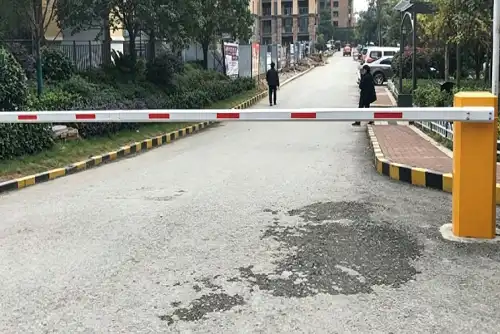
Straight arm block gates function simply yet effectively. A combined control system activates the motor assembly as a car approaches. This can be done by hand, RFID, or license plate recognition. This motor's bent crank arm and three-link moving structure lift the boom 90 degrees. The entire procedure might take 1.5 to 6 seconds, depending on traffic. The boom arm may span 2–6-meter lanes, allowing for many opening configurations. Telescopic arms and horizontal movable gates are considerably different from this concept. Straight arm dividers move vertically, saving space and improving efficiency.
Core Components and Automation Technology
Modern Automatic Rising Straight Arm Boom Barriers include multiple interdependent pieces. The 2 mm cold-rolled galvanized steel casing protects the inside parts from environmental harm. A 24V DC brushless motor was used for its durability and speed control. The bent crank arm mechanism softly converts motor activity into arm movement. Hall-effect sensors or digital encoders in modern versions precisely track arm movement, enabling safety features like auto-reverse when obstructions are detected. Today, electric motors are the most popular automation type since they require less maintenance than hydraulic systems. Electric fences respond quicker, quieter, and need less maintenance. Hydraulic versions are still employed in some settings because of their endurance in harsh environments and greater cost of purchase and maintenance.
Practical Applications in Vehicle Access Control
Shopping malls benefit from these barriers because they restrict parking during busy hours and prevent nighttime parking. Airports utilize them in public parking lots and places with limited services since they must perform dependably even when used often. Residential communities prefer these barriers because they regulate access to private areas, adding security. Residents can also enter and exit easily using automated identification systems. They divide staff parking from visitor areas in office buildings, easing morning traffic. These devices let commercial parking lot owners enforce payment procedures and prevent customers from leaving without paying. Connecting to current entrance control systems like license plate recognition, electronic toll collection, and Bluetooth allows the machine work without a human, saving labor expenses while satisfying security standards.
Benefits and Advantages of Automatic Rising Straight Arm Boom Barriers
Speed and Efficiency in Traffic Management
Traffic congestion reduce employee productivity and annoy consumers, costing businesses money. An Automatic Rising Straight Arm Boom Barrier swiftly lets cars enter and exit, solving this problem. Facility managers can maximize work based on the scenario due to changeable working speed. Traffic flows smoothly when many people enter business buildings in the morning by setting the barrier to 1.5 seconds. However, security-conscious places may extend the cycle to 4 seconds to confirm credentials before letting individuals in. This versatility is important in many situations. The technology eliminates hand gate opening and closing errors and operates without fail in any weather or time. Vehicles swiftly pass through inspections, reducing waiting time and pollution, an issue increasingly significant to environmental organizations.
Enhanced Security Through Advanced Safety Features
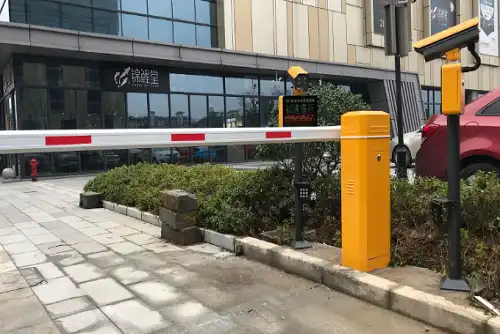
Security requires prudence and safety. Modern barrier gates use many mechanisms to perform both. The triple anti-crushing mechanism improves pedestrian and vehicle safety. This system uses infrared photocells, ground-mounted inductive loop detectors, and motor torque tracking. The mechanism rapidly stops the arm whenever a monitor senses something in the way of the barrier, preventing injuries. By alerting management of unauthorized system changes, the tamper warning function enhances security. This is especially beneficial in unmanaged, insecure areas. Material selection affects long-term protection. Aluminum boom arms don't corrode, thus they stay durable from -35°C to 80°C. The powder-coated steel body protects computer equipment from dust, water, and physical damage, ensuring reliability in severe industrial situations.
Durability and Cost-Effectiveness Analysis
The overall cost of ownership is more relevant than the original purchase price when buying. Over time, automatic gates prove cheaper than human ones. Staffing manual gates constantly increases costs beyond the tools. A barrier with an Automatic Rising Straight Arm Boom Barrier operates without human assistance and only needs maintenance every three months. The three-link movement arrangement with a bent crank arm distributes mechanical stress, extending part life. Industrial-grade systems can operate for 5–10 million runs before requiring substantial component replacement. Maintenance frequency depends on material quality. Aluminum boom arms don't crack or corrode like steel ones, but they're less wind-resistant, which is vital in open locations. Self-designed components ensure accurate quality control and product availability throughout its lifecycle in professional models.
Comprehensive Guide to Installation and Maintenance
Step-by-Step Installation Process
Years of steady performance start with correct placement. In order to install, a location must have enough space and access. The barrier needs a 600 mm wide, 600 mm tall, and 800 mm deep concrete base to properly attach the home. This foundation must cure for 72 hours before mounting equipment. Electricity requires separate power lines and conduit pathways for control wiring. Most professional barriers utilize standard power sources that automatically regulate voltage to prevent voltage variations. Construction teams bury anchor bolts and install barrier casing over them. It aligns well with the traffic lane. Wired control requires switch signal compatibility for existing parking systems. This is easy with contemporary access control devices. Technicians adjusted the counterbalance spring stiffness to match the boom arm length during testing. Not adjusting the balance puts the gearbox under needless stress, shortening its lifespan significantly.
Common Issues and Troubleshooting Solutions
Knowing about potential issues helps building managers resolve them immediately, ensuring smooth operations. Opening speeds that alter after speed settings are a regular issue. The counterbalance spring's setting has likely altered. Disconnect the motor clutch and keep the arm at 45 degrees to repair it. Spring tension must be adjusted professionally for any difference. A recurrent concern is that power outages may disable barriers. High-quality units include an external key lock for manual release. Security personnel can physically elevate the arm. The automatic reset function restarts regular operation when the power comes back on without human involvement. Sensors may pick up artificial impediments and turn the barrier when they don't function. Cleaning the optical sensors and verifying the loop detector sensitivity usually fixes these issues. Instead of tampering, significant traffic vibrations may trigger the theft alarm. By adjusting sensor sensitivity, you may reduce unwanted sounds while maintaining security.
Maintenance Best Practices and Support Services
Prepared maintenance maintains equipment in excellent condition and saves money on accident repairs. Every three months, check spring tension, lube the internal linkage rod, tighten chassis pin bolts that loosen from frequent vibrations, and clean optical sensors. Installations with over 1,000 cycles per day benefit from monthly eye examinations between planned servicing. Comprehensive support packages from ZOJE include preventative maintenance, priority emergency service, and authentic replacement parts. The quality barriers have a 2-year warranty to safeguard you financially during break-in, when manufacturing problems generally appear. Relationships with manufacturers safeguard your warranty and ensure you can access expert service and parts years after installation. Modern barriers may link to the cloud, allowing support personnel to remotely test and discover issues before they fail the system. Instead of reactive maintenance, proactive maintenance reduces downtime significantly.
Comparing Straight Arm Boom Barriers with Other Types
Space Requirements and Operational Differences
Facility layout frequently determines the optimal barrier for a certain function. Straight arm barriers require less side space since the boom rises vertically. They're ideal for short driveways or structures with limited side area. Lowered, the arm crosses the traffic lane with just the width and a tiny overhang on either side. However, swinging arm bars require the same area as the arm's open length, which is sometimes impossible in small spaces. Telescopic arms withdraw inside themselves instead of folding, which is more beautiful but makes the mechanism more complicated and more likely to malfunction or need maintenance. Most applications benefit from straight arm shapes' operational speeds. The balanced counterweight system helps you move fast without straining your machine. Good Automatic Rising Straight Arm Boom Barriers accomplish full cycles in 1.5 to 3 seconds, faster than previous designs, and operate better after millions of cycles.
Electric Versus Hydraulic Automation Systems
The performance benefits of electric and hydraulic drive systems must be weighed against their cost and maintenance. For several practical reasons, electric fences are the most popular installation. In houses and workplaces, noise concerns often upset tenants, yet 24V DC brushless motors are silent. Electric systems respond more correctly to control signals, making them more efficient and compatible with access control systems. Maintenance is still minimal, simply greasing and eye checks. Heavy-duty scenarios like industrial sites or large roadways that require arms longer than 6 meters justify hydraulic barriers' increased expense. The hydraulic drive's torque makes moving large booms easier, but also makes maintenance harder. Hydraulic fluid must be changed periodically, seals wear out and must be repaired by a professional technician, and housings must be heated in cold weather to maintain fluid thickness. The total cost of ownership typically favors electric systems for general corporate usage and hydraulic systems for particular industrial purposes.
Integration with Existing Access Control Systems
Modern structures already invest much on security. Instead of distinct systems, new walls must fit easily. Wires can accept switch signals from practically any access control platform to control professional Automatic Rising Straight Arm Boom Barriers. License plate readers, RFID card readers, QR code scanners, and fingerprint scanners are compatible. The barrier simply receives "open" and "close" signals and does not participate in authentication. This design offers several advantages. Building managers upgrade entrance control without modifying barrier hardware. Even while password systems are patched, the block works. Advanced versions use cloud connectivity to monitor and control many building doors from one interface. Built-in relay switches regulate traffic lights and barrier position. Visual indications match barrier state instantaneously. Integration potential makes barriers part of creating security ecosystems rather than standalone devices.
Procurement Insights for B2B Buyers
Understanding Pricing Structures and Budget Planning
Buying teams must carefully analyze several basic elements that affect equipment pricing. Standard Automatic Rising Straight Arm Boom Barriers with 3–4-meter metal arms cost $800–$2,500 per unit, depending on features and manufacturer. Because gears must be reinforced for longer booms up to 6 meters, they cost $300 to $800 more. Material enhancements like 316 stainless steel housings for tough situations cost 30% to 50% more than powder-coated steel enclosures. Automation complexity greatly impacts pricing. Modern versions with various safety sensors and speed control are more costly than simple ones. Cloud connectivity adds $200 to $400 to the base unit price for remote monitoring and control. Don't forget to add installation staff, foundation preparation, electrical work, and connecting the new system to the old one in the task cost. Extra expenditures are often equal to or more than equipment prices. This applies especially to retrofits in older structures that need considerable electrical improvements.
Evaluating Supplier Credentials and Reliability
Choosing the proper factory partner affects long-term enjoyment. Reliable suppliers are transparent about their business practices and give verifiable qualifications. A corporation with ISO 9001:2015 accreditation meets foreign quality control requirements. This accreditation requires frequent tests and growing strategies that improve product consistency. Patents demonstrate original ideas, not copycat designs. Manufacturers that invest in R&D patent their innovations, indicating their engineering skills. Experience with OEM and ODM demonstrates you can adjust to individual demands. Facilities with particular planning or security demands benefit from suppliers who can customize conventional items. Track markers matter. Famous tool makers demonstrate their goods' real-world performance. Asking current customers about performance in real life reveals nuances that marketing materials miss.
Ordering Process and After-Sales Considerations
Knowing delivery dates helps buying teams plan project dates. Standard configurations ship in 5–7 business days after confirmation. Manufacturing and quality testing take 10–15 days for customized requirements. Extra costs apply to rush orders to meet tight deadlines. International shipping arrangements effect delivery time. Sea freight is cheaper for large purchases but takes 4–8 weeks to arrive, depending on the location. Air freight is useful for urgent replacements or jobs. It costs extra but comes in days. Customs clearance rules vary by destination country, thus improper documentation might delay clearance. Complete after-sales support distinguishes exceptional vendors. The 2-year warranty should cover work and parts. Remote professional advice is helpful when difficulties arise. Professional makers provide phone, email, and videoconferencing assistance 24/7. Remote support's 30-minute response time exhibits customer service dedication. For equipment replacement, lifelong maintenance availability ensures that parts may be found years after installation.
Conclusion
Automatic Rising Straight Arm Boom Barriers work in many corporate and industrial situations. These devices provide dependable automobile access control that may be customized for airport security perimeters and shopping malls with thousands of daily parking transactions. They function at varied speeds, can withstand extreme environments, have three safety mechanisms to prevent crushing, and are easy to link to contemporary access control systems. This makes them versatile for procurement experts considering traffic management. Understanding barrier systems, how to maintain them, and how to pick a provider allows site managers to implement security and operational efficiency systems at minimal cost.
FAQ
1. How long do automatic rising straight arm boom barriers typically last?
Industrial barriers can last 5–10 million uses before needing replacement parts. An actual facility that handles 1,000 automobile movements every day should endure 15–25 years with three-month repairs. Environment affects lifespan. Saltwater-exposed coastal residences need more frequent inspections, and climate-controlled parking garages can extend part life.
2. Can these barriers integrate with our current parking management software?
Automatic Rising Straight Arm Boom Barriers that take switch signals and wired control linkages can connect to most parking management platforms. Simple orders from your program can open and close the barrier without extra ways. Cloud-connected models provide additional API interfaces to administer and monitor complicated corporate facilities management systems.
3. What happens during power outages?
Professional barriers feature external key-locked manual release mechanisms. This lets security officers lift the arm manually if the power goes out. When the power returns, the system restarts without manual intervention. Advanced versions have battery backups to keep the automated system functioning when the power goes out. This is important for facilities that need to regulate entrance 24/7, regardless of electricity.
Partner with ZOJE for Superior Barrier Gate Solutions
For harsh industrial environments, ZOJE makes high-performance Automatic Rising Straight Arm Boom Barriers. Our ZOJE-PB300 model offers 1.5 to 6 second speeds, metal boom arms that can function in -35°C to 80°C, and three dependable anti-crushing safety devices to protect automobiles and people. We provide comprehensive customization, OEM/ODM collaboration, and worldwide after-sales support, including 24-hour professional help and 30-minute online troubleshooting, as an experienced Automatic Rising Straight Arm Boom Barrier provider. Our staff at info@zoje-tech.com can discuss your building's particular demands and provide customized product specs.
References
1. Chen, W. (2021). Access Control Systems for Modern Facilities: Design and Implementation. Industrial Security Press.
2. Martinez, R. & Thompson, K. (2020). Automated Traffic Management Technologies. Transportation Engineering Journal, Volume 45, Issue 3.
3. National Parking Association. (2022). Best Practices in Parking Facility Access Control. NPA Technical Standards Committee.
4. Roberts, J. (2019). Commercial Security Equipment: Selection and Maintenance Guide. Facility Management Publications.
5. Zhang, L. & Kumar, P. (2023). Evolution of Barrier Gate Technology in Access Control Applications. International Journal of Security Systems, Volume 12, Issue 2.
6. Wilson, D. (2020). Cost-Benefit Analysis of Automated versus Manual Access Control. Business Facility Management Quarterly, Volume 28, Issue 4.

Send Inquiry
You may like


Related Industry Knowledge
- Why Parking Automatic Payment Station Integrated with LPR System Is the Future of Parking
- How barrier radar sensors prevent injury accidents?
- Best Anti-Tailgating Turnstile for Secure Facilities
- How Anti-Tailgating Turnstile Prevents Unauthorized Access?
- How Tempered Glass Full-Height Turnstile Enhances Security?
- Is Slim Speed Gate Turnstile Durable and Efficient?
- What Is High-Speed Access Control Turnstile Gate?
- Uses of Efficient Parking Solutions for Urban Mobility
- Where to Buy Reliable LPR Systems for Municipal Parking Lots?
- Top 24/7 Unattended Parking Systems to Cut Labor Costs