
How Do Outdoor LED Displays Make Parking Lots Smarter?
2026-07-22
Outdoor LED displays revolutionize parking management by transforming static facilities into intelligent, responsive environments. These advanced Parking Guidance led Display Screens integrate with real-time sensor networks to communicate instant availability data to drivers at critical decision points. By eliminating the frustrating search for open spaces, these intelligent visual systems reduce vehicle cruising time by up to 50%, decrease internal congestion, and optimize space utilization across shopping malls, airports, office complexes, residential areas, and commercial parking lots. The result is a seamless parking experience that benefits both facility operators and end users through improved traffic flow, enhanced revenue generation, and reduced environmental impact.
Understanding Parking Guidance LED Display Screens
What Are Parking Guidance LED Display Screens?
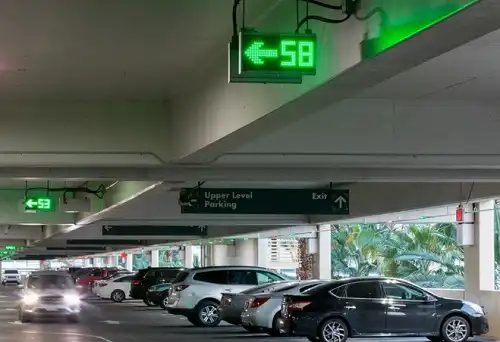
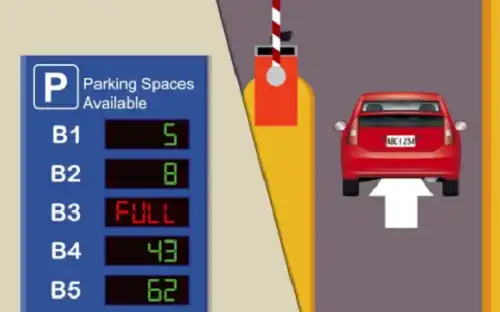
The visible link between cars and smart parking control systems is provided by Parking Guidance led Display Screens. Unlike regular flat signs that don't change no matter what, these dynamic displays get constant data feeds from occupancy sensors that are placed all over the building. The screens take this data, turn it into clear, practical instructions, and show them as the number of open spaces, arrows pointing in different directions, and availability by zone.
Industrial-grade LED matrix panels are used in the technology. These panels can provide bright light that can be seen in direct sunlight. Display choices include two-color setups with red and green lights for easy status reporting and full-color RGB panels that can handle complex variable messaging and branding elements.
How the Technology Works
Using sonar, geomagnetic, or video-based detecting methods, sensor networks spread out in parking lots find vehicles. This information is sent to a central management server using either RS485 or TCP/IP. On this server, algorithms figure out each zone and level's real-time availability. After being processed, the data flows to display screens that are placed in key places like entrances, decision points, and floor changes.
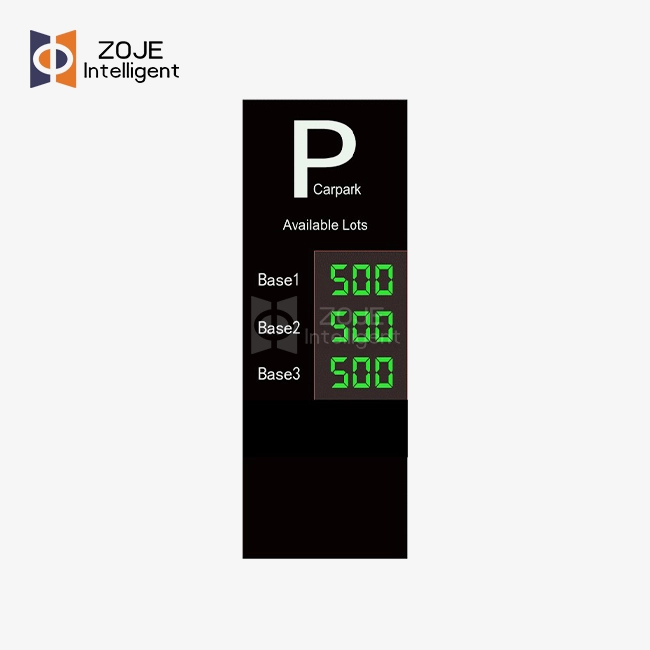
The ZOJE-3N-1 model is a good example of this integration because it has an entrance screen that guides drivers as soon as they arrive. The system sends out real-time empty space warnings 24 hours a day, 7 days a week. This makes sure that drivers get correct information when they need it. Data synchronisation happens quickly, which allows all linked displays to show the latest vacancy information at the same time.
Technical Capabilities That Matter
These days, outdoor LED guidance displays use SMD technology for indoor use and DIP LED configurations for outdoor use. For outdoor use, the brightness levels go over 5,500 nits. This level of brightness makes it easy to see outside in bright situations where LCD screens would be useless.
The flexible design theory makes it easy to put things together and keep them in good shape. When parts need to be replaced, techs can swap out individual sections instead of taking apart whole display units. This cuts down on downtime and long-term maintenance costs. This method works especially well for places that need to be open 24 hours a day, seven days a week, and where even short breaks can ruin the experience for users.
Key Benefits of Using Outdoor LED Displays in Parking Lots
Implementing smart LED guidance systems has huge advantages in terms of operations, finances, and the environment. When facility managers use these solutions, they report measurable changes in a number of performance measures that make the initial investment worth it.
Enhanced User Experience and Reduced Search Time
The main gain for drivers is that they don't have to spend as much time looking for parking. Transportation research organisations have found that vehicles with guidance information take 35–50% less time to find parking spots than facilities that use traditional signs. This increase in speed directly makes drivers happier, especially during rush hours when every second counts.
Operators of shopping malls say that better parking experiences lead to longer stays and higher customer satisfaction scores. When buyers can quickly find parking spots near the entrances they want to use, they have a good image of the store that lasts the whole time they are there.
Operational Efficiency and Cost Reduction
Manual traffic control is eliminated with automated space management systems, and a Parking Guidance led Display Screen delivers real-time visual indicators. Real-time sensor data is more precise than human observation, reducing personnel costs and improving accuracy. Modular design increases savings since it simplifies maintenance, reducing part costs and technician time.
Another important practical benefit is that it saves energy. Incandescent or fluorescent signage systems from the past use a lot more power than modern LED displays. Automatic brightness adjustment features, which change the intensity of the display based on the lighting conditions, use even less energy. The weekly power costs of facilities that run hundreds of guidance points go down by a large amount.
Scalability and Customization
Parking lots are very different in terms of size, layout, and how they need to be run. LED guidance displays can be put up in a variety of places, from small office parking lots to huge airport parking garages that are used for long periods of time. The systems allow messages in more than one language, which is very important for foreign airports and other places that serve a wide range of people.
Customisable messaging can include more than just different languages. It can also include emergency alerts, advertising material, and notices of special events. Facility managers can use their investment in display infrastructure for more than just parking guidance because it is so flexible.
Environmental Impact and Sustainability
Minimising parking lot traffic is excellent for the environment. Less time spent for parking places reduces sitting pollution, improving air quality. Businesses that desire LEED accreditation or other sustainability certifications benefit from intelligent parking systems, which help them fulfil environmental objectives and streamline operations.
LEDs survive longer than conventional lighting and advertising, so less material has to be replaced. This reduces waste. Many buyers increasingly consider parking technology expenditures in terms of sustainability. They recognise that being environmentally friendly and productive go together.
Choosing the Right Parking Guidance LED Display Screen: A Decision Support Approach
Procurement professionals face numerous considerations when selecting LED guidance systems for parking applications. Making informed decisions requires understanding both technical specifications and strategic partnership factors.
Critical Technical Specifications
Outside gate signage must be 5,500 nits bright in bright sunlight. Indoor directional indicators work well at 800–1,500 nits. The ZOJE-3N-1 is easy to see in bright sunlight due to its high-contrast colours and increased LED intensity. Drivers may view distances and approaches on a Parking Guidance led Display Screen.
Weatherproofing and durability: Facilities must specify IP ratings for product installation. Outdoor IP65 or IP66 screens are dust-proof and water-resistant from all directions. Long-term sun exposure doesn't fade or damage anti-UV galvanised steel. Adjusting to temperature changes keeps the system running year-round.
Compatibility and Protocol Support: Guidance systems must function effectively with current or future sensor infrastructure. RS485 is used for short distances and TCP/IP for networked systems with wider areas. Compatibility testing upon buying prevents implementation issues.
LED Versus LCD Technology Comparison
When it comes to parking advice, LED technology is clearly better. At first glance, LCD screens may seem like a good deal, but they aren't bright enough for outdoor use, and they don't last as long as LED systems do. According to research from schools of display technology, LED panels keep 70% of their brightness after 100,000 hours of use, while LCD panels lose a lot of their light between 30,000 and 50,000 hours.
Energy use comparisons show that LED solutions are even better. LCD screens of the same size use 40–60% more power than LED screens of the same size. This difference grows when brightness is needed for outdoor use. Over ten years of use, the higher cost of buying an LED system can be covered by the money saved on energy costs alone.
Procurement Considerations Beyond Hardware
provider Dependability and Support: Your display technology provider is more than just a vendor. As long as the system is in operation, facilities require professional advice, warranty servicing, and replacement parts. ZOJE's two-year guarantee and 24/7 technical assistance provide procurement managers confidence that their investment will lead to a long-term collaboration.
Project delays may result from equipment supply timetables. Project managers may better plan Parking Guidance led Display Screen deployment when they know how long suppliers take to make standard vs. customised versions. ZOJE provides ordinary things in 5–7 days and creative solutions around 10–15. Urgent replacements and phased rollouts are possible.
customisation and OEM: System developers and major facility owners require customisation to satisfy brand standards or add management software. Experienced OEM and ODM suppliers may provide personalised solutions that ordinary catalogue items couldn't match. Hardware and software customisation ensures that the guiding system meets construction demands without compromising work.
Installation and Maintenance Guide for Outdoor Parking Guidance LED Displays
Successful deployment of LED guidance systems depends on thorough planning and adherence to installation best practices. Facility managers who invest time in proper implementation avoid common pitfalls that compromise system performance.
Pre-Installation Planning and Site Analysis
Full site studies find the best places for displays to be put based on driver sightlines, decision points, and the limitations of the infrastructure. An electrical capacity assessment makes sure that there is enough power at the planned installation sites, and a network infrastructure assessment makes sure that the needs for data connections can be met.
The building owners use traffic flow modelling to determine how many display points they need and where to position them. Drivers should notice displays at the entry and interior guidance indications whenever they have to pick a route. Facilities that don't consider how many displays they need typically have service gaps after installation, requiring expensive display upgrades.
Installation Best Practices
Parking Guidance led Display Screen mounting frameworks must withstand wind, temperature, and traffic vibrations. Strong galvanised steel mounting brackets may be adjusted for optimal viewing angles during installation. Electrical connections should include surge protection to prevent harm from lightning or power grid issues outside.
To integrate a network, you need to pay close attention to how the protocols are set up and how the addresses are assigned. In order for the management system to make sure that data flows correctly, each show must be given a unique identity. Before the installation is considered complete, it should be tested to make sure that the screens react correctly to management orders and show correct real-time occupancy data.
Ongoing Maintenance Protocols
Regular cleaning removes dust, pollen, and other airborne contaminants, improving vision. Every three months, inspect for mounting gear corrosion, electrical connection damage, and display module pixel failures. Manufacturers offer software upgrades with bug fixes and performance enhancements to increase reliability.
Quality guidance displays are modular, making part replacement easy. Technicians can replace failing power supplies, control modules, and LED displays without tools. This reduces system downtime and maintenance costs. Partnering with approved service providers ensures genuine parts and expertise in difficult repairs.
Emerging Trends and Future Prospects of Parking Guidance LED Displays
The parking guidance technology landscape continues evolving as advances in artificial intelligence, connectivity, and display engineering create new possibilities for facility operators.
AI-Driven Predictive Analytics
Next-generation parking management systems use machine learning algorithms to look at past patterns of occupancy to guess what spaces will be available in the future. With these predictive features, screens can point cars to places that are likely to have open spots before sensors confirm that there are spaces. During busy times, predictive routing makes the facility less crowded by spreading arriving vehicles out more evenly.
Artificial intelligence also improves repair schedules by finding trends that happen before parts break. Predictive maintenance methods cut down on unplanned downtime and increase the life of equipment by fixing small problems early on, before they become big problems.
IoT Integration and Smart City Connectivity
More and more, parking garages are connecting to the infrastructure of smart cities as a whole. They share information about availability with navigation apps and traffic management systems run by cities. With this combination, drivers can choose where to park before they even get to the facility, which cuts down on trips to places where parking is limited.
The internet enables you monitor and operate things remotely, so you don't require technical people for each Parking Guidance led Display Screen. Facility managers may monitor system status, update display material, and react to warnings from multi-location central control rooms. This centralised strategy is ideal for city parking lot managers.
Advances in Display Technology
New display technologies claim to be even more energy efficient and better at producing light. As microLED technology improves, it may one day be possible to make displays brighter than 10,000 nits while using less power than current displays. Better colour accuracy and wider viewing angles will make information communication more useful, especially for complex wayfinding in buildings with multiple levels.
Flexible display materials that are being developed right now could make it possible for curved and non-rectangular shapes that fit in better with building elements. Even though these new technologies are still in their early stages of commercial use, procurement managers should keep an eye on them to see when new solutions are ready for mission-critical uses.
Sustainability and Environmental Responsibility
As companies try to lower their carbon emissions, environmental concerns are becoming more and more important in their purchasing decisions. As a response, display makers have come up with eco-friendly materials, better ways to save energy, and recycle programs for old screens. In the future, guidance systems might use solar power to help them use less energy from the grid, especially for sites that are outside.
Market research firms predict that the use of intelligent parking systems will continue to grow. This is because more people are moving to cities and smart city projects are being launched in both developed and emerging markets. When purchasing managers buy solutions that can be expanded and improved, their buildings are ready to use new technologies in the future without having to completely replace their systems.
Conclusion
Outdoor LED panels provide drivers real-time instructions that simplify and maximise space in parking lots, changing the industry. With sophisticated Parking Guidance led Display Screens, sensor networks, and management systems, environments can adapt swiftly. Shopping malls, airports, office buildings, neighbourhoods, and business lots benefit from fewer traffic, improved customer experience, and more efficient operations. The system reduces search times, personnel expenses, and energy consumption while increasing revenue. LED guidance displays may be scaled up or down and employed in a number of settings, making them a crucial aspect of current parking infrastructure as smart city initiatives proliferate and technology improves.
FAQ
1. What specifications should I prioritize when selecting a parking guidance LED display screen?
For outdoor installations, brightness must be at least 5,500 nits to be viewable in direct sunshine. IP65/IP66 weather resistance keeps dust and water out of open areas. The sensor is compatible with your occupancy detection system, and RS485 or TCP/IP protocol support ensures secure data transmission. Because modular parts may be changed without disassembling the device, maintenance is simpler. The ZOJE-3N-1 Parking Guidance led Display Screen includes all these characteristics and more, making it the best option.
2. How do LED displays outperform traditional parking signage?
Drivers must blindly look for free spaces since static signs can't warn them when circumstances change. LED guidance displays provide real-time occupancy data, reducing search time by 35–50%. No one needs to manually control traffic since the systems do it. The systems get increasingly accurate. LED technology lasts over 100,000 hours and consumes 40–60% less power than LCD equivalents while giving superior brightness. This makes it more energy-efficient than lit signs.
3. What maintenance do outdoor LED parking displays require?
Clean every three months to remove natural contaminants that cloud things. Visual checks check mounting hardware, electrical connections, and display modules for damage or missing pixels. Software upgrades from manufacturers increase speed and solve issues. The modular architecture facilitates replacing damaged pieces fast and straightforward without tools. This reduces downtime. Working with vendors who offer 24/7 technical assistance ensures you obtain help fast when things grow difficult. This protects your investment with proactive maintenance rather than crisis management.
Partner with ZOJE for Advanced Parking Guidance Solutions
ZOJE can completely change the look of your parking lot with smart LED display technology that makes things run more smoothly and makes users happier. As a producer with a lot of experience in Parking Guidance led Display Screens, we offer complete solutions that are made to fit the needs of shopping malls, airports, office buildings, apartment complexes and business parking lots all over the United States and the world.
Our ZOJE-3N-1 entrance display model shows how committed we are to quality. It has real-time space reminders that work 24 hours a day, instant data synchronisation, and clear visibility in all kinds of weather. The flexible design makes it easy to put together and keep up, and the fact that it can adapt to changes in temperature means that it will work reliably all year long. We back up every system with a two-year warranty and technical support 24 hours a day, seven days a week. This gives you peace of mind throughout the lifecycle of your investment.
Along with standard products, ZOJE is great at custom projects because we can do both OEM and ODM, which lets us meet specific needs that off-the-shelf solutions can't. Our flexible shipping support includes DDU and DDP terms, which make buying things from other countries easier. Get in touch with our knowledgeable staff at info@zoje-tech.com to talk about your specific project needs and get accurate quotes. Find out why site managers all over the world choose ZOJE as their favourite seller of Parking Guidance led Display Screens. You can see all of our products at zoje-parking.com.
References
1. International Parking Institute. (2022). "parking guidance systems: Technology and Implementation Best Practices." IPI Publications.
2. Smith, Robert J., and Chen, Wei. (2021). "LED Display Technology in Transportation Infrastructure: Performance Analysis and Case Studies." Journal of Urban Technology, 28(3), 45-67.
3. Transportation Research Board. (2023). "Smart Parking Solutions and Urban Congestion Mitigation." National Academies Press.
4. Garcia, Maria L. (2022). "Energy Efficiency Comparisons in Outdoor Display Technologies for Parking Applications." International Journal of Sustainable Transportation, 16(4), 312-329.
5. European Parking Association. (2023). "Standards and Specifications for Parking Guidance Systems in Multi-Story Facilities." EPA Technical Guidelines.
6. Wilson, Thomas A., and Kumar, Raj. (2021). "ROI Analysis of Intelligent Parking Management Systems in Commercial Real Estate." Facilities Management Journal, 39(2), 88-104.

Send Inquiry
You may like


Related Industry Knowledge
- How to Choose Entry Ticket Dispenser and Card Reader System for Commercial Parking
- What is a UHF RFID Tag Reader for Parking Management System?
- Parking Management Barrier Gate Features & Integration
- Tempered Glass Full-Height Turnstile Materials & Safety
- OEM Anti-Tailgating Turnstile Supplier Guide
- Top Benefits of High-Wing Speed Gate Turnstile Systems
- How Straight Arm Barrier Gate Controls Traffic Flow?
- What Is a High Accuracy LPR Parking System? Complete Guide
- LPR Parking System for Automated Parking Access Control
- ALPR Hardware for Smart Parking and Traffic Monitoring