
What is Vertical Tripod Turnstile for Secure Access Control
2026-08-14
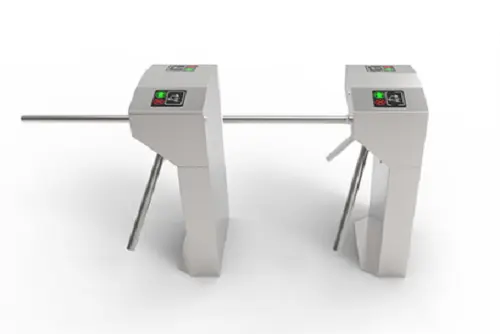
A vertical tripod turnstile for secure access control is a compact, electro-mechanical pedestrian barrier engineered to regulate entry in medium-security environments through a physical one-person-one-passage mechanism. Unlike optical barriers that can be easily bypassed, this technology utilizes a rotating three-arm hub mounted on a vertical stainless steel cabinet to physically obstruct unauthorized passage. The system addresses critical industry pain points by eliminating tailgating through mechanical singulation, managing high-throughput crowd control in space-constrained areas without human intervention, and providing a robust, cost-effective Physical Access Control System interface that integrates seamlessly with RFID readers, biometric scanners, and ticketing systems.
Understanding Vertical Tripod Turnstiles: Definition and Core Features
It has been shown that the vertical tripod turnstile for secure access control is a good mix of mechanical dependability and electronic accuracy. At its heart, the system has a three-arm rotor unit that is placed vertically inside a housing made of SUS304 or SUS316 stainless steel, which is usually between 1.5mm and 2.0mm thick to protect it from corrosion and theft.
Mechanical Architecture and Operation Modes
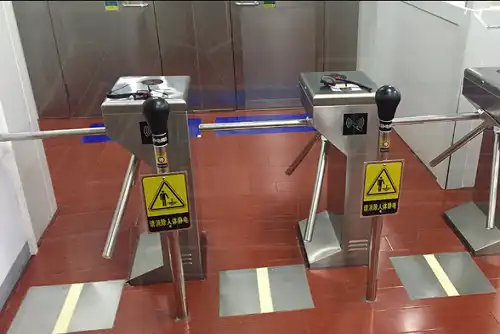
A heavy-duty solenoid lock and hydraulic shock absorbers make the mechanism work. They keep the rotation smooth and quiet for the whole life of the device. When an approved ID is shown, like an RFID card, fingerprint scan, or QR code, the control board sends a signal to unlock the mechanism. This lets the arms turn exactly 120 degrees before locking again. This precise engineering makes sure that only one person can pass at a time, creating a physical barrier that stops people from just following behind. The method can work in both one-way and two-way passing modes, depending on the needs of the facility's traffic flow. When the system is working normally, the arms stay locked in place, even if someone tries to break in and applies forces exceeding 80 kg.
Integration Capabilities with Access Control Systems
Modern tripod turnstiles have standard inputs and outputs, such as Wiegand 26/34, RS485, RS232, and dry touch inputs, so they can work with all security systems that are already in place. Because of this, facility managers can connect the turnstile to proximity card readers for basic access control, fingerprint scanners for more thorough identity verification, or facial recognition cameras for authentication without touching anything. This is shown by the ZOJE-S206 model, which can support different access control modules while still having a small 420x330x1000mm footprint that makes it easy to install in tight spaces. The control board can self-diagnose, which lets you check on the health of the system in real time and let repair teams know about any problems before they affect operations.
Benefits and Use Cases of Vertical Tripod Turnstiles in Access Control
When used for vertical tripod turnstile for secure access control, it improves security and makes operations more efficient in a wide range of building types. The mechanical singulation design physically stops people who aren't supposed to be there from following approved users through the gate. This fixes a problem that optical systems alone can't safely fix.
Security Advantages in High-Traffic Environments
The main security benefit comes from making sure that access rules are followed physically. The turnstile can handle up to 35 people per minute, which is helpful for shopping malls that get a lot of visitors. However, it can be used to strictly control entry to staff-only areas or premium areas. At airport security checks, these devices set up controlled waiting areas where each person must show legal identification before moving forward. The feature that stops people from tailgating is especially useful in apartment buildings where management wants to keep uninvited guests from riding along behind real residents at night. The turnstile adds an extra layer of security to office buildings that store private intellectual property because it keeps a record of every attempt to enter that is linked to a specific pass.
Cost-Effectiveness and Maintenance Requirements
Instead of full-height turnstiles, which take up a lot of room and cost a lot of money, tripod versions are cheaper and can handle more than 5 million actions before they break. Because they last so long, they don't need much upkeep. For units that handle up to 5,000 rounds per day, lubricating the hydraulic damper every three months, checking the solenoid limits every so often, and regularly tightening the arm fixtures are all that's needed. Commercial parking lot owners like this low-maintenance profile because unmanned entry points need reliable equipment that works all the time without needing to be serviced often. Stainless steel doesn't break down easily in the environment, so it can be used in climate-controlled indoor settings as well as outdoor settings where temperature changes and wetness are common.
Real-World Applications Across Industries
These turnstiles are used by factories to keep track of employees' time and attendance. They are often combined with ESD testers to make sure that workers are properly grounded before they enter production areas that are sensitive to static electricity. Public transportation hubs need fast processing to handle rush-hour crowds and make sure that fares are correctly validated, which protects revenue from people who don't pay their fare. Corporate gyms and leisure centers have automatic membership verification that works 24 hours a day, seven days a week. This stops people who aren't members from getting in and stops pass-back fraud in empty reception areas. Each use shows how the vertical tripod turnstile for secure access control can be adjusted to meet different operating needs while still providing the same level of security.
Comparing Vertical Tripod Turnstiles with Other Turnstile Types
When looking at pedestrian access control options, people who work in procurement need to know what the pros and cons of each turnstile configuration are so that security investments can be made that fit the needs of the building and the budget.
Space Efficiency and Security Level Analysis
Vertical tripod turnstiles for secure access control take up much less floor space than full-height rotational models. This makes them perfect for adding to existing entrances without having to make major structural changes. Full-height turnstiles need at least 0.5 square meters of space, while a normal standing unit only needs about 0.14 square meters. This small design has a moderate security rating. The waist-high barrier effectively stops casual intrusion, but determined athletes could theoretically jump it. Flap barrier gates look better and can handle 40 to 50 people per minute faster, but their visual sensors aren't as good at stopping people from tailgating as tripod arms' mechanical enforcement. Full-height turnstiles provide the highest level of security by enclosing each user in a floor-to-ceiling cage. However, because they are so much more expensive and take up so much space, they can only be used in very secure places like data centers or prisons.
Access Control Technology Integration Comparison
When comparing credential readers, biometric systems offer more reliable identity verification than card-based entry, as they do not require the risk of lost, stolen, or shared credentials. Fingerprint readers that are built into turnstiles have False Acceptance Rates below 0.001%, which makes sure that only allowed people get in. Face recognition systems are convenient because they don't require users to stop and show a card. Instead, they can be processed at walking speed. However, biometric implementations make things more difficult when it comes to managing databases, making sure privacy rules are followed, and the initial costs are higher. RFID card systems are still the most cost-effective option for places with low security needs because they are easy to manage and give out credentials quickly. The ZOJE-S206's flexible integration architecture can work with any of these technologies, so businesses can choose the authentication method that best meets their needs and fits their budget.
Installation, Maintenance, and Integration Best Practices
To successfully set up a vertical tripod turnstile for secure access control, you need to plan ahead and take into account the conditions and operating needs of the site right from the start.
Site Assessment and Installation Considerations
Before the installation starts, building managers have to do a full site study that looks at things like the floor's load capacity, the proximity of electrical equipment, and the available network connections. The mounting surface needs to be level and stable so that it can hold the weight of the unit plus the side forces that are expected from the user touching it. For outdoor installations, electrical needs usually include 110V to 240V AC power with proper grounding to make sure safe operation and lightning protection. Either hardwired Ethernet is needed for real-time data synchronization, or Wi-Fi coverage must be reliable if wireless integration is desired. The construction team should check the clearances around the gate to make sure there is enough room for people to enter, go through, and leave without having to crowd. When installing more than one lane, there must be enough space between each unit to allow wheelchair access and emergency evacuation.
Preventive Maintenance Protocols
Regular maintenance plans keep the vertical tripod turnstile for secure access control working well for as long as it's supposed to. During every three-month maintenance check, the arm alignment should be looked at visually, the emergency drop-arm function should be tested, the hydraulic damper should be oiled with compounds allowed by the maker, and all electrical connections should be checked for signs of corrosion or loosening. Cleaning procedures include wiping down stainless steel surfaces with cleaners that don't scratch in order to keep them looking good and stop buildup that could affect optical sensors. The self-diagnostic logs of the control board should be looked at to find any error codes or strange behavior patterns that need to be looked into further. Units that are outside need extra care to make sure the seals are tight, and weatherproofing gaskets need to be replaced on a regular basis to keep the IP65 grade against dust and water entry.
Integration with Existing Security Infrastructure
Investing in turnstiles that work well with building management systems, visitor management platforms, and central monitoring stations makes them more valuable. Modern access control panels can link to the internet via TCP/IP, which lets turnstiles talk to cloud-based management software directly and get real-time status reports and make changes to the configuration from afar. This connectivity makes it possible to centrally manage access permissions across multiple entry points. This way, security administrators can quickly revoke credentials or change access schedules without having to go to each device. Integrating a fire alarm system makes sure that the arm releases automatically within one second of the warning going off. This makes clear escape routes that meet life safety standards. When you pair turnstiles with overhead surveillance cameras, you get detailed records of every passage event. This helps with investigations after security breaches happen.
Procurement Considerations and Trusted Supplier Selection
Choosing the right vertical tripod turnstile for secure access control supplier has a big effect on the long-term success of the project. This is because system reliability and total cost of ownership are directly affected by differences in quality between manufacturers.
Evaluating Product Quality and Certification Standards
Manufacturers with a good reputation keep quality management systems that are ISO 9001:2015 approved. These systems make sure that all of their production units meet the same standards. Procurement teams should ask for proof of compliance testing, such as salt spray tests according to ASTM B117 standards to make sure the mechanism doesn't rust, static load tests to make sure the arms can handle forces greater than 80 kg, and life cycle fatigue tests to show the mechanism can handle millions of rotations. CE approval means that a product meets European safety standards. On the other hand, goods that will be sold in North America may need to be UL listed. The grade of stainless steel is very important. For example, SUS304 is fine for indoor uses, but marine-grade SUS316 stainless steel is needed for installations near the coast, where salt air speeds up corrosion. By looking at sample units, you can actually judge the quality of the construction by feeling the welds, checking the smoothness of the finish, and seeing if there are any safety features, like arm-end rubber caps that stop injuries during contact.
Warranty Coverage and After-Sales Support Structure
The ZOJE-S206 comes with a full two-year warranty that covers manufacturing flaws and component failures under normal working conditions. This shows that the company that made the product is confident in its longevity. In addition to the length of the warranty, procurement professionals should look at the supplier's after-sales support system. This should include expert help available 24/7 to fix operating problems, quick responses to service requests, and clear prices for replacement parts. ZOJE's promise to visit customers in person once a year shows that they want to build more than just a transactional connection with them. This way, the provider can understand how the facility's needs change over time and suggest ways to make the system work better. Having access to authorized service networks in your area cuts down on downtime when repairs are needed because local technicians can come right away with genuine replacement parts instead of having to ship them from another country.
Customization Capabilities and Volume Pricing
Standard products usually ship within 5 to 7 days, which fits into tight project schedules. However, if you need to customize the product, lead times can go up to 10 to 15 days, depending on how complicated the changes are. Customizing hardware could mean changing the size of the housing to fit specific building requirements, choosing different end colors to match the company's brand, or adding special mounting brackets for readers. Customizing software lets you add your own access control logic, like anti-passback methods that stop one credential from letting multiple rapid entries or time-zone limits that only let people in during certain hours. Distributors and system integrators can rebrand products and offer unique products to their customers through OEM and ODM cooperation models. Large-scale deployments are rewarded by volume price structures, which offer tiered discounts at buy amounts that make sense for focused production runs. As a company that makes vertical tripod turnstiles for secure access control, ZOJE can handle both custom orders for specific projects and standard bulk orders, which gives them the flexibility to work with a wide range of procurement situations.
Conclusion
In order to strike a balance between security efficiency and operating practicality, the vertical tripod turnstile for secure access control is an essential part of current pedestrian access management strategies. This guide looked at how these devices enforce one-person-one-passage control by combining mechanical strength with electronic intelligence. It also looked at their benefits in a variety of settings, including shopping malls, airports, residential areas, office buildings, and commercial parking lots, and it compared their performance to other types of turnstiles. If procurement experts know about the best ways to install things, how to keep them in good shape, and how to choose a supplier, they can definitely suggest solutions that meet the security goals and price constraints of the organization. The ZOJE-S206 model shows how careful engineering can solve real-world facility problems while keeping costs low for projects with limited funds. It has a small footprint, a throughput of 35 people per minute, full integration support, and a two-year warranty.
FAQ
1.How does the vertical tripod turnstile for secure access control comply with fire safety regulations?
The vertical tripod turnstile for secure access control does what the fire safety rules say it has to do. These units have an emergency drop-arm module that is designed to respond right away to signals for life safety. If the power goes out or the building's fire alarm system sends a warning through dry contact input, the horizontal arms drop within one second, making a clear, unobstructed escape route that lets people get out quickly in an emergency. This fail-safe design makes sure that the building meets international building rules that say there must be clear exits in case of a fire.
2.Can the system be installed outdoors?
Ingress protection ratings of IP65 or higher protect internal parts from dust and water jets, so the unit can be installed outside without any problems. The ZOJE-S206 is made of stainless steel, which doesn't break down easily in sunlight or when the temperature changes. Internal heater modules and thermostat controls keep the mechanism from freezing in cold places and stop condensation from building up, which could damage electronic parts. This makes sure that the machine works reliably all year.
3.What access control devices is it compatible with?
There are standard Dry Contact relay inputs, Wiegand 26/34 interfaces, and RS485/RS232 communication ports on the main control board. This means that it can work with all RFID proximity readers, fingerprint biometric scanners, facial recognition cameras, and barcode ticket validators. With this wide range of interfaces, facility managers can choose the authentication technology that best meets their security needs without having to worry about whether it will work with other systems.
Upgrade Your Facility Security with ZOJE's Proven Access Control Solutions
Businesses that want to improve perimeter security while keeping pedestrian flow smooth should think about teaming up with a well-known vertical tripod turnstile for secure access control supplier that has a track record of success. Since 2012, Hong Kong ZOJE Intelligent Technology Co., Ltd. has been creating and making access control systems. The company has ISO 9001:2015 approval and several technical patents to back up its work. Our ZOJE-S206 model is designed to take up little room and have a high throughput capacity. It can be easily integrated with your current security system. In addition to high-quality products, we offer great value by delivering standard orders quickly (5-7 days), allowing for a lot of OEM and ODM customization, offering 24/7 global technical support, and offering a solid two-year warranty. Our team visits customers once a year to learn about how your business needs are changing and to strengthen long-term relationships. Contact Us at info@zoje-tech.com right away to talk about how our custom solutions can meet the needs of your building.
References
1. Smith, J. R., & Anderson, K. L. (2021). Physical Access Control Systems: Design, Implementation, and Management. Security Technology Press.
2. International Organization for Standardization. (2019). ISO 9001:2015 Quality Management Systems—Requirements. Geneva: ISO.
3. Thompson, M. D. (2020). Pedestrian Flow Management in High-Security Facilities. Journal of Security Engineering, 15(3), 412-428.
4. National Fire Protection Association. (2018). NFPA 101: Life Safety Code Handbook. Quincy, MA: NFPA.
5. Chen, W., & Rodriguez, P. (2022). Comparative Analysis of Turnstile Technologies for Commercial Applications. Access Control Quarterly, 8(2), 67-84.
6. European Committee for Standardization. (2020). EN 60529: Degrees of Protection Provided by Enclosures (IP Code). Brussels: CEN.

Send Inquiry
You may like
Related Industry Knowledge
- The Benefits of Using a Entrance Parking Guidance Digital LED Panel for Parking Garages
- In-Ground Geomagnetic Parking Sensor for Smart Parking Systems
- Front-Mounted Ultrasonic Parking Space Detector Features You Should Know Before Buying
- What Makes Automatic Pay Kiosk for Commercial Parking Projects Reliable?
- Why Parking Operators Need Automatic Pay Kiosk for Commercial Parking Projects
- Why Parking Automatic Payment Station Integrated with LPR System Is the Future of Parking
- Cashless Parking for Government Facilities: A Modern Approach
- OEM Space-Saving Turnstile Customization Guide
- Best License Plate Recognition Systems for Parking
- What Is an Open API LPR Parking System for Smart Parking?