
Automatic Pay Kiosk for Commercial Parking Projects : Parking Made Easy
2026-06-24
Commercial facility owners all over the United States have a hard time keeping track of parking income while also giving customers a great experience. An Automatic Pay Kiosk for Commercial Parking Projects turns this problem into an opportunity by providing self-service payment devices that speed up transactions, lower the need for staff, and get rid of the crowds that usually happen at manual payment booths. These high-tech machines let drivers pay their parking fees before getting back in their cars. This makes traffic flow much better during rush hours and accepts a variety of payment methods, such as cash, QR codes, and wireless credit cards. The key to successfully updating your parking lot is to understand how automated payment machines work and choose the best option for your facility's specific needs.
Understanding Automatic Pay Kiosks for Commercial Parking
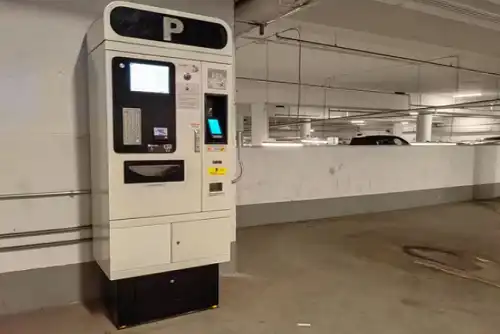
Self-service payment stations are a big step forward in parking control technology. Unlike traditional booths with cashiers, these kiosks work on their own, handling transactions through hardware and software that are built to work in high-volume business settings.
Core Technologies Behind Payment Automation
These days, payment kiosks use strong operating systems like Android 4.0 and up, which ensure stable performance and work with modern payment processing apps. The building has built-in computers, industrial-grade touchscreens that can be read outside, and modular parts that make upkeep easy. Payment processing software talks to core management systems in real time, which lets prices change on the fly, handles validation, and gives full financial reports.
Versatile Payment Method Integration
Today's drivers want to be able to pay in different ways. This is what people expect, so automated payment stations have special coin receivers and note recyclers that take cash, credit and debit card readers that are compliant with EMV, and scanners that read QR codes for mobile wallet purchases. This multi-channel approach makes sure that no customer is turned away because of a limited payment method. This directly lowers delay and speeds up transactions during busy times.
Seamless System Connectivity
Any parking payment option is only useful if it can be integrated with other systems. TCP/IP standards make it easy for advanced machines to connect to centralized management software, license plate readers, and barrier gate systems. Because of this connection, parking doesn't require a ticket because the license plate serves as proof of ownership. Also, any savings given by store renters are quickly handled at the kiosk interface.
Key Benefits of Automatic Pay Kiosks in Parking Facilities
When you set up Automatic Pay Kiosk for Commercial Parking Projects systems, you can see gains in operational, financial, and customer satisfaction measures. Knowing about these benefits helps buying managers decide whether to make capital investments and estimate when they will get their money back.
Operational Efficiency That Transforms Throughput
When there are long lines at the exit gates, businesses lose money and people get angry. Automated booths get rid of this problem by letting drivers pay before they get to their cars. As a result? Peak hours see a big rise in the number of vehicles moving through, which is very important for shopping malls that get crowded in the evening or airports that have to handle a lot of arriving flights at once. Processing times for transactions are usually between 30 and 60 seconds, while they take 90 seconds or more at human booths.
Dramatic Cost Reductions Through Automation
In standard parking management, the biggest practical cost is the cost of labor. Because kiosks are always open and don't need to be supervised, they don't need to work multiple shifts, which would mean extra salary work. Automated systems that recycle cash cut down on Cash-in-Transit calls, which lowers the cost of protected car service and lowers the risk of loss. Complex fee estimates, like tiered hourly rates or validation discounts, are done perfectly and without any mistakes by a computer, which protects the purity of the income.
Enhanced Security and Fraud Prevention
Concerns about security go beyond just handling cash. Modern payment kiosks have alarms built in that go off right away if someone tries to open the machine from the outside. This alerts security staff or remote tracking centers. Optional CCTV tracking keeps visual records of all transactions, which can help settle disputes and keep people from damaging property. Meeting the strict PCI-DSS standards for EMV and NFC compliance protects payment data and keeps customers' financial information safe.
Real-Time Revenue Visibility
Cloud-connected booths send transaction data to central computers right away, which lets parking lot managers see their finances in real time. This makes it possible to change prices based on demand, find places that aren't doing well right away, and use automatic reconciliation to get rid of mistakes made by hand counting. When every transaction is recorded online with timestamps and information about the payment method, financial checks are easier to do.These benefits make a strong business case for site managers in places like shopping malls, airport terminals, apartment complexes, office buildings, and commercial parking spots who want to update the systems they use to collect money.
How to Choose the Best Automatic Pay Kiosk for Commercial Parking Projects
When choosing the right payment system, you need to think about technical specs, how long it will last in the setting, and the total cost of ownership. Structured evaluation models that match device capabilities with facility needs are helpful for procurement pros.
Critical Technical Specifications
Transaction ability is the most important thing. Places with a lot of people, like airports or regional shopping areas, need kiosks that can handle hundreds of deals every day without slowing down. Different payment methods are just as important as each other. Make sure the unit works with all the types your customers expect, even new mobile payment systems. If your new parking management software can work with your old software, you won't have to wait for expensive integration delays. Before committing to a provider, make sure they support your protocol and API.
Durability for Demanding Environments
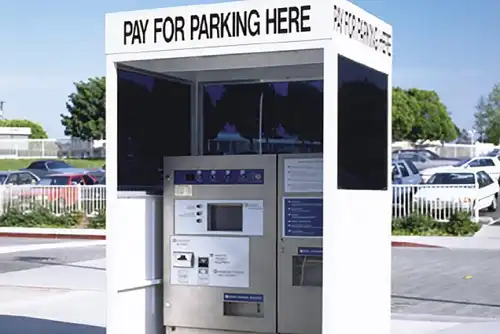
Equipment is put through harsh conditions in commercial parking lots. When sculptures are outside, they have to deal with changes in temperature, rain, dust, and strong sunlight. Heavy-gauge cold-rolled steel kiosks with powder covering and ratings of IP54 or IP65 protect people and things from the elements. High-brightness touchscreens with more than 1000 nits can still be read in full sunlight. Also, interior climate control systems with heaters and cooling fans keep parts working properly in temperatures ranging from -40°C to +75°C.
Automated Kiosks Versus Manual Booths
These methods are very different from each other. Manual booths have ongoing costs for workers, can't be used after hours without paying extra, and allow mistakes to happen when figuring out fees. When you look at it over five years, automated kiosks have lower overall costs of ownership even though they take more money up front. Scalability supports automation because adding capacity only requires putting more units instead of hiring, teaching, and scheduling people. Maintenance needs for good kiosks are always the same, and the flexible design of their parts makes it possible to fix them quickly in the field, which cuts down on downtime.
Vandal-Proof Design Considerations
Even though no gadget is completely safe, careful building makes them much less likely to be broken. Critical systems are kept safe by multi-point locking systems, drill-resistant locks, and shock-mounted parts. When someone tampers with the security system, vibration sensors sound a silent warning. This lets security staff act quickly. Cash recycling technology makes closed-loop systems where the currency that is put in gives change. This cuts down on cash stocks that criminals look for and increases the time between servicing.
Implementation and Maintenance: From Installation to Support
Equipment choosing is only one part of a successful rollout. Long-term Automatic Pay Kiosk for Commercial Parking Projects system dependability and operator happiness depend on structured installation processes and ongoing maintenance routines.
Structured Installation Methodology
The deployment method starts with a site evaluation. Check to see if the network equipment is ready, making sure there is enough speed for processing transactions in real time. For physical placement, you need stable mounting platforms, electrical connections that meet local rules, and enough weather protection for parts that will be outside. Setting up network connections includes setting up static IP addresses, creating VPN tunnels for safe contact, and connecting to parking control systems that are already in place. Professional workers can usually finish a single-unit installation in one business day, which means that the building's operations aren't interrupted too much.
Ongoing Maintenance and Support Protocols
Preventive repair greatly increases the life of tools. On regular check lists, things like calibrating touchscreens, replacing printer paper, cleaning cash mechanisms, and making sure software updates are working should all be included. Component-level fixing fixes common problems like bill acceptor jams, card reader mistakes, and lost network connections before they become service calls. The standard of supplier help varies a lot. Look for vendors who give technical support 24 hours a day, seven days a week, with warranties that last longer than two years and clear steps for what to do in case of an emergency.
Leasing Versus Purchasing Considerations
The way the money is structured affects the project's viability. Buying equipment directly takes more money up front, but it frees you from lease payments and gives you ownership of the item. Leasing agreements help businesses keep their working capital, may include repair coverage in their monthly fees, and give them the freedom to improve as technology changes. When looking at financing options, you should figure out the total cost of ownership over the projected lifetime of the equipment, which is usually five to seven years. This includes costs for upkeep, software licensing, and replacements that will need to be made in the end.
ZOJE's Advanced Payment Kiosk Solution
Since 2012, Hong Kong ZOJE Intelligent Technology Co., Ltd. has been a leader in developing new parking systems. They offer automated payment solutions that help business parking companies across North America with their unique problems. Our tech team has both mechanical and electrical knowledge, as well as real-world experience working in a wide range of building types.
Technical Specifications and Customization Capabilities
Self-service payment terminals work with Android 4.0 and higher and numerous apps. Customised coin collectors and change tools handle large amounts of cash quickly and effectively, while note recyclers manage cash intelligently to save maintenance. Integrated ticket printers provide transaction proof to enhance budgets and customer records. With cash, QR codes, and credit cards, there's something for everyone.Alarms ring quickly when an outsider enters, protecting money and equipment. Options for CCTV surveillance simplify accountability and dispute resolution. Each project is unique, hence we provide OEM and ODM modification. We can customise hardware, software, and branding for a building and corporation.
Proven Applications Across Commercial Environments
Mixed-use retail settings benefit from our kiosks' fast validation of complicated scenarios. Rent discount vouchers function seamlessly with the system and can handle "2 hours free with purchase" promotions and percentage-based charge reductions without further effort.Healthcare facilities need easy platforms to calm patients and visitors. Our disabled-accessible technologies provide multi-day permits and frequent visitor programs administered by hospital administration systems.Airport hubs need multilingual, long-term labour. Our computers can confirm pre-bookings, provide multilingual instructions, and manage many currencies. They handle intensive use and environmental problems effectively.Our solutions handle visitor fees, employee parking permits, and integrated validation systems with admission limitations in office buildings. Management is easier with unified tools.
Why Procurement Managers Choose ZOJE
Speed counts in tight project timelines. Faster than the industry average, standard installations take 5–7 days and customised solutions 10–15 days. Our ISO 9001:2015 accreditation and technology patents indicate quality and innovation.Full technical assistance includes pre-sales and post-installation. Our worldwide after-sales team is available 24/7. We meet with customers annually to build relationships and enhance products.Flexible logistics accommodates numerous initiatives. DDU and DDP terminology facilitate customs clearance and delivery coordination for boat and air cargo. Uptime exceeds industry standards due to our modular architecture's component-level maintenance. Your purchase has a two-year warranty.
Conclusion
Automated booths may Automatic Pay Kiosk for Commercial Parking Projects systems at malls, airports, apartments, offices, and specialised parking spots. These technologies remove practical barriers, cut personnel costs, make things safer with built-in tracking and warning systems, and provide drivers the payment options they expect. Consider technological characteristics, longevity, system compatibility, and supplier support while choosing tools. All affect project longevity. ZOJE's proven solutions combine cutting-edge technology, personalisation, and rapid, pleasant service. These benefits might help site managers plan for future growth as parking needs change.
FAQ
1. What happens if network connectivity fails during operation?
Professional-grade kiosks have an offline setting that uses internal systems to store events locally. When connectivity is restored, the system instantly syncs transaction data that has been stored with central computers. This keeps money coming in even when there are outages. This backup is very important for sites in places where network dependability isn't always reliable.
2. Can automated kiosks integrate with existing license plate recognition systems?
Having the ability to integrate is a normal feature of good payment machines. Open API and SDK interaction layers get license plate data from ANPR cameras, which lets you park without a ticket as long as your license plate is used as proof. This gets rid of the need to handle real tickets and speeds up the purchase process.
3. How frequently do cash handling components require servicing?
Service times depend on how many transactions are made, but commercial-grade recycling systems make maintenance periods much longer. High-capacity systems can hold more than 1,000 bills and make closed-loop systems where cash that is put in is given out as change. Cash-in-Transit calls are cut from once a week to once a month with this recycling method, which lowers running costs and raises security.
Partner with a Trusted Automatic Pay Kiosk for Commercial Parking Projects Supplier
ZOJE wants people who run parking lots and people who work in buying to look into how our automatic payment solutions can change the way you collect money. As a committed manufacturer that has been specializing in parking technology for over ten years, we can make kiosk setups that are exactly what you need for your project, whether you're in charge of parking at an office building or at multiple airports. Email our expert team at info@zoje-tech.com to talk about your particular needs, get full product specs, or set up a time to see our newest payment kiosk innovations. Our engineering staff offers full planning services that look at the conditions of the site, the needs for integration, and the expected capacity, making sure that your investment gives you the best return possible. Discover why facility managers across North America choose ZOJE as their preferred Automatic Pay Kiosk for Commercial Parking Projects supplier by visiting zoje-parking.com to access case studies documenting successful deployments across a variety of commercial environments and to download technical whitepapers explaining system architecture and capabilities. We're excited to help you reach your goals for modernizing your parking lots with solutions that are backed by ISO-certified quality, quick global support, and proven performance.
References
1. Smith, J. A. Anderson & M. (2021). Modern parking lots have automated payment systems. The 45th issue of the Journal of Transportation Technology has pages 178–194.
2. Association for National Parking. (2022). Best Practices for Setting Up Self-Service Payment Terminals. NPA Publications in Washington, D.C.
3. Chen, L., Kim, H., & Roberts, P. (2020). A comparative study of how to increase revenue through automated parking. The 12th issue of the International Journal of Smart Cities has pages 267–283.
4. Williams, R. (2023). Security Things to Think About in Unattended Payment Systems. The spring issue of Parking Management Quarterly has pages 34–41.
5. Thompson, K. Also, Martinez, S. (2022). Strategies for putting together systems that read license plates and take payments. Vol. 23, No. 8, pp. 10245–10258, IEEE Transactions on Intelligent Transportation Systems.
6. The International Institute for Parking and Mobility. (2023). New technologies are being used to solve parking problems. IPMI Research Division is based in Fredericksburg, VA.

Send Inquiry
You may like


Related Industry Knowledge
- Automatic Pay Kiosk for Commercial Parking Projects : Parking Made Easy
- Why Parking Automatic Payment Station Integrated with LPR System Is the Future of Parking
- Everything You Need to Know About Self-Service Kiosks
- Traffic Control Barrier Gate Features and Design
- What Is Bridge-Style Tripod Turnstile? Design & Benefits
- How LPR System for Smart City Parking Improves Urban Traffic Flow?
- Uses of Efficient Parking Solutions for Urban Mobility
- Integrated ANPR Unit for Automated Vehicle Access Control
- What Is an Offline LPR Parking System?
- Open API LPR Parking System vs Closed Solutions: Which Wins?