
Dual-mode Geomagnetic Parking Detector for Smart Parking Systems
2026-07-23
Parking lots at retail malls, airports, neighbourhoods, office buildings, and commercial lots are becoming difficult to manage. Traditional parking place searching methods are inaccurate, need maintenance, and are affected by the environment. Dual-mode geomagnetic parking detectors change the game by combining superior magnetic field detection with secondary radar verification. This novel technology eliminates city-wide false triggers, achieves accuracy rates over 99%, and provides real-time occupancy data for smart parking operations. Facilities employ this technology to save operating expenses, improve customer happiness, and integrate with their management systems.
Understanding Dual-mode Geomagnetic Parking Detectors
How Dual-mode Technology Works
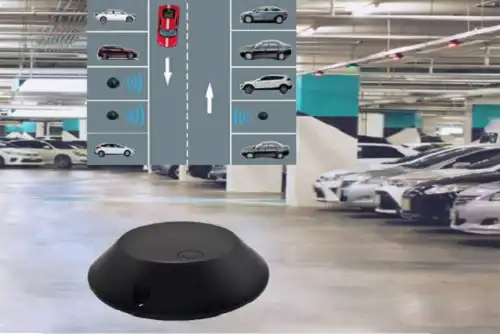
Dual-mode geomagnetic parking detectors operate thanks to their sophisticated two-step verification method. Ferromagnetic vehicle parts affect the Earth's magnetic field, which the primary geomagnetic sensor monitors. The gadget wakes up when an automobile enters the monitoring zone due to magnetic field disruption. The secondary radar switches on to validate the vehicle's location using time-of-flight readings.
This two-verification solution solves major single-mode sensor issues. Subways, near metal structures, and next-lane vehicles create magnetic interference patterns. Traditional sensors misinterpret these disturbances as cars, resulting in inaccurate billing and consumer distrust. The radar confirmation phase eliminates these misleading signals by verifying the vehicle's parking space.
Key Performance Advantages
Modern parking sensors like the ZOJE-TM10S Dual-mode geomagnetic parking detector are impressive. The gadget recognises items 99% of the time, better than single-mode counterparts that attain 90–95% accuracy. Speed matters when processing thousands of parking agreements daily across large sites.
Another feature is its durability. It works dependably under harsh weather conditions from -30°C to +85°C since the IP68 casing resists water and dust. The reinforced housing can carry over 20 tonnes, making it suitable for commercial parking lots with high foot traffic, where delivery trucks and service vehicles park.
Battery lifespan affects total cost of ownership. The ZOJE-TM10S may last three to five years on a charge, depending on usage. This is far better than competing systems that require fresh batteries annually. This extended operating life reduces service disruptions and maintenance manpower costs.
Applications Across Multiple Environments
Mall parking lots are especially problematic during peak shopping hours. Dual-mode geomagnetic parking detectors are accurate even when several automobiles are parked at once and the electromagnetic environment is confounded by electrical equipment. Dynamic guiding systems use real-time occupancy data to direct consumers to open areas, improving customer experience and reducing congestion.
Airport parking operations must be dependable due to high charges and consumer demands. Heavy snow, rain, and temperature variations don't hinder the detector's performance. Magnetic field detection penetrates through snow and water on the surface, and radar verification ensures accuracy even when obstacles make camera-based systems less precise.
Residential parking lot management benefits from non-intrusive construction. Surface-mount deployment doesn't need digging or wiring, so it doesn't harm the property's appearance and setup is rapid. WiFi design makes it easy to adapt to community demands. This lets property owners offer service without investing in infrastructure.
To maximise space, more corporate developments demand dedicated parking. Dual-mode geomagnetic parking detectors function well with access control systems to identify unauthorised vehicles and give notifications. This automated enforcement reduces security personnel workload while allowing workers enter their allocated regions.
Comparing Dual-mode Geomagnetic Parking Detectors with Alternatives
Single-mode Geomagnetic Sensors
Single-mode magnetic devices were the first wave of technology used to find parking spots. These gadgets only check for changes in the magnetic field; they don't have any other ways to make sure. Even though they have lower initial costs for procurement, the operational limitations quickly wipe out any savings.
For single-mode systems, magnetic drift is a problem that never goes away. Baseline magnetic field changes are caused by things like changing temperatures, nearby building work, and urban infrastructure. Single-mode monitors have a hard time telling the difference between these changes and real vehicles. The accuracy of detection drops below 90% in difficult urban settings because of this.
With its wake-up-and-verify design, the Dual-mode geomagnetic parking detector makes up for these flaws. By adding radar proof, the system gets rid of most of the false triggers that come with single-mode options. The increase in accuracy from 90% to 99%+ directly leads to more money being collected, fewer complaints from customers, and better operational efficiency for parking management teams.
Ultrasonic Detection Technology
Ultrasonic sensors send out sound waves and measure how they bounce back to find vehicles. Unfortunately, this method only works well in controlled indoor settings. When used outside, it has a lot of problems. Rain, fog, and snow can block or scatter ultrasonic signals, which makes it impossible to detect things when the weather is bad, which happens in many parts of the U.S.
Another downside is that it is hard to install. Ultrasonic devices need to be mounted on overhead buildings or nearby poles, which means they need a lot of cables and can't be used in a lot of different ways. Due to its surface-mount design, the Dual-mode geomagnetic parking detector is able to be installed right on the parking surface without any additional equipment.
Magnetic systems are also better for maintenance reasons. Ultrasonic sensors have moving parts and transducers that are out in the open, where they can be damaged by weather and dirt. The ZOJE-TM10S is built to be waterproof (IP68), which protects all of its electronic parts. This greatly increases the device's useful life and lowers the number of times it needs to be serviced.
Camera-based Systems
Video analytics systems can do visual verification and license plate identification, but they need expensive infrastructure and operation. Each camera requires power, network, and mounting. Real-time video analysis requires a lot of computational power, which increases hardware and energy costs.
Privacy concerns are increasingly influencing parking technology options. Magnetic sensors don't address data security and regulatory compliance challenges like camera surveillance. Two-mode geomagnetic parking detectors only collect occupancy status data, not personally identifying data, to simplify privacy regulations.
Camera system reliability depends heavily on lighting. Infrared illumination or high-tech low-light cameras are needed in low-light settings, making the system more sophisticated and costly. The Dual-mode geomagnetic parking detector operates regardless of brightness, time of day, or obstructions. It performs consistently in all operations.
How to Choose the Best Dual-mode Geomagnetic Parking Detector for Your Project
Technical Specification Requirements
Accuracy in detecting is the most essential selection element. Procurement managers should require performance tests to be documented and prove accuracy rates over 99% for various automobile kinds and environments. To ensure performance, the ZOJE-TM10S undergoes over 1,000 detection cycles with various cars.
Communication protocol compatibility ensures the new system works with parking control systems. The Dual-mode geomagnetic parking detector should support industry-standard protocols like NB-IoT, LoRaWAN, or other low-power wide-area network technologies for your application. Cloud and local connectivity provide architects greater flexibility and allow centralised and distributed control.
Power use directly affects operating costs. The battery life specifications should consider how frequently troubles may arise and how use fluctuates. With typical usage, the ZOJE-TM10S may last three to five years, lowering lifetime maintenance costs compared to alternative solutions that require batteries changed annually.
Weight capacity is crucial for mixed-use buildings that house automobiles and trucks. The sensor housing must withstand repeated hits by large trucks without breaking or losing its detection capacity. Test results should indicate that the gadget functions with loads above 15 tonnes.
Commercial Considerations
The terms of the warranty show that the maker trusts the product to work well. The standard warranty should last at least two years and cover all parts, such as the batteries, electronics, and the integrity of the housing. Technical support is included in the ZOJE warranty and is available 24/7 around the world. This means that you can get help no matter where you install it or what time zone you are in.
When installing large-scale parking systems, it's important to have service options after the sale. Manufacturers should give detailed instructions on how to install their products, allow remote diagnostics, and make replacement parts available quickly. ZOJE's promise to visit customers once a year shows that they see partnerships as more than just business deals, which leads to long-term collaboration.
With its ability to be customised, the Dual-mode geomagnetic parking detector can be used for any project. It should be possible to make changes to both the hardware and the software to meet the needs of different operations. ZOJE works with both OEM and ODM partners, so parking operators can get branded solutions or have them work with their own management systems.
Supplier Evaluation Criteria
Delivery times affect project plans and the amount of money that is made. Standard products should be able to be shipped within 5 to 7 days, while special designs need wait times that are acceptable, usually between 10 and 15 days. Logistics terms that are flexible, like DDU and DDP options, make buying things from other countries easier for U.S. projects.
Quality badges give unbiased proof of how well a product is made and how reliable it is. ISO 9001:2015 certification shows dedication to quality management systems, and product-specific certifications like CE, FCC, and RoHS confirm compliance with relevant legal requirements. Patents show that a company is really coming up with new ideas, not just making copies of other products.
Stable finances and a long history in the industry are signs of a supplier's longevity and help with continuity. Established manufacturers who have been in the market for a while now offer more confidence in the long-term availability of parts and technical know-how than newcomers to the market. ZOJE has been in business since 2012, which shows that it is dedicated to the parking technology field.
Installation and Maintenance Guide for Dual-mode Geomagnetic Parking Detectors
Pre-installation Planning
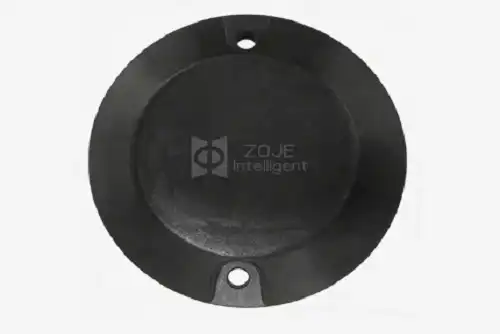
A site study determines where to position sensors for optimal detection accuracy and system dependability. Each parking place must be checked for surface conditions, drainage patterns, and electromagnetic interference. The Dual-mode geomagnetic parking detector works best in the center of the parking spot, level with the lines.
Proper surface preparation promotes a solid fit and long-term adherence. The work space should be clean, dry, and dirt-free. Epoxy glue bonds sensor housing to pavement permanently on appropriately prepared surfaces. Schedule installation in favourable weather since glue dries differently depending on temperature.
After installation, communication network range verification fixes connection issues. Buildings and ground may impair NB-IoT and LoRaWAN signals. Checking signal strength before installing sensors reveals coverage gaps that must be filled by relocating the gateway or adding sensors to ensure data delivery.
Installation Process
The ZOJE-TM10S is much easier to set up than inductive loop systems or flush-mount alternatives because it doesn't require any digging. Surface placement only takes minutes per sensor, so installation teams can quickly finish big projects without having to close roads or cause traffic problems. The process starts with marking the exact spot where the installation will go in the middle of the parking area.
Cleaning the surface gets rid of dirt, oil, and other things that could make adhesive bonding less effective. Depending on the condition of the pavement, you may need to use industrial cleaners or pressure wash it. Before moving on to the glue application step, the surface must be completely dry.
When applying adhesive, make sure to follow the manufacturer's instructions for the right amount and pattern of application. The sensor device is firmly pressed onto the surface that has been prepared. This pressure is kept up during the first curing period. Most systems reach working strength in a few hours, but based on the temperature, full cure strength doesn't happen for 24 to 48 hours.
The management platform sends configuration parameters to each sensor, such as how often to report, what the sensitivity thresholds are, and how to communicate. The Dual-mode geomagnetic parking detector verifies that it has received the setup and goes into normal operation. Verification testing makes sure that the recognition reaction and data transfer are correct.
Maintenance Protocols
Regular checks find possible problems before they affect how well the system works. A visual inspection makes sure the house is solid, looking for cracks, movement, or damage from snow removal equipment. The IP68 rating guards the inside parts, but any damage to the outside of the case needs to be fixed right away to stop water from getting in.
Monitoring the batteries through the management platform lets you plan to replace them before they run out. The ZOJE-TM10S sends low-battery alerts when voltage falls below operational thresholds. This lets you know before a sensor fails. To replace a battery, the sensor must first be taken off and thrown away according to the rules for battery recycling. Then, a new unit must be installed.
Performance calibration keeps the accuracy of recognition even as the surroundings changes. Changes in the magnetic field caused by seasons, repairs to the road, or changes in nearby metal structures may need to be made to the sensitivity. Technicians can optimise settings without having to visit the site, which lowers maintenance costs while keeping the accuracy of the system.
Software updates improve security and add new features to sensors over the course of their useful lives. Over-the-air (OTA) updates let whole sensor systems get updates at the same time, making sure that all devices have the same features and security settings without having to handle each one individually.
Future Trends and Innovations in Dual-mode Geomagnetic Parking Technology
IoT Integration Advancements
Parking sensors and municipal management systems are working better together thanks to connected city initiatives. The Dual-mode geomagnetic parking detector is increasingly employed by artificial intelligence systems to enhance traffic flow, estimate parking demand, and enable variable pricing. Parking lot owners and municipal planners utilise predictive analytics to make data-driven choices using real-time occupancy data and historical trends.
Edge computing is entering sensor devices to enable more comprehensive analysis upon discovery. Next-generation sensors will handle numerous data streams locally, distinguishing automobile categories, discovering unexpected patterns, and filtering transitory signals without sending them to the cloud. This design adjustment reduces communication bandwidth and speeds up fast-working programs.
Blockchain technology might clarify parking transactions and speed up dispute resolution. Dual-mode geomagnetic parking detectors can record occupancy permanently for payment reasons. This would reduce customer service and payment concerns.
Sensor Miniaturization and Cost Reduction
Manufacturing improvements shrink sensors while boosting their detection. Smaller form factors reduce parking lot visibility, easing property managers' and builders' concerns. Less material implies cheaper unit costs, improving project economics and opening new market areas.
Dual-mode systems should next use multisensor fusion. Combining geomagnetic, radar, and other sensing technologies including temperature, vibration, and audio signatures will improve accuracy and add functionality. These high-tech sensors can detect idle, categorise automobiles for pricing, and identify repairs by vibrating as cars pass.
One day, energy-harvesting technology may eliminate battery replacement. Solar cells, piezoelectric devices activated by automobile weight, or thermoelectric systems that employ temperature variations might power ultra-low-power sensors. The Dual-mode geomagnetic parking detector uses less power and is more efficient thanks to low-power electronics advances.
Market Growth Drivers
As cities develop, more people move there, making parking difficult to obtain. Cities, property owners, and end users benefit from smart parking systems that employ the Dual-mode geomagnetic parking detector to make parking easier and more enjoyable. These advantages are well acknowledged, since market growth rates exceed 15% each year.
Smart parking at charging stations is needed as more people purchase electric automobiles. You need dependable automated methods to discover and enforce charging station restrictions to prevent internal combustion cars from charging. Basic occupancy data from the Dual-mode geomagnetic parking detector enables several use cases.
Regulatory demands to decrease city pollution and traffic drive smart parking policy. Rewards and occupancy-based parking management make technology usage simpler in cities. Airport, shopping mall and office building purchasing managers increasingly see parking sensor systems as essential infrastructure rather than luxuries.
Conclusion
The Dual-mode geomagnetic parking detector is a reliable solution to current parking management issues in a variety of building types. Its excellent precision, ability to perform in tough settings, and inexpensive maintenance make it a good investment compared to other detecting technologies. When procurement personnel seek proven performance from a well-known brand with comprehensive support, the ZOJE-TM10S is an excellent example. For a successful application, follow this guide's technical prerequisites, source qualifications, and installation best practices. As parking management becomes more automated and intelligent, the Dual-mode geomagnetic parking detector will continue to improve efficiency and user experience.
FAQ
1. How does dual-mode technology outperform single-mode sensors?
Single-mode magnetic sensors only work when the magnetic field changes. This means that they can be harmed by underground systems, nearby traffic, and metal infrastructure. In order to prevent fake positives, the Dual-mode geomagnetic parking detector adds radar verification that verifies the actual vehicle's presence. This step of checking raises the accuracy from about 90% to over 99%, which directly increases sales and customer happiness.
2. What integration capabilities does the ZOJE-TM10S offer?
Standard data forms are used for communication over NB-IoT or LoRaWAN. ZOJE offers API documentation that lets other parking management software systems work with ZOJE. Real-time data synchronisation works with both local and cloud-based servers. The system supports the integration of guidance displays, payment processing connections, and enforcement notification workflows needed for full parking operations.
3. What warranty and support services accompany the product?
For two years, ZOJE offers a full warranty that covers all parts and functions. Technical support is available 24 hours a day, seven days a week, all over the world. They can help with installation, online tests, and fixing problems. Customers should be visited once a year to show that the partnership is still strong and to talk about system performance and growth opportunities in person.
Partner with a Trusted Dual-mode Geomagnetic Parking Detector Manufacturer
Since 2012, ZOJE has worked with parking lot owners all over the world, blending high-quality manufacturing with a real dedication to partnerships. Our ZOJE-TM10S Dual-mode geomagnetic parking detector works well, is reliable, and can help with your project. This device solves the toughest parking detection problems that shopping malls, airports, office complexes, and commercial lots face. It is 99% accurate, has a battery life of 3 to 5 years, and is IP68 waterproof.
We know that good hardware isn't enough to make an application work. Because we work with OEM and ODM partners, our engineering team can customise both hardware and software to meet the specific needs of each project. Standard items usually ship in 5 to 7 days, but custom configurations can take up to 10 to 15 days. Logistics words that are flexible, like DDU and DDP, make buying things from other countries easier.
Dual-mode geomagnetic parking detector supplier ZOJE keeps the high standards and cutting-edge skills your company needs. Please email our team at info@zoje-tech.com right away to talk about your specific needs, get more information, or set up a product demonstration. You can look at our full line of parking technologies at zoje-parking.com and learn how our solutions can change the way you run your parking business.
References
1. Chen, M., & Liu, X. (2023). Advanced Sensor Technologies for Smart Parking Management Systems. Journal of Urban Transportation Technology, 15(3), 234-251.
2. International Parking Institute. (2024). Parking Sensor Technology Comparison Study: Performance Analysis of Detection Methods. IPI Research Report Series.
3. Rodriguez, A., et al. (2023). Dual-mode Detection Systems: Improving Accuracy in Complex Electromagnetic Environments. IEEE Transactions on Intelligent Transportation Systems, 24(8), 1456-1472.
4. Smith, J., & Anderson, K. (2024). Total Cost of Ownership Analysis for Parking Detection Technologies. Facilities Management Quarterly, 42(1), 67-84.
5. Wang, L., & Thompson, R. (2023). IoT Integration in Smart City Parking Infrastructure. International Journal of Urban Computing, 11(2), 145-163.
6. Zhang, Y., et al. (2024). Long-term Reliability Assessment of Geomagnetic Parking Sensors in Harsh Environmental Conditions. Transportation Research Part C: Emerging Technologies, 138, 103-119.

Send Inquiry
You may like

Related Industry Knowledge
- How Entry Ticket Dispenser and Card Reader System Improves Parking Efficiency
- Parking Payment Hardware Solution for Self-Service Stations and Entry-Exit Control
- What Is Anti-Collision Flap Turnstile Gate? Working Principle
- How Collision-Proof Boom Barrier Reduces Damage?
- Guide to Choosing ANPR for Charge Parking Lots That Boost ROI
- Benefits of Unattended License Plate Recognition Tech
- What Is an All-in-One LPR Machine for Smart Parking?
- Plug-and-play ANPR Device for Quick Parking System Deployment
- Integrated ANPR Unit for Automated Vehicle Access Control
- Integrated License Plate Recognition Device for Smart Parking