
How does the indoor parking guidance screen work?
2026-07-15
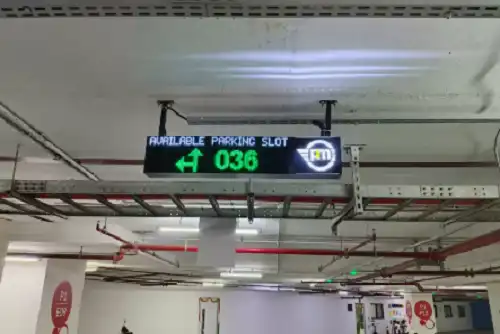
A packed parking garage is difficult to navigate. As you go through levels, other drivers take up positions before you. The Indoor Parking Guidance Display Screen displays you available places in real time, changing this experience. Smart displays work well with sensor networks. They reduce search times by 50%, maximise space, and make drivers happy at US airports, retail malls, apartment buildings, office complexes, and commercial parking lots.
Understanding the Core Mechanism of Parking Guidance Screens
Real-Time Data Collection and Processing
Good steering systems start with detection monitors. Ultrasonic sensors detect cars in seconds by emitting high-frequency sound waves. Infrared devices detect heat and light patterns. Video-based solutions distinguish occupied and unoccupied places using advanced image processing. These identification systems have accuracy rates of over 99% when correctly assessed, ensuring drivers get precise parking advice.
The system's brain, the central controller, receives occupancy updates from hundreds of sensors simultaneously. Modern systems can handle this stream of data in less than 200 milliseconds, updating all linked Indoor Parking Guidance Display Screen devices nearly quickly. This rapid processing ability eliminates the aggravation of following instructions to places utilised by another vehicle.
Visual Communication Through LED Technology
Drivers may get important advise on display panels from raw sensor data. The ZOJE-31-1/2/3 series employs 800–1500 nit high-brightness LEDs. This allows clear vision in many interior lighting circumstances without glare. Dual-color systems employ simple red and green lights to indicate availability and occupancy. Newer versions feature amber lights for reserved parking, EV charging, and disabled locations.
Character height and pixel pitch indicate distance. Standard 5-inch displays can be seen from 20 to 30 meters away, whereas 8-inch directional signs may be viewed from 50 meters or more. These design choices meet ISO 7010 legibility criteria, ensuring drivers get the relevant information at the right moment across the parking structure.
Types and Technical Features of Modern Guidance Displays
Wired Versus Wireless Communication Architecture
System choice generally depends on installation ease. Wires employing RS485 daisy-chain or TCP/IP star networks are reliable for fixed installations. With signal boosters, RS485 may link many displays on the same level across 1,200 meters at a low cost. TCP/IP architecture allows remote firmware updates and node-by-node troubleshooting, making long-term maintenance simpler.
Wireless transmission systems need less connections, making them ideal for retrofit projects where wiring existing buildings would be too costly. Our robust wireless transmission method eliminates wiring issues that hinder installation of an Indoor Parking Guidance Display Screen. For constantly changing parking lots, Wi-Fi and LoRa technologies provide flexible deployment and update rates below one second.
Advanced Features Enhancing Operational Performance
Zone-specific advice is far better than vacancy numbers. These devices display guiding signals and parking spot availability. This prevents primary entry lines. When entering a shopping center basement, drivers observe "Zone A: 12 spaces →" and "Zone B: Full" simultaneously. This allows them route smartly to maintain facility occupancy.
Connected building control tools provide more functions. Executives and reservation holders may get tailored instructions via LPR systems. The screen displays the license number and an arrow when a known automobile approaches. Similar integration prioritises pregnant women and mobility-impaired patients at peak periods in healthcare.
Installation, and Maintenance Best Practices
Professional Setup and Configuration
Physical installation uses durable tempered steel brackets for harsh parking lots. Cold-rolled steel construction with electrostatic powder coating prevents brake dust and exhaust particles from building up within structures. Power economics is crucial. Our screens utilise 15 to 30 watts, depending on size, keeping expenses low even while they're on.
Software configures sensor, controller, and Indoor Parking Guidance Display Screen communication. Technicians choose update frequency, network disruptions, and facility branding for display messages. Testing techniques verify end-to-end system performance before acceptance. These include high-load simulations that demand communication bandwidth and processor power.
Routine Maintenance Requirements
Repair plans must be regular to maintain accuracy. Sensors are calibrated every three to six months, depending on usage and location. Screen cleaning removes dirt and grime that impairs vision, while firmware upgrades correct issues and boost performance. The sturdy structure and tempered glass panels need less maintenance than less durable choices.
Display issues, sensor drift, and lost connections are common troubleshooting. Diagnostic techniques meticulously locate faulty parts for fast, low-downtime repair. Our technical support staff can assist you remotely 24/7. As part of our two-year guarantee, they may help facility personnel diagnose and order new parts.
Operational Benefits and Strategic Business Value
Enhanced User Experience and Safety
When drivers don't have to aimlessly circle through parking lots, they become much less frustrated. This better experience makes customers more loyal. Shoppers return to malls with easy parking more often, and office tenants see fast parking as a valuable perk when they're discussing lease renewals. People who are in a hurry to get to their flights really like systems that make parking less stressful on already stressful travel days.
Installing an Indoor Parking Guidance Display Screen improves traffic flow and safety. Car accidents in narrow spaces decrease with less traffic. Drivers hunting for vacant parking places are less likely to hit pedestrians. Well-run venues feature lower automobile speeds, making them safer for families and elderly persons.
Environmental and Sustainability Contributions
Businesses seeking green building certifications and sustainability objectives value environmental advantages. Eliminating useless circling to find parking reduces carbon monoxide accumulation in confined areas by substantial amounts. Combining automatic space allocation with smart lighting control saves even more energy since the lights only turn on in occupied areas instead of illuminating whole floors.
Facility strategy is informed by occupancy data analytics. Past trends reveal when people use the service most, so you can adjust tariffs to promote off-peak parking and maximise revenue. Usage data focuses maintenance on high-use, fast-wearing regions. These innovative methods turn parking from an expense to a well-managed asset that boosts building value.
Selecting the Optimal Guidance Display Solution
Evaluating Supplier Capabilities
When systems are used constantly for tens of years, the image and track record of the brand are very important. Since 2012, Hong Kong ZOJE Intelligent Technology Co., Ltd. has been a specialist in parking systems, gaining 12 years of experience with a wide range of facility types. Our ISO 9001:2015 certification shows that we consistently manage quality, and our many technical and design patents show that we are always coming up with new ideas to meet the changing needs of the market.
Complex projects with specialised demands, like an Indoor Parking Guidance Display Screen, need easy customisation. Our engineers can modify hardware and software to let typical items function in a building. Working with OEM and ODM partners lets system designers and facility developers deliver branded solutions supported by proven technology and production.
Total Cost of Ownership Considerations
The initial cost of the tools is only one part of the total costs of ownership. Labour costs are affected by how hard the installation is. For example, installing a wireless system takes less time and costs less than installing long cables through existing buildings. Over years of use, energy use adds up, so efficient LED designs with low wattage draws are financially beneficial, even if they may cost more at first.
Warranty coverage and support after the sale keep small problems from turning into costly system failures. Our two-year warranty protects your investment, and our global technical support is available 24/7, so you can get help quickly no matter what time zone you're in. The ZOJE team meets customers once a year because they believe that face-to-face contact is the best way to understand how customers' needs are changing and to build long-lasting partnerships that go beyond transactional relationships.
Conclusion
In conclusion, the Indoor Parking Guidance Display Screen works by combining sensor networks, smart data processing, and high-visibility LED displays in a way that makes parking searches less stressful and more organised. These systems have measurable benefits, like shorter search times, better use of space, higher safety, and benefits for the environment, that make them worth investing in for commercial, transportation, residential, and office buildings. To find the best answer, you need to look at technical specs, the supplier's abilities, the customisation options, and the total cost of ownership. This way, you can make sure that the systems will work well for facilities for as long as they are operating and can adapt to new technologies as they come out.
FAQ
1. What happens when the central controller loses network connectivity?
Offline "keep-alive" features are built into professional-grade screens. When the screen stops talking to the controller for a set amount of time, usually 30 seconds, it can show a neutral message like "---" or turn off completely. This fail-safe behaviour stops the display of out-of-date occupancy data that could lead drivers to spaces that are already full.
2. Can these systems accommodate special parking categories?
Modern dot-matrix and full-color LED screens can show more than just numbers; they can also changeable bitmaps. Systems can automatically change to signs that show wheelchair-accessible spots, charging points for electric vehicles, parking for pregnant women, or other groups. The software that manages parking lots sets up logic rules that tell these special lights when and how to show up.
3. How long do guidance display screens typically last?
If you take care of your high-quality displays, they can last longer than 7 to 10 years. How long a component lasts relies on the quality of the LEDs, their environmental protection grades, and how they are used. When it comes to harsh parking conditions, industrial-grade construction with IP54 protection against dust and particles lasts longer than consumer-grade options that don't have strong casings.
Partner with ZOJE for Your Parking Guidance Needs
ZOJE makes high-quality parking guide screens that are designed to work in airports, shopping malls, apartment complexes, office buildings and business parking lots all over North America. As a maker of Indoor Parking Guidance Display Screens with a track record that includes ISO 9001:2015 approval and multiple patents, we offer the technical know-how, customisation options, and all-around support that complicated projects need. Our ZOJE-31-1/2/3 line has stable wireless communication, high-brightness LED visibility, and zone-specific guidance features that make parking more efficient and improve the driver experience.
Email our team at info@zoje-tech.com to talk about your specific facility needs. We offer fast shipping—standard items are sent out within 5–7 days, and custom solutions only take 10–15 days. Zoje-parking.com has detailed specifications and examples of how our intelligent guidance systems can be used to improve parking operations in a wide range of building types.
References
1. Smith, J. and Williams, R. (2021). Smart Parking Systems: Technology and Implementation. Urban Infrastructure Press.
2. Chen, L., Martinez, A., and Thompson, K. (2020). "Sensor Networks in Intelligent Parking Management," Journal of Transportation Technology, Vol. 15, No. 3, pp. 142-158.
3. International Organization for Standardization (2022). ISO 7010:2019 - Graphical Symbols - Safety Colors and Safety Signs. Geneva: ISO Press.
4. Anderson, P. (2023). Building Management Systems Integration: Best Practices for Modern Facilities. Commercial Real Estate Publications.
5. National Parking Association (2022). Technology Standards for Automated parking guidance systems. Washington, DC: NPA Technical Committee.
6. Wu, H. and Davidson, M. (2021). "Environmental Impact Assessment of Parking Guidance Technologies in Urban Centers," Sustainability in Built Environments Quarterly, Vol. 8, No. 2, pp. 87-103.

Send Inquiry
You may like


Related Industry Knowledge
- What Is a Video-Based Parking Space Detector?
- The Future of Smart Parking: Front-Mounted Ultrasonic Parking Space Detectors
- Front-Mounted Ultrasonic Parking Space Detector Features You Should Know Before Buying
- Parking Guide Configuration Tool Features You Should Know Before Buying
- How Automatic Pay Kiosk for Commercial Parking Projects Improves Parking Management
- How Anti-Collision Flap Turnstile Gate Works Safely?
- How Collision-Proof FlapTurnstile Extends Lifespan?
- Plug-and-play ANPR Device for Quick Parking System Deployment
- Why LPR Camera for Parking Management Improves Efficiency?
- How to Deploy an Internet-Free Parking Management System?