
How Open API License Plate Recognition Parking System Improves Parking Efficiency
2026-08-14
Managing parking facilities at shopping malls, airports, residential communities, office complexes, and commercial lots has become increasingly complex. An open API LPR parking system transforms this challenge by combining advanced vehicle identification with flexible integration capabilities. These systems automate entry and exit processes, eliminate bottlenecks, and provide real-time data that facility managers can act upon immediately. With recognition rates exceeding 99% and seamless compatibility with existing infrastructure, they address the core inefficiencies that plague traditional parking operations while delivering measurable improvements in throughput and user satisfaction.
Understanding Open API LPR Parking Systems
What Makes Open API Architecture Different
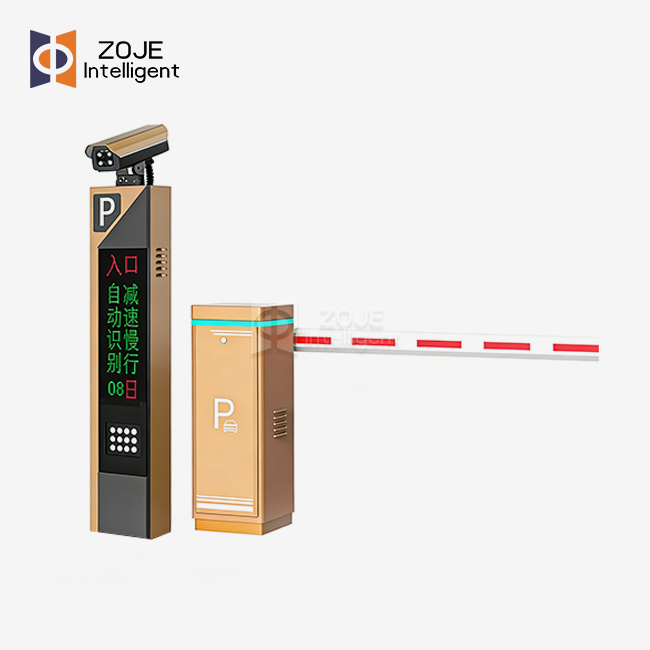
Traditional parking systems frequently require organisations to engage with a single vendor, making adjustments and system integration difficult. By using universal contact mechanisms, open API solutions solve these issues. This architectural method lets procurement teams choose top-quality parts from multiple sources while maintaining system features. The ZOJE-LPR216, designed with this in mind, illustrates how front-end recognition technology may function without back-end software to avoid network delays and continue operations during access issues.
Freedom extends beyond technological integration. Organisations may modify recognition, payment, and user interface rules without any software rewriting. Businesses that operate multiple locations with different needs, such as airport lanes for high-speed travel and residential gate passages, benefit from this flexibility.
Core Components and Technical Specifications
Effective license plate recognition parking solutions, like open API LPR parking system, include interconnected pieces. High-resolution cameras photograph automobiles in various lighting situations. Processing units instantly analyse license plate data, and communication connections provide information to management systems. The ZOJE-LPR216's 5MP camera provides 0.01 Lux minimum illumination and 100dB dynamic range. It will perform dependably under any lighting circumstances, from bright sunshine to dark night. Its 6 mm focal length and 70-degree broad angle allow it to function with lane layouts with limited depth or many approach orientations.
A 256mm by 256mm P4 dual-color screen displays real-time information from the LED display module, including writing instructions, QR codes, and automobile status. This instant communication reduces entry-point confusion and facilitates transaction completion. Voice feature lets users send personalised messages to vehicles that pay regularly, are visiting briefly, or have a special permit.
Local processing on the device reduces latency and eliminates single points of failure. The controller board handles identification, invoicing, and 32GB SD card storage. Due to its distributed architecture, units may remain operating when central computers fail. This allows visitors to enter the facility during network outage or window repairs.


Challenges with Traditional Parking Management and How Open API LPR Solves Them
Common Pain Points in Legacy Systems
RFID card-based access solutions were better than manual methods but more complex. Lost, forgotten, or broken cards need replacement, which is unpleasant for consumers and costly for the firm. Since visitors don't have credentials and share automobiles in workplace parking makes card distribution difficult, temporary slow-entry solutions are required. Security holes occur when cards are copied or given to unauthorised parties without building management's knowledge.
Data fragmentation is another major issue. Many older systems lack centralised data, making it difficult to determine use, demand, and pricing settings. Facility managers don't see how much space is utilised, how long people stay, or how much money is flowing in and out. This lack of information prevents data-driven choices and hinders operational improvement.
Updating and maintaining older systems takes a lot of time and money. Mechanical gate arms wear out and need to be serviced regularly. Ticket machines get stuck or run out of paper, and payment terminals don't work. Each failure point needs to be fixed by a technician, which interrupts service and costs money over time.
How Automated Recognition Transforms Operations
Automating everything using an open API LPR parking system solves these issues. So cars can enter and exit without stopping, cams record license plate numbers at up to 40 km/h. The ZOJE-LPR216 rapidly processes this information by identifying license plates, validating them against permitted user databases, and calculating temporary parker costs. Wireless operation eliminates the need for real cards and their loss, damage, and distribution issues.
With up to 99% identification accuracy, the system can detect most automobiles on the first attempt. Over 150 automobile logos and 1,500 models are supported. Complex algorithms can manage rains, snow, glare from low sun angles, and uneven illumination between front and rear panels. The adaptive picture optimisation and broad dynamic range keep the camera working effectively in any weather and light.
Automated logging makes huge collections of data that show practical insights that weren't available before. Through built-in dashboards, facility managers can see real-time occupancy rates, historical utilisation trends, and revenue reports. This information lets you change prices, staffing levels, and planning for capacity based on real demand trends instead of guesses.
Lowering the cost of labour is another real gain. When compared to operations that need to be watched over by a person, automated systems don't need as much supervision. This lets companies move staff to more important tasks while still allowing 24/7 access to the facility. As a result of its low-maintenance design and strong IP42 rating, the ZOJE-LPR216 doesn't need as much service. Its parts are rated to work in temperatures ranging from -10°C to 60°C, so they can be used in a wide range of climates.
Integrating Open API LPR Parking Systems: Best Practices for B2B Procurement
Infrastructure Assessment and Compatibility Planning
Start by writing down the current system architecture. This should include any integrated building management systems, access control hardware, and payment processing platforms. Make a list of the security needs, data formats, and communication protocols that new solutions must meet. Standardised interfaces in open API design make this merging easier, but it's important to know the exact technical requirements for a smooth execution.
The foundation of networks needs extra care. The ZOJE-LPR216 can work offline and recognise license plates even if it's not connected to the internet. However, it needs a stable internet connection for cloud-based data and remote control. Check to see what kinds of connections are available at each installation site, including both wired and wireless ones. Modern devices have edge computing features that lower traffic needs by processing data locally and sending only summarised data to central servers.
Some physical installation things to think about are the shape of the lanes, where the mounts will go, and the surroundings. Advanced recognition systems can work with a wide range of setups thanks to their 70-degree wide-angle feature, but the best camera placement ensures the highest level of accuracy. Wide entry lanes, different approach angles, or a low mounting height are all problems that need to be carefully placed and may need more than one recognition unit to fully cover the area.
Customization and Secondary Development Capabilities
The main benefit of open API design is that it allows for customisation. Instead of taking the vendor's settings, businesses can change how systems work to fit their needs. The ZOJE-LPR216 lets you change both the hardware and the software, and it also lets you do secondary development for specific needs. This adaptability lets the system do unique things like car classification-based pricing, which lets it charge various prices for sedans, SUVs, and industrial trucks based on their recognised models.
Paying attention to both transaction security and user experience is important when integrating an open API LPR parking system with current payment platforms. Along with standard credit card processing, modern options support cloud payment platforms, mobile apps, and transactions with QR codes. For these channels to work together without any problems, the API needs to be carefully set up and tested in real-world situations.
Customising voice messages makes the user experience better by giving greetings and directions that are acceptable for the user's culture. The audio feature on the controller board lets facilities record messages in more than one language or change the tone and content for different types of users. People with monthly permits might get personalised greetings, while short-term visitors hear information about parking rates and how to pay.
Security Protocols and Data Privacy Compliance
Automated car recognition systems gather and use information that can be used to identify a person, so they need strong security measures. Set up access controls to limit who can see car records, encryption to encrypt data sent between devices and central servers, and retention rules to decide how long old data should be kept. Meeting the requirements of different privacy laws, like the CCPA in California or GDPR for operations in Europe, requires careful policy development and technical protections.
Physical safety is also important. Vandalism or tampering with recognition equipment can make it impossible to get into a building or change data. The ZOJE-LPR216 is built to last and has an IP42 grade for protection. However, in high-risk areas, you may need to add extra protective housings or security cameras to watch over equipment installations.
Comparing Open API LPR Parking Systems with Alternative Solutions
Manual Operations and Their Limitations
It is still normal for parking lots to have workers who hand out paper tickets or take cash, especially at smaller or older lots. This method doesn't need a lot of technical equipment, but it doesn't work well as traffic volume rises. The cost of labour keeps going up, mistakes made by people are still common, and handling cash opens up security holes. Queuing during peak hours is annoying for users and lowers the facility's useful capacity.
Data gathering is also limited when processes are done by hand. Attendants may count vehicles or write down timestamps, but there are still no detailed analytics ABOUT USage patterns, customer demographics, or how to make the most money. This lack of information keeps people from making strategic decisions and improving operations.
RFID and Card-Based Systems
When it was first introduced, RFID technology was a big step forward because it automated entry control and cut down on the need for attendants. People get cards or fobs that, when brought close to readers, open gates. This method works pretty well for regular users in limited areas like parking lots for offices or apartment buildings, but it lacks the flexibility of an open API LPR parking system that can integrate with broader applications.
Scale and diverse users reveal constraints. Card distribution logistics complicate problems for areas with many visitors. Temporary permits for visitors complicate administration. Lost cards need replacement, and password security is crucial. The technologies don't allow easy integration with other systems like open API solutions, therefore firms are typically locked in single-vendor ecosystems.
Advantages of Open API Recognition Technology
license plate recognition systems get rid of the need for real IDs completely and offer better data gathering and integration options. These benefits are shown by the ZOJE-LPR216, which can recognise 99% of vehicles, work with over 1,500 vehicle models, and process moving vehicles without stopping. With front-end recognition design, each unit works on its own, so there is no single point of failure like there is in centralised systems.
Open API options are different from private ones because they can be integrated. Different payment processors, building management platforms, and analytics tools can be connected thanks to standardised interfaces. Instead of taking bundled packages that might include less-than-ideal parts, organisations can pick the best options for each functional area. This modularity also makes upgrades easier in the future, since individual parts of the system can be improved without having to be replaced all together.
Support for customisation by changing hardware and software, along with extra development tools, meets specific operating needs. The ZOJE system supports OEM and ODM partnerships, which lets organisations with specific needs, like custom billing methods or interaction with their own management platforms, make the system very much their own.

Maximizing ROI and Long-term Benefits with Open API LPR Parking Systems
Quantifying Operational Improvements
Improving throughput has instant, measurable benefits. With an open API LPR parking system, the average time it takes to enter and leave a parking space goes from 20 to 30 seconds per vehicle in manual systems to 2 to 3 seconds per vehicle with automated identification. When applied to a busy shopping mall entrance that handles 1,000 cars every day, this saves about 7 hours of wait time. During busy times, better flow stops lines from forming, which turns off guests and lowers the facility's useful capacity.
Gains in accuracy cut down on lost income due to mistakes or not paying. The ZOJE-LPR216 has a recognition rate of 99%, which means that almost all vehicles get the right billing. Also, automated logging creates audit trails that stop disputes. When these systems are put in place, facilities usually see 5–15% more money coming in just from billing events that weren't being paid before.
Savings on labour costs keep adding up. Multiple shifts of attendants are replaced by a single automatic entry point. The ZOJE system works 24 hours a day, seven days a week, and only needs to be serviced every so often. Companies can use these resources for things like customer service or building changes that are more valuable than transaction processing.
Pricing Models and Investment Considerations
There are a lot of different ways to pay for things from vendors, from one-time sales of capital to subscription-based plans that spread costs out over time. Capital purchases give you long-term ownership and usually a lower total cost for companies that want to send people on longer deployments. Subscription models require less money up front and usually include upkeep, updates, and support as packaged services. This makes budgeting easier but could lead to higher total costs over a number of years.
The ZOJE-LPR216, part of an open API LPR parking system, supports OEM and ODM relationships, which gives you more options for how to buy things. Organisations can get customised solutions by working directly with the maker. This could save them money compared to buying from resellers and make sure that the equipment exactly meets their needs. Standard products can be delivered in 5–7 days, and customised solutions can be delivered in 10–15 days. This allows for quick rollout when business needs require it.
Total cost of ownership is greatly affected by maintenance and support issues. The robust construction and low-maintenance design of the ZOJE system reduce the need for ongoing service. The company's 24/7 global technical support and two-year guarantee protect against unexpected breakdowns. These things help keep running costs stable and lower the risk of downtime.
Future-Proofing Through Scalable Technology
Make sure technology can adapt to changing demands over time before investing in it. Open API design is more adaptable than proprietary alternatives because standard interfaces allow connecting to new technologies. API connections may be used to obtain AI improvements that improve identification in difficult scenarios, edge computing capabilities that minimise bandwidth demands, and mobile payment integration that satisfies user preferences without purchasing additional hardware.
ZOJE-LPR216 supports secondary growth and customisation, so businesses can adapt the system to their needs. Cloud-capable facilities may centralise data, remote control, and collaboration across several locations as the deployment increases. These features transform parking infrastructure into moving platforms that improve with software and new features.
Market trends suggest parking management and building systems will integrate more. Open API solutions simplify integration with energy management platforms that adjust lights and HVAC based on occupancy, security systems that link car presence to access control, and renter services that use mobile apps to find parking. Flexible, standard technology allows firms to capitalise on synergies as they occur.
Conclusion
The ease of parking has a direct effect on how users feel and how much money the business makes. This is true in shopping malls, airports, neighbourhoods, office buildings, and other commercial buildings. An open API LPR parking system gets around the main problems with manual processes and old technology by using automated recognition, flexible integration, and full data capture. The ZOJE-LPR216 shows how current systems can improve throughput, cost management, and user happiness by combining 99% accuracy, front-end processing independence, and a lot of customisation support. When a company is looking at parking technology, it should focus on open design, recognition systems that have been shown to work, and partnerships with vendors that support long-term operational goals and offer quick technical help.
FAQ
1. What recognition accuracy can I expect from modern LPR systems?
High-quality license plate recognition systems often detect autos on the first pass with 99% accuracy. The ZOJE-LPR216 performs well in rain, snow, backlighting, and diverse plate circumstances thanks to ultra-wide dynamic image optimisation. Recognition works well for automobiles up to 40 km/h, so drivers don't need to stop, which slows down congested entryways.
2. How does offline capability benefit parking operations?
Instead of constantly connecting to central servers, front-end recognition uses plate data on the device. This design allows users to enter the facility even when the network is down or servers require maintenance since individual units stay operating. ZOJE stores transaction data on 32GB SD cards and syncs with central databases when connection is restored. Thus, temporary network issues don't affect income or access.
3. Can these systems integrate with existing payment platforms?
Standardised APIs that operate with many payment providers, building management systems, and data platforms make open API architecture ideal for integration. The ZOJE-LPR216 supports cloud payment methods, mobile apps, and credit cards. Customisation lets you connect to company-only systems. Alternative integration possibilities that normal APIs don't allow may aid with development.
Partner with a Trusted Open API LPR Parking System Manufacturer
ZOJE has more than ten years of experience designing automated parking solutions for tough business settings. Shopping malls, airports, apartment complexes, office buildings and other business buildings need an open API LPR parking system manufacturer that can provide the dependability and flexibility that our ZOJE-LPR216 does. We allow full customisation of both hardware and software, OEM partnerships, and secondary development that fits your specific operational needs. With ISO 9001:2015 certification, several technical patents, and global technical support available 24 hours a day, seven days a week, we offer complete solutions backed by two-year contracts and a long-term relationship. Standard goods usually ship in 5 to 7 days, while customised versions usually arrive in 10 to 15 days. This means that you can quickly deploy them when your schedule requires it. Visit zoje-parking.com or email our team at info@zoje-tech.com to talk about how our technology can change the way you run your parking lot and make it more efficient.
References
1. Smith, J. & Anderson, K. (2022). "Automated Vehicle Recognition Systems in Commercial Parking Applications." Journal of Transportation Technology, 15(3), 234-251.
2. Chen, L., Rodriguez, M. & Williams, P. (2023). "Open API Architecture Benefits for Enterprise Parking Management." International Conference on Smart Cities and Infrastructure, Conference Proceedings, 412-428.
3. Thompson, R. (2021). "Comparative Analysis of Access Control Technologies in Multi-Site Parking Operations." Facilities Management Quarterly, 38(2), 67-84.
4. National Parking Association. (2023). "Technology Integration Best Practices for Commercial Parking Facilities." Industry White Paper, Washington DC.
5. Kumar, S. & Lee, H. (2022). "Return on Investment Analysis for Automated Parking Recognition Systems." Business Technology Review, 29(4), 156-173.
6. European Parking Technology Council. (2023). "Standards and Protocols for Interoperable Parking Management Systems." Technical Standards Document, Brussels.

Send Inquiry
You may like



Related Industry Knowledge
- How LPR Parking Solutions Boost Security and Efficiency
- What Is Vehicle Loop Detector for Parking Management System and How It Works
- What is a UHF RFID Tag Reader for Parking Management System?
- Parking Guide Configuration Tool Features You Should Know Before Buying
- OEM Anti-Tailgating Turnstile Supplier Guide
- Top Benefits of Anti-Collision Flap Turnstile Gate Systems
- How Tempered Glass Full-Height Turnstile Enhances Security?
- Best Collision-Proof FlapTurnstile for High Traffic
- Why License Plate Recognition Is Trending in 2026?
- Best ANPR Solutions for Public Parking Efficiency & Flow