
Ticketless Parking: The Future of Seamless Parking Access
2026-08-05
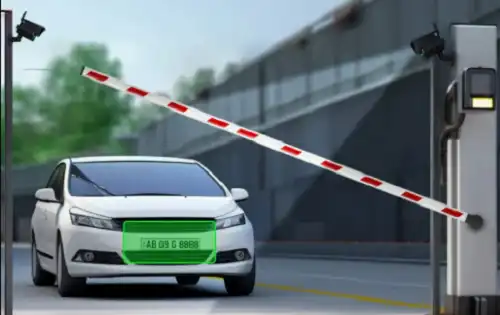
Imagine pulling into an airport parking garage, and the barrier lifts before you even reach for a ticket. Your vehicle is recognized instantly, and you drive straight to an available spot. When you return days later, the exit gate opens automatically, and payment processes without you lifting a finger. This is not a futuristic fantasy—this is ticketless parking powered by smart ticketless ANPR parking systems. These innovative solutions eliminate traditional ticketing hassles while delivering unprecedented efficiency and security for commercial facilities. From shopping malls to office complexes, automated license plate recognition technology is reshaping how we think about parking access and management.
Understanding Smart Ticketless ANPR Parking Systems
Core Technology and Components
Every ANPR system uses advanced image processing to capture photographs, evaluate them, and identify license plates in milliseconds. Hi-res cameras with high-tech sensors picture each car approaching the entrance point. The system's AI algorithms then match the picture's number plate number to databases and take the appropriate action, such as permitting permitted vehicles in or receiving visitors' money.
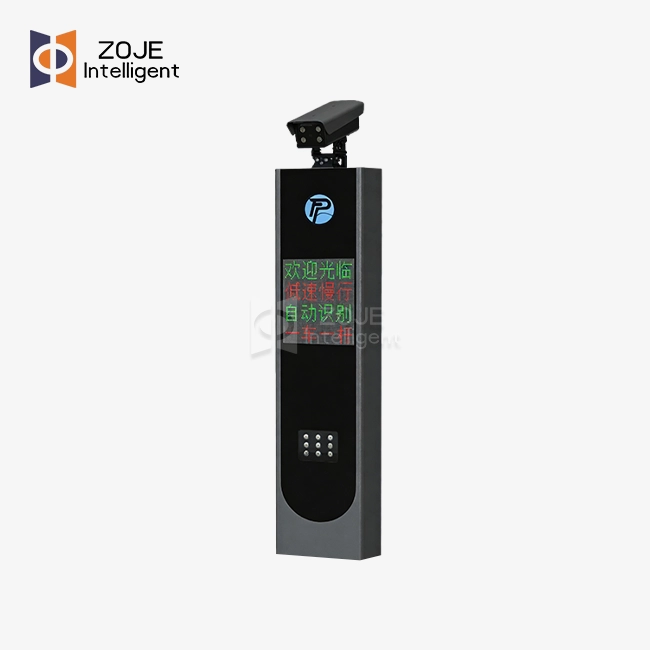
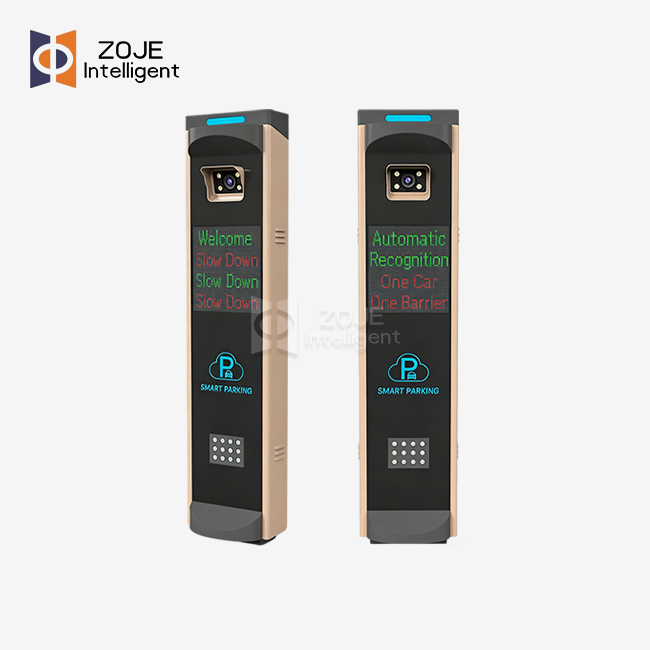
The ZOJE-LPR210 shows how effectively hardware and software can cooperate. This front-end identification device recognises license plates locally, so network delays or internet outages won't effect it. Even in poor circumstances, the 5MP camera can shoot crisp photos with a broad dynamic range of over 100dB and a minimum illumination performance of 0.01 Lux. Cars may see welcome messages, parking fees, and QR codes for mobile payments on a 256mm by 256mm LED display.
Intelligence That Adapts to Real-World Conditions
Modern license plate recognition technology, such as the smart ticketless ANPR parking system, is much more flexible than older systems that were set in stone. The ZOJE-LPR210 has recognition angles that can be changed, so installation teams can put cameras in the best places for the job, no matter what the site limitations are. The system can handle steep entrance steps, curved driveways, and difficult architectural plans, and it always gets 99% recognition accuracy.
Another important thing to think about is weather defence. With the front-mounted sunshade, the camera lens is protected from direct sunlight and rain, so it works well all year round. This equipment can work in temperatures ranging from -10°C to 60°C and has an IP42 grade for safety. It can handle the different weather conditions in the United States, from the hot summers in Arizona to the cold winters in Minnesota.
Seamless Integration Capabilities
Access control systems for parking lots don't work by themselves. They have to talk to payment providers, get into databases, and use tools for managing facilities. The ZOJE-LPR210 allows a lot of secondary development through a free SDK that works with many computer languages, such as Python, C++, and Java. System integrators can make custom solutions that work perfectly with existing infrastructure because of this.
The processor board handles several tasks at the same time. It sends out voice texts that welcome people with monthly passes or tell guests how to pay. It works with different LED modules to show the right information. The built-in storage can hold Micro SD cards up to 32GB, so transaction records can be saved locally even if the connection is lost.
Benefits of Implementing Ticketless ANPR Parking Systems in Business Environments
Operational Efficiency That Transforms Daily Management
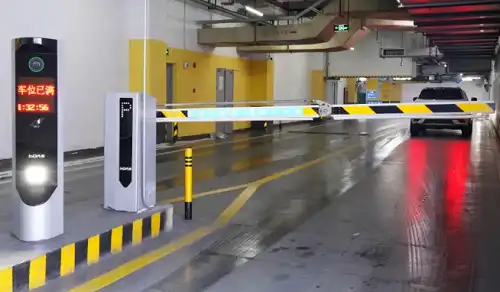
When there are traffic jams at the exits to parking lots, buyers get frustrated and business owners lose money. With an automated barrier system, vehicles are processed in less than two seconds, so there are no more wait times. This difference in speeds means that lines are much shorter and customers are happier during busy times at malls and office buildings, like in the morning.
An added bonus is that it may be done unsupervised. Cloud-based control technologies enable buildings operate unattended. Drivers may scan QR codes on LED displays to pay or the system will quickly charge registered payment methods. Remote monitoring alerts management to equipment issues before they worsen, while analytics dashboards display consumption patterns to help set rates and plan expansion.
Financial Returns Through Cost Reduction
Paper ticket rolls, thermal printers, and ticket dispensers all need to be maintained and replaced with consumables on a regular basis. If you switch to a smart ticketless ANPR parking system, you won't have to pay for these things anymore. Labour costs go down because facilities don't need as many people to control entry and exit places and help customers who have lost their tickets.
Stopping fraud is another way to protect your money. In traditional methods, fake tickets and camping are two ways that people can get in without permission. License plate recognition keeps a record of every move a car makes, so security breaches are quickly clear. Some facilities say that within the first year of implementation, they were able to cut revenue leakage by 15 to 20 percent.
Enhanced User Experience and Security
Contactless access has gone from being a nice-to-have to an expectation, especially since recent health worries around the world. Drivers like that they don't have to roll down their windows, stretch to get to the ticket machines, or touch surfaces that might be dirty. Hands-free operation is especially helpful when it's raining or snowing, or when a driver has trouble moving around.
Improvements to security are helpful for both the personnel who operate the facility and the individuals who utilise it. The system keeps detailed logs that connect particular cars to times of entry and exit, which can be used as proof if an accident happens. Unauthorised cars are detected and tagged as they follow legal vehicles through gates. Parking lots become safer when people feel comfortable and management can see everything.
Comparing Smart Ticketless ANPR Systems with Traditional Parking Solutions
The Limitations of Legacy Technologies
Parking lot ticketing has been around for decades, but when standards evolve, its shortcomings become apparent. Tickets become misplaced, caught in machines, or ruined by water. Staff must intervene in all these circumstances, causing delays and irritation. Maintenance staff must regularly service mechanical parts that wear out rapidly from usage.
While barcode and RFID alternatives are superior, they also introduce new issues. Barcode readers require clean surfaces and precise alignment to function. Distribution and placement of RFID tags on specific vehicles need forethought, adding to ordinary effort. Both solutions require cars to slow down or halt at entrance and departure points, which slows things down when congested.
Speed and Accuracy Advantages
A smart ticketless ANPR parking system uses automated license plate recognition to detect automobiles approaching without slowing down at high speeds. This function is useful at airports, where people are hurried. It's especially handy in communities where workers demand fast access after work. The processing time from detection to access grant is usually less than two seconds.
Less than 1 in 100 autos require manual inspection with accuracy rates around 99%. Smart AI algorithms that can handle diverse plate designs, filthy or damaged plates, and harsh lighting make this reliability possible. Machine learning models learn on larger datasets, improving technology and making current systems more powerful.
Scalability for Growing Operations
Parking systems must adapt to corporate growth. More ticket machines, printers, and parts are needed to expand ticket-based infrastructure. Since they employ software settings, automated parking management solutions may expand without adding hardware. A single management server can monitor dozens of entry and exit points for consistent policy enforcement and central control.
New technologies prepare these systems for upgrades. Mobile applications may indicate real-time availability, lead drivers to available sites, and allow pre-booking. Electric car charging facilities are integrated to ensure that charging sites are constantly accessible. Adding these capabilities to previous parking alternatives is very difficult.
How to Procure and Install a Smart Ticketless ANPR Parking System
Evaluating Supplier Qualifications
Selection of a manufacturing partner is the first step to application success. Purchasing teams should verify that vendors have ISO 9001:2015 accreditation, which indicates quality management system commitment. Patents prove that R&D is still funded. ZOJE has multiple technical and design patents, demonstrating its commitment to improving parking access technology.
Customisation is crucial since various facilities have distinct demands. Malls require customer loyalty programs. Residential areas require visitor management. Many office complexes need to integrate staff databases and security systems. Changing the hardware configuration and software functionality ensures that the solution satisfies particular operational demands without compromise.
Technical Requirements and Site Preparation
To implement a smart ticketless ANPR parking system, do a thorough site analysis to assess placement, power availability, network connection, and traffic flow patterns. Place a camera considering how the light varies during the day, the car's proximity, and any impediments. Equipment and lane width determine the ideal mounting heights and vehicle distances.
The ZOJE-LPR210 is 1400 mm tall, 336 mm wide, and 180 mm thick at its widest point. This makes it compact and suitable for most entrances. Standard electrical lines may power many units since they only require 100W. Ethernet or wireless connections may be utilised to connect to a network, depending on infrastructure. The front-end detection method lets units work during network outages and synchronise transaction data when the connection is restored.
Configuration and Staff Training
After installation, the device is programmed to follow construction regulations. Managers determine who plates automatically go in as monthly pass holders, establish costs for short-term visitors, set weekday and weekend rates, and allow customers choose how to be alerted about activities. The simple interface helps non-technical workers make routine modifications without provider assistance.
Facility teams get extensive training on daily activities, problem-solving, and report-writing. Operators learn to utilise panel indications to evaluate system health, input plates by hand when they get them incorrect, and use usage statistics to make business decisions. ZOJE provides 24/7 global technical support. This implies individuals can obtain support anytime, regardless of time zone.
Future Trends and Innovations in Ticketless ANPR Parking Systems
Predictive Analytics and Space Optimization
Next-generation parking management employs AI to recognise cars, estimate their usage, and maximise resource consumption. Since historical data reveals when various portions of huge facilities have the highest demand, pricing may be changed to promote capacity dispersion. You may notify approaching cars of open spaces using predictive methods to estimate space occupancy.
Machine learning systems look for unusual things that could indicate equipment failure or security issues. Strange patterns like cars arriving but never leaving or the same license plate accessing many sites trigger automatic alarms. Smart tracking features simplify security job duties and speed up issue resolution.
Smart City Integration and IoT Connectivity
A smart ticketless ANPR parking system helps urban planners include parking in transit plans. Drivers choose better when parking lots, public transportation, and navigation apps operate together. Optimisation across the city utilising real-time availability data from automated systems to central platforms eliminates traffic bottlenecks created by drivers searching blocks for parking.
Internet of Things connectivity allows parking gadgets communicate with other system components. Environmental monitors adjust lighting and air depending on building occupancy. Energy is saved during quiet times. Integrating with electric car charging networks simplifies paying for and reserving slots. These links unify experiences and meet current user-friendliness and environmental demands.
Data-Driven Revenue Management
With comprehensive analytics, parking may become an active revenue generator. Demand-based pricing modifies prices immediately, as airlines and hotels do to maximise yield. Frequent customers get discounts or reserved spaces via loyalty programs. This strengthens client relationships and keeps the company filled. Validation programs connected to retail or office tenant systems might encourage shoppers to remain longer or attend special events.
Reporting tools let facility owners and investors see success measures that help them make strategic decisions. Metrics like average length of stay, busiest times, and income per spot help with planning for growth and making managerial changes. The change from counting tickets by hand to collecting data automatically is a huge step forward in management.
Real-World Applications Across Key Market Segments
Shopping Malls: Enhancing the Retail Experience
E-commerce gives shopping malls a lot of competition, so every part of the real experience is important for their success. Making parking easy sets a good mood before buyers even walk into stores. When a lot of people go shopping or to the store on the weekend, automated systems make things easier and less frustrating.
Validation programs let stores offer free parking to encourage sales when they connect to mall management platforms. Recognition devices may display promotional messages or instructions on LED panels, adding marketing to the entry experience. Analytics that reveal which entrances receive the greatest traffic aid with tenant placement and building changes.
Airports: Managing High-Volume Transient Traffic
With so many users, from long-term travellers departing to short passengers getting picked up, airport parking is difficult. A smart ticketless ANPR parking system simplifies this by distinguishing short-term, long-term, employee, and business automobile zones. Dynamic pricing helps passengers choose the optimal locations depending on their journey duration, maximising capacity.
Pre-registering automobiles using mobile applications allows fast lanes where a vehicle's identification activates a barrier without transaction processing upon entrance. This speed is for hurried aircraft catchers. When you return, the system calculates how much you owe depending on how long you stayed and processes payment instantaneously, so exhausted travellers may depart without looking for payment tools.
Residential Communities: Balancing Security and Convenience
Property management firms and homeowners associations prioritise security while making it simple for residents to go home. license plate recognition systems track resident automobiles that may enter automatically, but visitor management requires visitors to sign up or check in with security. This two-pronged technique prevents unauthorised entry and eliminates the need for physical access cards that homeowners may lose.
Service providers and companies that transport packages can get temporary access codes that are only good during certain times. This way, repairs or deliveries can happen without putting general security at risk. The system keeps thorough records of which vehicles entered the land and when, which is useful in case of a security breach.
Office Complexes: Streamlining Employee and Visitor Access
On corporate campuses, there are often more than one building with different levels of parking for employees based on their job or level of rank. Automated systems consistently enforce these rules, so security staff don't have to remember who drives what or check credential lists. When access rights are integrated with HR systems, they are automatically changed when workers join, leave, or change roles within the company.
When guests are pre-registered and given parking spots, visitor management looks more professional. When they get there, the recognition system finds their car and shows them a welcome message with information to the visitor parking places. This finished experience makes the company look good and shows that you pay attention to details, which clients and partners like.
Conclusion
The switch from paper tickets to automatic license plate recognition is more than just an improvement in technology; it's a complete rethinking of how parking works. Smart ticketless ANPR parking systems make significant improvements in security, user experience, cost management, and efficiency that help facilities in all market segments. As these solutions continue to change with improvements to AI and the integration of smart cities, early users will be in a good place for the future of getting around cities. Today, the question for building managers is not whether to use this technology or not, but how quickly they can start seeing its big benefits.
FAQ
1. What are the installation prerequisites for implementing an ANPR parking system?
For installation to go smoothly, there needs to be enough power at entry and exit points, network connectivity (wired or wireless), enough space for mounting hardware, and clear camera views of vehicle approach paths. Technicians with a lot of experience do site surveys to find any problems and suggest answers before the equipment comes.
2. How do these systems protect driver privacy and secure data?
Reputable makers use encryption to send and store data, access controls to limit who can see records, and retention policies that remove old data automatically after a certain amount of time. Adhering to privacy rules depends on using the right settings and methods for operation. Legal counsel should be consulted by organisations to make sure they are following the law.
3. Can ANPR systems integrate with existing payment infrastructure?
APIs and standard protocols make it possible for modern solutions to integrate with a wide range of other systems. A lot of big payment processors, mobile wallet platforms, and subscription management systems are linked to them. The ZOJE-LPR210 supports a number of different secondary development methods, which lets you integrate it with old systems in a way that fits your needs.
Partner with ZOJE for Your Smart Parking Transformation
Choosing to upgrade to smart parking facilities is a big choice that will have long-lasting effects on your business. ZOJE has been making smart ticketless ANPR parking systems for more than ten years and offers solutions that combine tried-and-true reliability with cutting-edge technology. Our ZOJE-LPR210 has 99% recognition precision, can work offline, and has a lot of customisation choices that are needed in demanding business settings.
We know that responsive help and a long-term relationship are important parts of a successful implementation that go beyond the quality of the tools. That's why ZOJE offers full two-year contracts, expert support around the clock, and yearly visits to talk about your changing needs. Our engineering team works with both OEM and ODM companies to make sure that the solutions they offer are perfect for your needs, no matter if you run a single facility or a collection of facilities across the country.
Contact our specialists at info@zoje-tech.com to discuss how automated parking access control can transform your operations. We'll provide detailed technical consultations, customized proposals, and transparent pricing that demonstrates clear ROI. Visit zoje-parking.com to explore our complete product range and discover why businesses across North America trust ZOJE as their preferred smart ticketless ANPR parking system provider of choice. Your journey toward seamless, efficient parking management begins with a single conversation.
References
1. Smith, J. and Chen, L. (2022). "Automated Parking Management Systems: Technology Review and Implementation Guidelines." Journal of Transportation Engineering, Vol. 148, No. 3.
2. International Parking & Mobility Institute (2023). "Emerging Technologies in Parking: ANPR and Beyond." Annual Industry Report.
3. Richards, M. (2021). "The Economics of Ticketless Parking: Cost-Benefit Analysis for Commercial Facilities." Parking Today Magazine, September Issue.
4. National Parking Association (2023). "Standards and Best Practices for License Plate Recognition Systems." Technical Guidelines Publication.
5. Zhang, H. et al. (2022). "Artificial Intelligence Applications in Smart City Infrastructure: Focus on Parking Management." Smart Cities Journal, Vol. 5, No. 2, pp. 412-438.
6. Williams, R. and Thompson, K. (2023). "Future Trends in Automated Vehicle Access Control Systems." Facilities Management Quarterly, Spring Edition.

Send Inquiry
You may like
Related Industry Knowledge
- The Benefits of Entrance Outdoor Parking Guidance Display Screen for Parking Operators
- Front-Mounted Ultrasonic Parking Space Detector Features You Should Know Before Buying
- How Parking Guide Configuration Tool Improves Parking Sensor Setup Efficiency
- How barrier radar sensors prevent injury accidents?
- How Parking Automatic Payment Station Integrated with LPR System Improves Efficiency
- Top Benefits of Collision-Proof Boom Barrier Systems
- Benefits of High-Durability ANPR Cameras for Operators
- What Is a High-Performance License Plate Recognition Camera?
- Plug-and-play ANPR Device for Quick Parking System Deployment
- What Is a Local-database LPR System for Parking Control?