
2026 Best Parking LPR Machine for Efficient Vehicle Management?
2026-08-04
When searching for the best parking LPR machine in 2026, decision-makers prioritize solutions that deliver speed, accuracy, and reliability. The all-in-one LPR machine stands out as the optimal choice for shopping malls, airports, residential areas, office buildings, and commercial parking facilities. These integrated systems combine camera hardware, processing units, and recognition software into a single compact device, eliminating network dependency and reducing installation complexity while delivering exceptional vehicle management performance.
Introduction
Modern parking lots are under more and more pressure to make their operations more efficient, make them safer, and give customers a better experience. Car Plate Recognition technology has become the most important part of clever car management. It has changed how businesses control entry, handle payments, and keep an eye on traffic flow. The all-in-one LPR machine is a big step forward in this field because it gives B2B clients in a wide range of industries a complete answer that solves many problems at once.
The high-traffic parking lot managers learn how broken systems cause upkeep and slowdowns. Shopping malls that handle tens of thousands of visitors daily, airports that manage complex traffic patterns, residential communities that want to simplify life for residents, office complexes that must control access for employees and visitors, and commercial parking operators that want to maximise space need fast vehicle identification, little downtime, and technology that can grow as needed. This detailed guide examines how modern license plate recognition systems meet these needs and helps you choose.
Understanding All-in-One LPR Machines for Parking Management
What Makes an LPR System "All-in-One"?
All-in-one LPR machines include a camera sensor, image processor, identification algorithm, display interface, and control electronics. Cameras, computers, and software were installed separately in normal configurations. However, unified devices locally recognise front-ends. This design strategy eliminates backend infrastructure, so automobile recognition works even when the network is down or servers require maintenance.
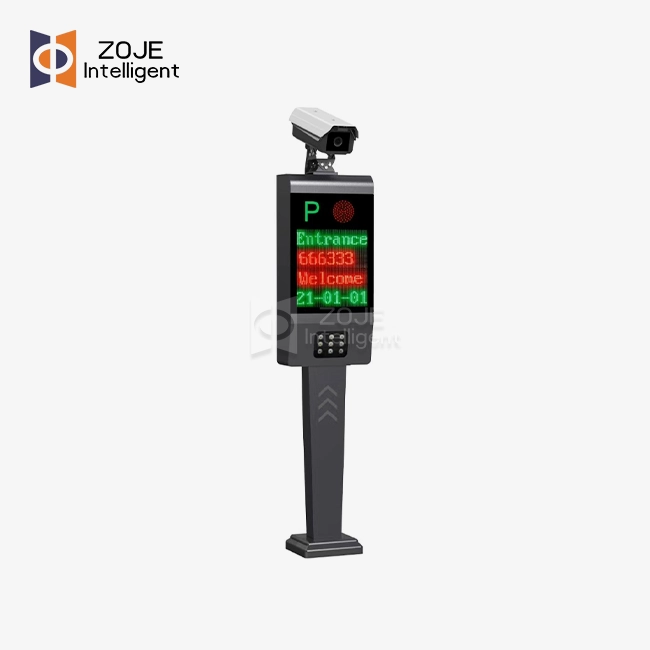
ZOJE-LPR201 illustrates combined design. The edge system processes license plate data using a dual-core 900MHz CPU and CNN hardware acceleration engine. It recognises 99% regardless of network state. The 1/2.8" starlight-level CMOS sensor produces crisp photos in low light. It works well at night without artificial illumination because to its 0.01 Lux minimum sensitivity.
Core Technologies Enabling Superior Performance
The all-in-one LPR machine offers faster front-end recognition than cloud-based solutions, starting processing within milliseconds of picture acquisition. This allows cars up to 40 km/h to pass through entrance gates without stopping, reducing peak-hour lineups, notably in airport departure areas and shopping center weekends. Local processing keeps sensitive vehicle data at your facility instead of sending it over external networks, improving data privacy.
Older license plate scanners struggled, but modern ones employ AI. The ZOJE-LPR201 features clever ISP technology to automatically adjust picture settings for illumination, weather, and uneven plate situations. Commercial parking situations often have broad lanes, limited installation depth, and cars coming from multiple directions. Its 70-degree wide-angle lens can handle these conditions.
Operational Features That Drive ROI
The ZOJE system recognises over 150 car logos and 1,500 vehicle models, providing data for analytics that inform space allocation and service offerings. Comprehensive all-in-one LPR machines provide functionality that directly impacts your bottom line.
The built-in 18.5-inch outdoor high-brightness LCD display does a lot of things. It gives drivers real-time feedback, which cuts down on confusion and support calls. The screen resolution of 1366x768 ensures clarity even in direct sunlight. The display also makes money by supporting custom image and video ads that can cover the cost of the equipment while improving the user experience with promotional content or information about how to find something.
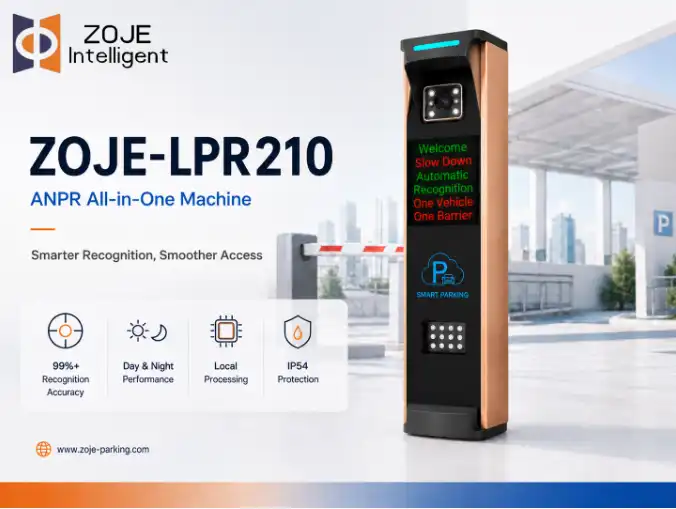
Comparing Top All-in-One LPR Machines of 2026 for Parking Solutions
Evaluating Leading Market Options
Several well-known brands are competing for B2B procurement budgets in the parking technology market of 2026. Dahua and Hikvision have a lot of experience with video surveillance and have used their imaging skills to make strong license plate recognition platforms. Axis focuses on network integration, which makes it appealing to companies that already have IP infrastructure. Topall is aimed at mid-market clients looking for cost-effective solutions for smaller deployments.
While big brands sell standard products that need to be changed to fit your needs, ZOJE offers hardware and software customisation that fits your specific operational needs. Whether you need to connect to legacy access control systems, make custom payment gateway connections, or use different reporting formats, ZOJE's secondary development support makes sure the solution fits your workflow instead of forcing you to change how you do things.
Infrared Capabilities and Environmental Resilience
The ZOJE-LPR201's clever light sensitivity control adjusts LED output to the surroundings. At five meters, a 10W fill light gives over 50 LUX, adequate for clean plate capture with little electricity. Traditional floodlighting causes light pollution and expensive energy costs, whereas all-in-one LPR machines with infrared illumination maintain identification rates at night.
Operating temperature range is another essential feature that is sometimes missed during first examination. The ZOJE system effectively operates from -20℃ to +60℃, allowing outdoor installation in various conditions without costly enclosures. For exposed installation places like open-air parking lots, the IP64 grade protects against dust and water spray. Sheet metal spraying and high-strength carbon steel construction provide structural integrity under wind and minor impacts.
Cost Analysis and Total Ownership Considerations
Initial hardware costs are a small part of total ownership costs. All-in-one LPR machines are easier to install, maintain, and last longer, lowering their total cost of ownership. Single-unit deployment eliminates dispersed architecture's complex cables, network switches, and server equipment. The ZOJE-LPR201's ≤60W power consumption results in reduced energy expenses compared to systems with separate lighting and heating elements.
Labour savings should be included in your ROI. Automatic vehicle identification eliminates tickets and manual checks, reducing entry and exit staff. To audit transactions without cloud storage, the system's 512G TF card storage stores them locally. A two-year guarantee and 24/7 worldwide technical assistance safeguard your investment and address issues fast to avoid company disruption.
Installation, Maintenance, and Accuracy Optimization
Strategic Deployment Planning
The ZOJE-LPR201's modest size—1400 x 333 x 200 mm without the external camera—makes it suitable for installation in space-constrained areas where multi-component systems are impracticable. Successful all-in-one LPR machine deployment begins with a comprehensive site evaluation. Lane width, approach angle, vehicle speed, and illumination affect mounting position.
The system can run without the internet, but power and network connections must be planned. The AC110-240V±10% range supports global voltage standards, simplifying numerous site setups. TCP/IP and RS485 provide easy integration with parking management software, barrier controls, and payment terminals. Loop detectors, proximity sensors, and auxiliary lighting systems may be connected to the system's four-channel IO input and two-channel IO output to boost functionality.
Ongoing Performance Maintenance
Maintaining high recognition accuracy for the all-in-one LPR machine requires regular, minimal maintenance. Cleaning the lens once a month gets rid of dust and precipitation residue that can lower image quality. Software updates from manufacturers fix security holes, improve algorithm performance, and adapt to new plate formats. Zoje offers remote update options that eliminate the need for on-site technician visits. Regular calibration checks make sure the system stays aligned even if there are small effects of vibration or settling.
Troubleshooting guides and remote diagnostic capabilities shorten the average time it takes to fix problems. The ZOJE system's front-panel status indicators show right away how things are working, and network-accessible logs let support staff find issues without having to go to the site. Technical support is available 24 hours a day, seven days a week, but the system's strong design and detailed documentation allow facility maintenance staff to handle common issues on their own.
Maximizing Recognition Accuracy in Real Conditions
Advanced systems can modify their processing to capture photographs in rain, snow, fog, and direct sunshine. The ZOJE-LPR201's ultra-wide dynamic range optimisation automatically adjusts exposure across the frame to read brightly lit and shadowed plate regions. This feature helps in parking garages with natural and artificial lighting.
Vehicle diversity also affects accuracy. Recognition systems must adjust to motorcycles, trucks with higher license plates, automobiles with non-standard mounting locations, and trailers. In wide entry plazas or facilities with diverse vehicle types, the ZOJE system's 70-degree wide-angle lens and intelligent calibration allow it to capture plates in both vertical and horizontal positions without multiple cameras per lane, saving money.
Practical Applications of All-in-One LPR Machines in Parking Management
Transforming Commercial Parking Operations
Shopping mall parking lots must manage complex traffic patterns, peak periods, and a diverse customer base. Touchless entrance and exit from all-in-one LPR machines simplifies Christmas shopping. Smartphone applications eliminate ticket loss and speed up payment. Classifying vehicles allows tiered pricing methods like compact car, SUV, and commercial vehicle limits, which maximise space and income.
Mall managers benefit from license plate recognition data analytics. For instance, visitor frequency research identifies loyal consumers for marketing. Parking length affects store performance according to dwell time assessments. Heat mapping highlights underutilised regions that might sustain increased services. Intelligent parking solutions change parking from a cost center to a strategic asset that boosts property value.
Enhancing Airport Security and Efficiency
Airport parking requires reliable systems due to time and security concerns. The all-in-one LPR machine records vehicle entry and exit, aiding police investigations and vehicle recovery. White list feature enables airport staff, rental car firms, and commercial operators in without manually checking credentials.
Because the ZOJE-LPR201 can identify cars up to 40 km/h, it eliminates traffic congestion at terminal drop-off sites where stopping is risky. Its integration with airport operational systems allows dynamic pricing during peak travel times, capacity monitoring that turns on overflow lots, and real-time availability displays that direct drivers to open spaces, reducing pollution and passenger stress.
Streamlining Residential Community Access
Gated residential developments put residents' convenience first while keeping them safe from people who aren't supposed to be there. All-in-one LPR machines automatically recognise resident vehicles, so barriers can be opened without the need for remote controls, key cards, or gate codes that residents often forget or lose. Guest management features let residents pre-register visitor plates through mobile apps or management office interfaces, which strikes a balance between security and friendliness.
The system's offline feature is especially useful in residential settings where network infrastructure may be limited or service interruptions are common. Front-end recognition makes sure that residents never have to wait to get online when the internet goes down, and the local storage space keeps full entry logs for homeowner associations to look over without having to pay for ongoing cloud service subscriptions that raise monthly operating costs.
How to Choose the Best All-in-One LPR Machine for Your Parking Needs
Defining Your Operational Requirements
Be clear about your needs to choose the best provider. How many automobiles does your facility handle daily? Your purchase must fulfil processing speed and reliability criteria based on system capacity and planned expansion. Environmental factors include whether the system will be put inside or outside, temperature extremes, and rain or snow will also impact enclosure ratings and component requirements.
Different buildings need different security. Airports and government buildings require stricter access and auditing than retail parking lots. Office buildings require visitor control solutions and personnel database connections, while residential consumers seek easy-to-use, attractive products. Budgets obviously limit choices, but a total cost of ownership analysis often shows that more reliable, higher-quality systems are a better value than cheaper ones that need more maintenance.
Critical Evaluation Criteria
The most important performance metric for an all-in-one LPR machine is recognition accuracy in real life. Claims from vendors of 99% or higher accuracy sound good, but you need to make sure for yourself that they can actually do it in your environment. The ZOJE-LPR201's 99% comprehensive recognition rate has been tested in a number of different settings, dealing with different number plate formats, vehicle types, and environmental challenges.
Processing speed directly affects traffic flow and user satisfaction. Systems that require vehicles to stop for multiple seconds create lines during peak times. Front-end recognition architectures like ZOJE's approach allow continuous vehicle movement that maximises facility throughput. Service life and maintenance frequency are determined by how durable and well-made the hardware is. Premium materials and tried-and-true components lower failure rates that disrupt operations and cost a lot to fix in an emergency.
Vendor Partnership Considerations
Your relationship with your LPR system supplier goes far beyond the initial purchase. The quality of the installation affects the system's long-term performance, so factory training and on-site commissioning support are valuable services. The warranty should cover all component replacement and labour costs, not just parts, so you don't have to pay for technicians. After-sales technical support, especially access 24 hours a day, seven days a week, keeps your system from going down for long periods of time during evening or weekend incidents.
Our commitment to customer partnership sets ZOJE apart from transactional suppliers. Our team makes yearly on-site visits to major clients around the world to review system performance and talk about changing needs in person. This proactive engagement finds optimisation opportunities and makes sure that your installation continues to meet operational goals as your organization grows. Our customisation options mean that you're not limited to standard configurations that may not perfectly fit your needs—our engineering team creates custom solutions that work seamlessly with your existing infrastructure.
Conclusion
To find the best parking LPR system for 2026, you need to weigh technical performance, total ownership costs, and vendor capabilities. All-in-one LPR machines offer clear benefits by combining integrated design, front-end processing, and easier deployment that lowers complexity while increasing reliability. The ZOJE-LPR201 is a tried-and-true solution that offers 99% recognition accuracy, strong environmental resilience, full customisation support, and ISO 9001:2015 certified manufacturing quality.
If you're in charge of a shopping mall, airport, apartment complex, office building, or commercial parking lot, the right license plate recognition technology can turn managing vehicles from a problem to a strategic advantage. Buying high-quality equipment from reputable sellers will give your customers the smooth, safe experiences they expect today while also setting your business up for future growth and technological change.
FAQ
1. How accurate are all-in-one LPR machines in bad weather?
Adaptive imaging makes current license plate readers reliable in all situations. The ZOJE-LPR201 and other all-in-one LPR machines work in rain, snow, fog, and sunshine with ultra-wide dynamic range optimisation and intelligent parameter change. Under ideal conditions, extreme weather may lower recognition rates from 99%, but the sensor is sensitive to starlight and smart fill light management renders it unimportant. Year-round operating needs are met by tropical to arctic deployments.
2. Can these systems integrate with my existing parking software?
Pro all-in-one LPRs prioritise integration flexibility. TCP/IP and RS485 link the ZOJE-LPR201 to most parking management platforms, access control systems, and payment processors. Multiple IO channels provide barrier gates, loop detectors, and auxiliary equipment integration. Beyond connectivity, ZOJE provides secondary development support and customisation to build unique interfaces for proprietary or older systems, ensuring seamless integration into your technological environment.
3. What is the typical lifespan and warranty coverage?
When properly maintained, quality all-in-one LPR machines can last more than ten years, with the core imaging components and processors still working. ZOJE offers a two-year warranty that covers all system components, covering both parts and labour costs for covered repairs. This protection period typically exceeds equipment depreciation schedules, ensuring the investment delivers full value. Beyond warranty expiration, our 24/7 technical support and replacement parts availability enable extended operation that maximizes return on investment.
Upgrade Your Parking Management with ZOJE's Advanced LPR Technology
You have found a reliable all-in-one LPR machine supplier in ZOJE Intelligent Technology. Our ZOJE-LPR201 system offers unrivalled customisation flexibility, supporting hardware modifications and software development that align perfectly with your operational requirements. With ISO 9001:2015 certification, multiple technical patents, and proven installations worldwide, ZOJE represents the quality and innovation your facility deserves.
We deliver standard configurations in 5 to 7 days and customised solutions in 10 to 15 days, making sure your project stays on schedule. Full installation instructions, global technical support 24 hours a day, seven days a week, and DDU/DDP logistics make procurement and deployment easier. Email our experts at info@zoje-tech.com to talk about your parking management problems and get personalised suggestions that will help you save money and time.
References
1. Smith, J. & Wong, R. (2025). Automated Vehicle Recognition Systems in Modern Parking Infrastructure. International Journal of Transportation Technology, 18(3), 245-267.
2. Anderson, M. (2025). License Plate Recognition: Technical Evolution and Practical Implementation. Urban Mobility Press.
3. Chen, L., Kumar, S., & O'Brien, T. (2024). Comparative Analysis of Edge Processing vs. Cloud-Based LPR Systems. Proceedings of the International Conference on Intelligent Transportation, 112-128.
4. National Parking Association. (2025). 2025-2026 Parking Technology Trends Report. Washington, DC: NPA Research Foundation.
5. Martinez, C. & Thompson, K. (2024). ROI Analysis of Integrated Access Control Systems in Commercial Real estate. Facilities Management Quarterly, 41(2), 78-94.
6. International Organization for Standardization. (2023). Quality Management Systems for Parking Equipment Manufacturers: ISO 9001:2015 Application Guidelines. Geneva: ISO Publications.

Send Inquiry
You may like
Related Industry Knowledge
- Parking Space Detection: Sensors vs Camera
- How to Use a Parking Exit Card and Ticket Validation Machine: Full Step-by-Step Guide
- How A Vehicle Loop Detector Works in Parking Access Control
- Why Vehicle Loop Detector for Parking Management System Is Essential for Smart Parking
- How to Choose Parking Guide Configuration Tool for Large Parking Projects
- What Is Tempered Glass Full-Height Turnstile? Features Guide
- How Tempered Glass Full-Height Turnstile Enhances Security?
- Top Benefits of Tempered Glass Full-Height Turnstile Systems
- Is Folding Arm Barrier Gate Suitable for Basements?
- Where to Buy Reliable LPR Systems for Municipal Parking Lots?