
Advantages of dual-mode geomagnetic parking detectors
2026-07-24
Dual-mode geomagnetic parking detectors are a big step forward in how well and reliably they find vehicles. By using radar or infrared technology along with magnetic field sensing, these devices can find things more accurately than 99% of the time. This is because they don't have the problems with false triggers and magnetic drift that common single-mode sensors do. This two-step process ensures reliable performance even in places with strong electromagnetic fields. This makes these detectors a must-have for shopping malls, airports, apartment complexes, office buildings, and commercial parking lots that need reliable space monitoring solutions.
Understanding Dual-Mode Geomagnetic Parking Detectors
How Dual-Mode Technology Works
To achieve higher detection fidelity, a Dual-mode geomagnetic parking detector combines two different sensing technologies. Anisotropic Magnetoresistive (AMR) sensors are used in the main part to track changes in the Earth's magnetic field caused by ferromagnetic vehicle materials. The sensor is set off by a change in the magnetic field when a car enters or leaves a parking space. The second part, which is usually low-power microwave radar or infrared sensing, confirms by measuring physical presence by finding distances or patterns of reflection.
This "wake-up and verify" feature fixes important issues that come up with single-mode computers. Traditional sensors that only use magnets can give false positives from cars going by in the next lane, from subway lines below, or from nearby metal structures. The verification layer sorts out these false alarms by making sure that the magnetic disturbance is caused by a real car that is within the parking space's boundaries. Combining these smart ways of sensing makes sure that the accuracy stays the same even in busy cities with lots of electromagnetic noise.
Technical Architecture and Integration
The ZOJE-TM10S exemplifies this dual-mode technique due to its complicated design. Geomagnetic and radar modules are contained in a robust 100mm container. Internal algorithms examine both sensors simultaneously and utilise logic gates to verify magnetic and radar readings before recording an occupancy status change. Cross-verification in milliseconds allows real-time data transmission across NB-IoT, LoRaWAN, and other wireless protocols.
Another advantage of current dual-mode systems is their integration flexibility. The detectors can simply communicate with cloud-based parking control systems and local servers. They support centralised and dispersed networks. Standard API standards enable connecting to existing smart parking applications straightforward. This enables automated advice, mobile payment, and enforcement tools. Wireless gadgets don't require pricey cable infrastructure. They may be rapidly installed in many parking structures, from surface places to multi-level skyscrapers.
Practical Applications Across Sectors
When it comes to handling big parking lots that serve thousands of visitors every day, shopping malls gain a lot from dual-mode detection accuracy. Digital signage systems use real-time usage data to direct drivers to open spots, which cuts down on traffic and makes the customer experience better. This technology is used by airport parking operations to keep an eye on both long-term and short-term spots. This makes sure that guests are billed correctly for longer stays and makes the best use of space during busy journey times.
Residential communities employ these detectors to enforce parking restrictions and prevent motorists from parking in resident slots. The system helps office buildings manage staff parking places and support flexible workspace programs that need to distribute spaces on the go. These systems detect how many spots are used and automatically collect payments to maximise profits for commercial parking lot owners. These technologies help in cities where parking demand constantly exceeds availability.
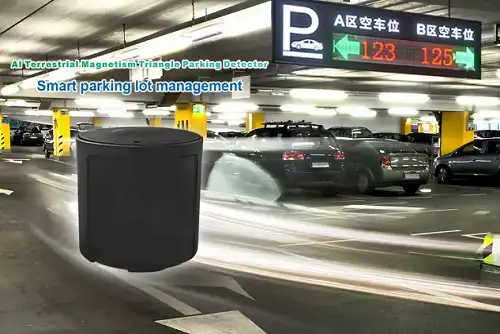
Key Advantages of Dual-Mode Geomagnetic Parking Detectors
Superior Detection Accuracy
The best thing about Dual-mode geomagnetic parking detectors is that they are very accurate at finding cars; in real life, they often work better than 99% of the time. This works better than single-mode magnetic monitors by 4 to 9 percentage points, which means that thousands fewer mistakes are made every year in large parking lots. The dual-verification architecture gets rid of magnetic drift, which happens when changes in temperature and other environmental factors make sensor calibration less accurate over time.
For example, this precision advantage is even stronger in places with a lot of electromagnetic interference, like parking garages under shopping malls or airports close to rail lines. With older sensors, passing tube trains could show up as an actual occupancy or create phantom gaps when cars next to each other cast magnetic shadows. The secondary verification layer finds these oddities before they reach the management systems. This keeps the integrity of the data, which is needed for reliable billing and guidance functions.
Extended Battery Life and Reduced Maintenance
Operations' longevity affects total cost of ownership. A non-rechargeable lithium thionyl chloride cell designed for low-power IoT usage gives the ZOJE-TM10S a 3–5-year battery life under typical operating circumstances. Smart power management just activates the radar verification module when the magnetic sensor detects a condition change, rather than operating both systems. This prolongs product life.
The lower maintenance required boosts these savings. Wireless operation eliminates cable deterioration issues in sensor networks, particularly outdoor ones exposed to harsh temperatures and dampness. The gadgets notify management systems of low battery power before it runs out. Instead of emergency repairs, the batteries may be changed during planned maintenance periods. This helps facility managers plan maintenance and maximise resources across big sensor fleets.
Environmental Resilience and Durability
In outdoor parking uses, Dual-mode geomagnetic parking detectors show amazing resistance to abrasive environments. The IP68 waterproof rating protects completely against dust entering and water reaching the device, making sure it works properly during heavy rain, flooding, and snowfall. Temperature tolerance from -30°C to +85°C can handle the wide range of climates in the U.S., from the cold winters in Minnesota to the hot summers in Arizona.
Physical durability matches environmental resistance. In areas with significant vehicle and snow removal equipment usage and high foot traffic, the reinforced enclosures can sustain static loads of over 12 to 20 tonnes. Epoxy resin filling protects electronics from stress and vibration, while UV-resistant compounds prevent degradation. The infrastructure will survive for years without losing efficacy due to its sturdy architecture, saving infrastructure investments.
Streamlined Installation and Deployment
Easy installations benefit large-scale parking developments. Surface-mount Dual-mode geomagnetic parking detectors don't need excavation or road penetration. This eliminates the need for coring, traffic management, and pavement repair. Instead of flush-mount or cable sensor networks, deployment teams may install dozens of sensors every day using industrial adhesive and hand tools, reducing project schedules by a considerable amount.
This ability to quickly launch is especially useful when installing new features in old parking lots that can't handle longer closing times. Installing sensors during off-peak hours makes it easier for shopping mall parking lots that need to stay open during the installation process. The small size can fit in a variety of spaces, so it can be used in standard, small, accessible, and angled parking configurations without the need for custom modifications or extra tools.
Comparing Dual-Mode Geomagnetic Detectors with Other Parking Sensor Technologies
Single-Mode Magnetic Sensors vs. Dual-Mode Systems
Dual-mode geomagnetic parking detectors get around these problems with their verification architecture, which lets them achieve accuracy rates of 99% or more without charging a lot more. The original price of the sensor may be 20–30% higher than single-mode options, but the lower rate of false positives gets rid of expensive manual verification processes and customer complaints. For parking lot managers who care about making money and keeping customers happy, the small price difference is worth it because of the higher reliability.
Ultrasonic Sensors and Their Limitations
Ultrasonic parking sensors work by sending out sound waves and measuring the patterns of reflection to find a car. These above-ground devices don't have to be installed as carefully as buried monitors do, but they do come with their own problems. Heavy rain, snow, and extreme temperatures can all have a big effect on the propagation of ultrasonic signals. This makes tracking less reliable in bad weather, which is common in many U.S. areas.
Maintenance needs for ultrasonic sensors are also higher than those for dual-mode geomagnetic sensors. Because they are mounted in open areas, these devices can be damaged by cars, vandals, and bad weather. Because they use more power, batteries need to be replaced more often or electrical links need to be connected, which raises the cost of installation. When these things come together, they often lead to a higher total cost of ownership, even if the equipment costs less at first.
Camera-Based Detection Systems
Video-based parking guiding systems are helpful because they can watch over multiple spots at once from one location where the cameras are installed. Modern algorithms for image processing can tell when a car is there, read its license plate, and even spot parking violations. Camera systems are useful in some situations because they can do these things, especially in shaded parking lots with even lighting.
Due to privacy issues and restrictions, camera-based solutions in public and residential parking lots are problematic. Many parking lots don't enable video monitoring and have strict notification and authorisation requirements. Camera systems cost more to install and operate than dual-mode geomagnetic parking detectors due to network infrastructure, server capacity, and illumination requirements for proper image capture. In fog, severe rain, and at night, camera systems perform worse than magnetic identification technology, which doesn't worry about sight obstacles.
Procurement Guide for Dual-Mode Geomagnetic Parking Detectors
Supplier Selection and Quality Assurance
When buying a Dual-mode geomagnetic parking detector, consider a company's technological expertise, quality control, and after-sales support. Suppliers must demonstrate ISO 9001:2015 or comparable quality management. This ensures uniform production and dependable goods. CE, FCC, and RoHS compliance certifications demonstrate that a corporation follows international safety and environmental regulations, while patent portfolios demonstrate that it innovates rather than resells.
ZOJE meets these quality standards with its ISO 9001:2015 certification, many technical patents, and thorough testing protocols. During quality control, each detector goes through more than 1,000 detection cycles. It is also submerged in water to make sure it is waterproof to IP68 standards and temperatures are changed across the whole operating range. This strict validation method makes sure that goods work successfully in the real world, not just according to the specs on the datasheet.
Customization and OEM Partnerships
A lot of the time, big parking projects need custom layouts so they can work with current management systems or meet specific operating needs. Suppliers that let you customise hardware and software add a lot of value by making solutions that fit the needs of a specific project. Distributors and system integrators can rebrand products or add their own features to make their products stand out in the market through OEM and ODM partnership options.
Customising hardware could mean changing communication methods, adjusting sensing sensitivity settings, or making special mounting hardware for places where it won't normally be used. Customising software can include adding it to your own parking management system, changing the way data is stored in databases, or adding special alert triggers for how your business works. Standardised solutions that cause operational compromises aren't always more useful than being able to change goods to fit the needs of a unique project.
Warranty Terms and Technical Support
Professional suppliers are different from commodity vendors because they offer full warranty coverage and quick technical support. Standard warranty terms should cover at least two years for both hardware parts and functions. This should include performance promises for batteries that make sure they work for a certain amount of time. With clear guarantee claim processes and set response times, you can be sure that broken units will be replaced quickly and without any long downtime.
Large-scale installations also need technical assistance. Providing worldwide phone, email, and online chat assistance 24/7 shows that suppliers care about their customers' success. Installation instruction documents, setup tools, and troubleshooting resources reduce the need to contact supplier assistance for common difficulties while providing professional help for more complex situations. ZOJE manages this massive support infrastructure and offers technical assistance 24/7 to clients worldwide. They provide detailed installation instructions and ongoing maintenance.
Logistics and Delivery Considerations
Logistics management affects both the time it takes to complete a project and the total cost of buying things. Suppliers should offer a range of shipping choices, such as air freight for urgent needs and ocean freight for big orders. They should also support DDP and DDU terms, which make it clear who is responsible for customs duties and costs. Clear lead time promises for both standard goods and custom designs make it possible to plan resources and schedule projects accurately.
Delivering standard products in 5–7 days and custom configurations in 10–15 days shows flexible manufacturing and good inventory management skills that keep project delays to a minimum. Secure payment options like letters of credit, wire transfers, and trade credit terms for known customers make transactions flexible and can be used with a wide range of buying policies from different organisations and countries.
Future Outlook and Trends in Geomagnetic Parking Detection Technology
Sensor Miniaturization and Enhanced Integration
As technology keeps getting better, sensor tracks get smaller while detection skills get better. The next generation of Dual-mode geomagnetic parking detectors will have smaller parts that use less power, allowing for even longer battery life and more covert installation. Better combining magnetic and radar sensing modules will make detection even more accurate while lowering the number of false alarms in electromagnetic environments that are getting more complicated.
Modern materials science has helped make these improvements possible by creating magnetic monitors that are more sensitive and can pick up on smaller changes in the field more accurately. Better battery chemistry makes them last longer than the current 3–5 year standards. This means that they don't need to be maintained as often and cost less over their entire lifetime. The value of dual-mode recognition technology keeps going up compared to other methods because these small gains add up over time.
AI-Driven Analytics and Predictive Intelligence
Adding artificial intelligence is another big trend that will affect parking detection systems in the future. Using machine learning algorithms on past usage data allows for predictive analytics that can predict trends in parking demand, find the best pricing strategies, and make better use of space allocation. These insights help parking lot owners make the most money while improving the customer experience by cutting down on search times and showing real-time available information.
Edge computing features built into new generations of sensors will allow for localised data processing, which lowers the need for bandwidth and speeds up response times. Sensors with built-in AI can tell the difference between types of vehicles, spot strange driving patterns, and change their sensitivity levels automatically based on the surroundings. Moving information from centralised computers to distributed sensor networks makes the system more reliable and less reliant on being online all the time.
Smart City Integration and IoT Ecosystems
Dual-mode geomagnetic parking detector integration within larger urban management systems is now more possible thanks to the growing usage of smart city infrastructure. Parking systems, traffic management platforms, public transportation networks, and city planning tools will all be able to easily share data thanks to standardised communication protocols and open API architectures. This integration helps complete mobility solutions that make transport more efficient across whole cities.
As smart city models change, investments made so far will still be useful because they are compatible with new IoT standards. More and more, parking recognition systems will send data to city-wide digital twin platforms that model how cities work and help policymakers make choices based on facts. Interoperability and scalability should be the top priorities when making strategic buying choices. This will protect against obsolescence and maximise long-term operational benefits as urban technology ecosystems develop.
Conclusion
Dual-mode geomagnetic parking detectors exceed existing detecting systems in accuracy, durability, environmental resistance, and installation. These advantages allow US retail malls, airports, residential neighbourhoods, office buildings, and commercial parking lots to generate more money, cut expenses, and improve customer service. Dual-verification design overcomes single-mode system false-trigger issues while being cheaper than alternative sensor technologies. Smart parking infrastructure is expanding due to urbanisation and connectivity activities. For accurate, durable, and readily integrated parking management activities, dual-mode detection systems are becoming the standard.
FAQ
1. How does installation work for surface-mounted detectors?
Dual-mode geomagnetic parking detectors that are mounted on the surface use industrial-grade epoxy glue to stick to asphalt and concrete surfaces permanently. The installation team cleans the mounting area, puts down the adhesive solution, and places the sensor within the lines of the parking spot. The process doesn't need any digging or drilling, and it's usually done in 5 to 10 minutes per sensor, so traffic can start going again right away.
2. Can these sensors integrate with our existing parking management software?
Modern dual-mode systems talk to each other using common protocols like MQTT and HTTPS. They send reports on the occupancy state to cloud servers or local hubs. Suppliers offer API documentation and hex payload decoding specifications that make it easy to connect to most platforms for parking management. ZOJE offers technical support to make sure that their products work well with your software infrastructure.
3. What happens when battery levels become low?
When voltage goes below certain levels, sensors send low-battery alerts to management platforms instantly. This usually happens weeks before the power runs out completely. This advance notice lets the replacement happen during regular maintenance windows instead of having to be done quickly in an emergency. To change the battery, all that needs to be done is to remove the sensor and put in a new unit. This usually only takes a few minutes per spot.
Partner with ZOJE for Advanced Parking Detection Solutions
ZOJE makes the best Dual-mode geomagnetic parking detector technology, which changes how parking is managed all over the US. Our ZOJE-TM10S model is a great choice for shopping malls, airports, residential communities, office buildings, and commercial parking operations because it has a 99% accuracy rate, a battery life of 3–5 years, IP68 environmental protection, and no-excavation installation. We guarantee the quality of every sensor with an ISO 9001:2015 certification, several technical patents, and thorough testing methods. We also offer 24/7 global technical help for every sensor.
ZOJE has the manufacturing flexibility and expertise to meet your needs, whether you need standard configurations delivered within 5–7 days or solutions that are made to fit the specific needs of your project. Our skilled staff helps with customising hardware and software, forming OEM relationships, and working together with ODMs to meet unique business needs. Get in touch with our experts at info@zoje-tech.com to talk about your parking detection needs with a reputable Dual-mode geomagnetic parking detector provider that wants your project to succeed. You can look at technical specs, ask for full product paperwork, and learn how our tried-and-true solutions can help you get the most out of your parking infrastructure investment by going to zoje-parking.com.
References
1. Transportation Research Board. "Smart Parking Management Systems: Performance Evaluation and Technology Assessment." National Academies Press, 2021.
2. International Parking and Mobility Institute. "Emerging Technologies in Parking Operations: A Comprehensive Guide for Facility Managers." IPMI Publications, 2022.
3. Institute of Electrical and Electronics Engineers. "Wireless Sensor Networks for Smart City Applications: Standards and Implementation Protocols." IEEE Standards Association, 2020.
4. American Society of Civil Engineers. "Infrastructure Integration in Modern Urban Planning: Parking Solutions for Connected Cities." ASCE Technical Report Series, 2023.
5. Journal of Intelligent Transportation Systems. "Comparative Analysis of Vehicle Detection Technologies in Parking Applications: Accuracy, Cost, and Reliability Factors." Taylor & Francis, Volume 27, Issue 3, 2022.
6. National Institute of Standards and Technology. "Performance Metrics for IoT Sensor Systems in Outdoor Applications." NIST Technical Publication 1900-series, 2021.

Send Inquiry
You may like


Related Industry Knowledge
- What Is a Video-Based Parking Space Detector?
- How to choose a uhf rfid tag reader? How does it work?
- Bridge-Style Tripod Turnstile Benefits in Office Security
- OEM Space-Saving Turnstile Customization Guide
- How Glass Full-Height Turnstile Improves Aesthetics?
- What Is License Plate Recognition and How It Works in 2026?
- Benefits of a City Parking Lot Management System in 2026
- What Is an All-in-One LPR Machine for Smart Parking?
- Plug-and-play ANPR Device for Quick Parking System Deployment
- What Is an Open API LPR Parking System for Smart Parking?