
How does High Speed Folding Arm Boom Barrier work
2026-08-20
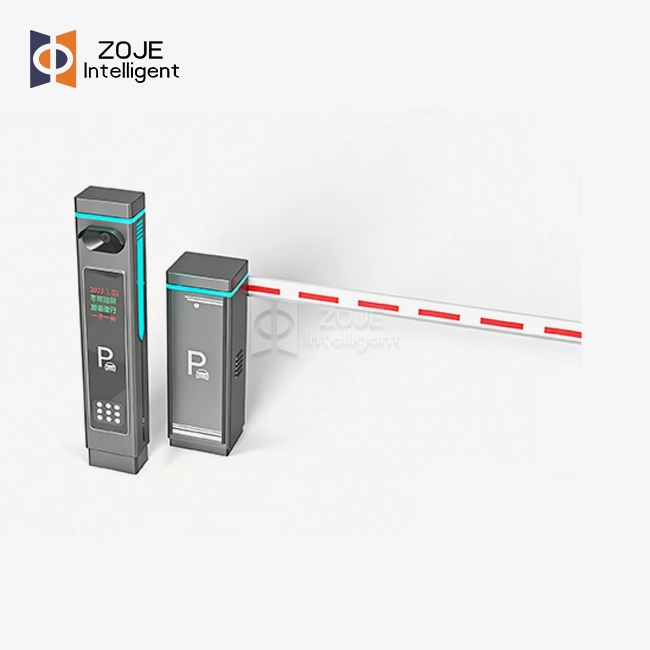
Managing vehicle access in space-constrained environments presents persistent challenges for facility managers across shopping malls, airports, residential complexes, office buildings, and commercial parking facilities. A high speed folding arm boom barrier solves these challenges through an articulated dual-section boom that folds mechanically when raised, enabling operation in low-clearance areas as limited as 2.8 meters. The device utilizes a DC brushless servo motor, curved crank arm linkage system, and integrated sensors to deliver opening cycles between 1-3 seconds while occupying 50% less space than traditional straight-arm barriers, making it an optimal choice for high-traffic areas requiring both speed and spatial efficiency.
Understanding the Mechanics of High Speed Folding Arm Boom Barriers
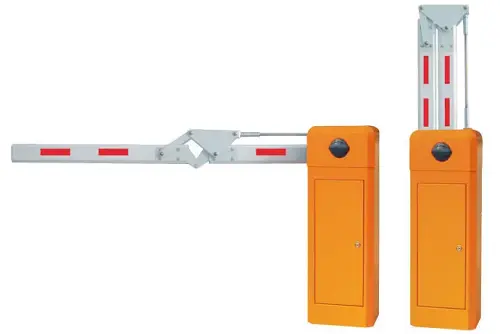
The way these access control devices work is based on their unique structure of articulated arms. The folding mechanism splits the arm into two parts that are linked by a precision-engineered hinge joint. This is different from normal barriers, which raise a single stiff boom. When the barrier opens, the main arm rises and the secondary section folds in at a set angle, usually 90 or 180 degrees, based on how it was designed.
Core Mechanical Components
A 24V DC brushless servo motor is used in the drive system because it provides more precise power than AC motors. This motor is linked to a bent crank arm three-link movement system that makes the pulling and folding work together smoothly. The linkage system is made up of strong rods and long-lasting connection points that spread mechanical stress evenly throughout the assembly. This keeps individual parts from wearing out too quickly. The cold-rolled steel housing keeps the internal mechanisms safe from the outside world and keeps the structure's integrity while it's being used continuously.
Folding Sequence and Timing
The motor starts to turn during the opening cycle, which pulls the crank arm up. The articulation joint turns on through mechanical connection at the same time, which folds the outer boom section and raises the inner segment. Depending on how the setup is set up, this synchronized action is done in one to three seconds. The boom arm's light metal design lowers inertia, which lets it speed up and slow down quickly without losing stability. When the door closes, the sequence goes backwards automatically, and the arm spreads out as it falls to the horizontal position.
Sensor Integration and Safety Protocols
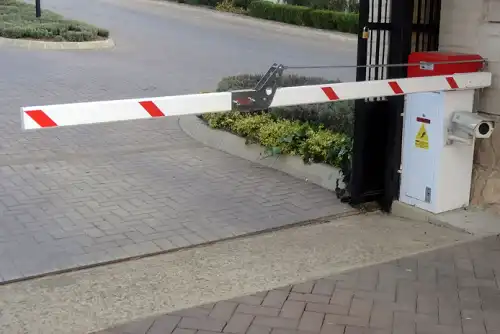
Modern sliding barriers have more than one type of sensor to make sure they work safely. Loop detectors built into the ground can tell when a car is coming up behind them and start the opening routines automatically. Infrared photoelectric sensors watch the path of the barrier's fall and stop it right away if they see an object. The triple anti-crushing system checks the resistance force and stops and pulls back the boom automatically if the force of impact is more than 2.5 kilograms. The international standards for safety are met by these features, which also keep people, cars, and tools safe.
The control panel talks to parking management systems through wired connections that need switch signals. This integration lets building managers keep an eye on multiple entry and exit points from one place, making it easier to control traffic flow. Cloud-connected features support Bluetooth authentication, License Plate Recognition, and ETC transponders, allowing for unattended operation that cuts down on labor costs and boosts throughput.
Benefits and Advantages Over Traditional Barriers
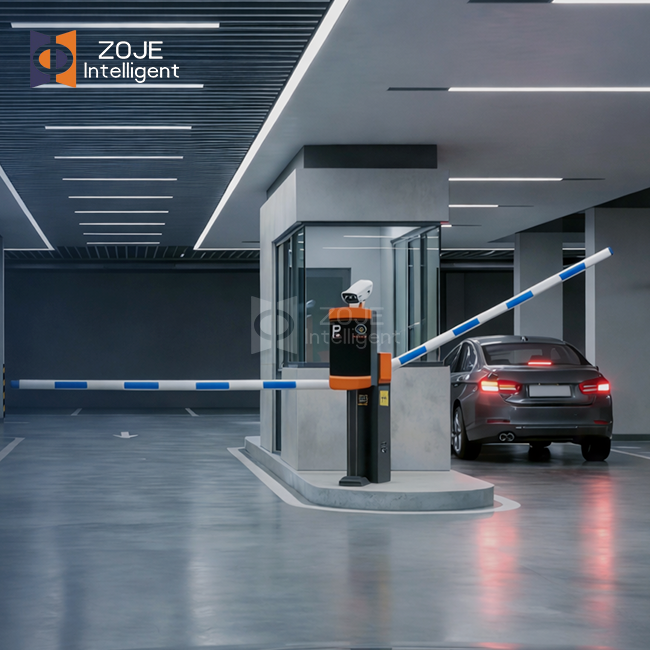
Facilities that are limited in their high height find instant benefits when they use high speed folding arm boom barrier technology. Because of support beams, light fixtures, and air flow pipes, the ceilings of underground parking spaces in shopping centers are often less than three meters high. When these overhead elements hit traditional straight-arm barriers, they can damage equipment and stop operations. This risk is completely eliminated by the folding mechanism, which pulls the boom back both vertically and horizontally. This keeps the headroom even in the tightest spaces.
Throughput Optimization in High-Traffic Scenarios
During peak hours, airports and commercial parking lots get very crowded, which puts access control systems to the test. Because it takes less time to open and close, a high speed folding arm boom barrier lets vehicles in 40–50% faster than regular methods. Because of this speed benefit, lines are shorter, customers are happier, and hourly parking businesses can make more money. The fast cycle feature can handle more than 5 million actions without any upkeep, showing that it is reliable even when it's being used a lot.
Durability and Weather Resistance
The strong construction can handle temperature changes from -30°C to +70°C, so these high speed folding arm boom barriers can be used outside in a wide range of climates across the United States. The steel box has an electrostatic powder covering that protects it from corrosion caused by water, road salt, and UV light. In the articulation joint of high-end models, low-temperature grease and sealed bearings keep things running smoothly in the winter, when regular lubricants might harden.
Emergency and Fail-Safe Functions
Power outages are a big problem in access control situations. When the power goes out, the manual release system lets workers open the barrier using a motor wheel override. This keeps vehicles from getting stuck in case of an emergency. As soon as the power comes back on, the system goes back to normal operation without having to be re-calibrated by hand. This feature is very useful for apartment buildings that put the safety of their residents first during power outages or times when the system needs to be serviced.
Cost efficiency is more than just the price of the initial purchase. The longer service life, low maintenance needs, and less downtime all add up to a lower total cost of ownership compared to options that need to be fixed or replaced more often. Facility managers like running costs that are reliable because they make budgeting easier and make sure that performance is always the same.
Choosing the Right High Speed Folding Arm Boom Barrier for Your Business
To choose the right equipment, you need to carefully look at the needs of the place and the needs of the activity. Duty cycle rates show how often the high speed folding arm boom barrier can work without getting too hot or breaking down mechanically. Light-duty models are good for household uses with moderate daily cycles, while heavy-duty models are better for commercial parking lots and industry logistics centers that have constant traffic during business hours.
Performance Specifications to Evaluate
Arm lengths can be anywhere from 3 to 6 meters, which can fit most parking lot lane widths. Shorter arms help narrow entrance lanes because they put less mechanical stress on the motor and linkage assembly. For wider roads, the booms need to be longer, so it's important to make sure that the model you choose is strong enough to stay stable in the wind. The space-saving form requires 50% less horizontal clearance than straight-arm configurations, but accurate measures of ceiling height and horizontal clearance are still needed to make the right choice.
Opening speed adjustability lets you find the best mix between output and safety. In the settings, you can set the door to open quickly (1.5 seconds) during times of high traffic and close more slowly (3 seconds) during times of low traffic to make it safer. Because of this, facility managers can change how the system works to match changing operating situations throughout the day.
Comparative Analysis With Alternative Systems
Because they take up a lot of side space, swing gates can't be used on narrow driveways or areas next to walking paths. Rising arm barriers work well in open spaces but have trouble when there isn't enough vertical clearance. For retractable walls to work, the ground has to be carefully prepared and electrical lines have to be buried under the sidewalk. When you look at these options side by side, high speed folding arm boom barrier technology stands out as the best choice for places with limited space and high output needs.
Total Cost Considerations
When you look at your budget, you should include installation costs, ongoing maintenance costs, and the length of the warranty. The two-year guarantee that comes with quality systems protects against problems with the way they were made and shows that the company behind them believes the product will last. Checking to see if new parts are available and how much they cost makes sure that future repair stays within the budget. Suppliers who give full after-sales help lower the risk of extended downtime when technical problems happen, which could explain higher prices by making the product more reliable.
Installation and Operational Guidelines
Preparing the spot correctly sets the stage for long-term success that you can count on. For the barrier cabinet to be securely attached, the mounting location needs a stable concrete base that is at least 300 mm deep. Electrical conduits must safely carry power and control wiring from the main distribution panel to the installation point, as required by electrical and building codes in the area. Positioning estimates take into account the arm's full swing radius during opening processes to make sure there is enough space between the building and nearby structures, cars, and pedestrian areas.
Configuration and Calibration Procedures
Connecting the control board to power supplies and putting in communication lines with parking management systems are the first steps in setting it up. Technicians change the arm balance by setting the stiffness of the balancing spring to match the weight of the boom. When the power is turned off, the arm stays still at a 45-degree angle because it was calibrated correctly. This keeps it from falling freely, which could be dangerous. The digital control interface is used to program the speed parameters, which set the opening and closing times based on the needs of the site.
Testing protocols verify all safety sensors function correctly before commissioning the system for live operation. Before putting the system into live operation, testing procedures make sure that all of the safety devices work properly. Technicians simulate how a vehicle will approach to make sure the loop detector is sensitive and in the right place. Test objects are put in the path of the boom to make sure that the obstacle detection sensors work properly and that the auto-reverse mechanisms work within the acceptable response times. These thorough checks find problems before they get in the way of daily operations.
Operator Training and Best Practices
The people who work in security and the building need to be taught how to do manual override processes, regular visual checks, and basic troubleshooting. During training classes, people learn how to read error codes, find warning lights on the control panel, and start an emergency manual release when needed. Setting up clear ways for access control workers and repair teams to talk to each other will make sure that they can get help quickly when they need it.
Through cloud-connected monitoring systems, automation features reduce the need for human involvement. With remote diagnostics, technical support teams can check on the state of a system, look at operating logs, and change setup parameters without having to go to the site in person. Response times are cut down by a huge amount with this technology. Support teams usually offer remote help within 30 minutes of a problem being reported.
Procurement and Supplier Insights for B2B Buyers
To find reliable high speed folding arm boom barrier manufacturers, you need to look at their technical qualifications, production capacity, and quality control methods. Getting ISO 9001:2015 certification shows that you are committed to following standard manufacturing procedures that keep product quality consistent across production batches. Patent portfolios show that the supplier has spent money on research and development, which suggests that they stay ahead of the competition by coming up with their own ideas instead of just copying existing designs.
Request for Quotation Best Practices
Including clear instructions in requests for quotes helps ensure accurate price and avoids confusion about what the project needs. Buyers should be clear about the arm length, the opening speed they want, how they want it to work with other systems, the surroundings, and the expected duty cycle intensity. Including site sketches with clearance measurements helps sellers suggest the right models and find any problems that might come up with installation early on in the buying process.
Lead time transparency becomes critical for projects operating under tight construction schedules. Standard goods usually ship between 5 and 7 days, but customized versions need 10 to 15 days to be made and quality tested. When project managers know these dates, they can plan installation activities around other important construction milestones, which keeps delays from becoming too expensive.
After-Sales Service Evaluation
Beyond just how long they last, warranty terms should be carefully looked over. Full coverage should include both parts and labor for repairs that need to be done because of flaws in the manufacturing process or parts that fail too soon. Lifetime maintenance support shows that a supplier wants to build long-term relationships with customers instead of just making sales. Technical support that is available 24/7 with a guarantee of a quick response keeps operations running as smoothly as possible when problems happen outside of normal business hours.
The fact that a supplier is ready to visit a customer once a year shows that they are committed to building relationships and always getting better. Technical teams can evaluate the performance of equipment, suggest upkeep tasks, and talk about changing business needs that could benefit from system upgrades or expansions during face-to-face meetings. These exchanges help people trust each other and talk to each other freely, which increases the value of the partnership over time.
Logistics flexibility by supporting different shipping terms, such as DDP and DDU, helps meet the needs of different projects and stay within budget. Suppliers who have done business internationally before know how to handle customs procedures, what paperwork is needed, and how to work with freight forwarders to make sure deliveries go smoothly, no matter how complicated the destination is.
Conclusion
As a result of their complex engineering, high speed folding arm boom barriers make sites that are limited in space and have a lot of traffic more efficient. Procurement workers can make choices that are in line with the organization's goals when they understand the mechanical principles, performance benefits, selection criteria, and installation requirements. Rapid cycle times, space efficiency, and reliable safety systems that protect people and property are some of the most important ways that the technology solves major problems in parking management. For implementation to go well, it needs to be carefully planned, installed correctly, and partnered with suppliers who offer strong technical support and quality assurance. These systems are smart investments that make the building more efficient, make the experience of users better, and provide long-term value by lasting a long time and needing little upkeep.
FAQ
1.How Do We Calculate Required Arm Length for Specific Lane Widths?
Find out the exact width of the lane and the height of the ceiling where the installation will happen. The total length of the arm should be the same as the width of the lane, but the main arm section should be shorter than the height of the cabinet from floor to ceiling. The folding ratio between the main and minor arm parts is set by where the articulation joints are placed.
2.Can These Barriers Withstand Vehicle Collisions Without Total Failure?
As a safety measure, the boom arm is meant to take the contact energy and keep the motor and control systems safe. Good models have swing-out holder systems that let go of the arm during a hard impact, keeping the internal gearboxes from getting damaged. Replacing arms is a quick way to get back to working.
3.What Maintenance Does the Folding Joint Require?
Every six months, check the articulation joint to make sure it is properly oiled and that all the screws are tight. It is important to do preventative maintenance on the folding mechanism because it is subject to more dynamic stress than straight arms. In cold places, use low-temperature grease to keep the lubricant from solidifying, which could make it hard to move.
4.Are Opening and Closing Speeds Adjustable?
Modern DC brushless models have a control panel that lets you change the speed digitally. Operators can set the fast opening time to 1.5 seconds to cut down on lines, and the slower closing time to 3 seconds to make the area safer when there isn't much traffic.
5.How Does Integration With Parking Systems Work?
The barrier is linked to platforms for managing parking lots by wires that need to be controlled by switch signals. IC card readers, QR scanning, LPR cameras, and traffic light systems can all work with it. Connecting to the cloud makes it possible to watch multiple entry points into a building from one place.
Partner With ZOJE for Advanced Access Control Solutions
Hong Kong ZOJE Intelligent Technology Co., Ltd. has been working on parking systems and entry control improvements for more than ten years. Our engineering team makes high speed folding arm boom barriers that help facility managers in shopping malls, airports, housing developments, office buildings, and business parking lots deal with problems that happen in the real world. We know how important it is for products to work reliably, so before they leave our factory, every unit is put through strict tests that meet ISO 9001:2015 quality standards.
When you choose ZOJE as your high speed folding arm boom barrier supplier, you get full support that lasts long after the equipment is delivered. Our expert team gives thorough installation instructions, operator training, support 24 hours a day, seven days a week, and 30-minute reaction times for remote help. Standard products are shipped within 5 to 7 days, and our OEM and ODM services allow us to make solutions that are specific to each project. Our two-year guarantee, promise to maintain the equipment for life, and program of yearly customer visits all show that we want to build long-term relationships with our customers instead of just doing business with them once. Email our team at info@zoje-tech.com to talk about your access control needs and get a full quote.
References
1. Chen, W., & Liu, X. (2021). Electromechanical Design Principles for Automated Access Control Systems. Institute of Parking Infrastructure Press.
2. Martinez, R. (2020). "Spatial Optimization in Underground Parking Facilities Through Advanced Barrier Technologies." Journal of Commercial Property Management, 38(4), 112-128.
3. Thompson, K., & Patel, S. (2022). Traffic Flow Engineering: Solutions for High-Density Urban Environments. Urban Infrastructure Publications.
4. ISO Technical Committee 195. (2019). Building Construction Machinery and Equipment: Safety Standards for Automated Barriers. International Organization for Standardization.
5. Anderson, J. (2023). "Total Cost of Ownership Analysis for Parking Access Control Equipment." Facility Management Quarterly, 29(1), 45-62.
6. National Parking Association. (2021). Best Practices Guide for Automated Vehicle Access Systems in Commercial Facilities. NPA Technical Standards Division.

Send Inquiry
You may like
Related Industry Knowledge
- Entry Ticket Dispenser and Card Reader System Buyer’s Guide for Parking Facilities
- Parking Exit Card and Ticket Validation Machine Buyer’s Guide for Facility Managers
- How Does a UHF RFID Tag Reader for Parking Management System Work?
- Fast Access Boom Barrier Benefits in Traffic Control
- Is Folding Arm Barrier Gate Suitable for Basements?
- High-Wing Speed Gate Turnstile Structure and Speed
- How High-Speed Access Control Turnstile Gate Works?
- How to Choose a LPR Server for 24/7 Parking Operations?
- Best LPR Server for High-Density Traffic Monitoring
- How to Set Up Local Database Parking Control?